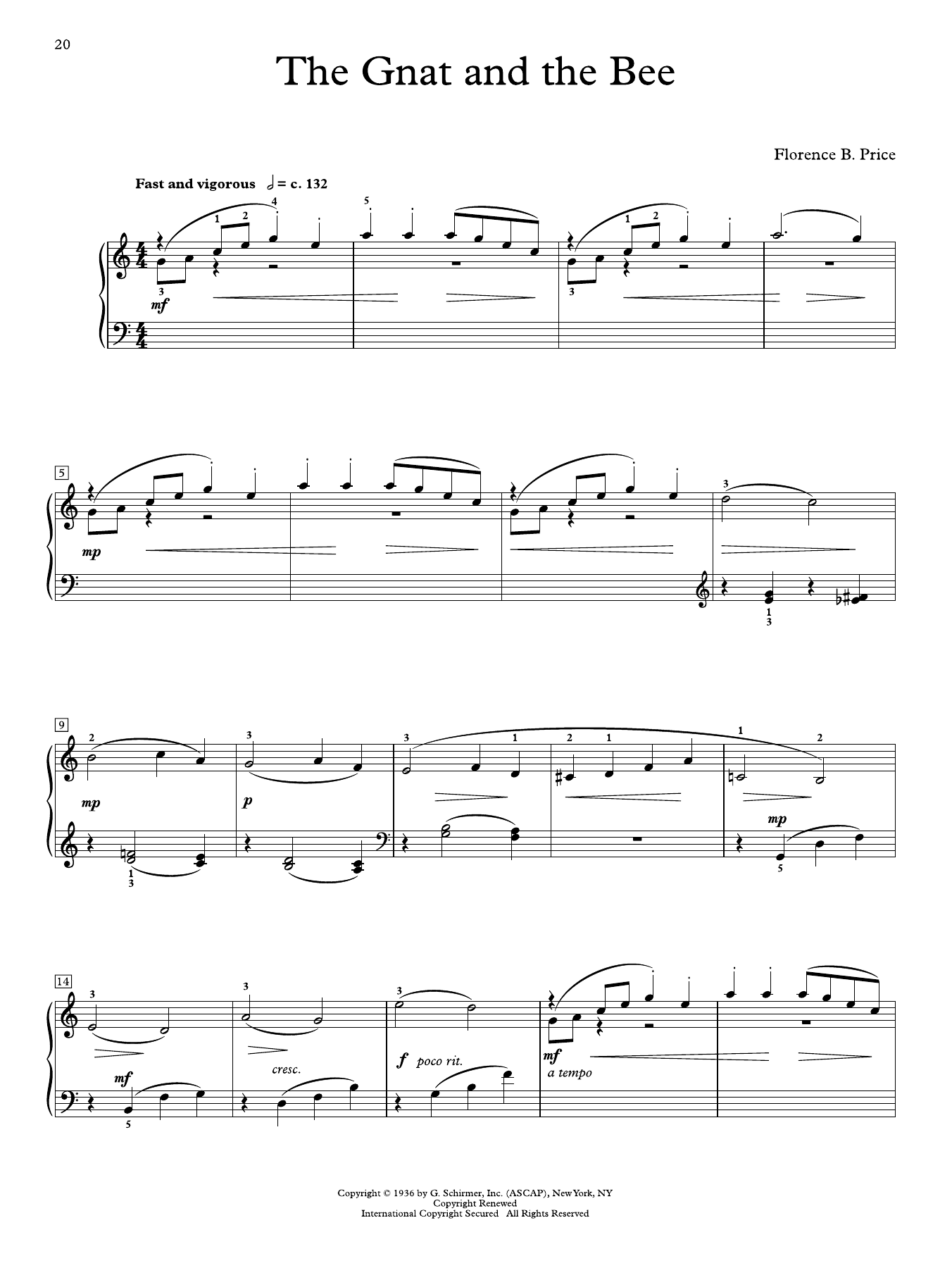
Florence Price (1887-1953) was an American composer and pianist whose work bridged classical training and African American musical traditions. She became the first Black woman to have a symphony performed by a major American orchestra, and her catalog includes over 300 compositions spanning symphonies, concertos, chamber works, and art songs. Price's piano writing reflects her gift for melody and her deep understanding of the instrument; her educational pieces remain vital resources for introducing students to both technical clarity and expressive sophistication.
Why we love this
Price's educational piano works occupy a rare space: they sound genuinely charming and musical while serving real pedagogical purpose. This piece teaches rhythmic precision and voice independence without sacrificing the pleasure of performance, and it expands students' exposure to a major American composer whose contributions are still underrepresented in standard piano curricula.
What to expect
A playful conversation between two creatures of very different sizes and temperaments. The piece darts and buzzes, with moments of gentle humor and genuine orchestral color rendered through keyboard writing.
Who it's for
Intermediate piano students ready for pieces that balance technical demands with musical storytelling. Teachers seeking repertoire by underrepresented composers that engages students musically rather than merely offering drill work.
How to get the most out of it
Differentiate the gnat's quick, scurrying passages from the bee's heavier character through touch and pedal choices; clarity wins over blur here.
Listen to how the two voices interact rather than treating them as separate lines; the dialogue is the point.
Resist adding tempo variation unless the score indicates it; the written rhythms create all the character you need.
How to use it
Pair this with other programmatic works for a recital exploring how composers paint scenes through sound, or use it as a showpiece solo to introduce students to Price's catalog. It sits naturally in a spring or school concert where programming calls for something lighter but still substantive.
Skills your students will build
Two-hand independence and rhythmic coordination
Character differentiation through articulation and dynamic control
Pedal technique and its effect on textural clarity
Sight-reading through clear, singable melodic lines
Listening for narrative and musical dialogue
You May Also Like
Scan to Complete Your Purchase
Use your phone's camera to scan the code below
You'll log in on your phone and the order will be added to your account