The Glow Worm Sheet Music Preview

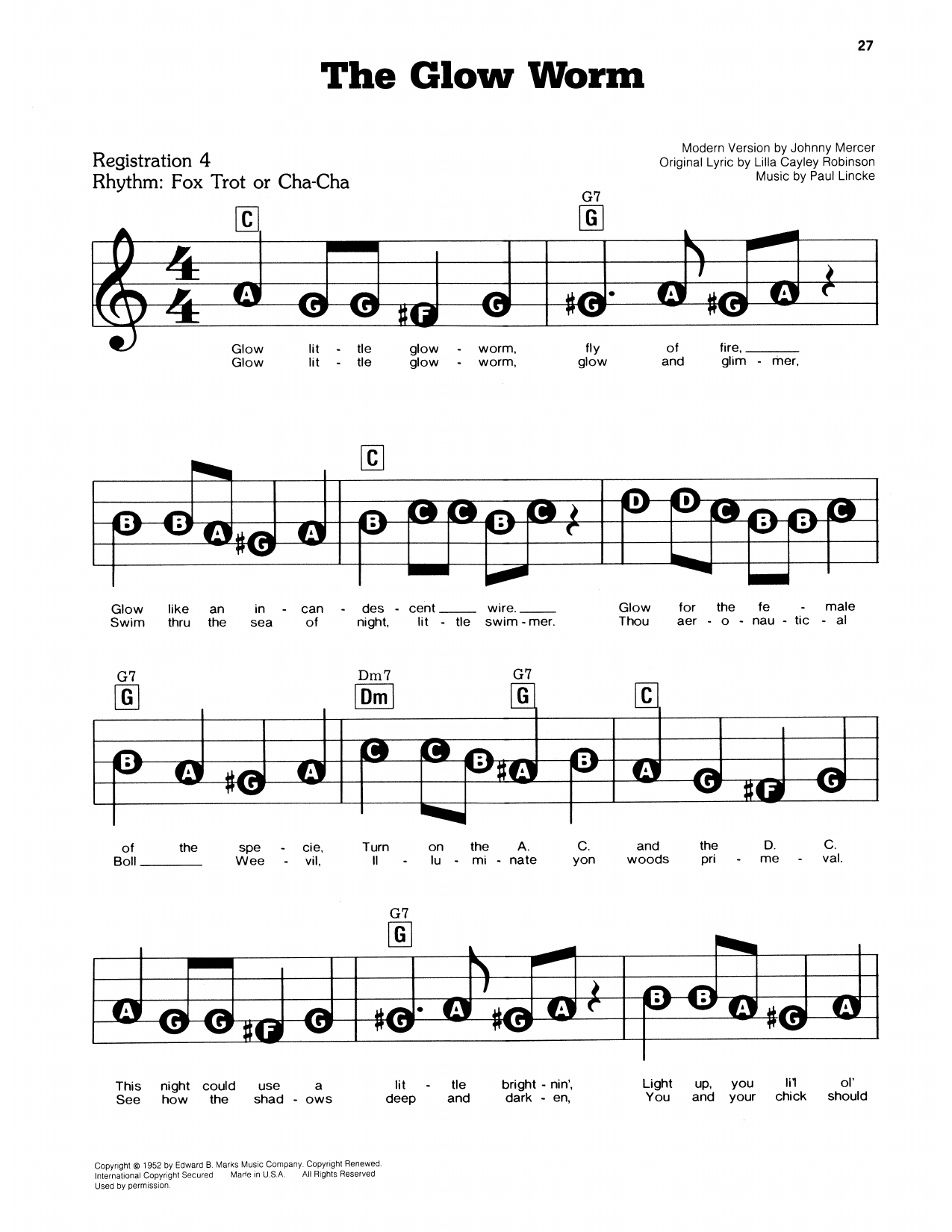
The Glow Worm: E-Z Play Today

Item: 35-DS01959294

Digital Download
$4.99
Description

The Glow Worm: E-Z Play Today isn't in MakeMusic Cloud just yet...but it could be. Let us know you'd like to see it, and you'll help shape what comes next. In the meantime, start a free trial and dive into thousands of interactive titles your students can play along with today.

Sample Audio
No sample audio found.
Sample Video
Additional Details
Publisher: Hal Leonard
Page Count: 3
SKU: 35-DS01959294

More about this title

About the Creator: Paul Lincke

Paul Lincke composed "The Glow Worm" in 1902 as part of his operetta "Lysistrata," and the piece quickly became a beloved standard across genres. His gift for melody and light orchestration made the work accessible to musicians and audiences alike, ensuring its survival well beyond the operetta's original run. Lincke's ability to craft singable, memorable themes established him as a significant figure in early twentieth-century musical theater.

Why we love this

This E-Z Play arrangement captures all the nostalgic charm of a classic standard while keeping the technical demands reasonable. Your pianists will appreciate how the lead melody stays at the top of the staff, leaving room for creative comping underneath, and the three-page length means it fits naturally into a casual set or jazz night program without overshadowing other selections.

What to expect

A gentle, wistful waltz suffused with early twentieth-century elegance and warmth. The melody has an old-world quality that feels both intimate and timeless, as though you're playing in a dimly lit room where time moves a little slower.

Who it's for

Pianists at early intermediate level and above will find this approachable yet rewarding. It works equally well for students building repertoire in the jazz and standards tradition or for community pianists looking for accessible material with real musical substance.

How to get the most out of it

  • Keep the tempo unhurried. This standard benefits from a relaxed pace that lets the melody breathe and gives listeners time to settle into the familiar tune.
  • Shape each phrase toward the strongest note, resisting the urge to play it mechanically note-to-note.
  • If playing as part of a larger performance, use the space between phrases to interact with other players or let the atmosphere shift slightly.

How to use it

Program this on a standards or jazz night to set a sophisticated, relaxed mood. It pairs well with other early American songbook material and serves as a solid anchor piece that gives your audience permission to simply enjoy the music without dramatic tension.

Skills your students will build

  • Phrasing and rubato in a lyrical context
  • Playing straight melody with awareness of accompanying harmonies
  • Reading chord changes for improvisation or comping
  • Maintaining steady tempo while shaping expression

You May Also Like