The Gladiator: B-flat Bass Clarinet Sheet Music Preview

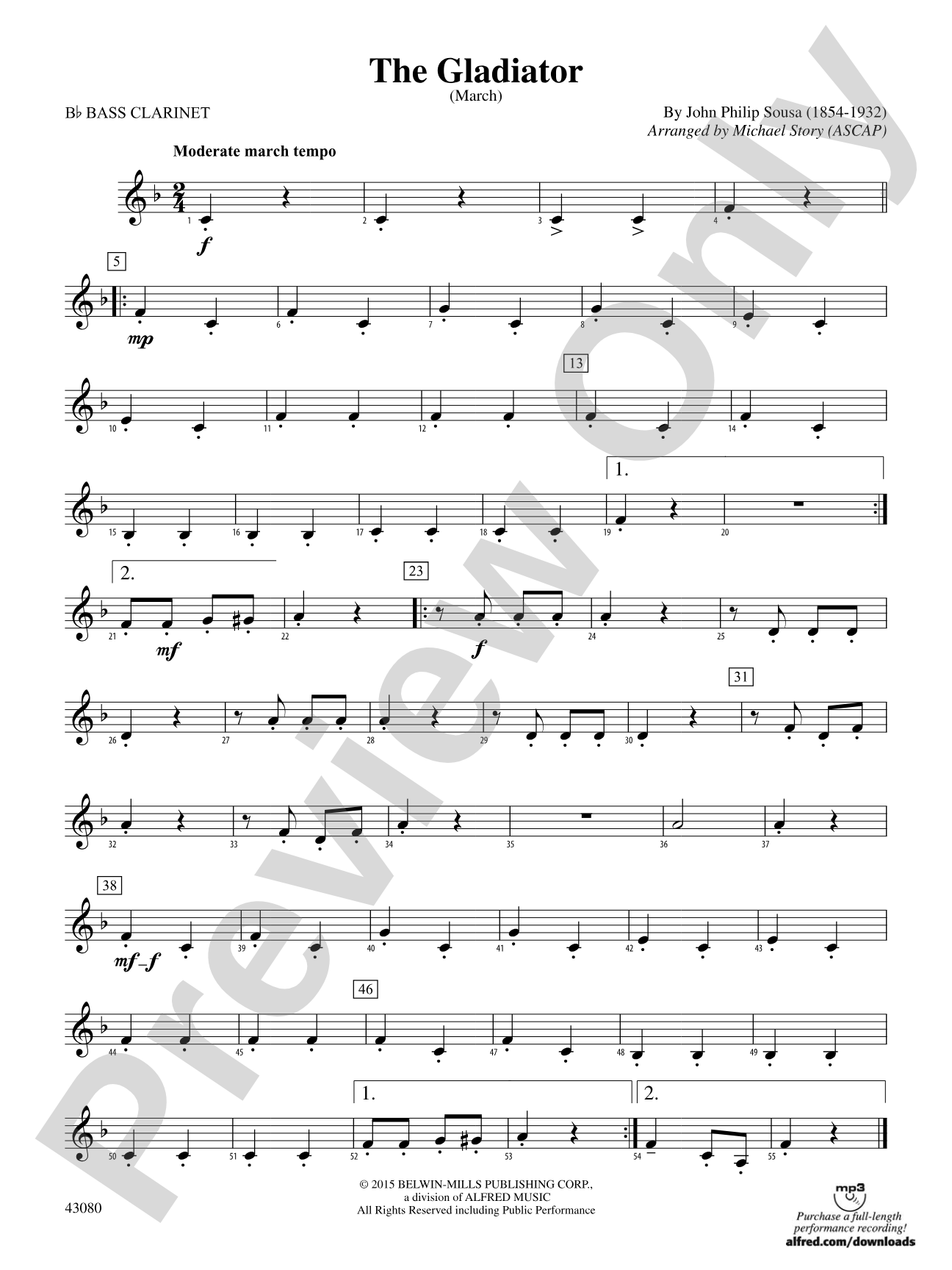
The Gladiator: B-flat Bass Clarinet

By John Philip Sousa / arr. Michael Story

Grade: 1 (Very Easy)

Item: 00-PC-0016737_BC

Digital Download
$3.00
Description
Composed in 1886 by the march king himself, this familiar bold march is sure to please. Retaining Sousa's original intent, the theme uncharacteristically incorporates light staccato notes in addition to full value quarter notes. A great teaching and performance choice! (2:00)

Don't just read it, hear it, play along with it, and watch your students grow with it. In MakeMusic Cloud, The Gladiator: B-flat Bass Clarinet comes alive with professional accompaniment, adjustable tempo, and built-in practice tools that turn solo practice into real progress.

Sample Audio
0:00
0:00
Sample Video
Additional Details
Series: Belwin Beginning Band
Publisher: Alfred Music
Page Count: 130
SKU: 00-PC-0016737_BC

More about this title

About the Composer: John Philip Sousa

John Philip Sousa (1854-1932) revolutionized American band music through his prolific output of marches and his leadership of the U.S. Marine Band and later his own ensemble. His compositional style balanced accessibility with sophistication, making his works standards in concert band and wind ensemble repertoire from the classroom to the concert hall.

Sousa's marches remain foundational teaching tools because they demonstrate clear form, memorable melodic writing, and the orchestrational principles that define the American band tradition. Directors continue to program his works as entry points into concert band literature while maintaining the musical integrity that earned him the title "the March King."

Why we love this

Sousa's marches have earned their place in beginning band curricula because they sound impressive without overwhelming young players. The Gladiator strikes that rare balance where Grade 1 players can execute the part writing cleanly while the full ensemble achieves genuine musical impact—a quality that keeps audiences engaged and students motivated.

What to expect

Bright, patriotic, and purposeful. The march opens with characteristic Sousa confidence while the interplay of staccato and sustained notes creates rhythmic interest that feels propulsive without being fussy. The short duration and clear phrase structure make it feel accomplishable from the first rehearsal.

Who it's for

Beginning concert bands and Grade 1 programs looking for a piece that teaches march form and solid ensemble technique without requiring advanced technical skills. This is an ideal choice for students who have completed fundamentals and are ready to tackle their first "real" repertoire with historical significance.

How to get the most out of it

  • Balance the staccato articulations in the theme against the longer note values; young players often rush through staccato passages, so establish a steady pulse and keep eighths and quarters proportionally grounded.
  • Shape the melodic contour across phrases rather than treating each bar in isolation. Even at this level, attention to line creates musicality that separates a workmanlike reading from a performance.
  • Tune the upper woodwinds carefully during sustained passages; intonation clarity matters more at slower tempos and becomes obvious when parts support a march's harmonic framework.
  • Balance brass volume so the melody carries through the middle voices without the bass line or low reeds disappearing into the accompaniment.

How to use it

Program this as a concert opener or for festival play where you want to demonstrate solid fundamentals and audience appeal early. It also pairs well in a patriotic or American music-focused concert, anchoring a set that might include other light marches or contemporary band pieces.

Skills your students will build

  • March form and phrase structure recognition
  • Articulation contrast (staccato paired with quarter-note values)
  • Dynamic shaping and melodic line emphasis
  • Rhythmic precision in ensemble contexts
  • Fundamental ensemble balance and intonation in mixed voicings

You May Also Like