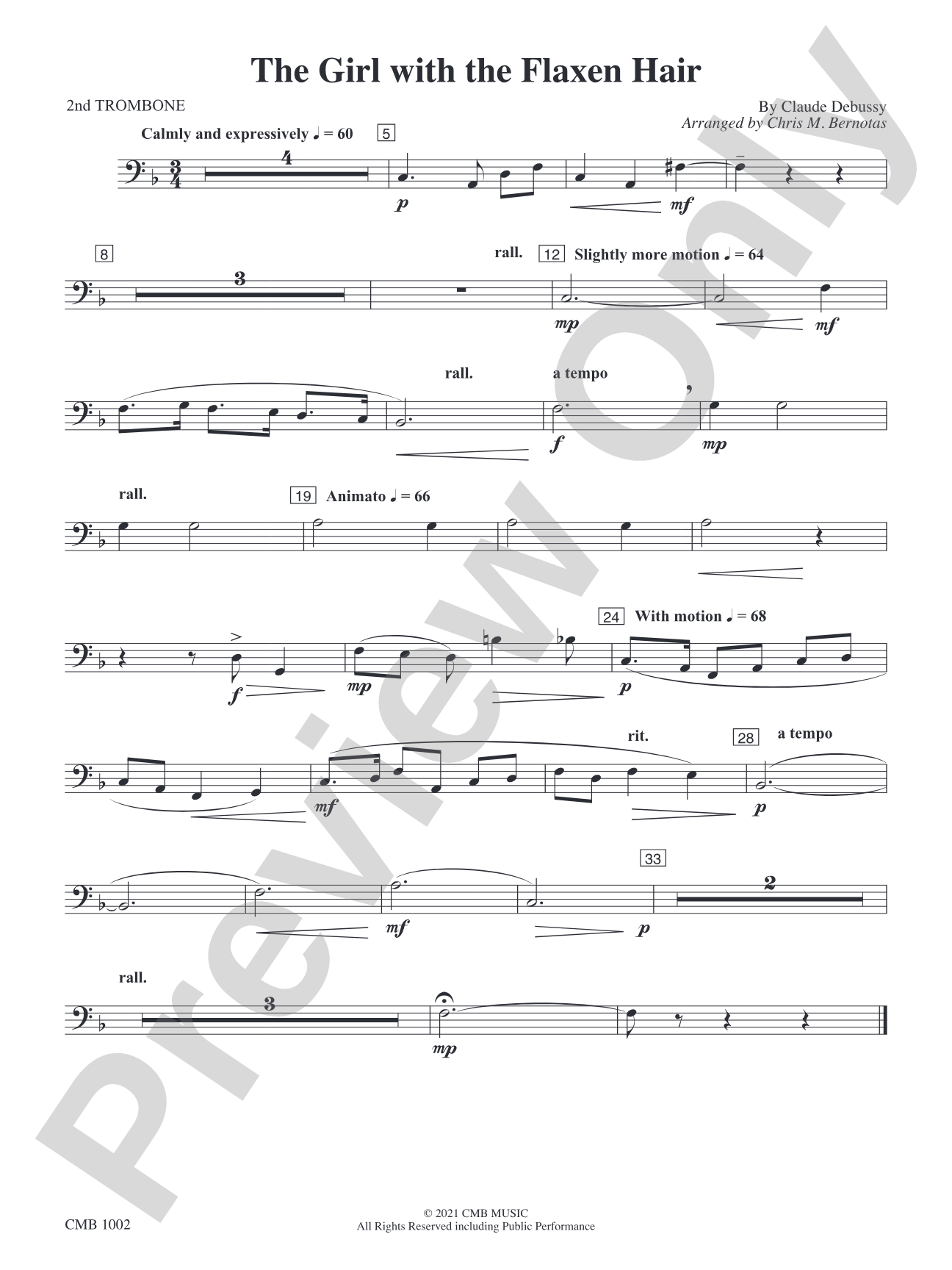
A beautiful adaptation of Debussy's wonderful piano prelude, The Girl with the Flaxen Hair by Chris M. Bernotas. This piece will provide a worthy challenge for all level bands. (2:25)
Discover MakeMusic Cloud: thousands of interactive titles your students can play along with today.
Claude Debussy (1862-1918) transformed musical language through his exploration of timbre, harmonic color, and impressionistic texture. His piano preludes, composed early in the 20th century, broke from traditional harmonic structures and introduced compositional techniques that continue to influence music education and performance practice today.
Why we love this
Bernotas has captured the shimmering, impressionistic essence of Debussy's original while making it accessible to Grade 3 concert bands. The arrangement respects the source material's delicate character while giving the full ensemble genuine musical moments to shine, creating a program piece that sounds sophisticated without requiring advanced technical facility.
What to expect
Soft light filtering through water. The piece shimmers with gentle harmonic movement and flowing melodic lines that evoke a sense of calm beauty and understated elegance. Despite the modest technical level, the arrangement carries an unmistakable sophistication that rewards careful listening and attentive ensemble playing.
Who it's for
Concert bands at the Grade 3 level looking for repertoire that challenges musicality and ensemble balance without requiring advanced technical demands. Directors seeking a transition piece into impressionistic literature or programming that elevates a concert with a recognized masterwork.
How to get the most out of it
Balance the flute and clarinet lines as they carry the primary melody; they should sing above the inner voices without forcing.
Treat the whole-note chords in the harmonic foundation as sustained colors rather than static blocks. Allow slight dynamic shaping through the longer held notes.
Maintain a flexible, singing approach to phrasing rather than a metronomic tempo. Debussy's impressionistic style benefits from subtle breathing and gentle rubato.
Use the recorded accompaniment to anchor rhythmic precision while maintaining the piece's lyrical, floating character.
How to use it
Program this as a concert centerpiece that provides contrast to more energetic or dramatic works. It works particularly well in a spring concert or as a bridge between contemporary and classical repertoire, offering audiences a recognizable entry point into early modern compositional thinking.
Skills your students will build
Sustaining warm, connected phrasing across entire phrases
Balance and blend across mixed woodwind textures
Control of dynamic shaping within sustained chords
Sensitivity to impressionistic harmonic color and timbre
Flexibility with tempo and rubato in a non-metrical context
You May Also Like
Scan to Complete Your Purchase
Use your phone's camera to scan the code below
You'll log in on your phone and the order will be added to your account