The Gift To Sing Sheet Music Preview

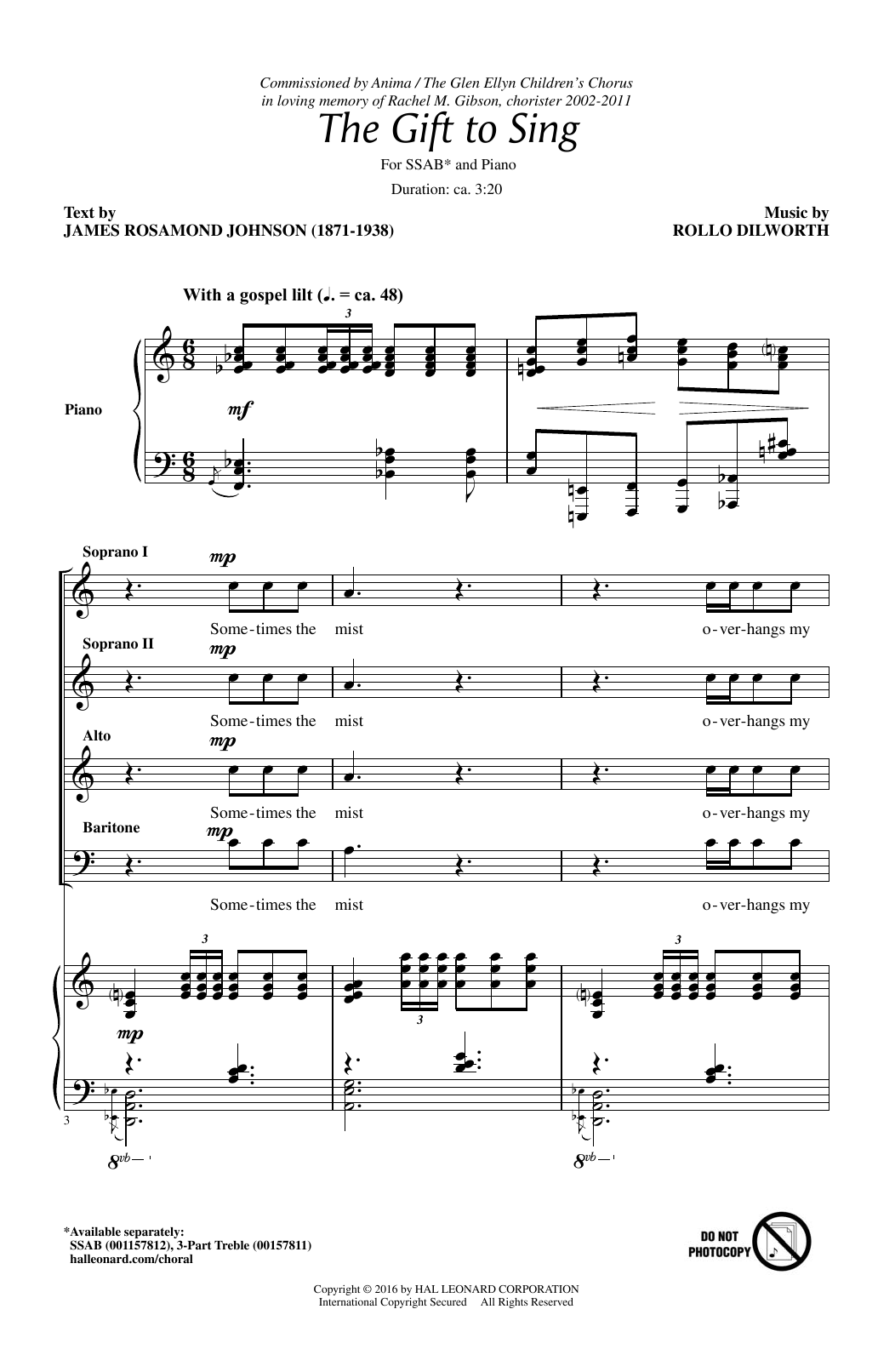
The Gift To Sing: SATB Choral Octavo

By Rollo Dilworth / As performed by James Rosamond Johnson

Item: 35-DS00344457

Digital Download
$2.99
Description

The Gift To Sing: SATB Choral Octavo isn't in MakeMusic Cloud just yet...but it could be. Let us know you'd like to see it, and you'll help shape what comes next. In the meantime, start a free trial and dive into thousands of interactive titles your students can play along with today.

Sample Audio
No sample audio found.
Sample Video
Additional Details
Publisher: Hal Leonard
Page Count: 11
SKU: 35-DS00344457

More about this title

About the Composer: Rollo Dilworth

Rollo Dilworth is a composer and arranger whose work sits at the intersection of classical choral writing and African American musical traditions. His arrangements and compositions have become staples in American choirs, known for their rhythmic vitality, accessible voicing, and deep respect for the spirituals and gospel music that inform his style.

Why we love this

Dilworth's treatment of this text balances accessibility with genuine musicality. The piece sits comfortably for mixed voices while delivering the emotional weight and rhythmic character that keep singers engaged and audiences moved.

What to expect

Warm and affirming. The piece radiates gratitude and celebration, built on the harmonic language and rhythmic language of the gospel tradition. Singers find themselves buoyed by the text and the music working in concert, creating a performance that feels both joyful and sincere.

Who it's for

Any SATB choir looking for a piece with authentic gospel roots and straightforward but expressive voicing. Works equally well for concert settings, worship contexts, and community ensembles seeking repertoire that engages singers and resonates with diverse audiences.

How to get the most out of it

  • Let the text drive your interpretation. The message of gratitude and celebration should shape tempo choices and dynamic contours; avoid a mechanical approach to the rhythms.
  • Attend to the independence of the four parts, especially in sections where lines move in different rhythmic patterns. Clean releases and precise entrances clarify the harmony.
  • Encourage singers to feel the pulse rather than count mechanically. Gospel music lives in the space between strict time and expressive flexibility.
  • Balance the soprano line without letting it overwhelm. This piece works when all four voices carry equal weight in the conversation.

How to use it

This fits naturally into programs exploring American choral traditions or celebrations of cultural heritage. It also works as a powerful closing number when you want to send audiences out uplifted, or as a bridge between classical repertoire and spirituals in a varied concert.

Skills your students will build

  • Gospel music phrasing and rhythmic inflection
  • Balancing independence and blend across four parts
  • Text expression in the context of African American musical traditions
  • Sustaining ensemble sound while maintaining individual vocal clarity

You May Also Like