The Ghost of John: Beginning Cello Sheet Music Preview

The Ghost of John: Beginning Cello

Arr. Susan C. Brown

Grade: 2

Item: 00-PC-0001852_BVC

Digital Download
$5.99
Description
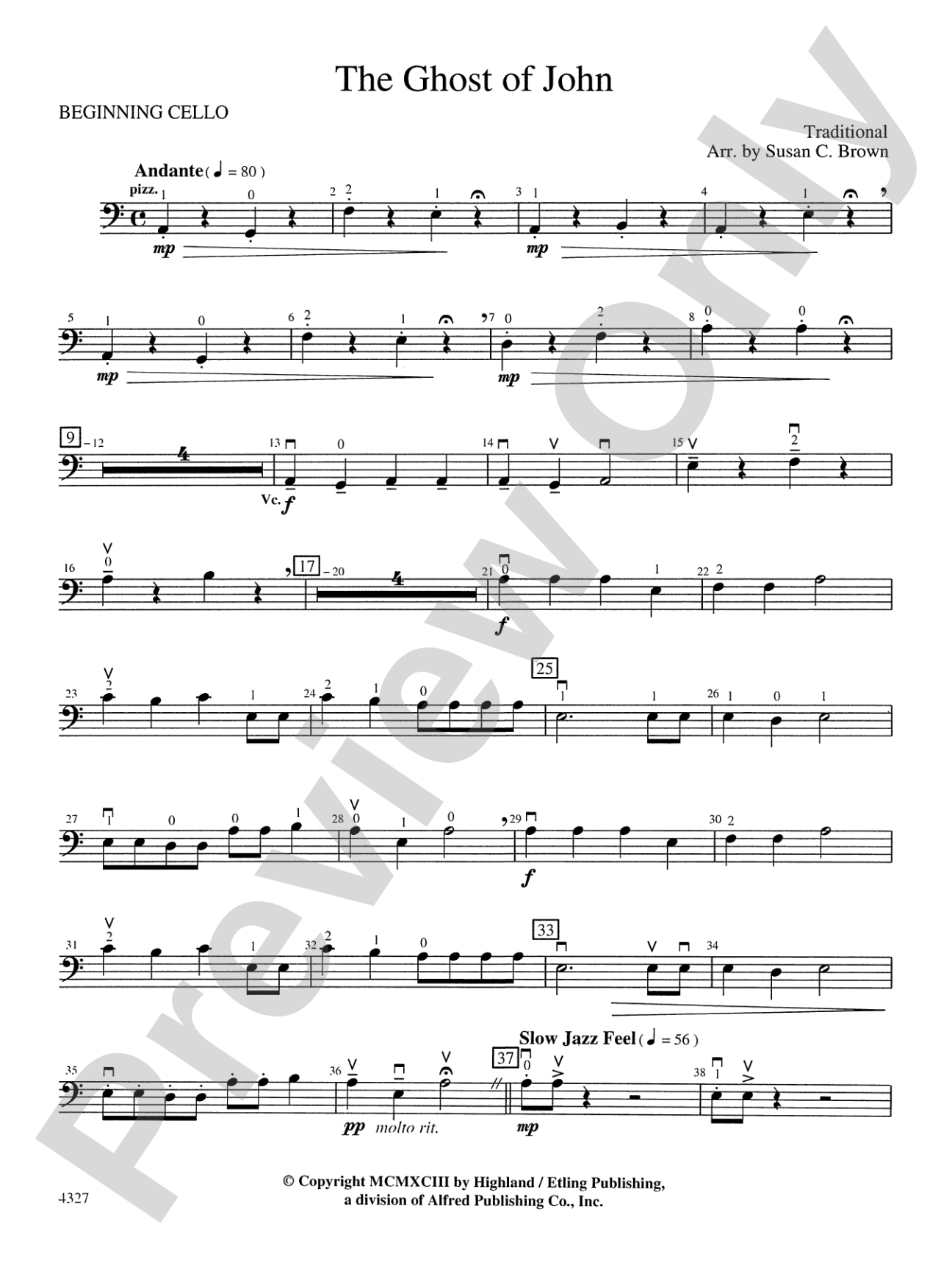
This excellent arrangement by Susan Brown is written in theme and variations format. It includes "warm-up" exercises and beginner string parts (also included in the score). Piano and percussion parts enhance the piece greatly, but are not essential. Ultra-flexible scoring makes this piece a great combined festival number. The special effects lend vivid programmatic impressions which keep your group alert and entertained while they learn about different styles, meters, bowings and keys (G and D). Fun for all! This title is available in MakeMusic Cloud.

Don't just read it, hear it, play along with it, and watch your students grow with it. In MakeMusic Cloud, The Ghost of John: Beginning Cello comes alive with professional accompaniment, adjustable tempo, and built-in practice tools that turn solo practice into real progress.

Sample Audio
0:00
0:00
Sample Video
Additional Details
Series: Highland/Etling String Orchestra
Publisher: Alfred Music
Page Count: 192
SKU: 00-PC-0001852_BVC

More about this title

Why we love this

Brown's theme and variations format keeps young players engaged across multiple character sections without requiring advanced technical facility. The built-in warm-up exercises and flexible scoring mean you can perform this at full strength or adapt it on the fly, making it genuinely useful for combined festivals where instrumentation varies week to week.

What to expect

A journey through contrasting moods and instrumental colors, with each variation offering a fresh perspective on a familiar melody. The special effects create vivid imagery that draws young players into the music's character, while the structural clarity keeps everything grounded and approachable.

Who it's for

String orchestras at the Grade 2 level who thrive on repertoire that teaches technique through musical context rather than in isolation. Directors preparing groups for festival performance will find the flexible instrumentation particularly valuable when putting together ensembles from multiple schools or managing inconsistent roster sizes.

How to get the most out of it

  • Work the warm-up exercises as a standalone rehearsal tool during the first weeks of learning the piece; they address the specific bowings and shifting demands that appear later in the variations.
  • Assign the special effects (pizzicato, col legno, harmonics, or other programmatic techniques) to different sections and rotate them across rehearsals so every player experiences the full range of the arrangement.
  • Balance the piano and percussion parts during full run-throughs; they add textural depth, but dial them back if your accompanists are still finding their footing so the string lines stay audible.

How to use it

This works beautifully as a closing number on a concert where you want to showcase your ensemble's range and flexibility without overextending your rehearsal time. It's also an ideal choice for collaborative festival performances, where the adaptive scoring means you can go on stage with confidence regardless of last-minute roster changes.

Skills your students will build

  • Playing in keys of G and D with secure intonation
  • Executing varied bowings and articulations (including pizzicato and col legno)
  • Reading and performing in mixed meters
  • Responding to conductor cues in theme and variations form
  • Developing dynamic control and character work across contrasting sections

You May Also Like