The Gettysburg Address: Narrator with Music Sheet Music Preview

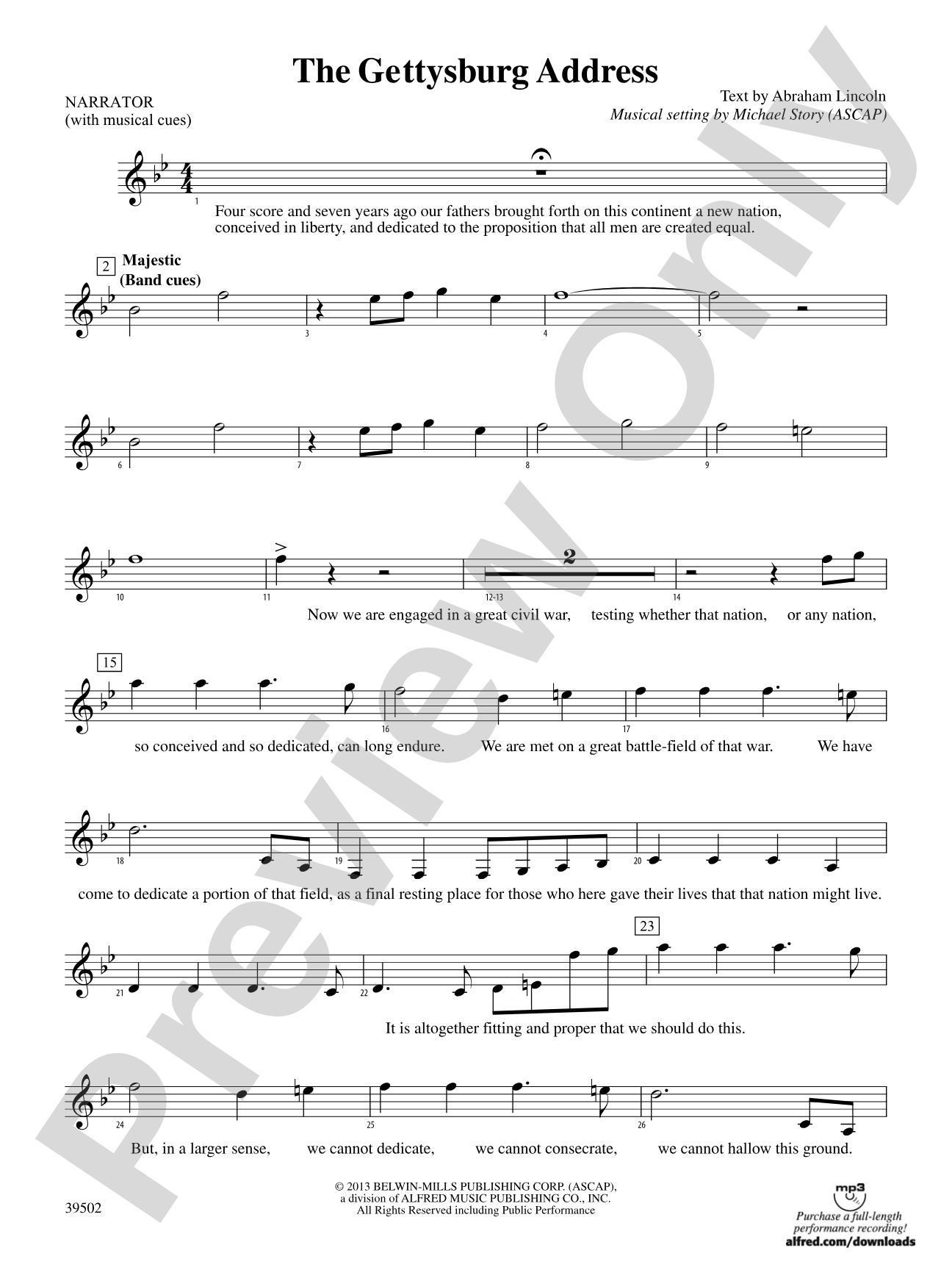
The Gettysburg Address: Narrator with Music

Text by Abraham Lincoln, music by Michael Story

Grade: 1 (Very Easy)

Item: 00-PC-0015820_NARR-M

Digital Download
$3.00
Description
To be performed with or without a narrator, this work contains musical fragments from three civil war songs, including the "Battle Cry of Freedom," "Dixie," and "Battle Hymn of the Republic." Scored for beginners, the use of the narration will certainly enhance this patriotic setting. (3:00)

Don't just read it, hear it, play along with it, and watch your students grow with it. In MakeMusic Cloud, The Gettysburg Address: Narrator with Music comes alive with professional accompaniment, adjustable tempo, and built-in practice tools that turn solo practice into real progress.

Sample Audio
0:00
0:00
Sample Video
Additional Details
Series: Belwin Beginning Band
Publisher: Alfred Music
Page Count: 144
SKU: 00-PC-0015820_NARR-M

More about this title

About the Composer: Abraham Lincoln

Abraham Lincoln (1809-1865) served as the 16th President of the United States and led the nation through the Civil War. While Lincoln is primarily remembered as a statesman and orator, his words have inspired countless musical adaptations and artistic interpretations. The Gettysburg Address, delivered in 1863, remains one of the most significant speeches in American history and continues to resonate as a foundation for patriotic and educational music.

Michael Story is a prolific composer and arranger known for creating accessible concert band repertoire for beginning and intermediate ensembles. His arrangements and original compositions are widely performed in schools across the United States and have become staples in beginning band curricula.

Why we love this

This piece gives beginning band students a genuine connection to American history while they're still building foundational skills. The integration of three recognizable Civil War era melodies creates natural musical anchors, and the optional narrator transforms the concert into a meaningful civic presentation that resonates with audiences of all ages.

What to expect

The piece unfolds like a musical meditation on American resolve and unity, weaving together familiar melodies that evoke the era without requiring complex harmonies or advanced technique. The addition of a narrator transforms the instrumental score into something larger: a testament set to music that speaks directly to young musicians about their nation's history.

Who it's for

Beginning concert bands seeking accessible repertoire with historical substance and patriotic relevance. This arrangement works well for ensembles preparing programs for Independence Day, Veterans Day, or other civic occasions where meaningful musical content matches limited technical demands.

How to get the most out of it

  • Coordinate the narrator's pacing with the conductor before the first rehearsal; mark cue points in the score where speech aligns with instrumental entrances and transitions.
  • Balance the band's sound to support rather than overpower the spoken text, especially during passages where narration and music occur simultaneously.
  • Rehearse the familiar melodies separately so students recognize them, then work on transitions between the three Civil War songs to maintain musical continuity.
  • Use the optional nature of narration strategically: perform without a narrator for pep band or summer concert settings, and with narration for more formal patriotic programs.

How to use it

This is ideal for summer concerts, patriotic holiday programs, or community events celebrating American history. Consider pairing it with other Grade 1 Belwin Beginning Band selections to build a thematic program, or feature it as a standalone concert opener that immediately establishes the evening's tone and purpose.

Skills your students will build

  • Sustained tone production across musical phrases
  • Ensemble balance and blend when multiple melodies are voiced simultaneously
  • Listening and responding to conductor cues during narrator accompaniment
  • Recognition and performance of historically significant American melodies
  • Attention to dynamic control in patriotic contexts

You May Also Like