The Gentle Aire: 2nd B-flat Clarinet Sheet Music Preview

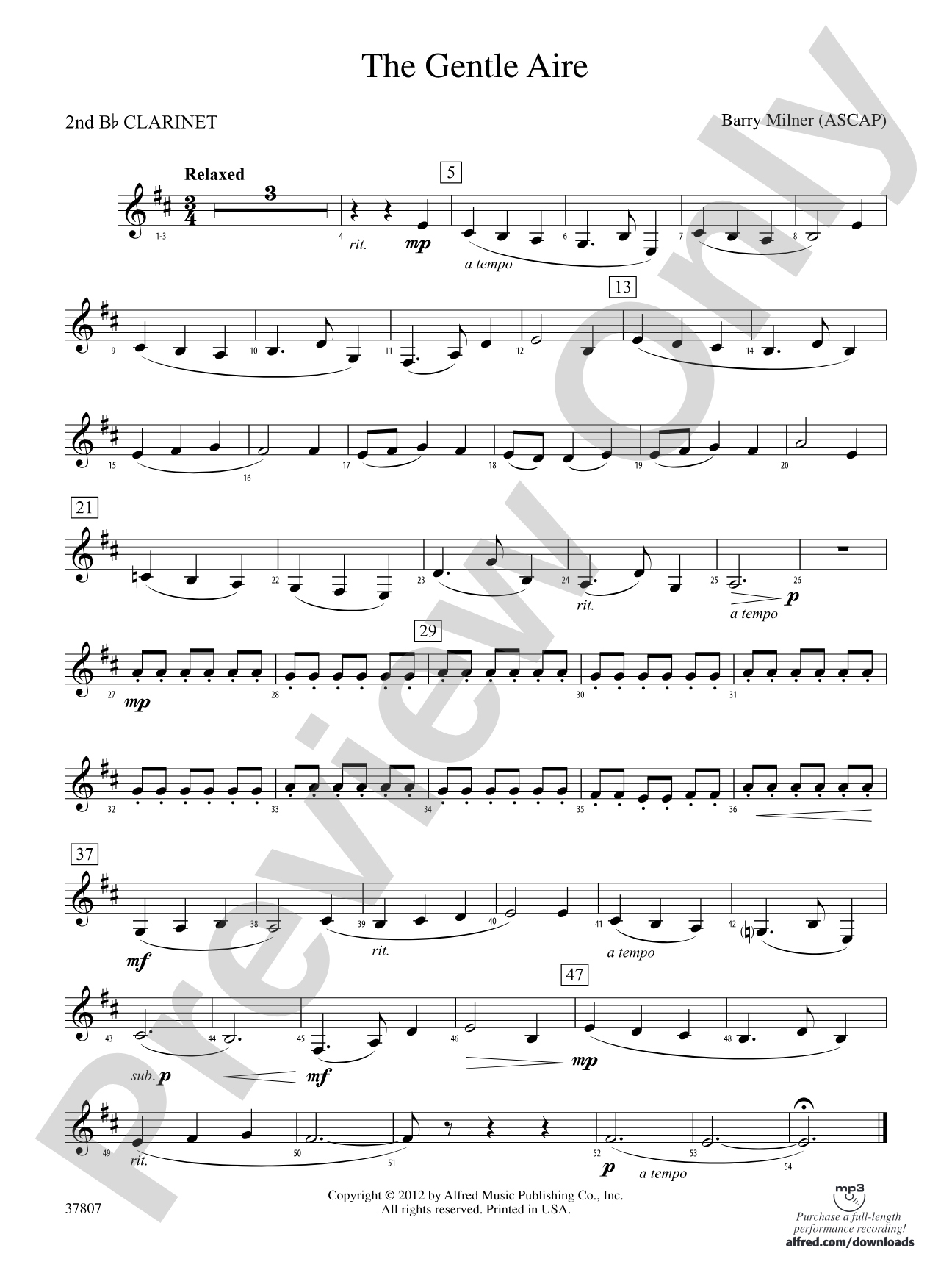
The Gentle Aire: 2nd B-flat Clarinet

By Barry Milner

Grade: 1.5 (Easy)

Item: 00-PC-0015338_C2

Digital Download
$3.00
Description
The Aire River in northern England is typically known for its picturesque settings. Although it runs through several major cities, a majority of the Aire winds its way though rolling hills and small towns, and is known as a tourist attraction for many villages in England. The gentle, calm, and modal nature of the melody in this charming piece is meant to evoke imagery of the Aire River flowing though country sides of Yorkshire. (2:00)

Don't just read it, hear it, play along with it, and watch your students grow with it. In MakeMusic Cloud, The Gentle Aire: 2nd B-flat Clarinet comes alive with professional accompaniment, adjustable tempo, and built-in practice tools that turn solo practice into real progress.

Sample Audio
0:00
0:00
Sample Video
Additional Details
Series: Alfred Debut Series
Publisher: Alfred Music
Page Count: 116
SKU: 00-PC-0015338_C2

More about this title

About the Composer: Barry Milner

Barry Milner

Barry Milner composes for concert band, orchestra, and film, with a catalog that spans educational ensembles and advanced groups alike. His works appear regularly on state festival and contest lists, and his music has been reviewed in The Instrumentalist, School Band and Orchestra Magazine, and other professional publications. He has taught in public schools while maintaining an active freelance composing practice.

Milner draws inspiration from the natural world, from national parks to the landscapes near his home in Arkansas. His compositional interests include both concert works and film scoring, and he continues developing pieces for orchestra and extended ensemble projects. More information about his music is available at www.barrymilner.com.

Why we love this

This piece delivers genuine musicality at a Grade 1.5 level without sacrificing artistry. The modal melody and peaceful character give students something contemplative and genuinely beautiful to perform, rather than just technically accessible; they'll feel like musicians, not like they're playing an exercise. For concert programming, it offers a refreshing change of pace that audiences respond to immediately.

What to expect

Serene and contemplative, with the unhurried quality of water moving through countryside. The modal harmony creates a settled, almost timeless feel, while the flowing melody suggests movement without urgency. Students and audiences alike will recognize the piece as earnestly artistic rather than merely utilitarian.

Who it's for

Beginning and developing concert bands looking for genuinely musical repertoire at accessible technical levels. This works well for programs working to build phrasing and ensemble balance skills without wrestling with extreme ranges or rapid passage work.

How to get the most out of it

  • Shape the modal melody with gentle dynamic contours rather than playing it straight; let it breathe as the Aire itself would, with slight swells at natural phrase points.
  • Balance the parts so accompaniment figures support without overwhelming the primary line; this transparent texture rewards careful attention to blend.
  • Use the two-minute duration strategically in rehearsal: record sections and listen back to catch balance issues that may not be obvious in real time.
  • Establish a steady, unhurried tempo that allows students to hear the modal quality without it feeling static or dragging.

How to use it

Program this as an opening or closing number at a spring concert to set a reflective tone. It also serves well on festival or contest programs where a single artistic statement matters more than technical flash; the piece competes effectively on character and ensemble maturity rather than difficulty.

Skills your students will build

  • Phrasing and dynamic shaping in modal melodies
  • Balance and blend in transparent textures
  • Sustained ensemble intonation
  • Listening for harmonic color and voice independence
  • Expressive interpretation at accessible technical levels

You May Also Like