The Gardener Sheet Music Preview

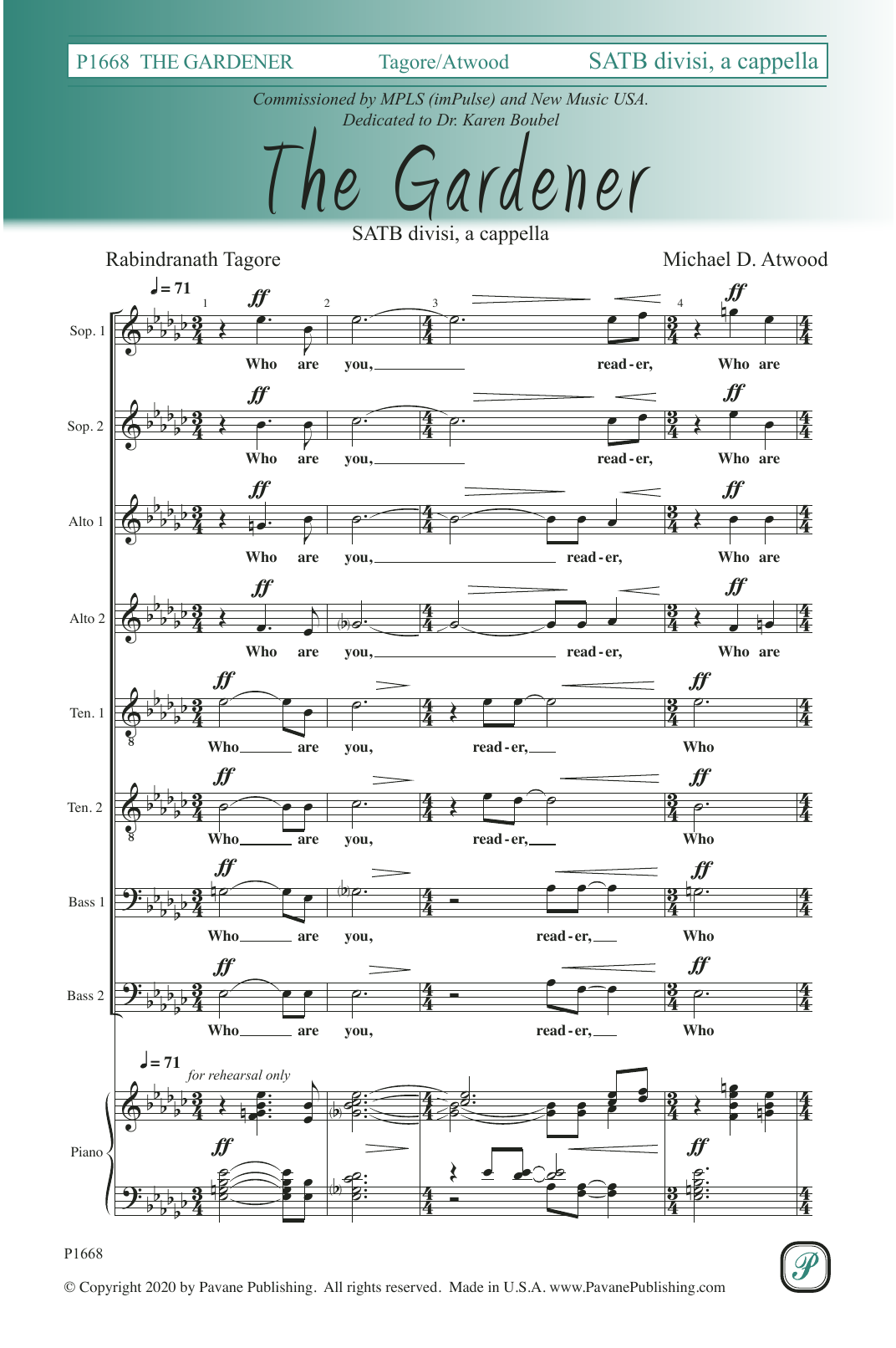
The Gardener: SATB Choral Octavo

By Rabindranath Tagore and Michael D. Atwood / By Michael D. Atwood / By Rabindranath Tagore

Item: 35-DS01104019

Digital Download
$3.60
Description

The Gardener: SATB Choral Octavo isn't in MakeMusic Cloud just yet...but it could be. Let us know you'd like to see it, and you'll help shape what comes next. In the meantime, start a free trial and dive into thousands of interactive titles your students can play along with today.

Sample Audio
No sample audio found.
Sample Video
Additional Details
Publisher: Hal Leonard
Page Count: 16
SKU: 35-DS01104019

More about this title

About the Composer: Rabindranath Tagore and Michael D. Atwood

Rabindranath Tagore (1861-1941) was a Bengali poet, philosopher, and composer whose work shaped modern Indian literature and music. His poetry explored themes of nature, spirituality, and human connection with lyrical intensity that translates powerfully to vocal music. Michael D. Atwood has created a choral setting that honors Tagore's contemplative voice while making his vision accessible to contemporary ensembles.

Why we love this

Atwood's setting captures the meditative quality of Tagore's poetry without sacrificing musical interest. The piece offers SATB choirs a chance to explore text-driven writing that rewards attention to language and phrase shaping, making it ideal for singers ready to move beyond purely technical challenges.

What to expect

The piece unfolds with quiet thoughtfulness, inviting singers and listeners into reflection. There's a gentle inevitability to its arc, much like watching something grow in a garden over time.

Who it's for

This work suits intermediate to advanced SATB choirs comfortable with text interpretation and four-part independence. It works equally well in concert settings and educational contexts where choirs are developing their interpretive skills.

How to get the most out of it

  • Approach the text as poetry first. Understand what Tagore is expressing about the gardener's work and relationship to growth, then let that understanding shape your phrasing and dynamic choices.
  • Balance clarity with lyricism in the soprano line. These voices carry the primary melodic material and should be heard, but resist the urge to make them sound separate from the ensemble.
  • Pay particular attention to vowel consistency across the four parts, especially during moments where voices move in parallel motion. Unified vowel shapes create blend that amplifies the piece's contemplative character.

How to use it

Pair this with other nature-inspired choral works for a thematic concert, or use it as a centerpiece for a program exploring poetry in music. The 16-page score makes it substantial enough to anchor a set while remaining accessible for groups building their classical choral repertoire.

Skills your students will build

  • Text interpretation and expressive singing
  • Blend and balance in SATB writing
  • Phrasing across longer lyrical lines
  • Understanding poetic meter and its relationship to musical rhythm

You May Also Like