

The Gallery: SATB Choral Octavo
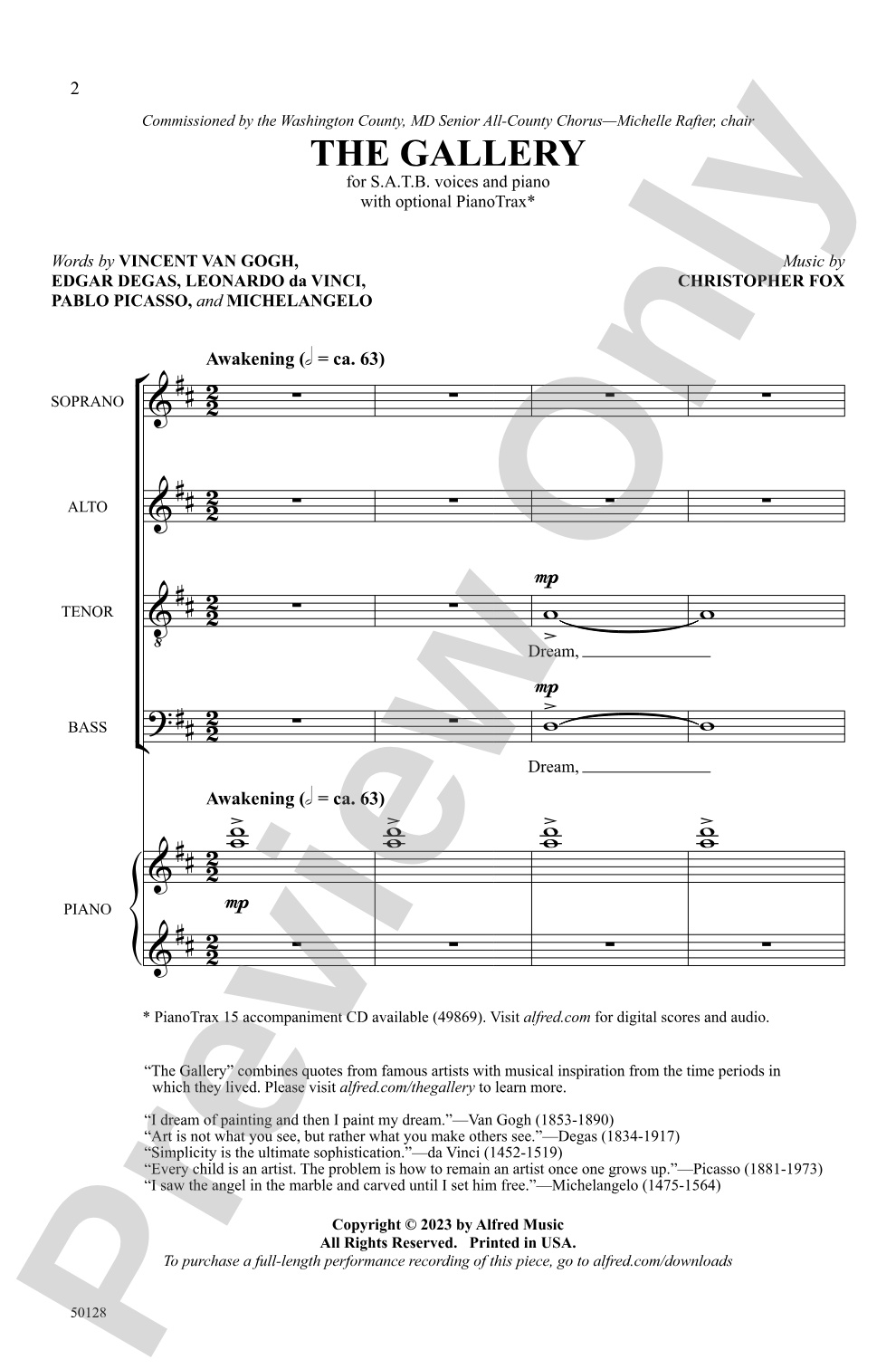
Words by Vincent van Gogh, Edgar Degas, Leonardo da Vinci, Pablo Picasso, and Michelangelo, music by Christopher Fox
Item: 00-PO-0007006
$2.20
Minimum order quantity: 20 copies
Pickup currently not available
Description
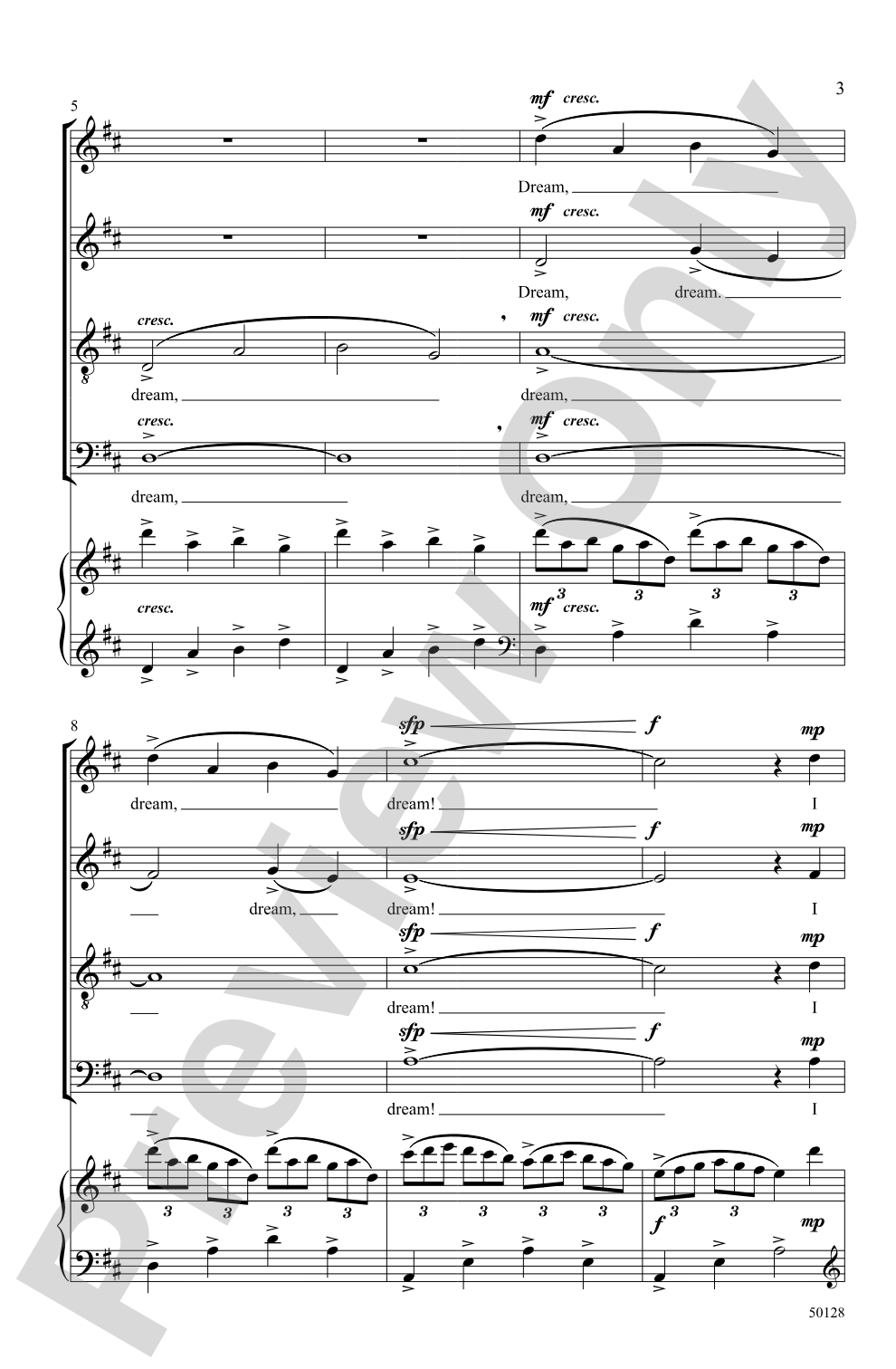
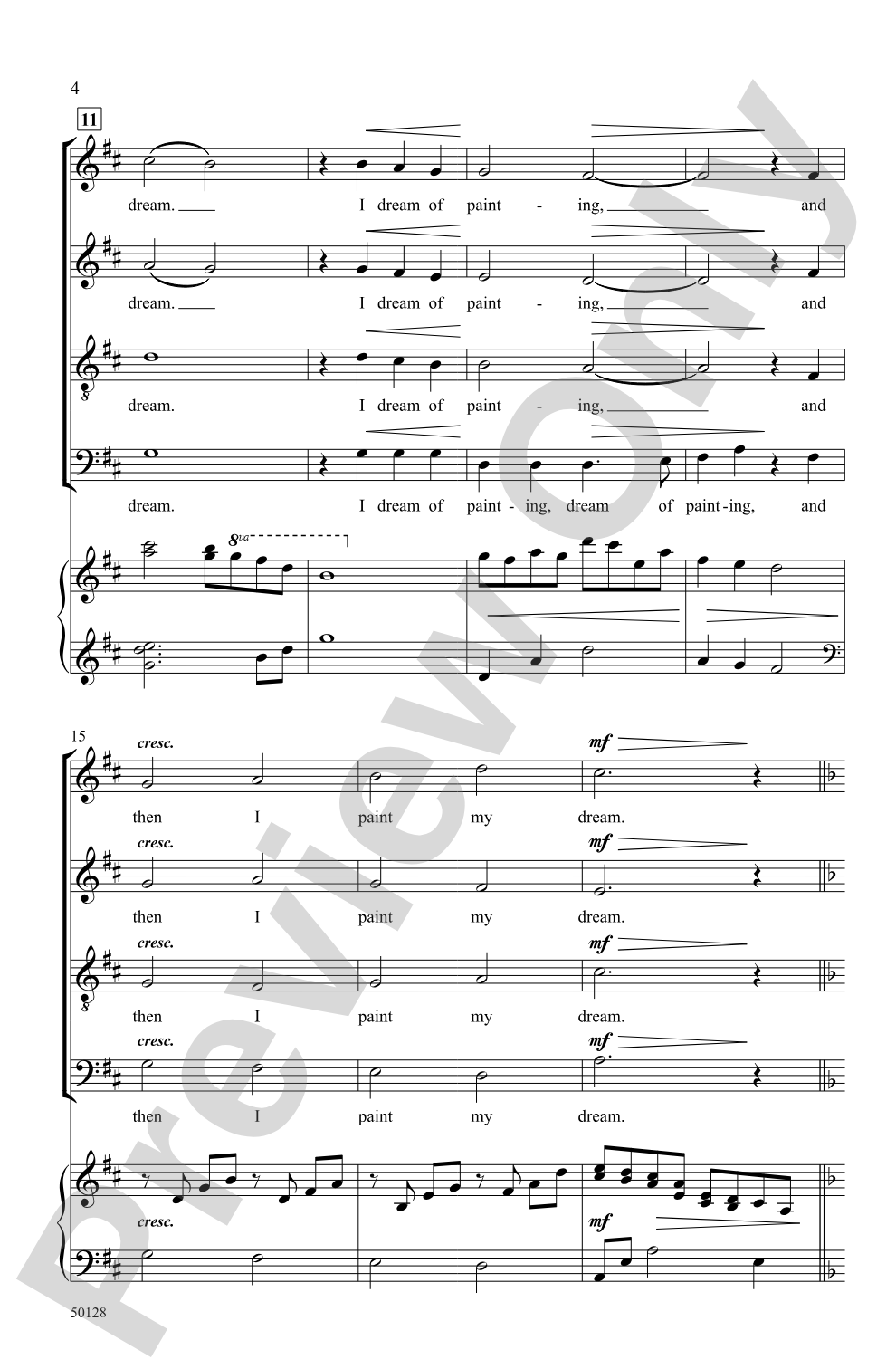
Transform your choral stage into a canvas for imagination with this innovative piece for concert or festival. The words of Vincent van Gogh, Edgar Degas, Leonardo da Vinci, Pablo Picasso, and Michelangelo come together to form an inspiring collective work. The ever-changing palette of musical colors reflects the time periods in which each of these artists lived. Discover more at alfred.com/thegallery.


The Gallery: SATB Choral Octavo isn't in MakeMusic Cloud just yet...but it could be. Let us know you'd like to see it, and you'll help shape what comes next. In the meantime, start a free trial and dive into thousands of interactive titles your students can play along with today.
Request This Title
Tell us you want it.
Start Your Free Trial
Explore everything that's ready to play right now.
Sample Audio
1
Audio File
--:--
0:00
0:00
Sample Video
1 / 2
Additional Details
Series:
Alfred Choral Designs
Publisher:
Alfred Music
Page Count:
16
SKU:
00-PO-0007006
More about this title
Why we love this
The Gallery does something rare: it weaves five distinct artistic voices into a unified choral statement without reducing any of them. The shifting musical palette genuinely mirrors the historical periods of these masters, giving your singers textural variety to dig into while they navigate what amounts to a moving meditation on creativity itself.
What to expect
Stepping through a museum where the walls themselves change as you move from gallery to gallery. The music honors each artist's era while building toward something cohesive and introspective, creating moments of brightness, shadow, and quiet revelation as the voices move through centuries of human creative vision.
Who it's for
Choirs preparing for concert or festival performance who want repertoire with literary depth and artistic ambition. This piece works equally well for high school, college, or community choirs seeking something beyond conventional pop or folk-based octavos.
How to get the most out of it
- Study the text sources independently before rehearsal. Having singers understand which artist wrote each section deepens their interpretive choices and sharpens diction around unfamiliar language.
- Balance clarity of the literary quotes against the choral harmonies. The words carry meaning, so mark cutoffs and releases carefully to let language land without muddying the musical line.
- Use the recorded accompaniment strategically in rehearsal to establish harmonic context, then gradually move toward independence so the choir owns the sound transitions.
- Pay attention to the color changes between sections. Each artist's era brings different harmonic language, so highlight these shifts through tempo, dynamics, and vowel shaping.
How to use it
Position this as a centerpiece in a concert built around art, literature, or interdisciplinary themes. It pairs thoughtfully with other works that value text and imagery, or it can stand alone as an ambitious single work that frames an entire program.
Skills your students will build
- Transitioning between contrasting harmonic languages and stylistic periods
- Shaping and sustaining long vocal lines across changing accompaniment textures
- Interpreting poetic text from multiple historical sources with intention and clarity
- Balancing ensemble blend while maintaining individual part security across 16 pages