
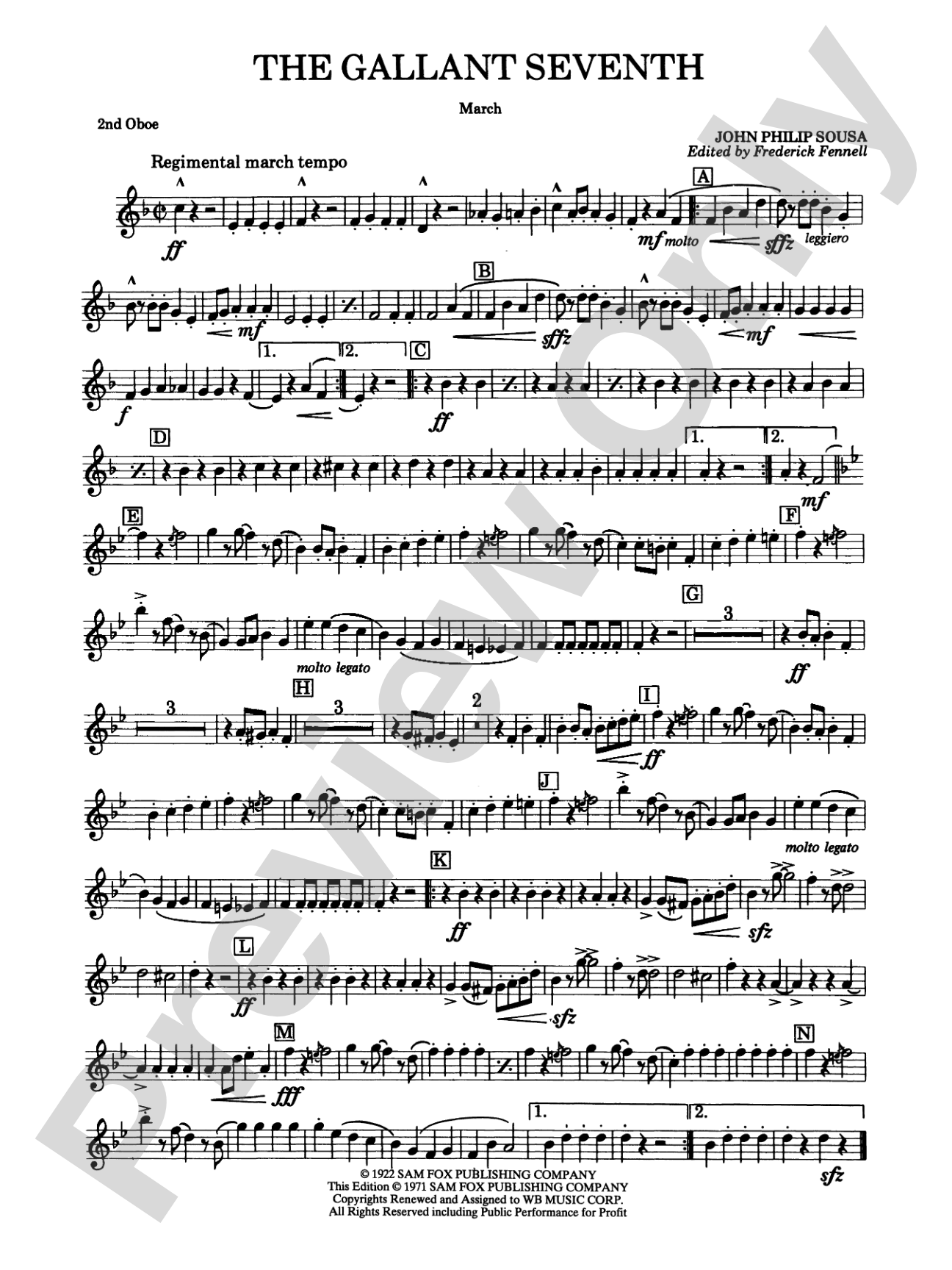

The Gallant Seventh: 2nd Oboe
By John Philip Sousa / ed. Frederick Fennell
Grade: 4 (Medium)
Item: 00-PC-0002154_O2
$3.00
Pickup currently not available
Description
Written for the 7th Regiment of the 107th Infantry of the New York National Guard in 1922 and composed late in his career, this is considered one of Sousa's best marches. The revered Frederick Fennell arrangement is a standard in the literature. This arrangement now includes freshly engraved parts and a full score! (3:13) This title is available in MakeMusic Cloud.


Don't just read it, hear it, play along with it, and watch your students grow with it. In MakeMusic Cloud, The Gallant Seventh: 2nd Oboe comes alive with professional accompaniment, adjustable tempo, and built-in practice tools that turn solo practice into real progress.
Open in the Player
Jump straight in and assign it today.
Start Your Free Trial
Open this title and explore the full library in minutes.
Sample Audio
1
Audio File
--:--
0:00
0:00
Sample Video
No sample videos found.
Additional Details
Series:
Fennell Edition Marches for Band
Publisher:
Alfred Music
Page Count:
176
SKU:
00-PC-0002154_O2
More about this title
About the Composer: John Philip Sousa
John Philip Sousa (1854–1932) shaped American concert band music like no other composer. His marches defined a genre and gave the concert band a permanent place in American musical life, moving it from military function to genuine artistic expression. Sousa's gift for memorable melody, clear harmonic progressions, and masterful orchestration made his works instantly appealing to performers and audiences alike. He composed 136 marches over his lifetime, many of which remain cornerstones of the band repertoire today.
Sousa's later marches, including The Gallant Seventh, display the compositional maturity of a composer at the height of his powers. Written in 1922 for a specific regiment, this work showcases the sophistication and polish that made Sousa's music enduring rather than merely popular.
Why we love this
This is Sousa at his most accomplished, and the Fennell arrangement honors every detail of the original voice leading while making the piece accessible to Grade 4 ensembles. Programming a freshly engraved Fennell edition score and parts means your musicians get clarity on the page that matches the clarity of Sousa's musical thinking. The march sits perfectly in the contest and festival repertoire: substantial enough to feel like a real achievement, but not so technically demanding that ensemble balance suffers.
What to expect
The Gallant Seventh radiates confidence and polish. Its melodies are direct and memorable, yet never simple; the harmonies shift with elegant inevitability, and the orchestration sparkles with detail. The march invites performers and listeners alike into a world of order, dignity, and celebratory energy that feels both deeply American and genuinely musical.
Who it's for
Bands at the Grade 4 level with solid fundamentals in blend, intonation, and rhythmic precision will find this march rewarding and achievable. Directors preparing for contests, festivals, or concert programs benefit from having a flagship work that engages audiences and challenges students meaningfully without requiring advanced technical facility.
How to get the most out of it
- Establish a clear, purposeful tempo that allows the countermelodies to speak without rushing. The secondary sections gain their character from rhythmic precision, not speed.
- Balance the clarinet choir against the cornet section during the trio; Sousa's orchestration uses both groups equally, and letting one dominate flattens the harmonic richness.
- Shape the dynamic curve across full sections rather than measuring it measure by measure. This march rewards conducting with long phrasing lines that build momentum naturally.
- Listen to a professional recording with this score in hand. The Fennell tradition emphasizes elegant articulation and controlled dynamics that may differ from your first instinct reading the page.
How to use it
Open a concert with this march to set a high standard of musicality and energy from the first note, or place it near the program's center as a pivot point between contrasting pieces. It pairs naturally with other Sousa or Fennell-arranged works, but stands equally well as a standalone feature that reminds your audience why the American march tradition endures.
Skills your students will build
- Articulation control in fast passages (tonguing accuracy and consistency)
- Intonation tuning in harmonic cross-currents, particularly in the secondary melodies
- Dynamic shaping across full phrases rather than isolated measures
- Rhythmic precision in ensemble contexts without sacrificing musicality
- Balance and blend when multiple melodic lines occur simultaneously