The Frim Fram Sauce Sheet Music Preview

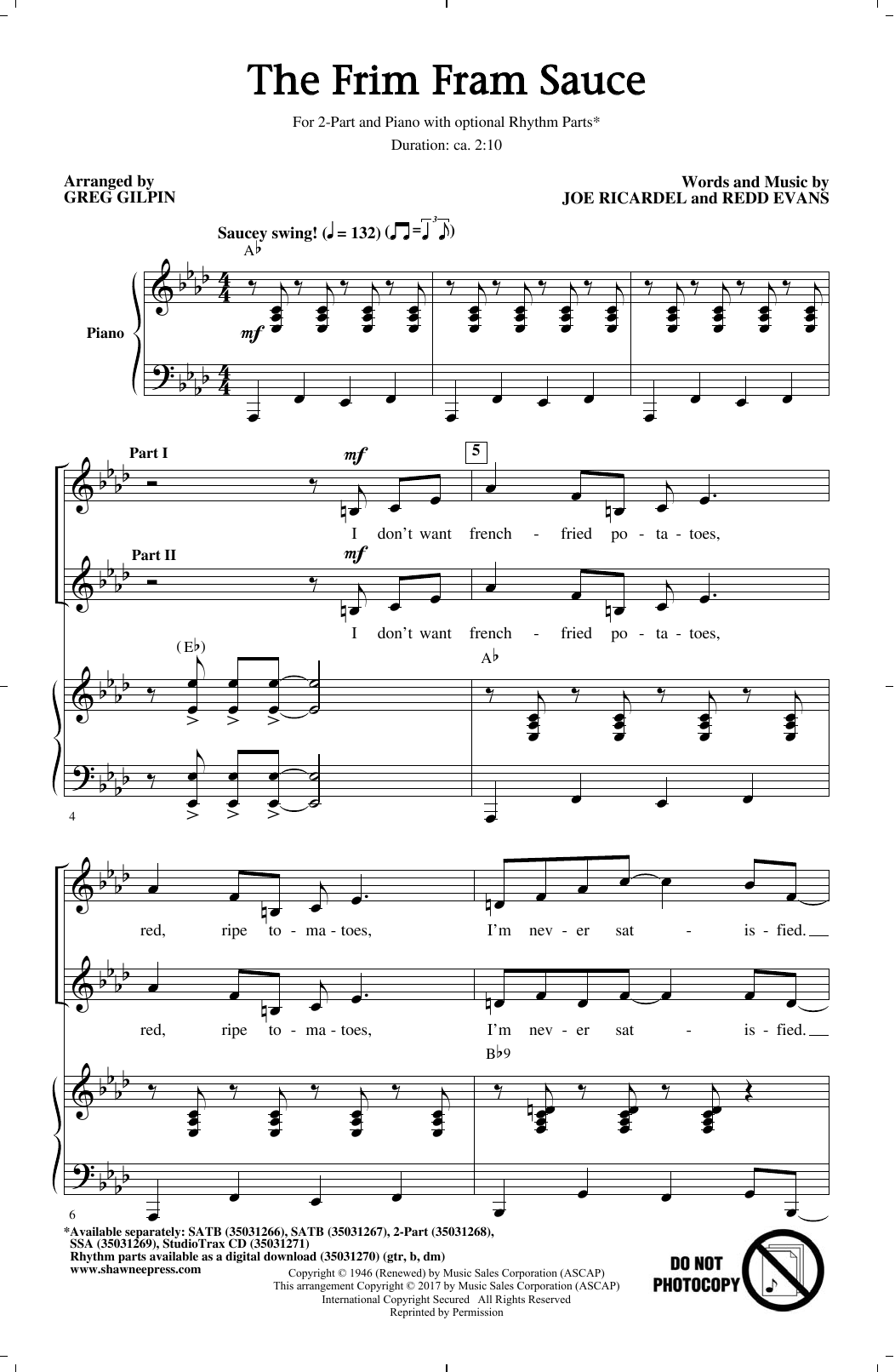
The Frim Fram Sauce: 2-Part Choral Octavo

Arranged by Greg Gilpin

Item: 35-DS00356944

Digital Download
$2.99
Description

The Frim Fram Sauce: 2-Part Choral Octavo isn't in MakeMusic Cloud just yet...but it could be. Let us know you'd like to see it, and you'll help shape what comes next. In the meantime, start a free trial and dive into thousands of interactive titles your students can play along with today.

Sample Audio
No sample audio found.
Sample Video
Additional Details
Publisher: Hal Leonard
Page Count: 7
SKU: 35-DS00356944

More about this title

About the Arranger: Greg Gilpin

Greg Gilpin

Greg Gilpin has built a multifaceted career as both a choral composer and conductor, earning ASCAP recognition for his contributions to the field. His conducting resume includes prestigious venues across North America and beyond: Carnegie Hall and Lincoln Center in New York, Ryman Auditorium in Nashville, the Sydney Opera House, Royal Festival Hall in London, and Harpa Concert Hall in Reykjavik. As Director of Educational Choral Publications for Shawnee Press, he shapes the landscape of choral repertoire available to educators.

Beyond the concert hall, Gilpin has expanded his artistic reach into film scoring and multimedia work. He composed the score for the award-winning short film "Rosie's Rescue" and collaborated with opera singer Angela Brown on a new arrangement of "What Child is This?" that premiered with the Indianapolis Symphonic Choir. Active in professional organizations including ACDA, NAfME, and SAG-AFTRA, Gilpin continues to work as a recording industry musician and producer while remaining deeply committed to teaching and composition.

Why we love this

Gilpin brings a sophisticated understanding of jazz voicing and pop sensibility to this swing standard, crafting an arrangement that sounds deceptively easy while rewarding singers with genuine musical depth. The two-part writing creates natural opportunities for blend work and intonation refinement without sacrificing the genre's playful, energetic character. You'll find your singers genuinely enjoying themselves while building real skills.

What to expect

Picture a smoky jazz club in the 1940s translated into a bright, confident choral arrangement. The piece swings with genuine style, balancing rhythmic playfulness against surprising harmonic sophistication. There's an infectious buoyancy here that pulls singers and audiences alike into its world.

Who it's for

This works beautifully for middle school through high school choirs seeking repertoire that's accessible in range and tessitura but musically substantial. It's equally at home in jazz ensembles, secular community choirs, or concert programs looking for a palate-cleansing pop standard.

How to get the most out of it

  • Establish the groove with confidence from the first measure. This arrangement lives and dies by rhythmic clarity and forward momentum, so lock the pulse early in rehearsal and return to it frequently.
  • Balance the jazz articulation against over-singing. Younger ensembles often push too hard on swing material; remind singers that lightness and precision serve the style better than volume.
  • Use the harmonic movement as a teaching tool for voice leading. Gilpin's voicing choices demonstrate excellent part-writing principles, so highlight these moments when discussing what makes the arrangement effective.
  • Shape phrases with attention to the lyrics' comedic intent. The text itself is whimsical and playful, and singers who commit to that character elevate the entire performance.

How to use it

Pair this with other mid-century standards to create a themed concert section, or use it as a bridge between classical and contemporary repertoire to demonstrate the musical legitimacy of jazz and pop idioms. It works particularly well as a closer on lighter concert programs where you want to send the audience out smiling.

Skills your students will build

  • Singing with swing articulation and jazz phrasing
  • Reading and performing syncopated rhythms accurately
  • Balancing dynamic restraint with stylistic energy in pop and jazz contexts
  • Blending voices across two parts with attention to harmonic balance
  • Connecting lyrical content to musical interpretation and character

You May Also Like