
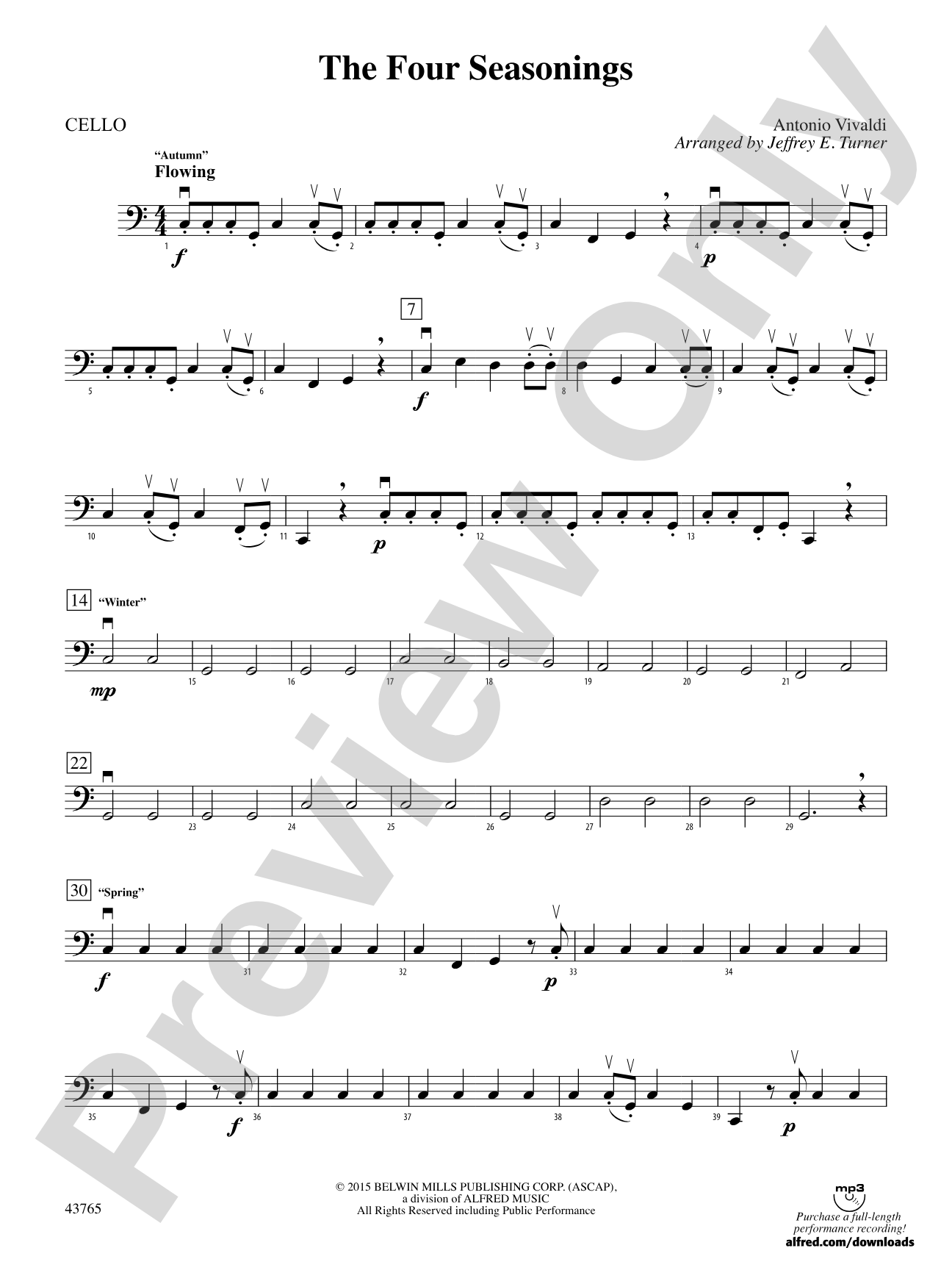

The Four Seasonings: Cello
[Based on the music of Antonio Vivaldi] By Jeffrey E. Turner
Grade: 2.5
Item: 00-PC-0016869_VC1
$5.99
Pickup currently not available
Description
This very accessible arrangement includes just enough of each movement to provide a taste of the original! Stirring the pot by the use of a common key for all four seasons and simplified rhythms create the perfect blend of "seasonings" to delight all as only Vivaldi can. (3:15)


Don't just read it, hear it, play along with it, and watch your students grow with it. In MakeMusic Cloud, The Four Seasonings: Cello comes alive with professional accompaniment, adjustable tempo, and built-in practice tools that turn solo practice into real progress.
Open in the Player
Jump straight in and assign it today.
Start Your Free Trial
Open this title and explore the full library in minutes.
Sample Audio
1
Audio File
--:--
0:00
0:00
Sample Video
No sample videos found.
Additional Details
Series:
Belwin Intermediate String Orchestra
Publisher:
Alfred Music
Page Count:
72
SKU:
00-PC-0016869_VC1
More about this title
About the Composer: Antonio Vivaldi
Antonio Vivaldi (1678-1741) was a Venetian priest and virtuoso violinist whose prolific output shaped the Baroque concerto and influenced composers across Europe. His mastery of orchestration and gift for memorable melody made his music instantly recognizable; The Four Seasons remains his most performed work and a gateway to Baroque string writing for students at every level.
Vivaldi's approach to program music—using instrumental color and rhythmic energy to evoke natural phenomena—gives teachers rich opportunities to discuss how composers translate images and stories into sound. His clear harmonic language and brilliant violin writing continue to engage young musicians nearly three centuries after his death.
Why we love this
This arrangement respects Vivaldi's essential character while making the work genuinely playable for emerging orchestras. By distilling each movement to its signature themes, simplifying the rhythmic texture, and unifying all four seasons in a single key, Jeffrey Turner preserves the work's dramatic arc and charm without overwhelming younger players. The result is a concert piece that builds student confidence and delivers the joy of Vivaldi without compromise.
What to expect
Familiar and energizing. Even if students have never heard The Four Seasons before, the melodies feel inevitable and singable; the reduced orchestration lets each player hear their own voice clearly. The unified key gives the whole performance a sense of cohesion and forward motion, transforming what could be four separate pieces into a spirited medley.
Who it's for
String orchestras in Grades 2-4 ready to tackle a masterwork but still building technical facility. This arrangement welcomes players who know melody and can manage straightforward rhythms but haven't yet mastered complex fingerings or quick position work.
How to get the most out of it
- Shape the familiar theme in each season with singing tone and clear phrasing rather than rushing the tempo; let the melody breathe even at accessible dynamic levels.
- Balance the violin lines with supportive violas and cellos so the arrangement doesn't feel thin; younger players often pull away from the middle voices.
- Mark the key relationships between sections in your parts so students hear how Turner's unification strategy actually simplifies recognition and memory.
- Attend to the transitions between seasons; a clean cut with a moment of silence will heighten the sense of shift and keep the piece moving energetically through its 3:15 duration.
How to use it
Program this early in a concert to establish energy and goodwill, or as a finale to showcase how much students can accomplish with a masterwork arrangement. It pairs well with other accessible arrangements or original works at the same grade level, and the clear sectional divisions allow for brief program notes or verbal introduction without awkward timing.
Skills your students will build
- Reading and executing simplified rhythmic figures while maintaining stylistic awareness
- Identifying thematic material across multiple key areas within a single tonal framework
- Balancing ensemble sonority in a lean orchestration where every voice matters
- Sustaining tone quality and musical intent in moderate tempos without rushing or dragging
- Understanding how arrangement techniques preserve compositional intent at accessible levels