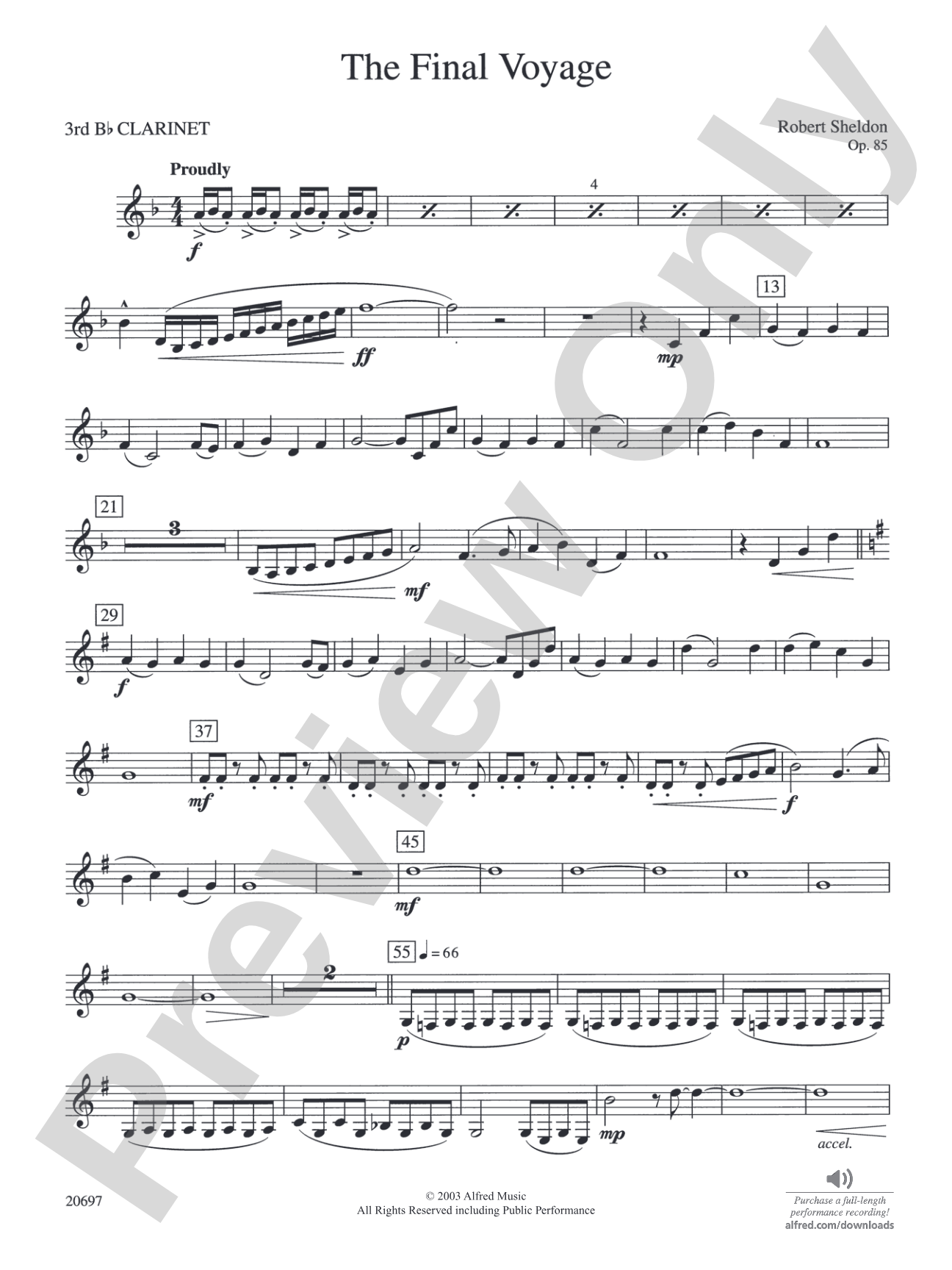
One of the most terrible shipping disasters of the nineteenth century occurred off the shores of Lake Michigan when the lumber ship Augusta rammed the luxury liner Lady Elgin during a September squall in the middle of the night. Although hundreds perished in this event, many acts of heroism took place during the treacherous rescue effort. This exciting and stirring composition is a memorial to those heroes.
Discover MakeMusic Cloud: thousands of interactive titles your students can play along with today.
Robert Sheldon's compositions are heard in concert halls, competitions, and school auditoriums across the globe, making him one of the most frequently performed wind band composers of our time. His honors include recognition from the American School Band Directors Association, Phi Beta Mu, and ASCAP, and he received a honorary doctorate from VanderCook College of Music in 2020. Beyond composing, Sheldon co-authored Sound Innovations for Concert Band and maintains an active schedule as a guest conductor for honor bands and clinician at universities and state music education conferences.
His work has been performed at Carnegie Hall, Orchestra Hall, Boston Symphony Hall, the Sydney Opera House, and the Kennedy Center, following conducting engagements throughout North America, Europe, Asia, and Australia. Sheldon accepts commissions regularly and releases numerous concert band publications each year, consistently crafting music that speaks meaningfully to both ensembles and audiences.
Why we love this
Sheldon translates a real historical tragedy into music that feels urgent and human rather than didactic. The Grade 3 writing is sophisticated in its pacing and orchestration without becoming inaccessible, allowing mid-level bands to engage with genuinely moving programmatic content. The memorial framing gives your ensemble a deeper reason to commit to the music beyond technical execution.
What to expect
The music captures both the chaos and the courage of a disaster at sea. Sheldon's orchestration alternates between turbulent, urgent passages and moments of quiet dignity, creating a soundscape that honors those lost and celebrates the rescuers who acted with valor in darkness.
Who it's for
Concert bands at the Grade 3 level seeking repertoire that combines accessibility with emotional substance. Directors programming a concert or festival event that honors heroism, resilience, or historical significance will find this piece particularly fitting, as it gives young musicians a genuine artistic reason to invest in their performance.
How to get the most out of it
Shape the narrative arc by varying dynamic intensity throughout. The disaster and rescue unfold over time, so avoid letting the climax settle into one unchanging forte; let the musical tension rise and fall as the story demands.
Balance clarity of the programmatic elements with cohesion of the ensemble sound. Individual sections carry thematic material that tells the story, but the band's overall blend remains essential to the memorial's dignity.
Coordinate the conductor's interpretation with the program notes so the audience understands the historical context. This piece rewards listeners who know what they're hearing and why.
How to use it
Program this as a centerpiece for a concert exploring historical or civic themes, or pair it with other memorial or heroic works to create a thematic set. Its Grade 3 accessibility makes it suitable for mid-season performance or a spring concert, when ensembles have developed the maturity to handle programmatic nuance.
Skills your students will build
Interpreting programmatic content and translating historical narrative into musical phrasing
Dynamic control and shaping sustained passages
Balance and blend across the full concert band texture
Tempo flexibility and understanding rubato in storytelling contexts
You May Also Like
Scan to Complete Your Purchase
Use your phone's camera to scan the code below
You'll log in on your phone and the order will be added to your account