
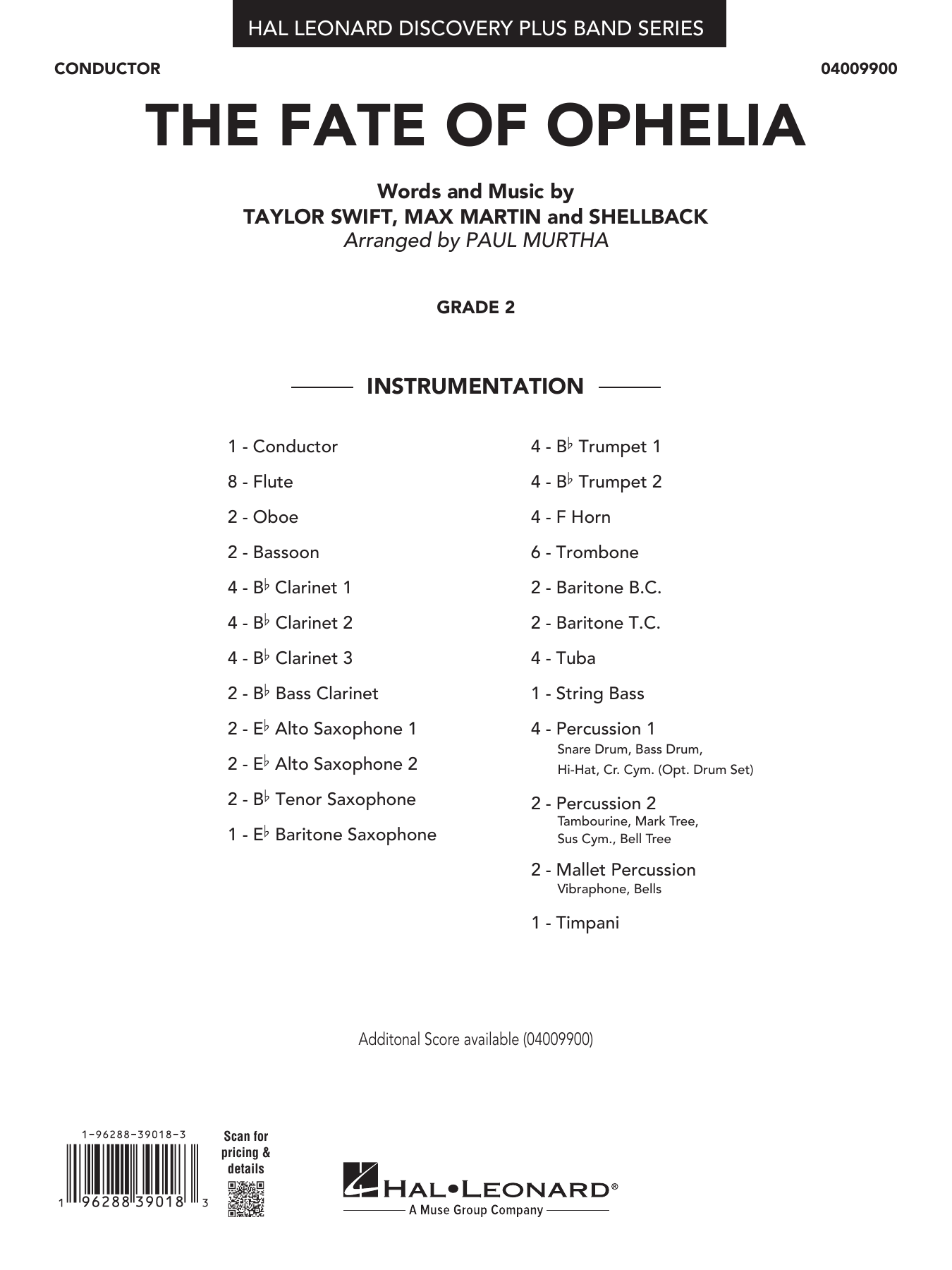

The Fate Of Ophelia (arr. Paul Murtha): Concert Band Conductor Score & Parts
As performed by Taylor Swift / Arranged by Paul Murtha
Grade: 2
Item: 35-PK01923279
$65.00
Pickup currently not available
Buy Extra Parts (Digital PDF Download)
Parts Added to Cart!
Description
Another smash hit from Taylor Swift means instant buy-in from the students and a concert favorite. This highy accessible arrangement can be put together on little rehearsal time and makes for the perfect last-minute addition.


The Fate Of Ophelia (arr. Paul Murtha): Concert Band Conductor Score & Parts isn't in MakeMusic Cloud just yet...but it could be. Let us know you'd like to see it, and you'll help shape what comes next. In the meantime, start a free trial and dive into thousands of interactive titles your students can play along with today.
Request This Title
Tell us you want it.
Start Your Free Trial
Explore everything that's ready to play right now.
Sample Audio
No sample audio found.
Sample Video
No sample videos found.
Additional Details
Publisher:
Hal Leonard
SKU:
35-PK01923279
More about this title
About the Artist: Taylor Swift
Taylor Swift has spent two decades at the forefront of popular music, moving fluidly between genres while maintaining a gift for narrative songwriting. Her influence on contemporary music culture means her catalog reaches beyond typical concert band audiences, giving educators direct entry points to engage students who might otherwise view concert music as distant from their listening lives.
Why we love this
Paul Murtha's arrangement captures what makes this song work without demanding complex rehearsal time from your ensemble. Grade 2 scoring means your full band can handle it immediately, and students recognize the material right away, which translates to motivation and energy you don't have to manufacture.
What to expect
This piece carries the emotional directness and clear melodic architecture of the original, uncluttered and dramatic without relying on technical showiness. The band sound feels intimate despite full instrumentation, letting the song's character speak through straightforward musical writing.
Who it's for
Concert bands looking to program contemporary material that connects with student performers and audiences alike. Directors seeking accessible pop arrangements that don't compromise musicality or require excessive sectional rehearsals.
How to get the most out of it
- Nail the opening sonority by balancing the low reeds and brass; this sets the tone for everything that follows and determines how clearly the melody lands when it arrives
- Maintain consistent rhythmic precision in the accompaniment figures so the lead voice can breathe expressively without rhythmic support becoming mechanical
- Shape the dynamic arc across phrases rather than treating sections as static blocks; this keeps a shorter piece engaging even through repetitions
How to use it
Consider placing this toward the end of a concert where it can serve as a crowd pleasing closer or bridge between classical and lighter fare. It works equally well as a fast turnaround for spring concerts or as an opener when you want to establish immediate rapport with your audience.
Skills your students will build
- Balancing melody and accompaniment across instrumental sections
- Responding to expressive phrasing in contemporary musical styles
- Reading Grade 2 concert band charts with typical doublings and voicings
- Maintaining rhythmic cohesion in repetitive accompaniment patterns