
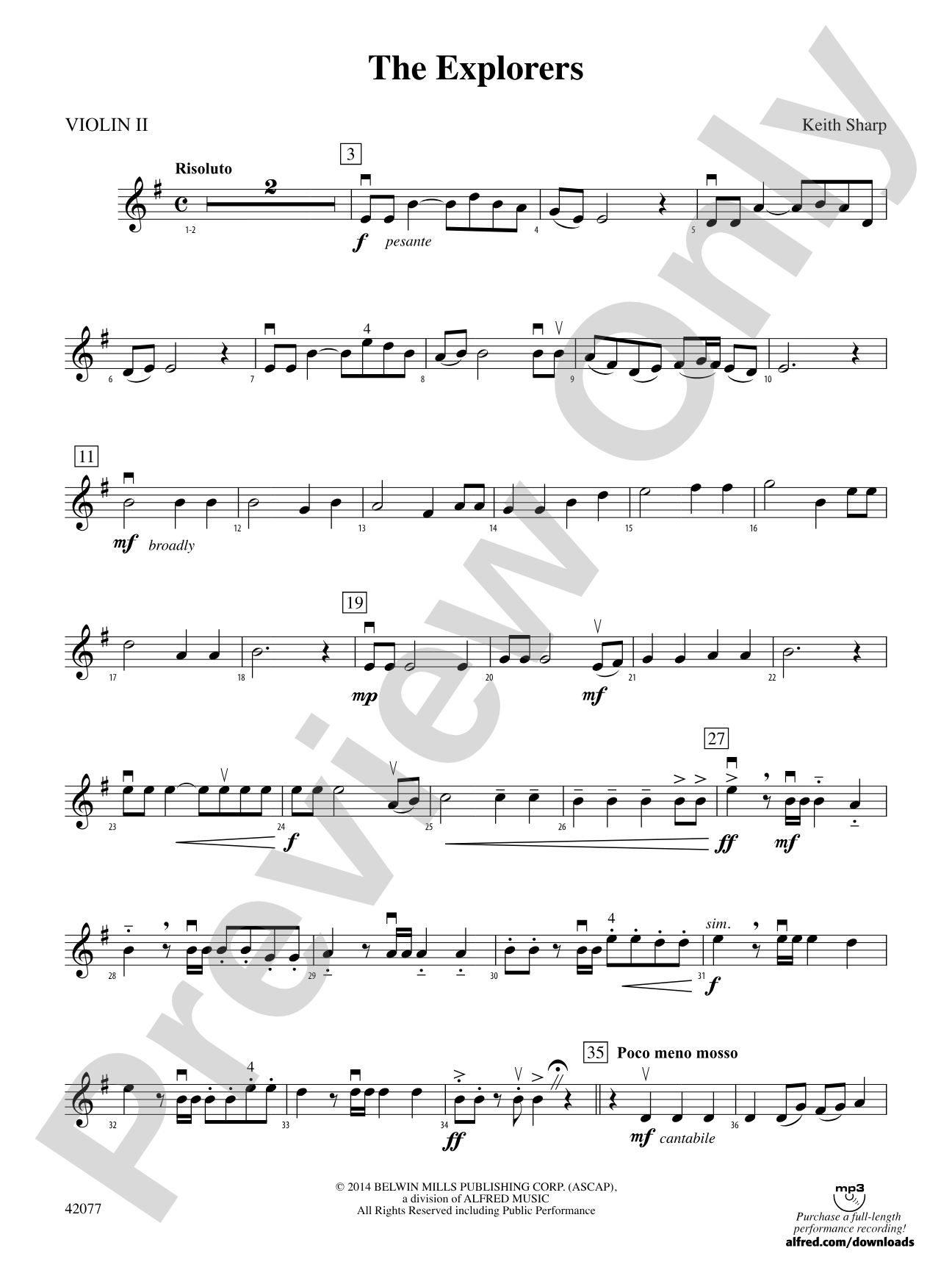

The Explorers: 2nd Violin
By Keith Sharp
Grade: 2.5
Item: 00-PC-0016469_VN2
$5.99
Pickup currently not available
Description
This stirring title features a majestic main theme and pesante accompanying figures which are catchy and attractive to play. The piece tells a story: its varied musical ideas portray the determination and resilience of explorers as they trek into the challenging unknown, contrasted with calmer experiences and the pleasure that new discoveries bring. A central chorale in G Major encourages cantabile sustain and warm tonal blend between the driving outer sections of the piece. All parts share the melodic interest and are thoughtfully written for the technique of developing players. The piano accompaniment is useful for rehearsal purposes or to assist with scaffolding balance, rhythm, and pitch in concert. (3:20) This title is available in MakeMusic Cloud.


Don't just read it, hear it, play along with it, and watch your students grow with it. In MakeMusic Cloud, The Explorers: 2nd Violin comes alive with professional accompaniment, adjustable tempo, and built-in practice tools that turn solo practice into real progress.
Open in the Player
Jump straight in and assign it today.
Start Your Free Trial
Open this title and explore the full library in minutes.
Sample Audio
1
Audio File
--:--
0:00
0:00
Sample Video
No sample videos found.
Additional Details
Series:
Belwin Intermediate String Orchestra
Publisher:
Alfred Music
Page Count:
148
SKU:
00-PC-0016469_VN2
More about this title
About the Composer: Keith Sharp

Keith Sharp has directed string programs in Brisbane schools since 1985, most recently at Brisbane State High School where he emphasizes ensemble and group learning. His educational compositions are performed by young orchestras worldwide and have earned multiple "Editor's Choice" designations in the J.W. Pepper Orchestral Music Catalog. Sharp holds a Bachelor of Music Degree and Graduate Diploma of Further Education, and his contributions to music education have been recognized with the AUSTA State Award for Queensland and two educator honors from his state government.
Beyond the classroom, Sharp serves as a guest clinician and conductor at schools, camps, and workshops throughout Australia. He is co-author of Encore on Strings: Music Maestros, a popular beginner series, and his work has been published by Alfred Music and The FJH Music Company. His commitment to accessible yet imaginative writing for developing musicians reflects decades of direct experience with young players.
Why we love this
Sharp's gift for narrative orchestration shines here: the piece unfolds like a journey, with distinct musical sections that tell a story without losing the attention of Grade 2.5 players. The central G Major chorale offers a genuine respite and invites the kind of sustained, warm playing that helps students hear the difference between technical and expressive music-making. Every string part carries melodic material, so no section feels relegated to accompaniment duty.
What to expect
The piece captures the drama of exploration, moving between moments of determined forward motion and passages of quiet discovery. The central chorale offers a shelter from the journey, allowing the orchestra to settle into warm, sustained playing before the active outer sections return.
Who it's for
String orchestra directors programming intermediate repertoire that develops both technical and expressive skills. This works equally well for concert performance and festival competition, and it engages developing players who benefit from melodically interesting parts across all sections.
How to get the most out of it
- Anchor the pesante figures in the outer sections with a steady, grounded bow stroke; these rhythmic accompaniments drive the narrative and need clarity to land effectively.
- Shape the main theme with slight dynamic flexibility even though the printed marks are straightforward; let students feel where the melody breathes and where it pushes forward.
- Balance the G Major chorale by having lower strings play with warmth rather than weight; the texture should feel open and resonant, not heavy.
- Use the piano accompaniment during sectional rehearsals to reinforce rhythmic entrances and to help pitch-check the chorale before full ensemble work.
How to use it
This pairs naturally with other journey or adventure-themed works on a concert exploring storytelling through orchestral music. At 3:20, it sits comfortably in the middle of a program and provides substantive musical content without overwhelming Grade 2.5 ensembles. Consider it for festivals or competitions where narrative programming adds context to intermediate selections.
Skills your students will build
- Cantabile bowing and sustain in lyrical passages
- Clear articulation in rhythmic accompaniment figures
- Balance between multiple melodic lines occurring simultaneously
- Dynamic control and shaping across contrasting sections
- Ensemble cohesion in a structured, multi-section form