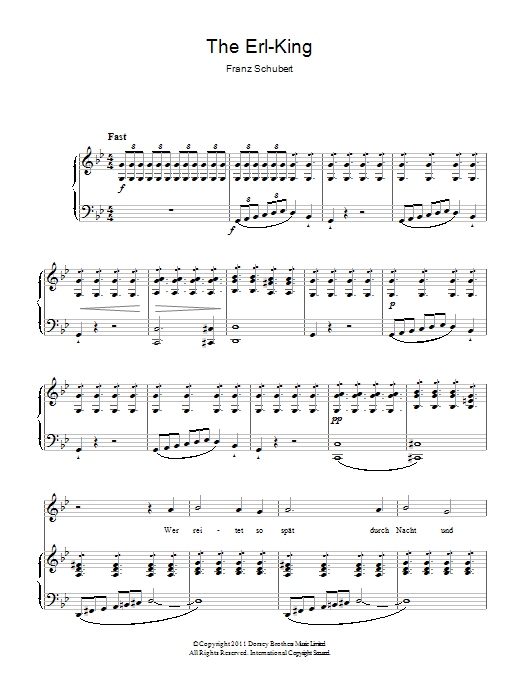
Franz Schubert (1797–1828) composed over 600 works across every major genre, yet many of his greatest achievements remained unpublished during his lifetime. His gift for melody was unmatched; he could spin out lyrical lines that feel both inevitable and surprising, often setting profound emotional shifts within deceptively simple harmonic progressions. As a song composer, Schubert essentially invented the modern art song (Lied), creating a template that composers would follow for generations.
Schubert's vocal writing reveals a deep understanding of the human voice and its expressive capacity. He wrote for singers of all levels and supported them with piano parts that are never merely accompaniment; instead, the piano becomes a partner in storytelling, sometimes narrating what the voice cannot express alone. His approach to text setting prioritizes emotional truth over literal meaning, making his songs enduring vehicles for artistic growth.