Cristi Cary Miller is an arranger and composer with a gift for making folk material accessible to young and developing singers. Her arrangements respect the integrity of traditional songs while opening them up for ensemble exploration, creating settings that feel both authentic and singable.
Why we love this
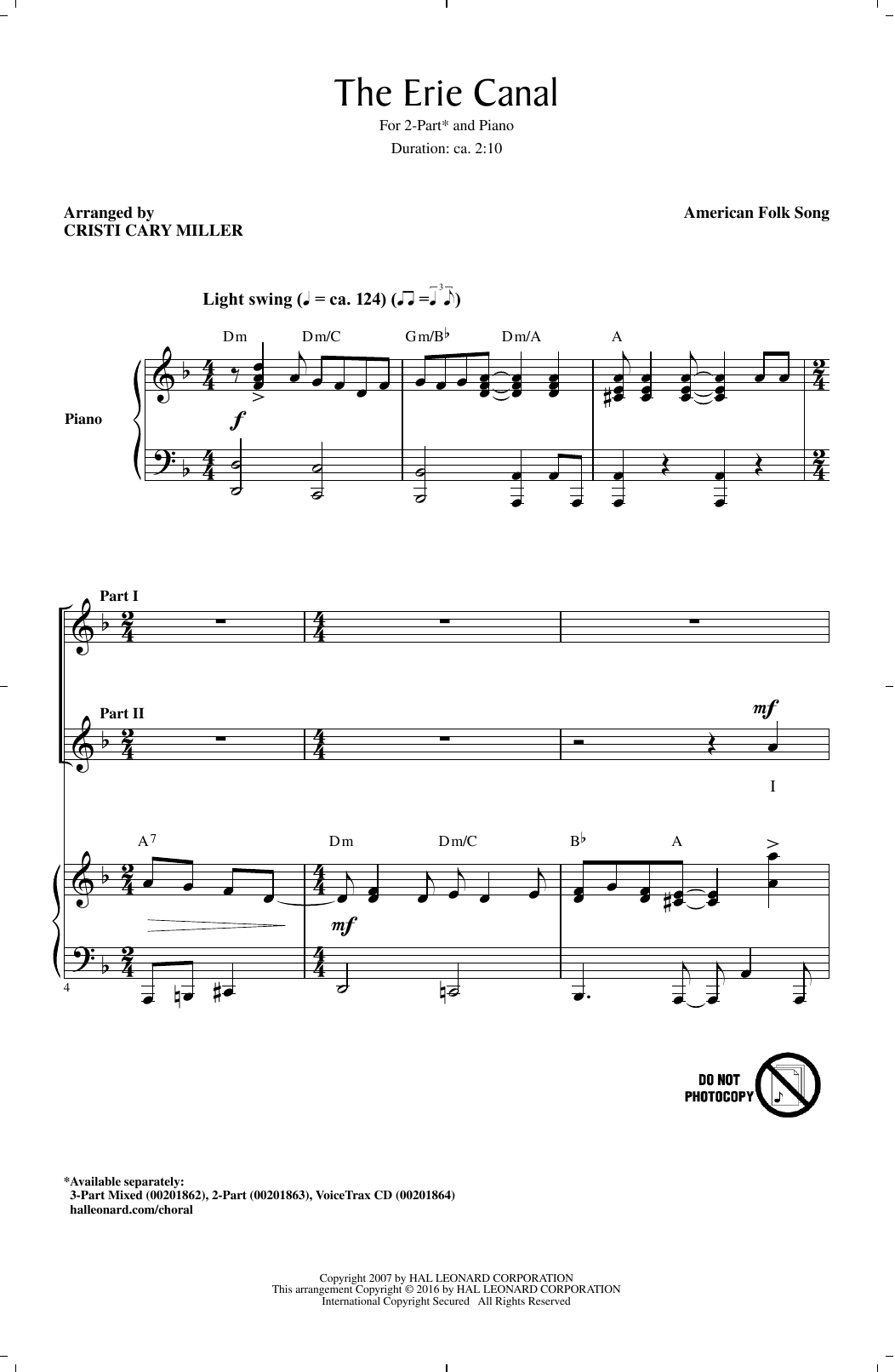
Miller's setting captures the work song energy of the Erie Canal without overcomplicating it. The two-part voicing gives you flexibility across ability levels while keeping the iconic melody front and center, making this a solid choice for building ensemble cohesion early in the year.
What to expect
There's an honest, working-class spirit to this tune. The melody carries the grit of laborers hauling cargo along the towpath, and Miller's arrangement honors that grounded quality. You're not singing about the canal from a distance; you're singing as the people who built it.
Who it's for
This arrangement works for developing choirs, middle school ensembles, and any group looking to build foundational two-part singing skills through material that resonates. The folk idiom removes some of the technical pressure while the straightforward voicing keeps focus on ensemble balance and diction.
How to get the most out of it
Find the steady pulse of the canal workers beneath the melody. This isn't a languid folk song; it has propulsive momentum that should drive the phrasing forward.
Balance the two parts so neither disappears. In many octavos, the lower part becomes accompaniment by default. Here, both voices carry equal weight in telling the story.
Let the text shape your dynamics. The physical labor described in the lyrics should be audible in your intensity and breath placement.
How to use it
Open a concert with this piece to establish a warm, accessible tone and connect with audiences who know the tune. It also sits naturally alongside other American folk repertoire or within a program exploring regional history and cultural traditions.
Skills your students will build
Balancing two-part texture with equal voice independence
Sustaining a consistent tempo through work-song rhythms
Characterization through text and dynamic shape in folk idiom
Blend and intonation in unison and parallel passages
You May Also Like
Scan to Complete Your Purchase
Use your phone's camera to scan the code below
You'll log in on your phone and the order will be added to your account