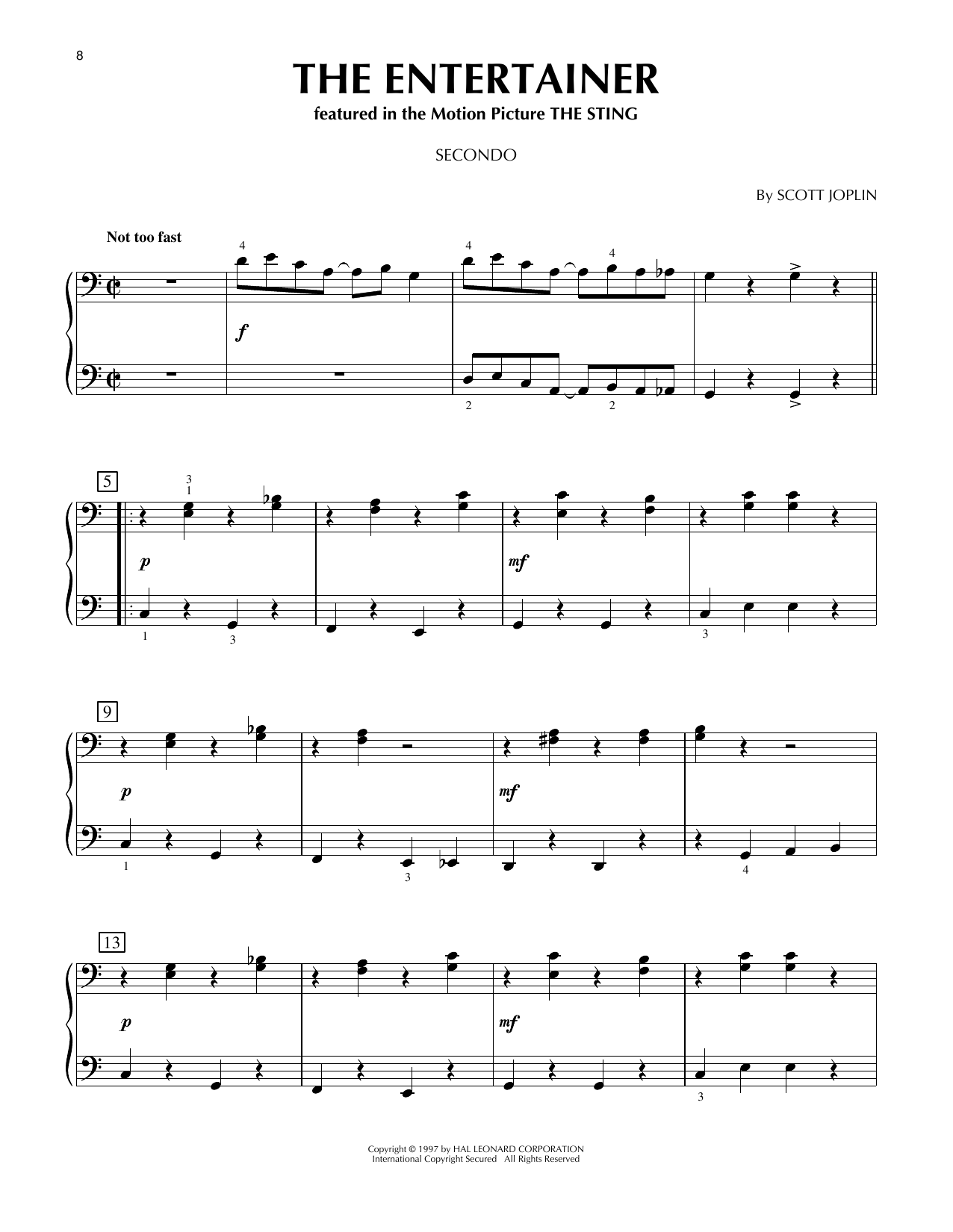
Scott Joplin (1868-1917) was an African American composer and pianist who fundamentally changed American music by elevating ragtime from a folk idiom to a sophisticated concert art form. His meticulous compositions, marked by syncopated melodies over steady bass lines, became the foundation of ragtime and influenced jazz, musical theater, and popular song throughout the twentieth century.
Why we love this
The Entertainer stands as one of the most recognizable pieces in American music, and this arrangement captures the infectious syncopation and rhythmic vitality that made Joplin's work so influential. It's a piece that rewards careful attention to articulation and rubato while remaining accessible to pianists eager to engage with concert ragtime.
What to expect
Jaunty and urbane, with just enough melancholy in its minor moments to keep things interesting. The piece pulses with the energy of a ragtime dancer, full of sharp turns and unexpected accents that make you want to move in your seat.
Who it's for
Pianists advancing into the intermediate repertoire who want to explore American music beyond the classical canon. Students of jazz history and popular music will find this an essential bridge between concert music and the vernacular traditions that shaped twentieth century composition.
How to get the most out of it
Balance the syncopated melody against a steady, unhurried pulse in the left hand; the ragtime feel depends on this rhythmic clarity rather than rushing.
Shape phrases with subtle tempo flexibility, allowing the syncopation to breathe without losing the underlying groove.
Invest in clean articulation on repeated note figures and scalar passages, which become playful rather than muddy with crisp touch.
Explore the contrast between sections by adjusting voicing and dynamic weight, letting key changes and melodic shifts guide your interpretive choices.
How to use it
Pair this with other American vernacular works on a concert exploring the roots of jazz and musical theater, or feature it as a solo piece that bridges classical and popular traditions. It works equally well as a teaching piece mid-year or as a rewarding recital selection that audiences immediately connect with.
Skills your students will build
Syncopation reading and performance
Steady pulse maintenance against syncopated melody
Ragtime articulation and phrasing
Melodic shape and rubato across multiple sections
Scalar and repeated-note technical clarity
Voicing and dynamic differentiation between sections
You May Also Like
Scan to Complete Your Purchase
Use your phone's camera to scan the code below
You'll log in on your phone and the order will be added to your account