
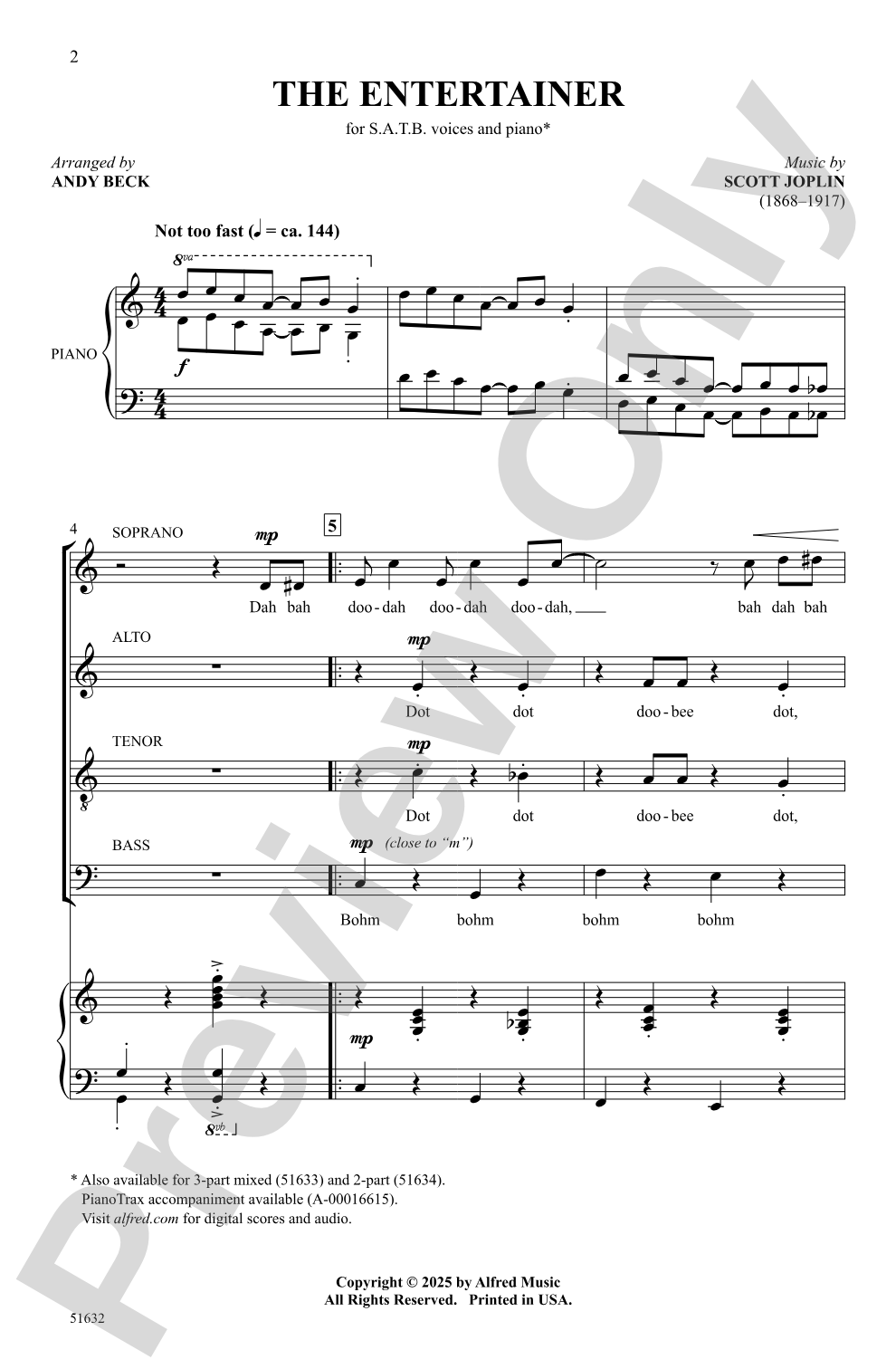

The Entertainer: SATB Choral Octavo
Music by Scott Joplin / arr. Andy Beck
Item: 00-PO-0007581

$2.20
Minimum order quantity: 20 copies
Pickup currently not available
Related Items
The Entertainer: 3-Part Mixed Choral Octavo |
$2.20
|
View | |
The Entertainer: 2-Part Choral Octavo |
$2.20
|
View | |
The Entertainer: PianoTrax Digital Download |
$9.99
|
View | |
The Entertainer: SATB Choral Octavo |
$2.20
|
View | |
The Entertainer: 3-Part Mixed Choral Octavo |
$2.20
|
View | |
The Entertainer: 2-Part Choral Octavo |
$2.20
|
View |
Description
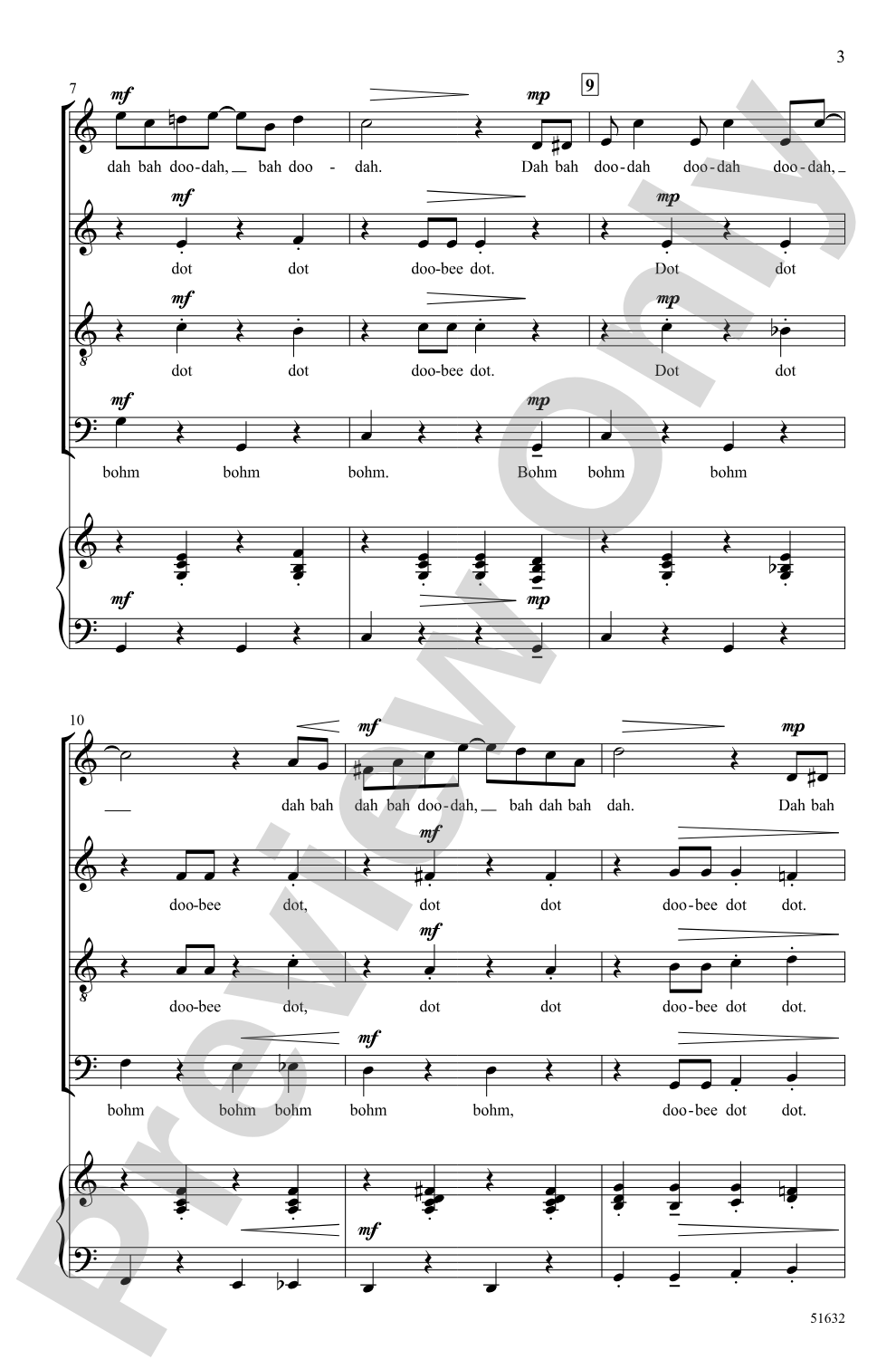
You've never heard ragtime like this! Scott Joplin's signature piano piece is cleverly arranged for voices with a supportive accompaniment. Carefully crafted to match the original while making the neutral-syllable vocals intuitive to learn. A truncated A-B-A form makes this two-minute showstopper come together in no time. So versatile and vibrant, choirs in any voicing will want to perform this for Black History Month, on an American music program, as a spotlight selection, or even an unexpected encore.


Don't just read it, hear it, play along with it, and watch your students grow with it. In MakeMusic Cloud, The Entertainer: SATB Choral Octavo comes alive with professional accompaniment, adjustable tempo, and built-in practice tools that turn solo practice into real progress.
Open in the Player
Jump straight in and assign it today.
Start Your Free Trial
Open this title and explore the full library in minutes.
Sample Audio
1
Audio File
--:--
0:00
0:00
Sample Video
Additional Details
Series:
Alfred Choral Designs
Publisher:
Alfred Music
Page Count:
8
SKU:
00-PO-0007581
More about this title
About the Composer: Scott Joplin
Scott Joplin (1868, 1917) was an African American composer and pianist who fundamentally shaped American music by elevating ragtime from dance hall novelty to art form. His published works, particularly "The Maple Leaf Rag" and "The Entertainer," became cornerstones of early 20th-century popular music and remain essential listening for understanding jazz's roots and the broader landscape of American composition.
In the classroom, Joplin's music teaches syncopation, rhythmic independence, and the sophisticated harmonic language that emerged from Black musical traditions. His influence extends far beyond ragtime; conductors and educators return to his work because it demonstrates how vernacular music can achieve lasting artistic merit and because it opens conversations about American music history and cultural contribution.
Why we love this
Andy Beck's arrangement captures the syncopated brilliance of Joplin's original while making it genuinely singable for mixed choirs. The neutral-syllable setting avoids awkward text-fitting and lets voices focus on the characteristic rhythmic drive that makes ragtime so infectious. This is a concert piece that audiences recognize immediately and choirs genuinely enjoy rehearsing.
What to expect
A concert hall suddenly becomes a piano bar as voices dance through the syncopated swagger of ragtime. There's joy in the rhythmic snap, sophistication in the harmonic language, and pure fun in the delivery. Audiences hear Joplin's invention immediately and recognize the musical Americana they're experiencing.
Who it's for
Any mixed choir looking for a concert piece that combines American musical heritage with modern accessibility. This works equally well for community choirs, college singers, and high school ensembles seeking something that sounds impressive without requiring extensive rehearsal time.
How to get the most out of it
- Lock the syncopation with your accompanist from the first rehearsal. The ragtime rhythm sits between the beat, and ensemble precision requires both singers and pianist to commit to the same placement of those off-beat patterns.
- Shape the dynamics within the A and B sections rather than treating each as uniformly loud or soft. Joplin's ragtime thrives on subtle contrast, and your voices can highlight this by varying phrase contours section to section.
- Treat the neutral syllables as pure rhythm. These are not vocables to breathe on or bend; keep them clipped and clean so the syncopated lines sparkle.
How to use it
Pair this with other American composers for a program celebrating Black History Month or a concert focused on American musical traditions. Its two-minute length and familiar melody also make it an unexpected and delightful encore that sends audiences home energized. Consider programming it alongside spirituals or other African American choral works to create deeper context.
Skills your students will build
- Executing syncopated rhythms in ensemble
- Maintaining steady subdivision while singing off the beat
- Performing neutral-syllable passages with articulation and clarity
- Understanding ragtime as a composed art form, not just improvisation
- Responding to piano accompaniment with stylistic precision