
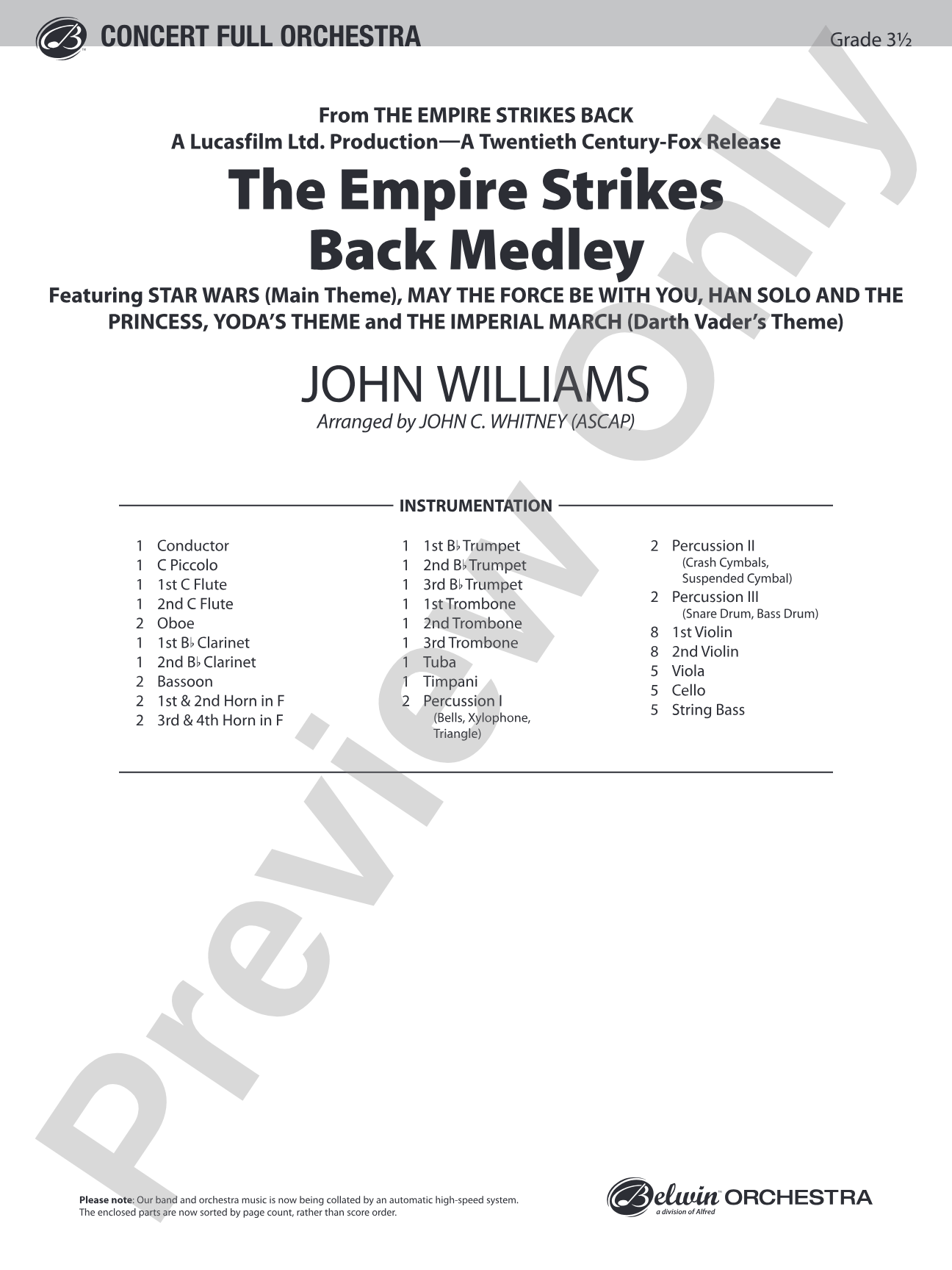
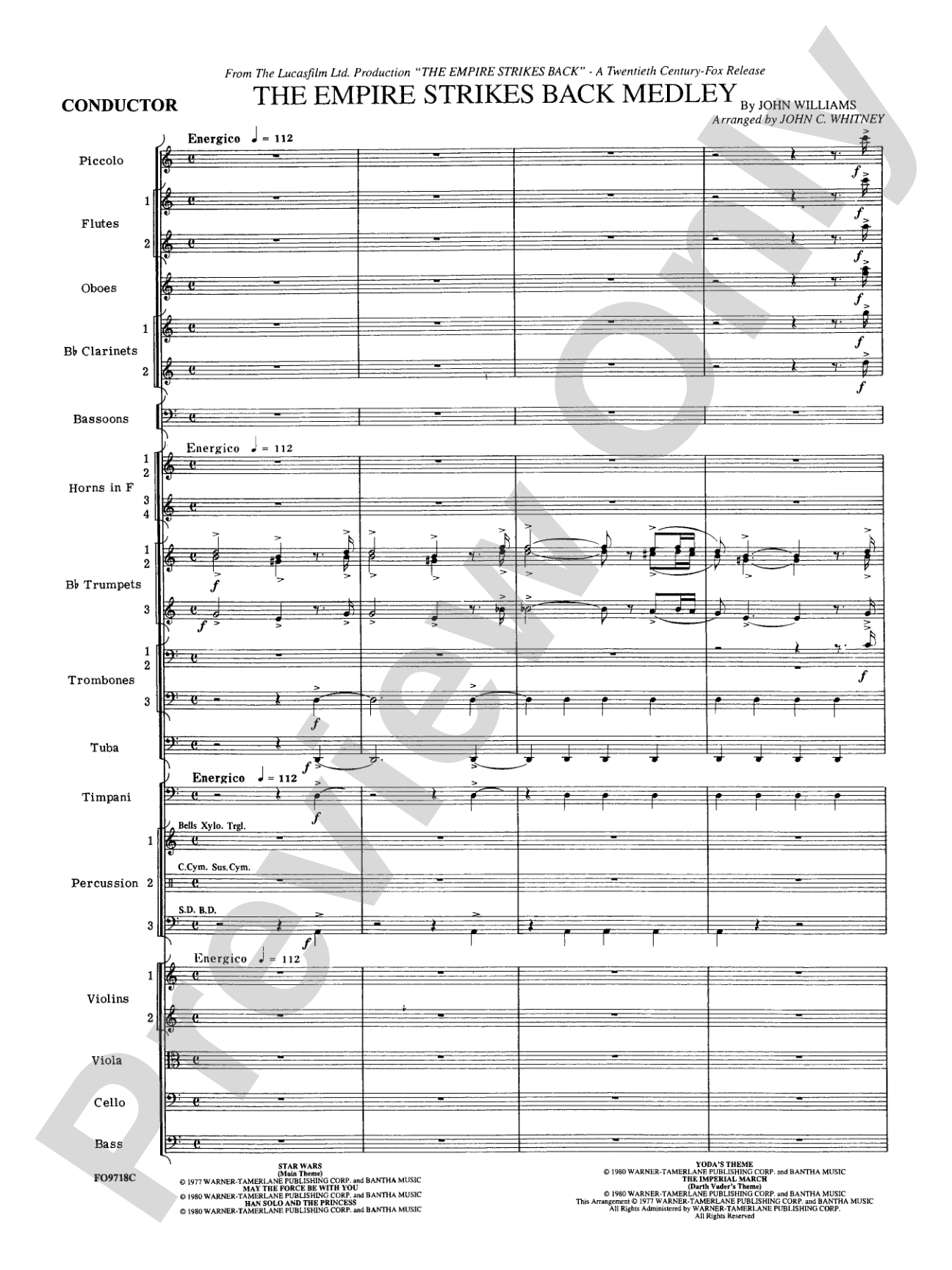
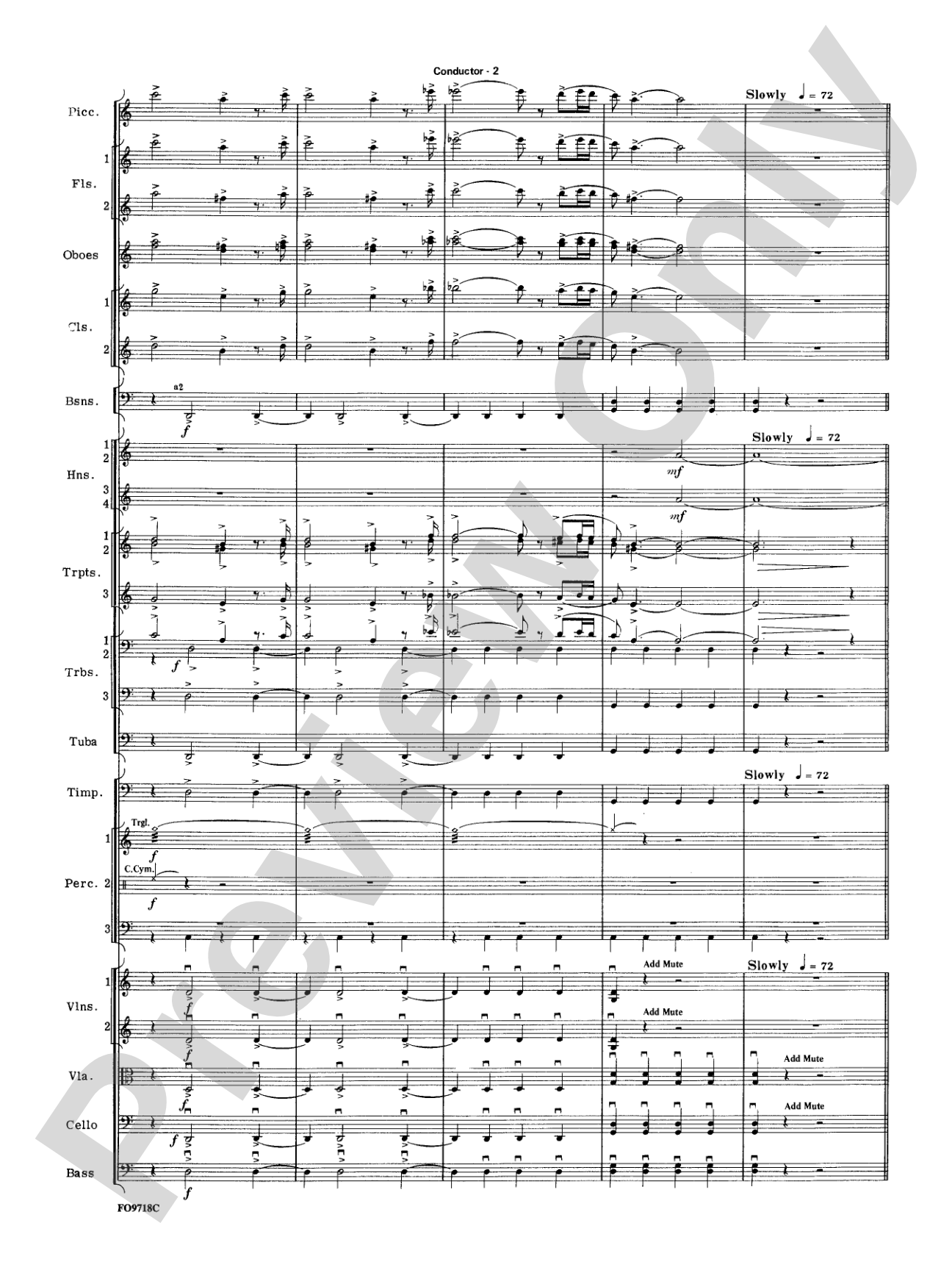
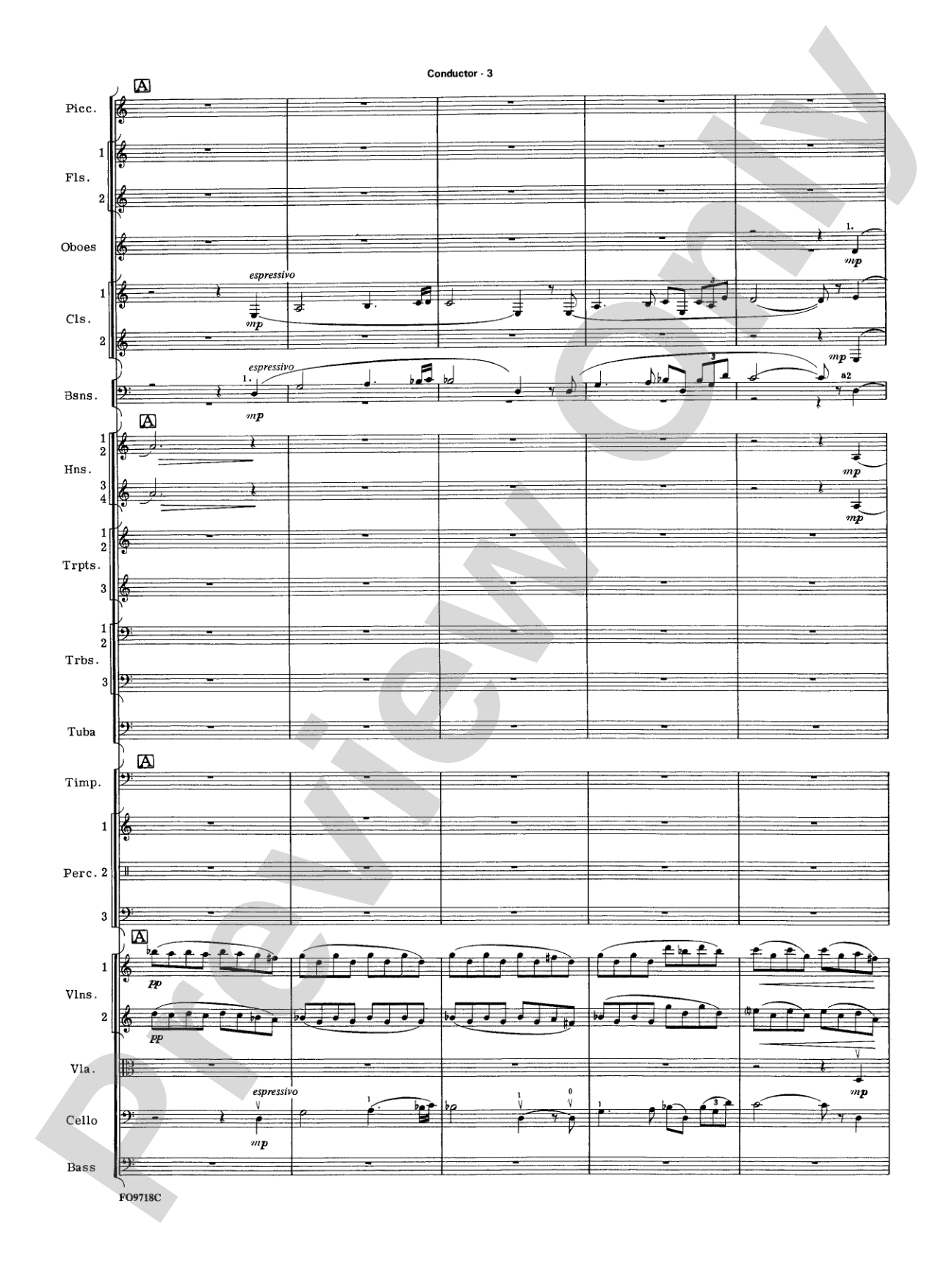
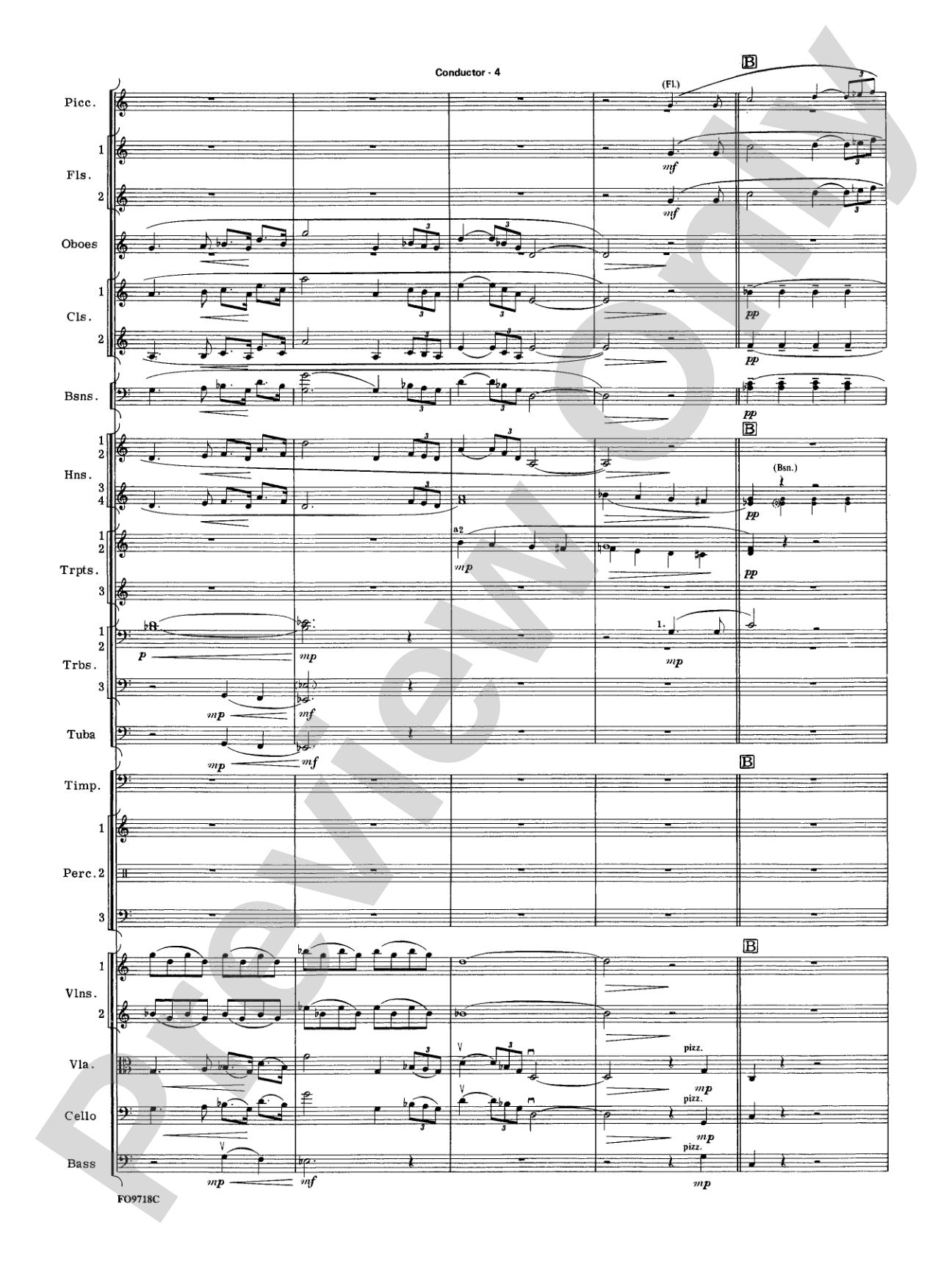
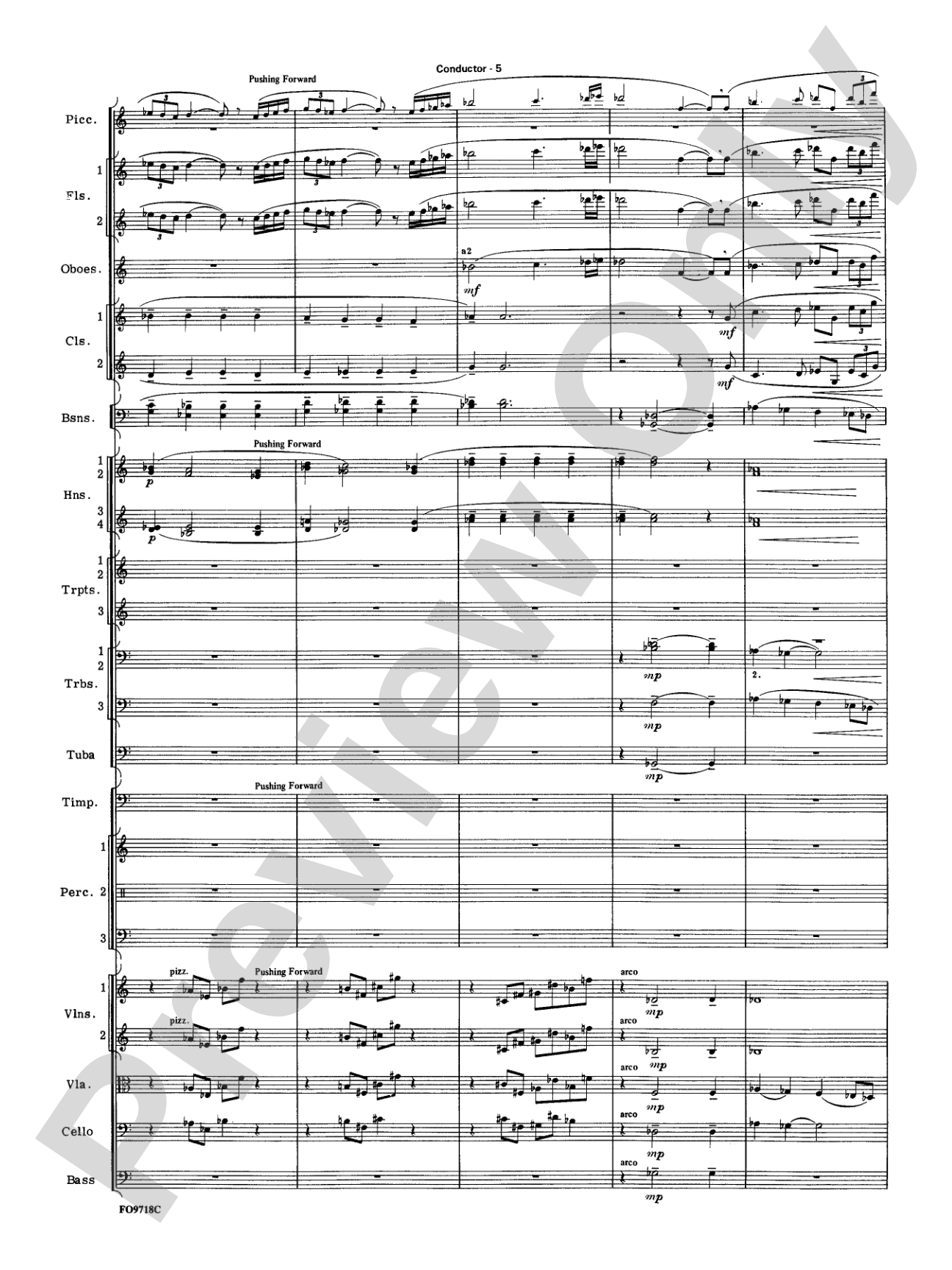
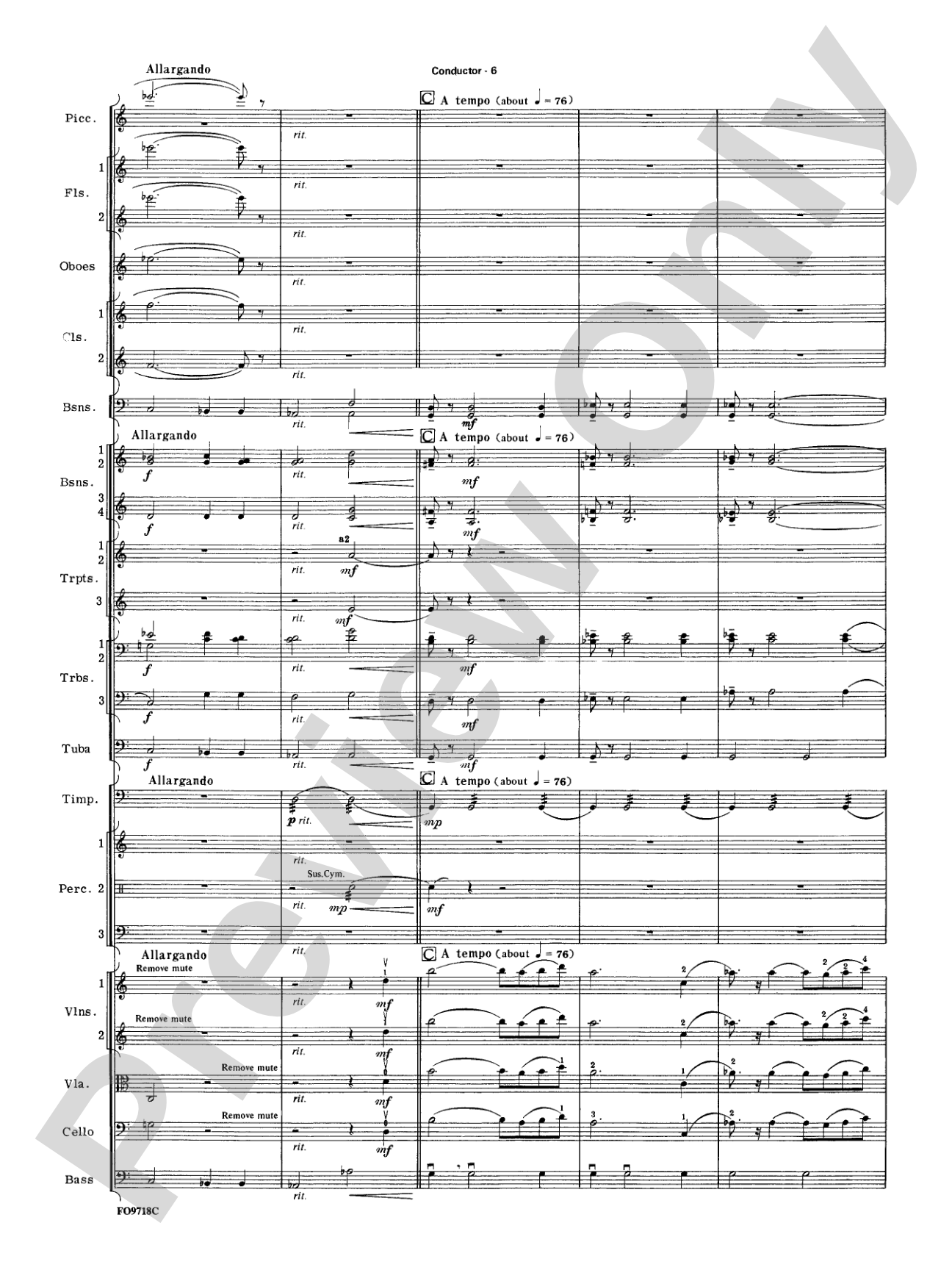
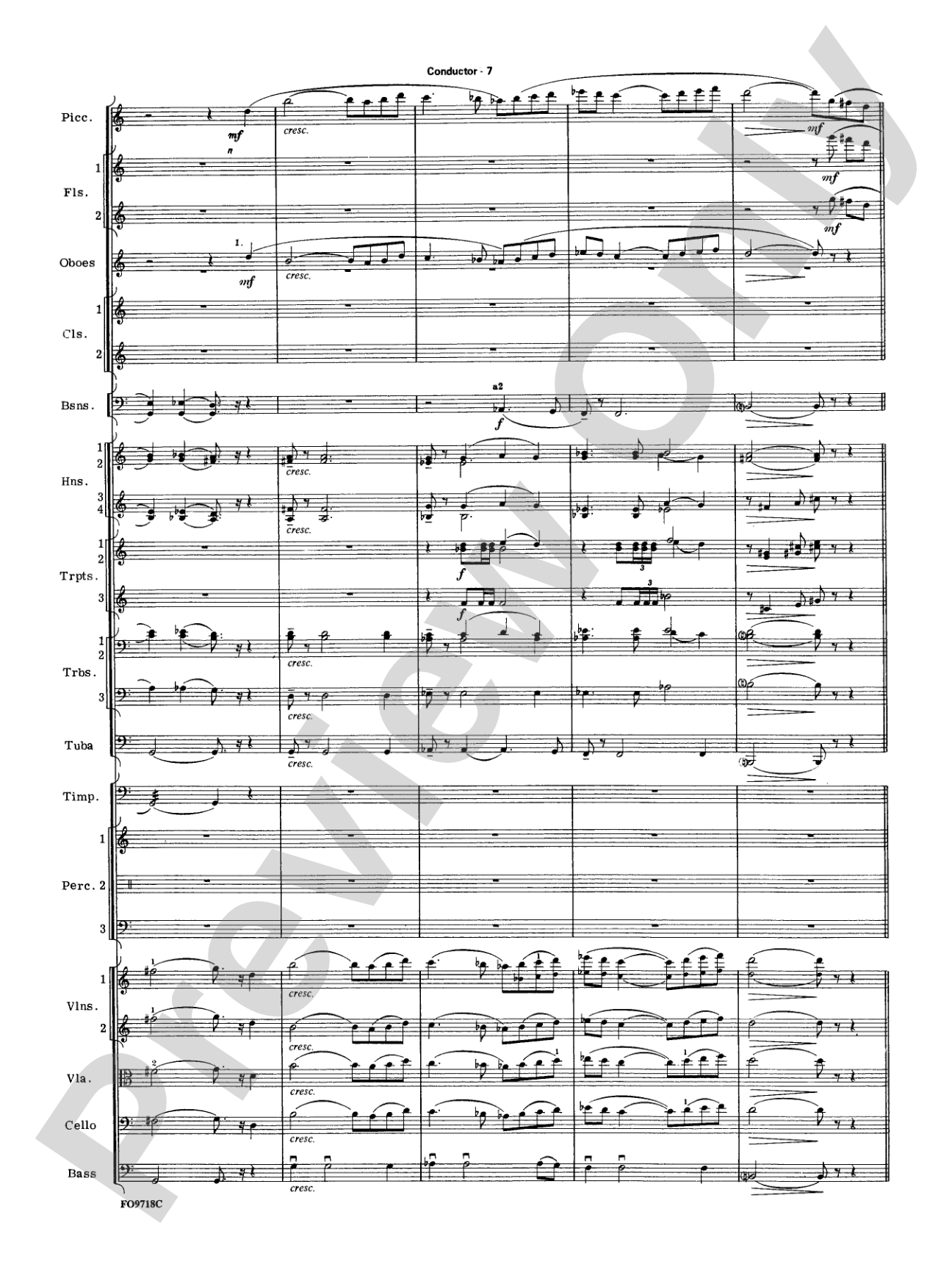
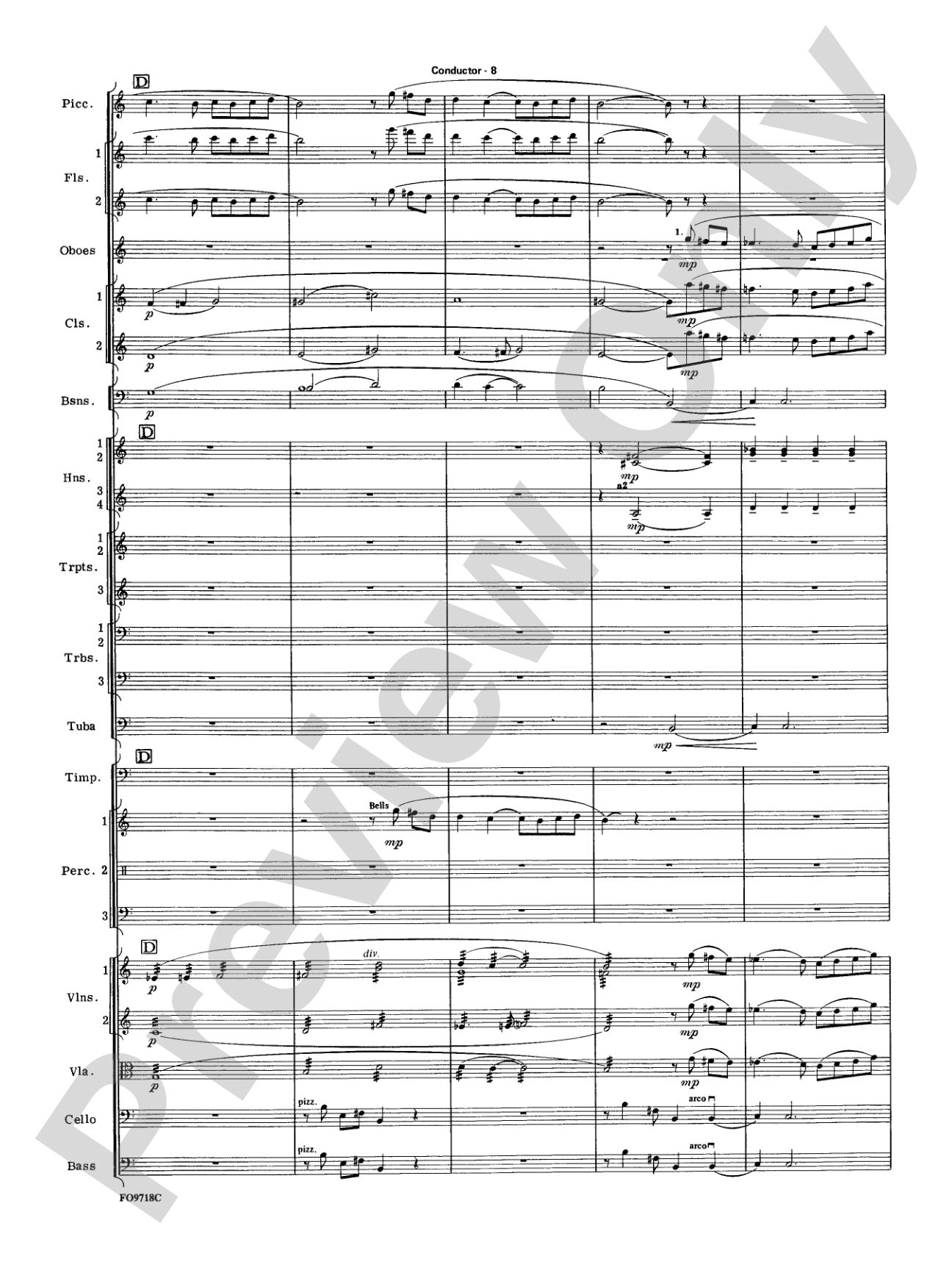
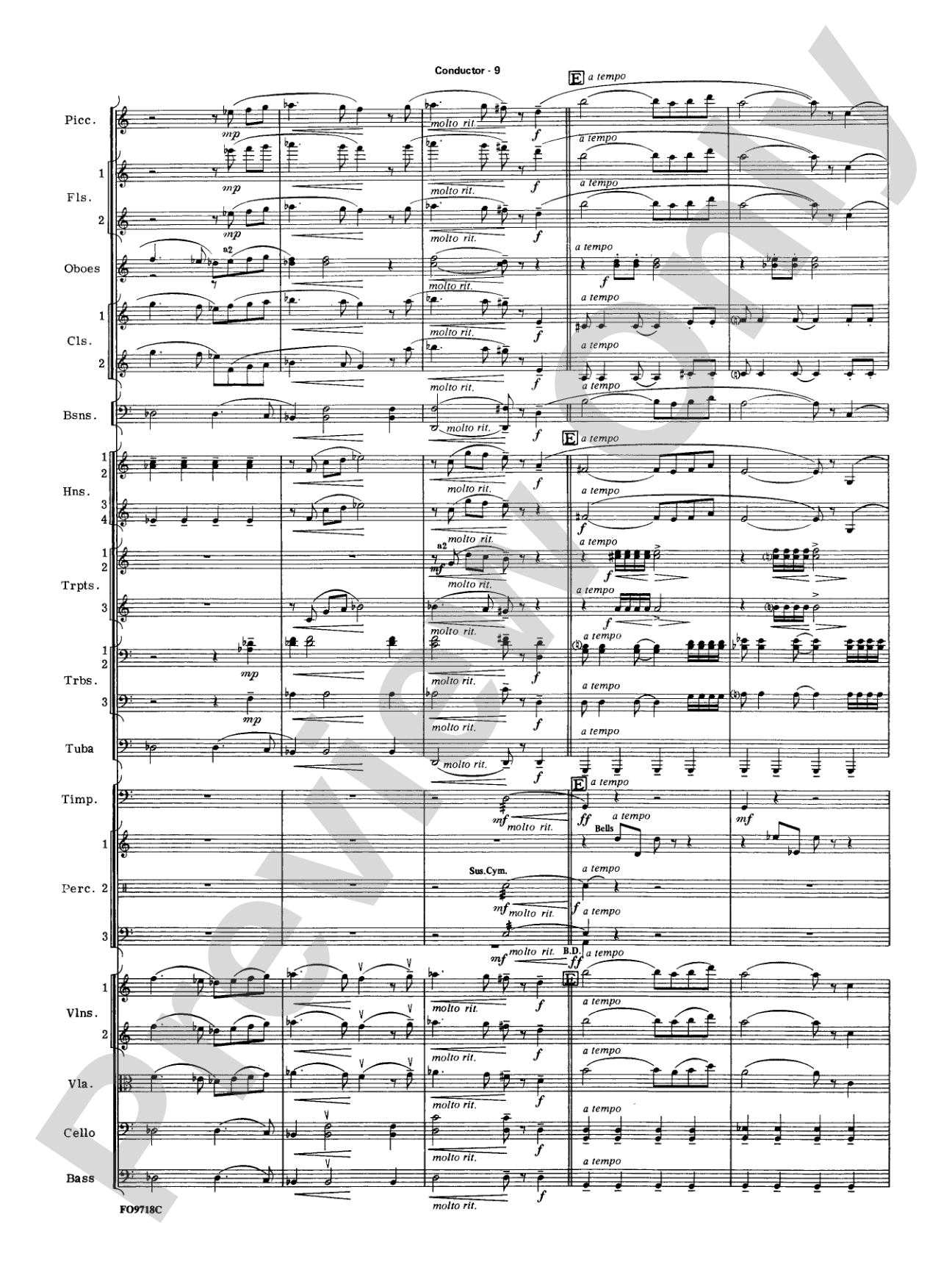
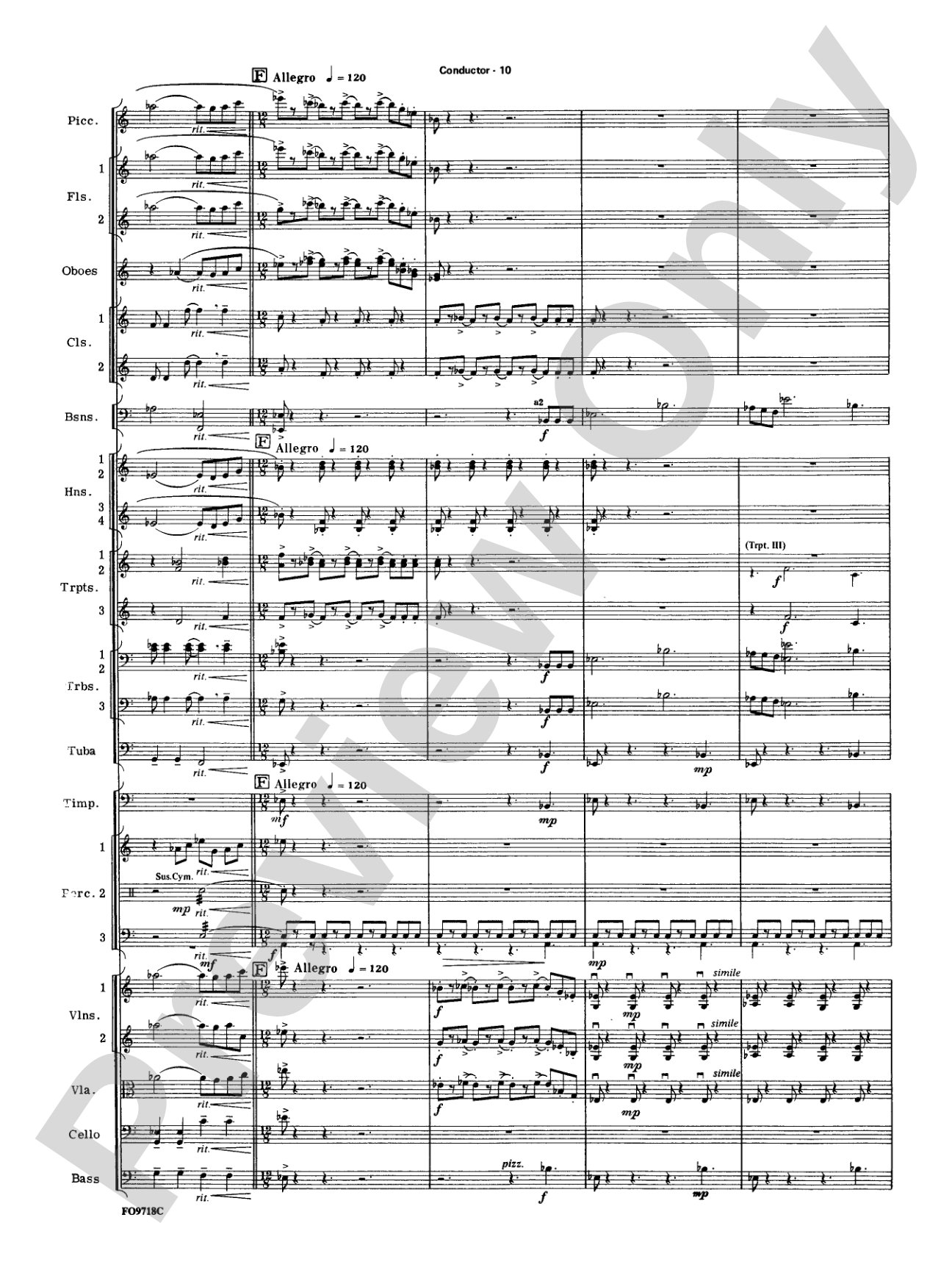
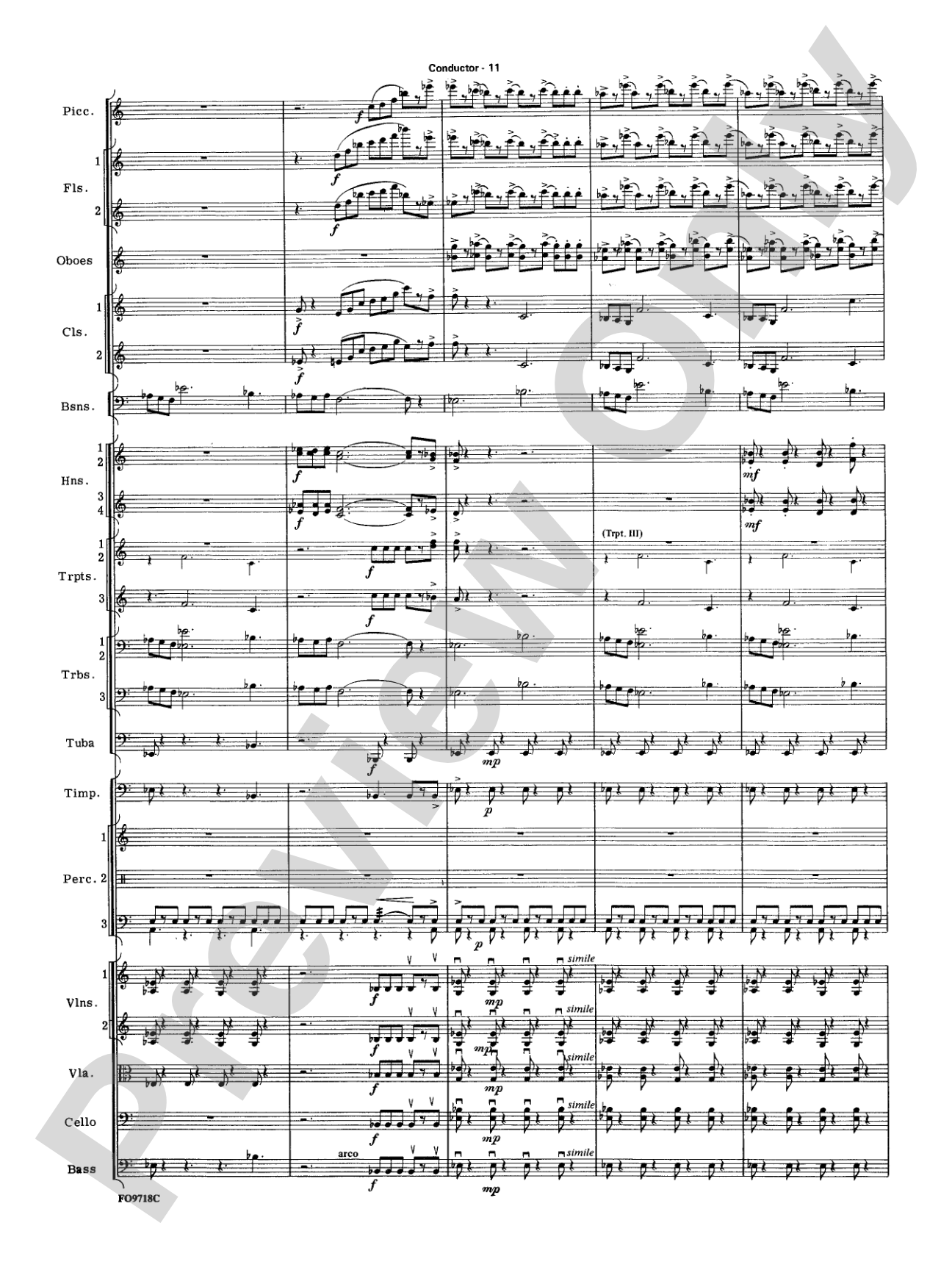
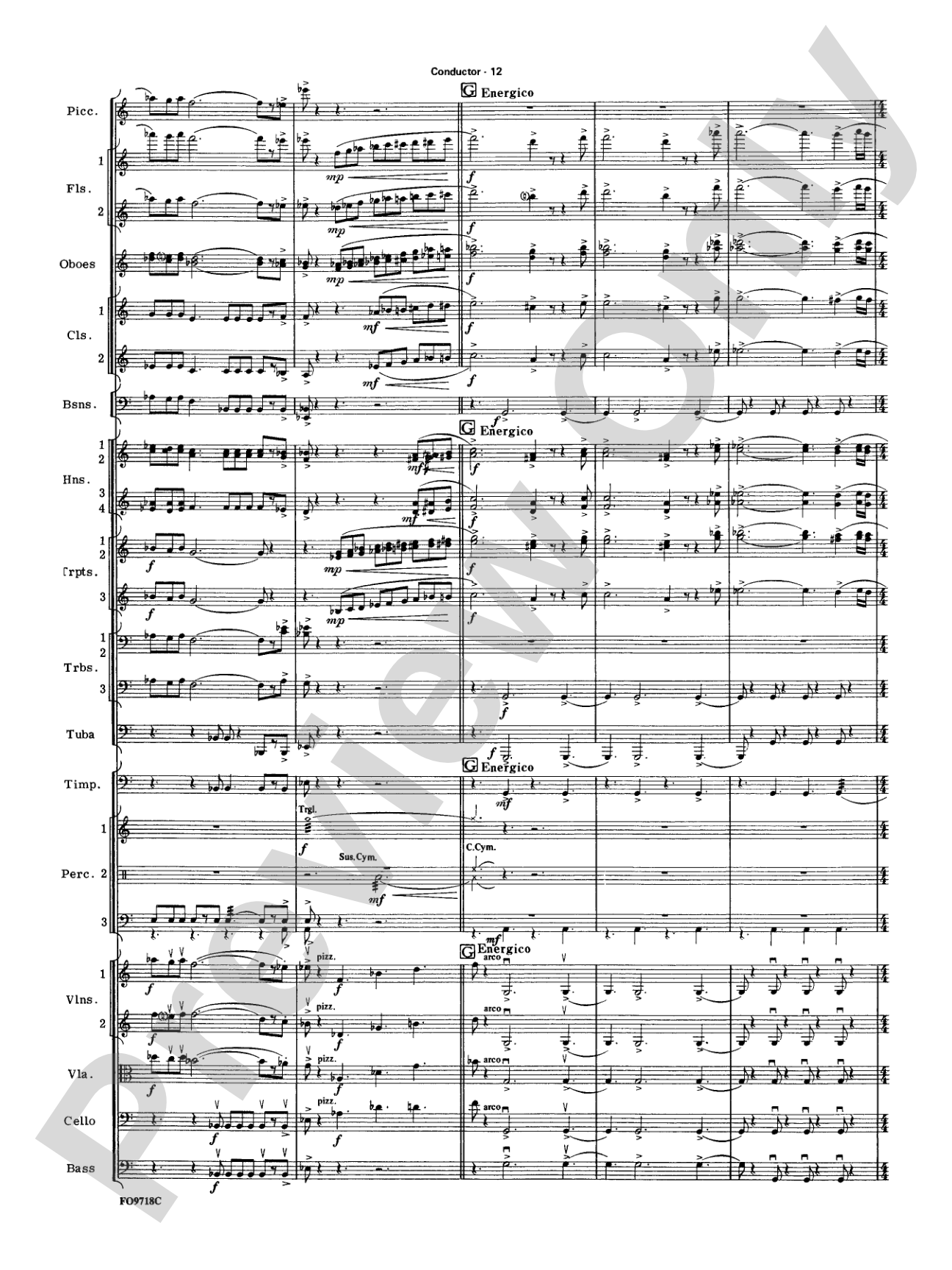
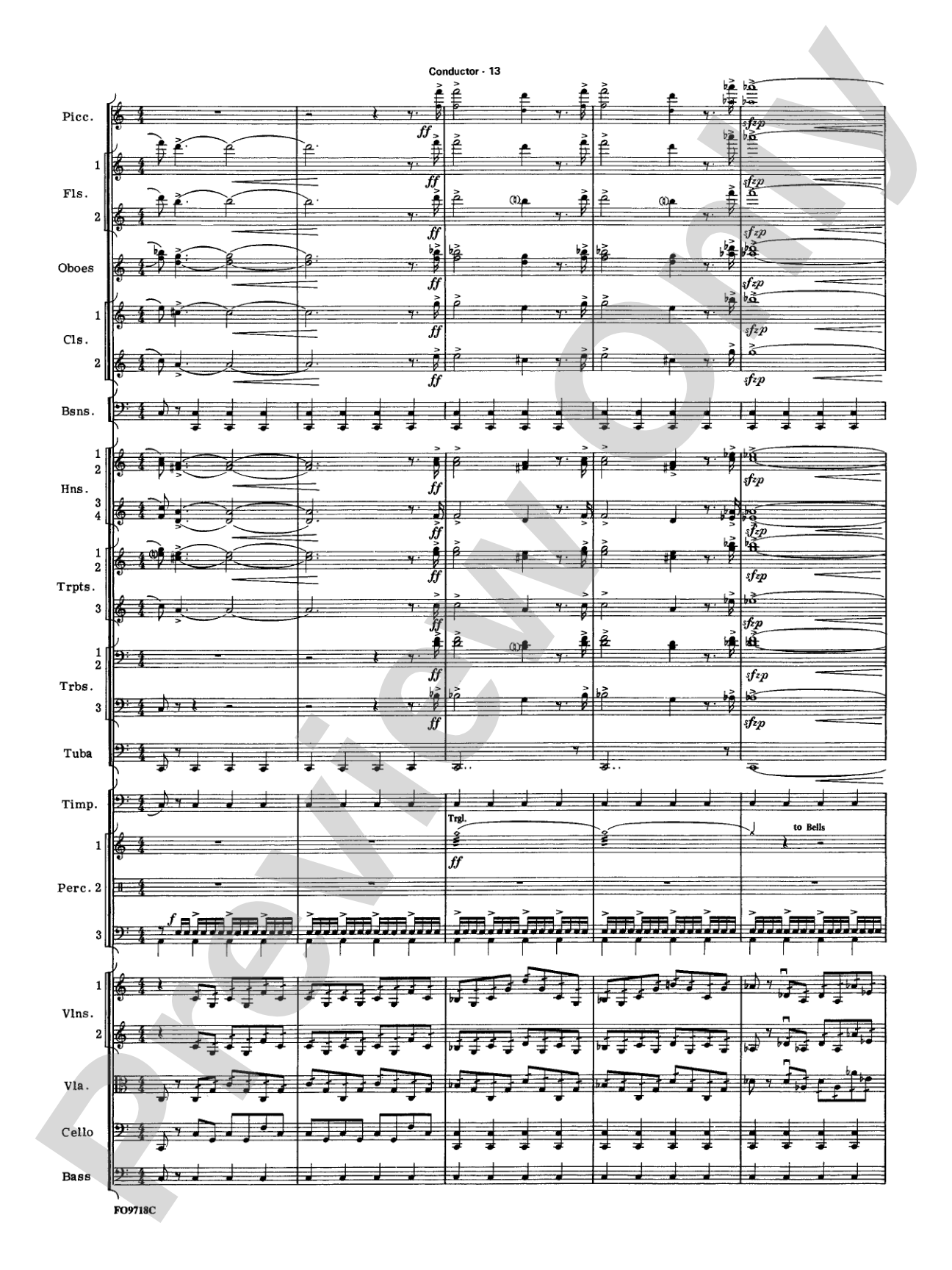
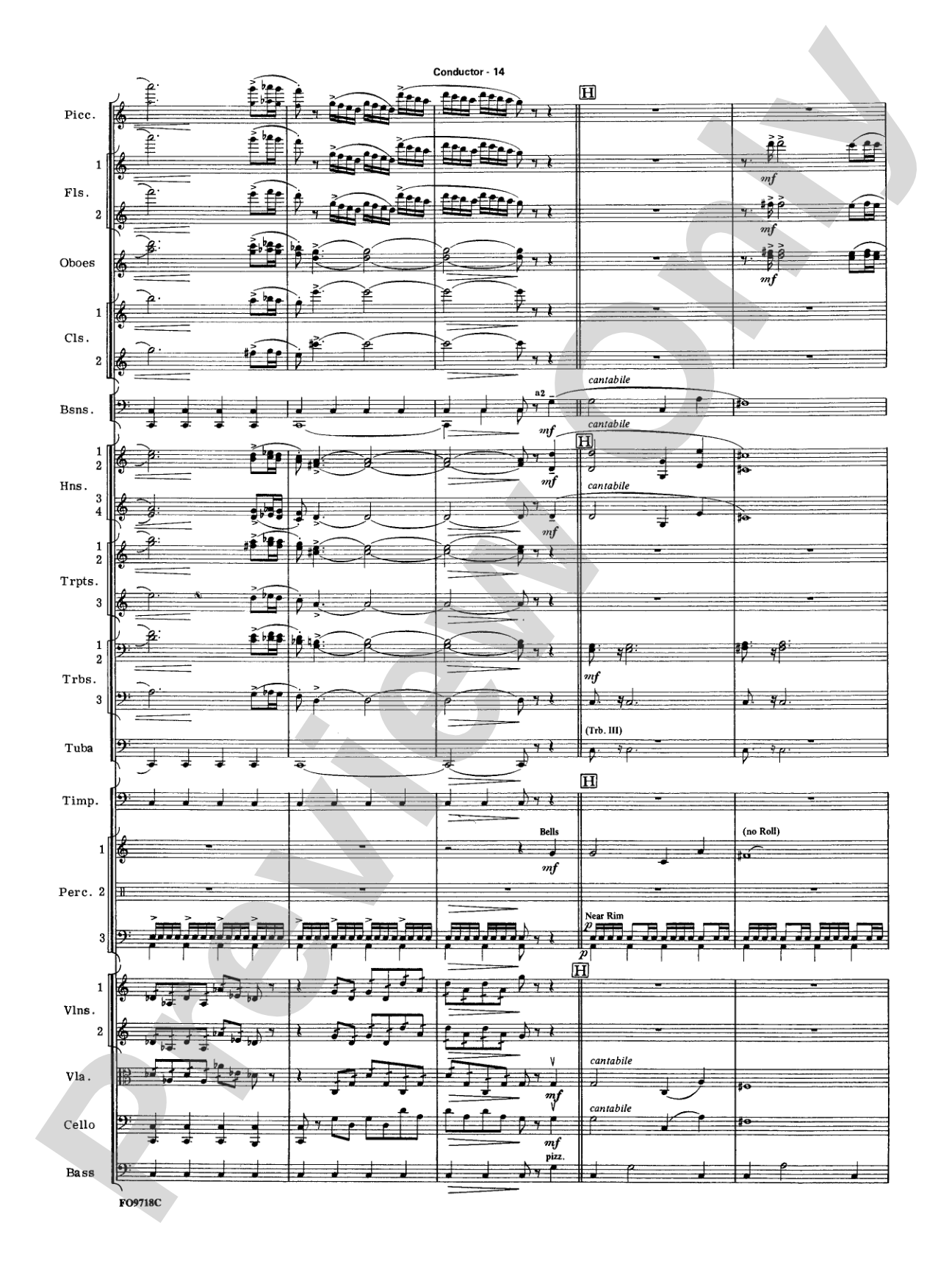
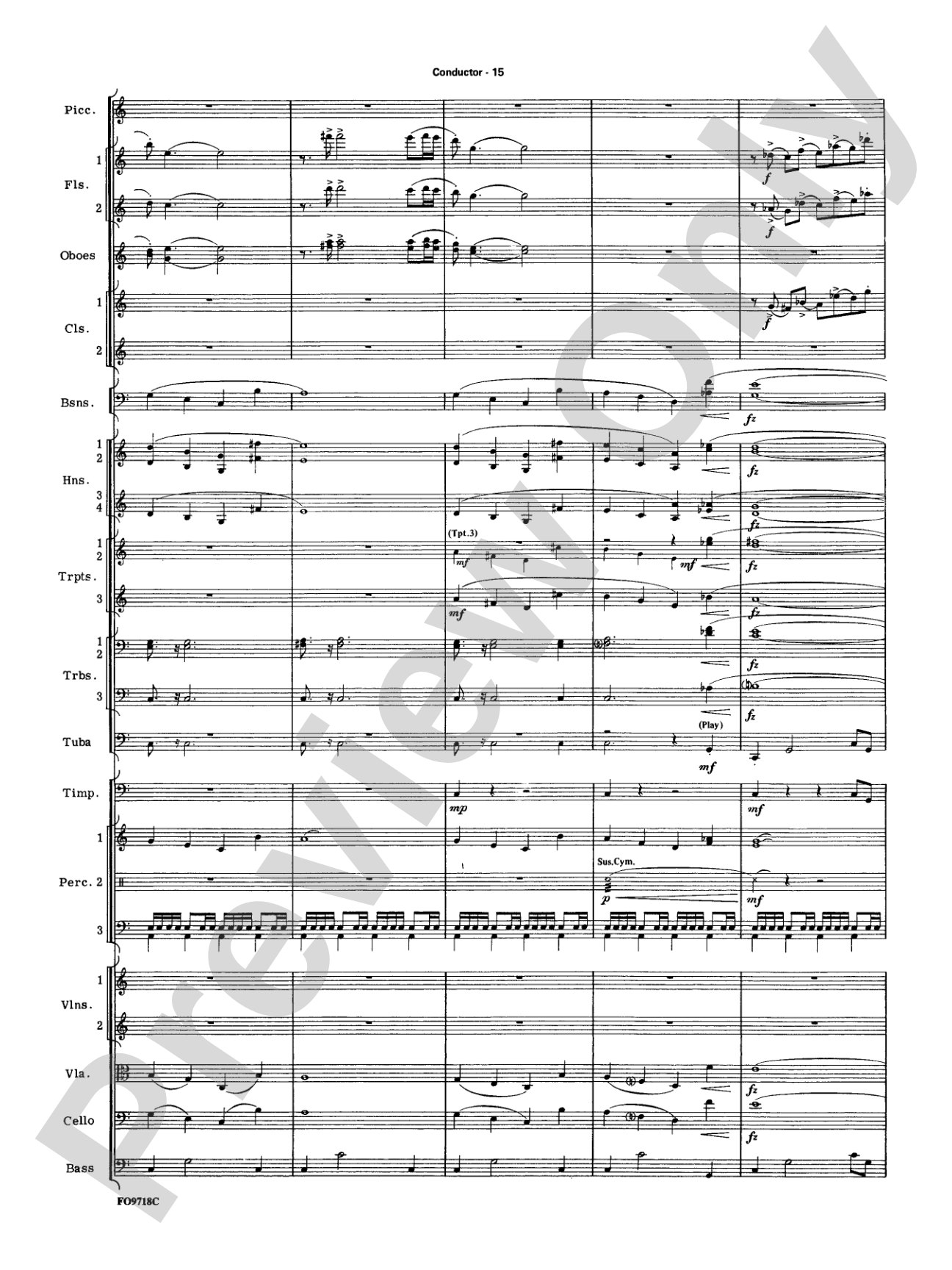
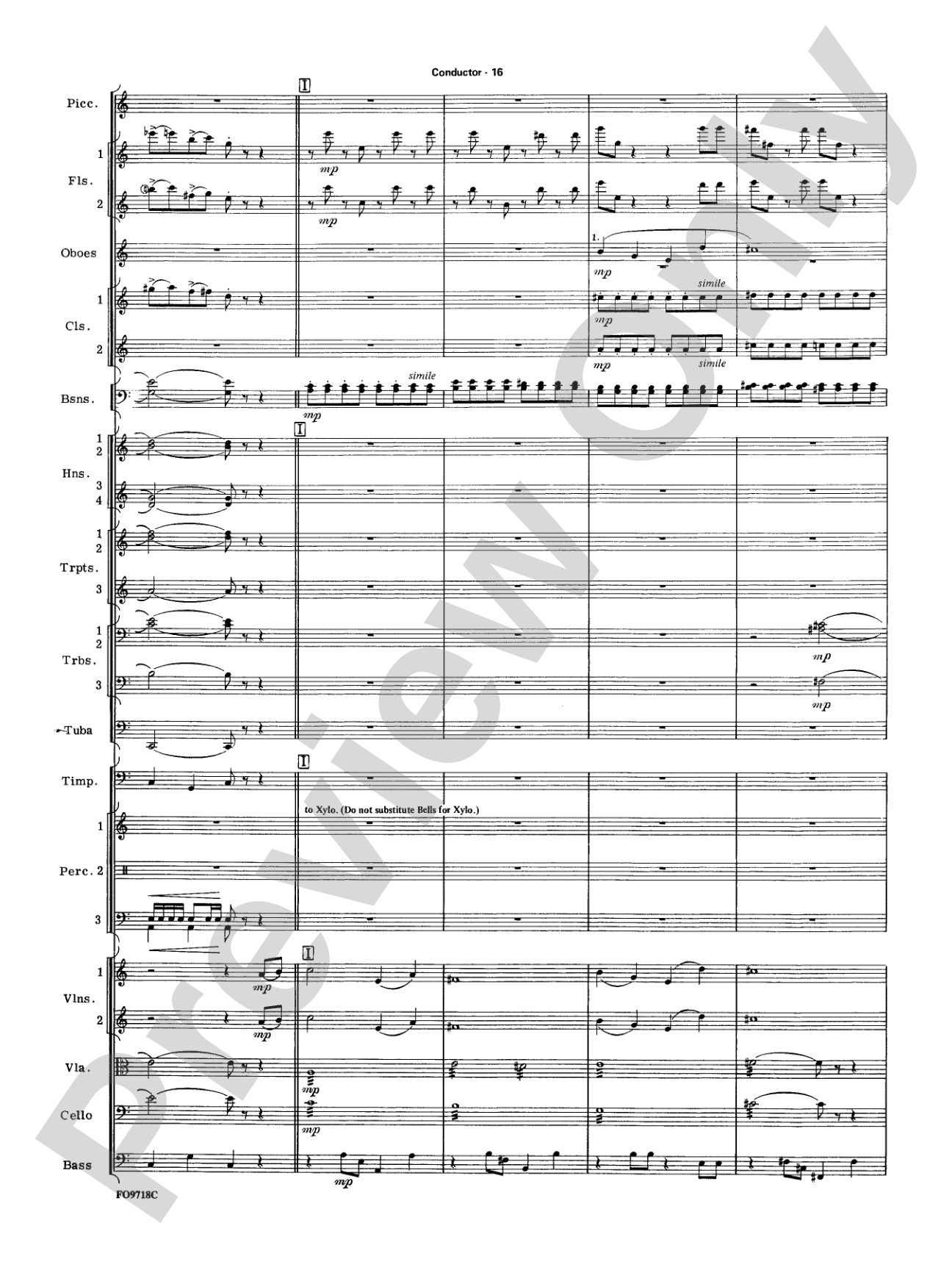
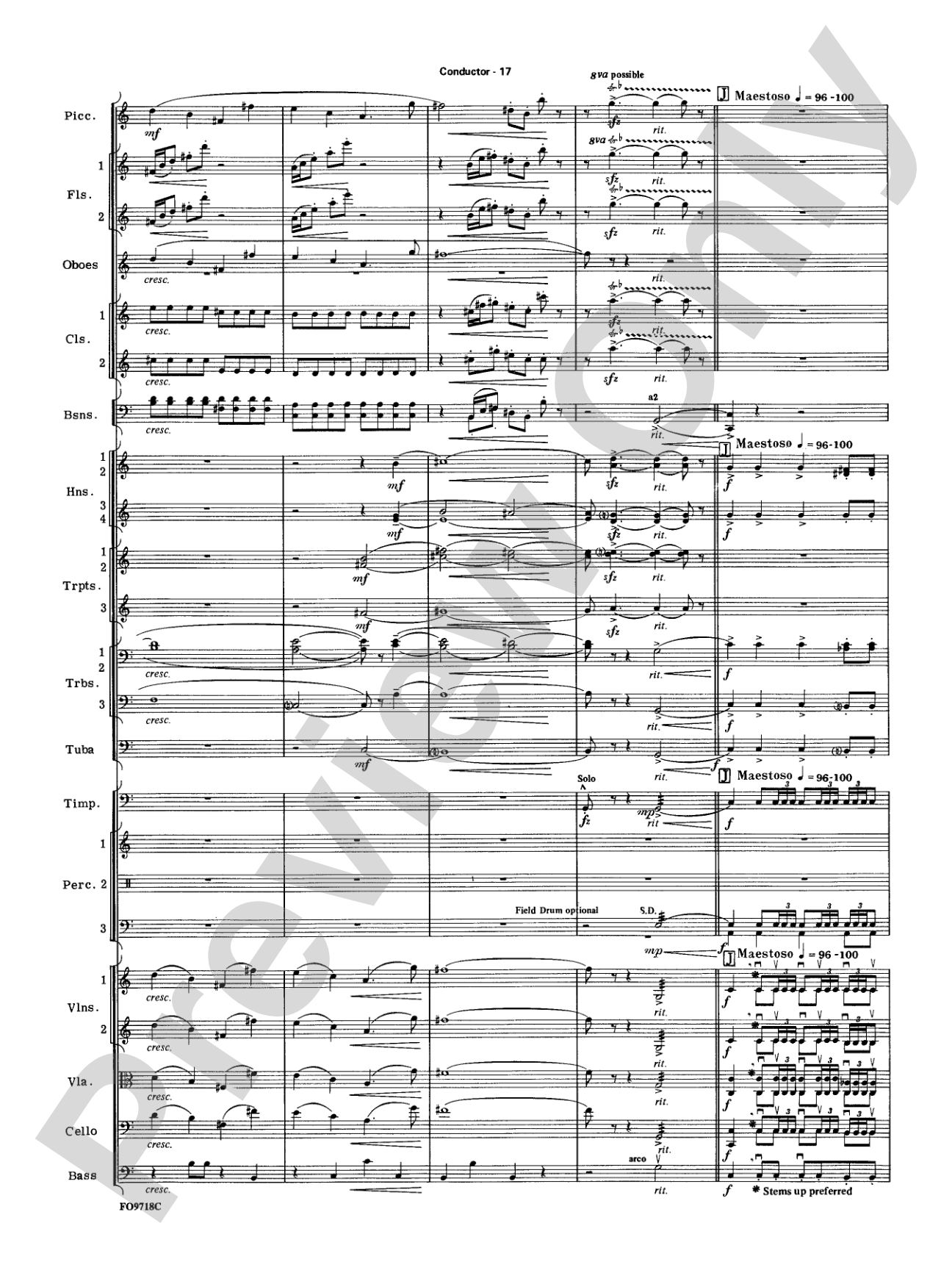
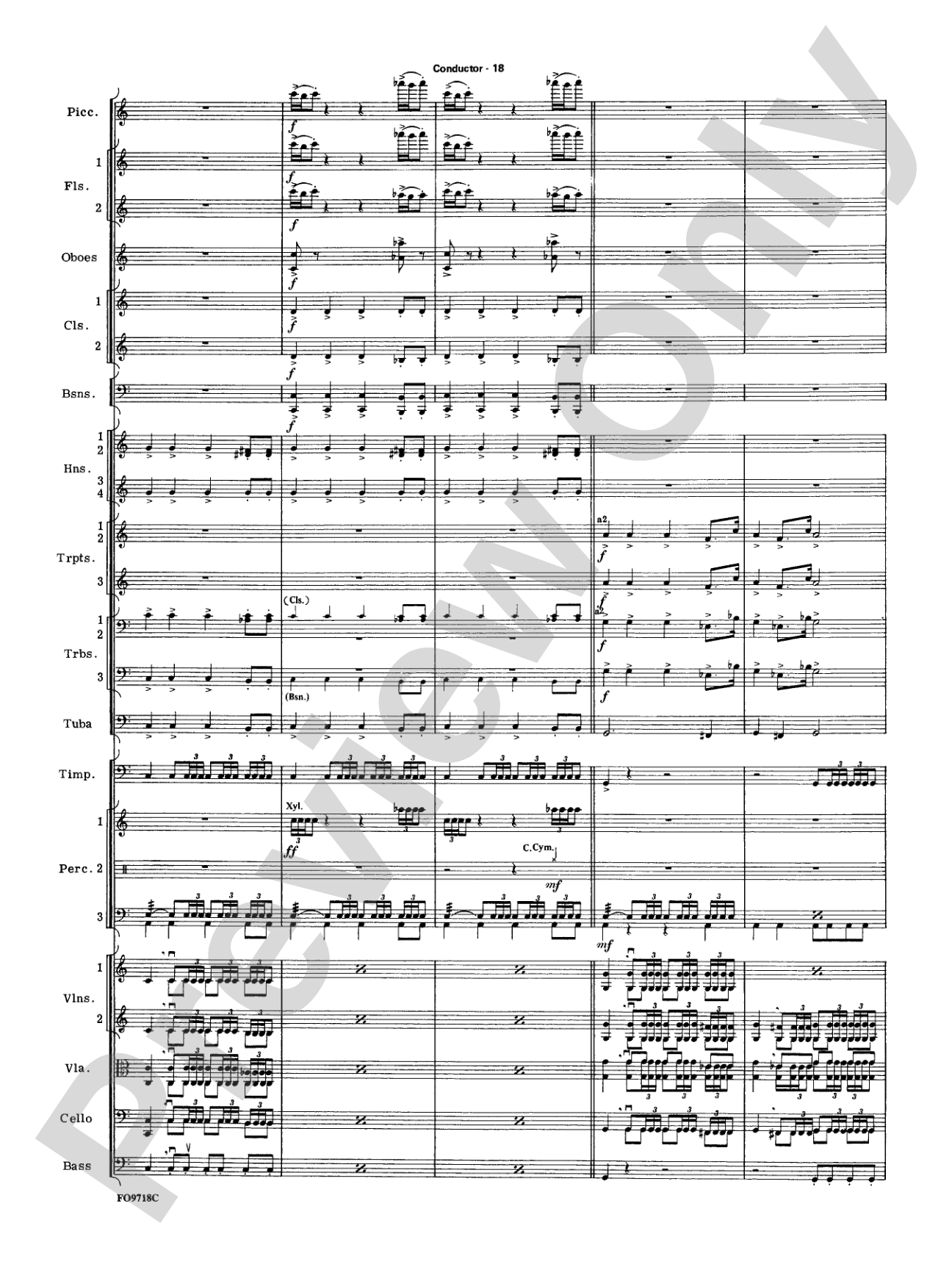
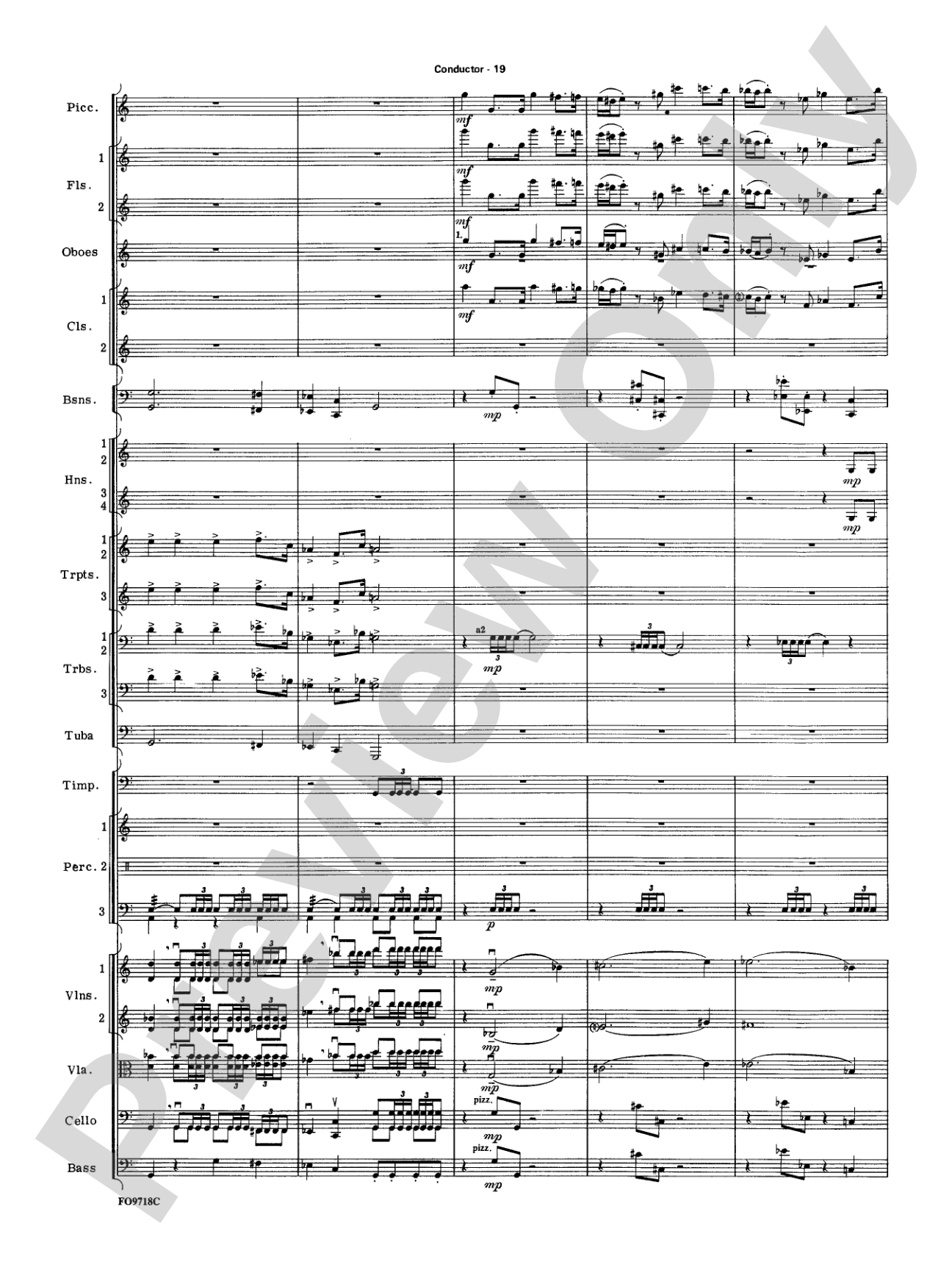
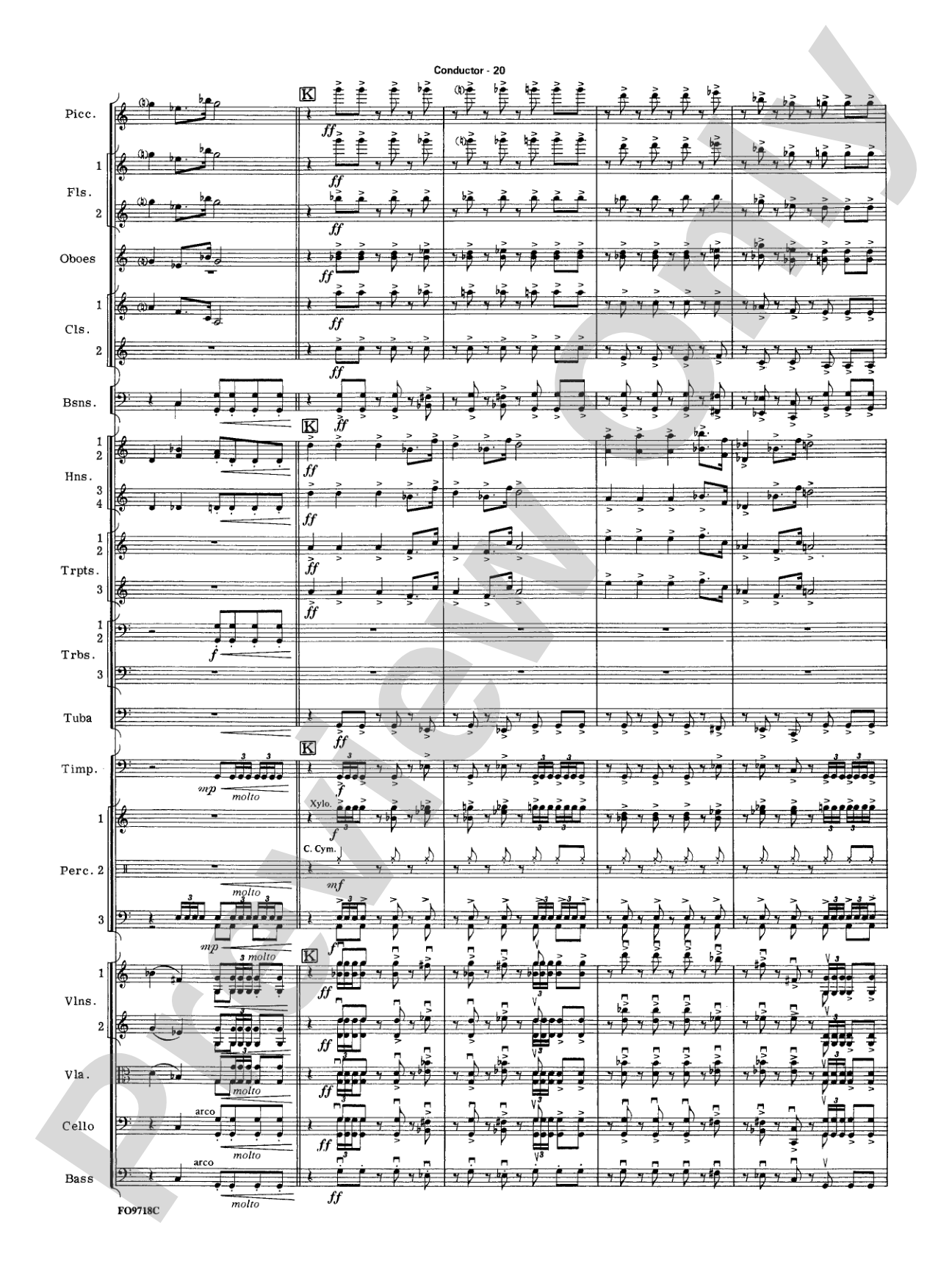
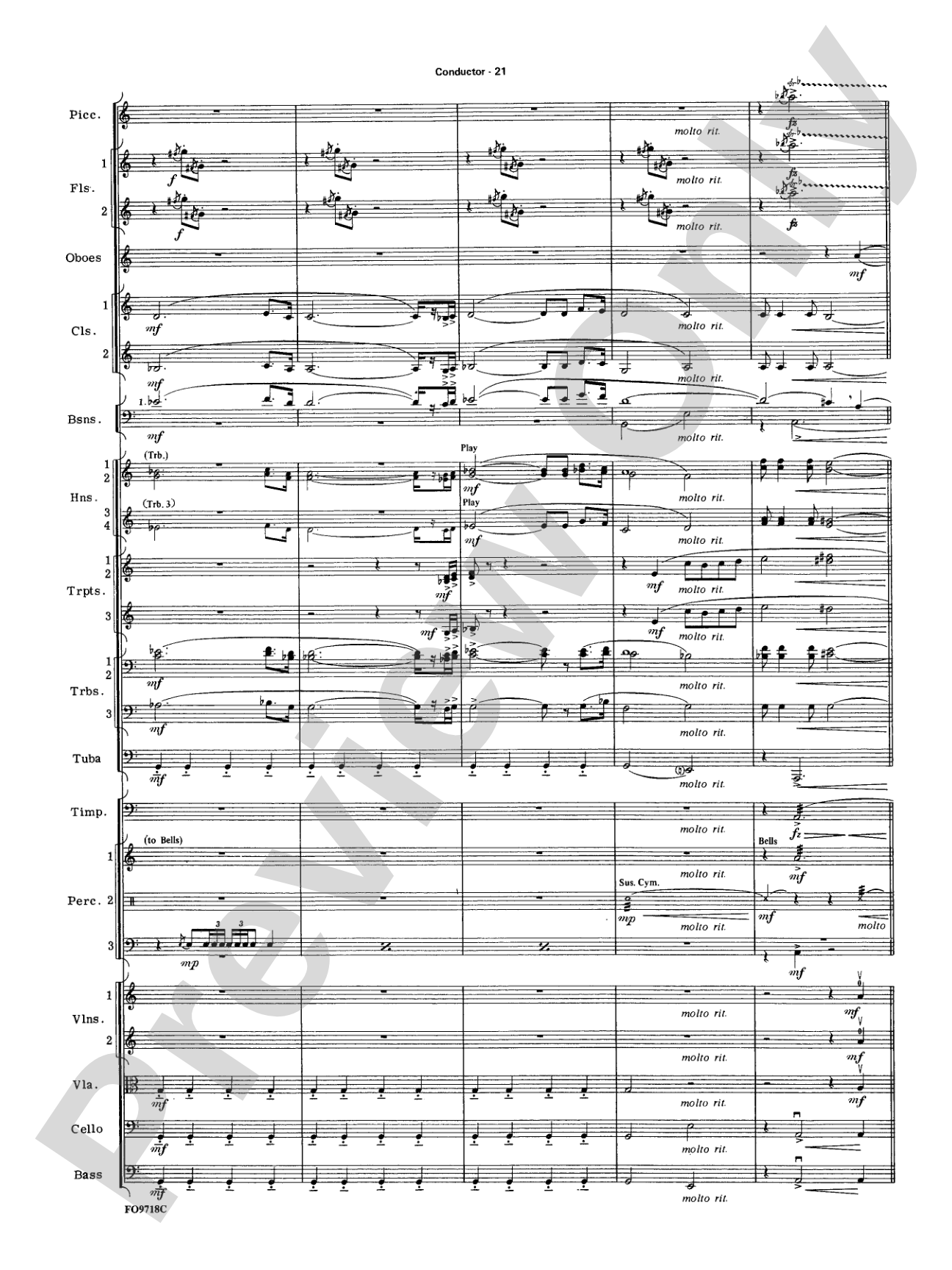
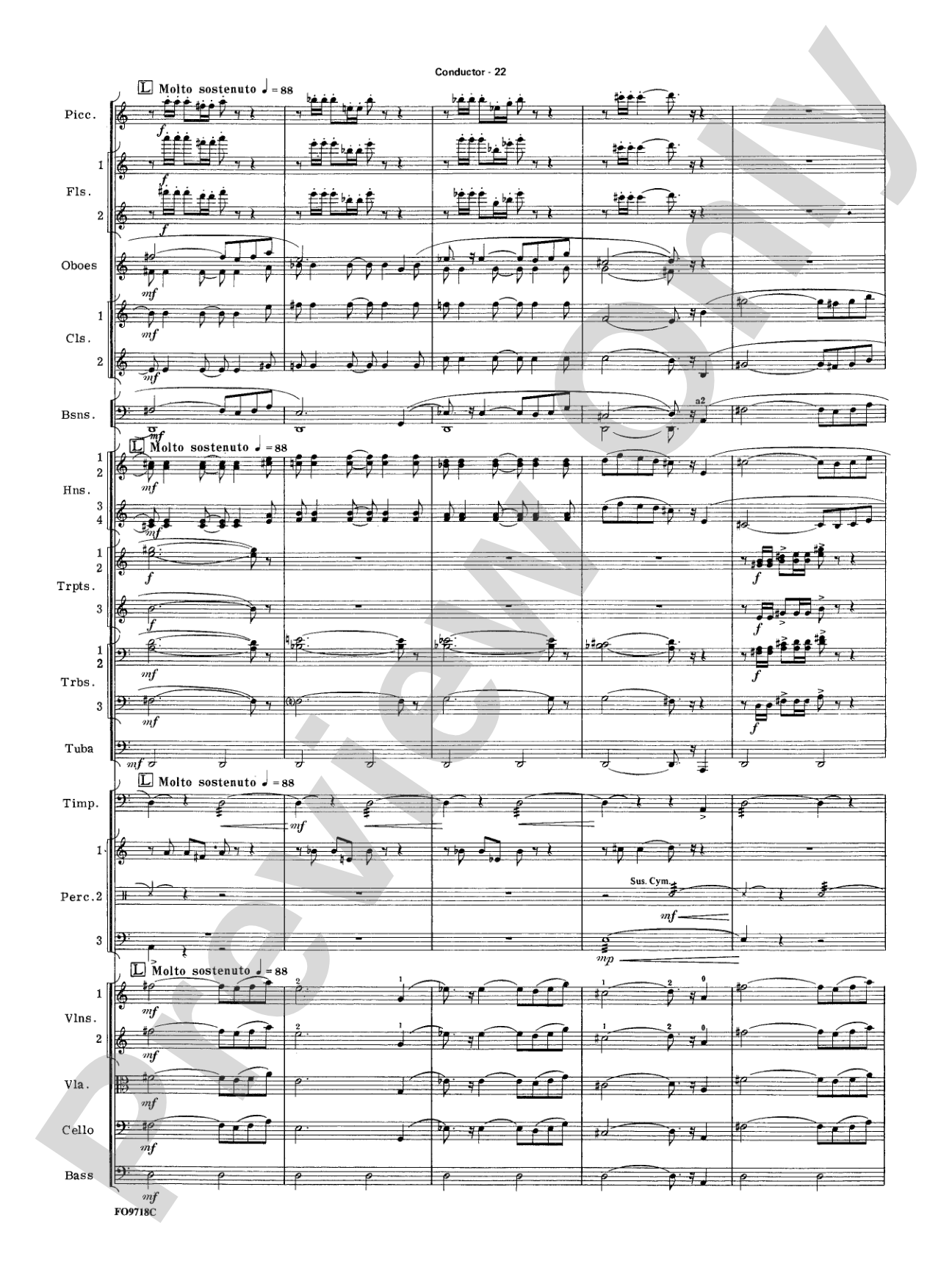
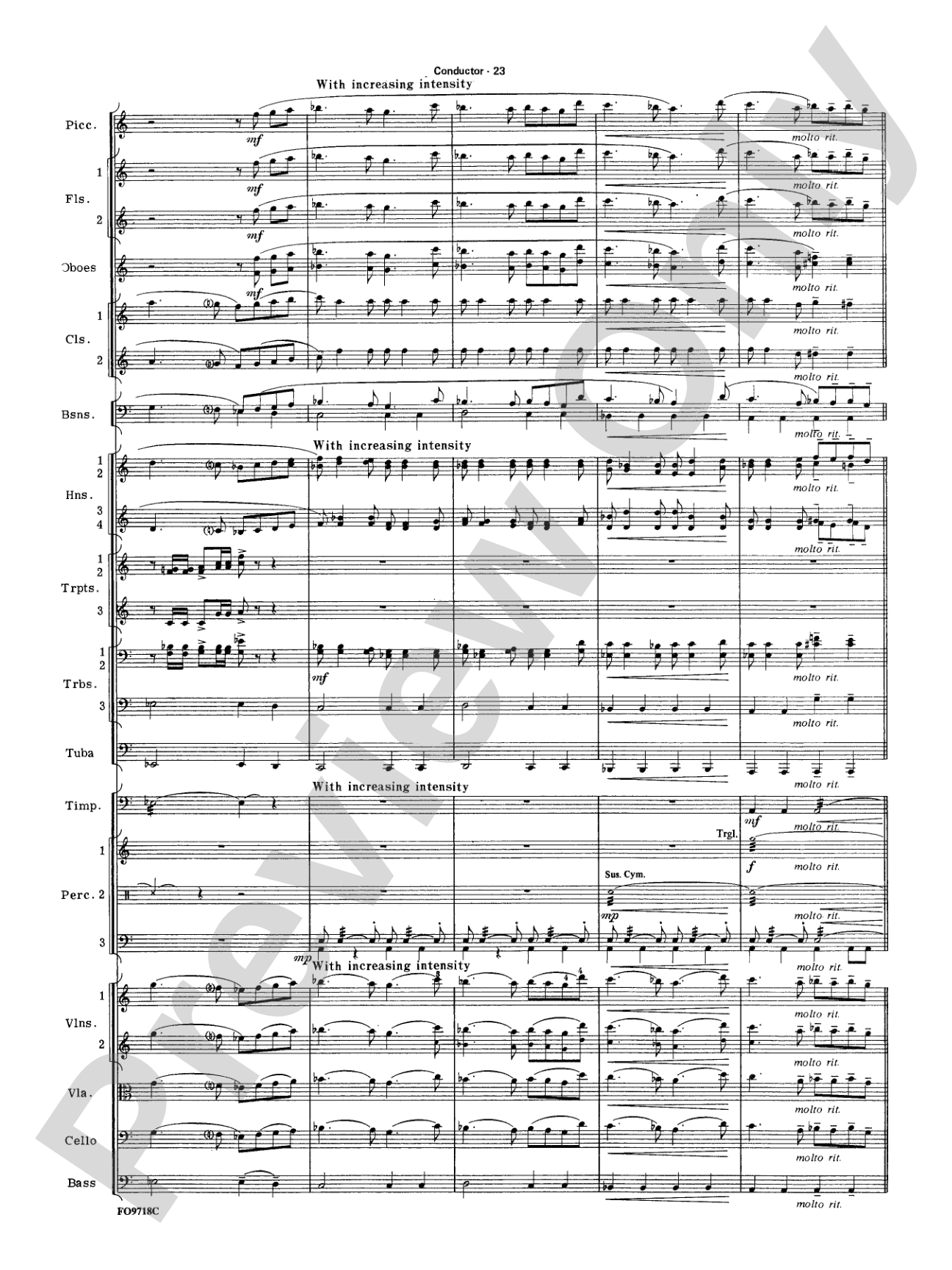
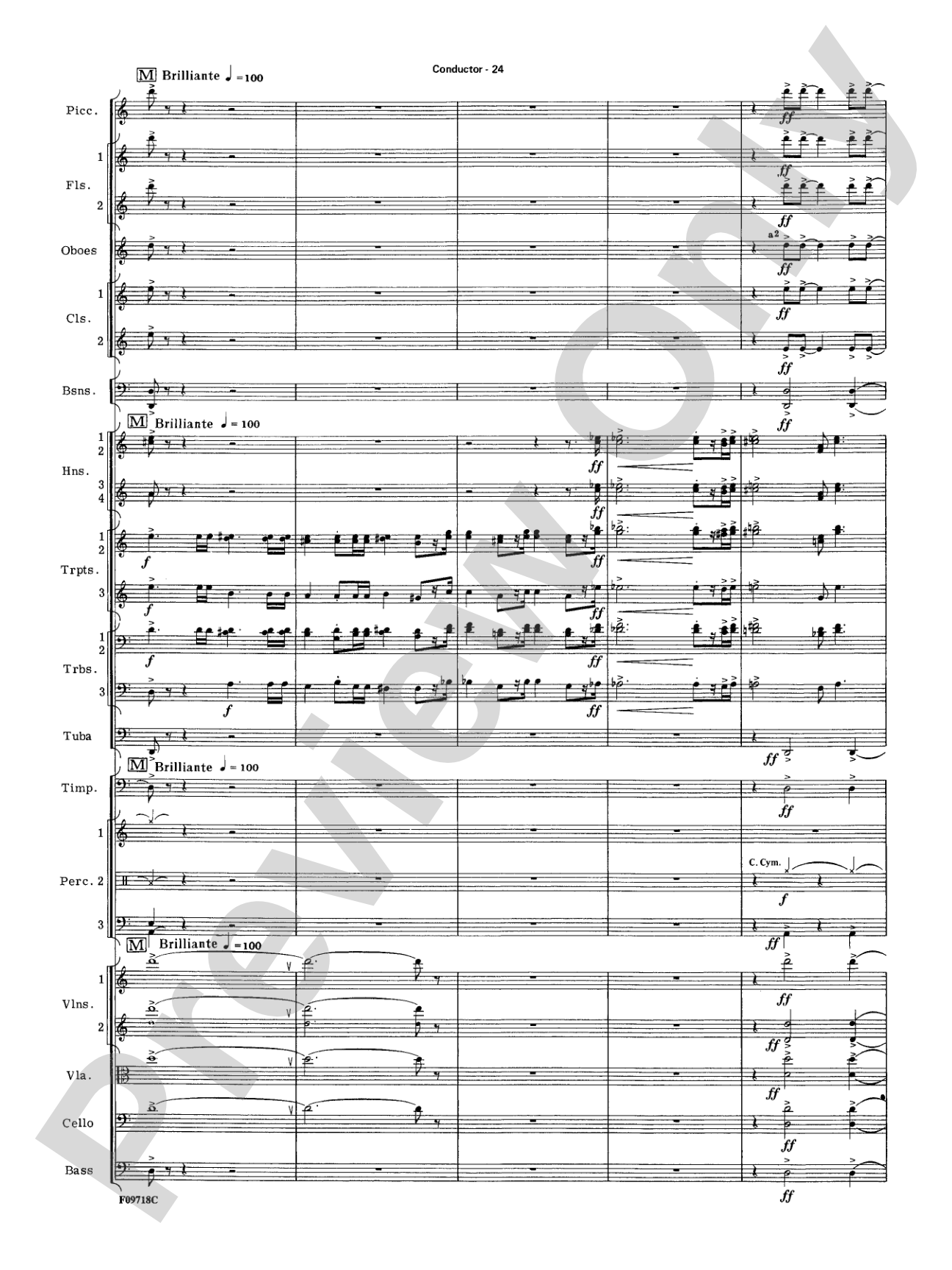
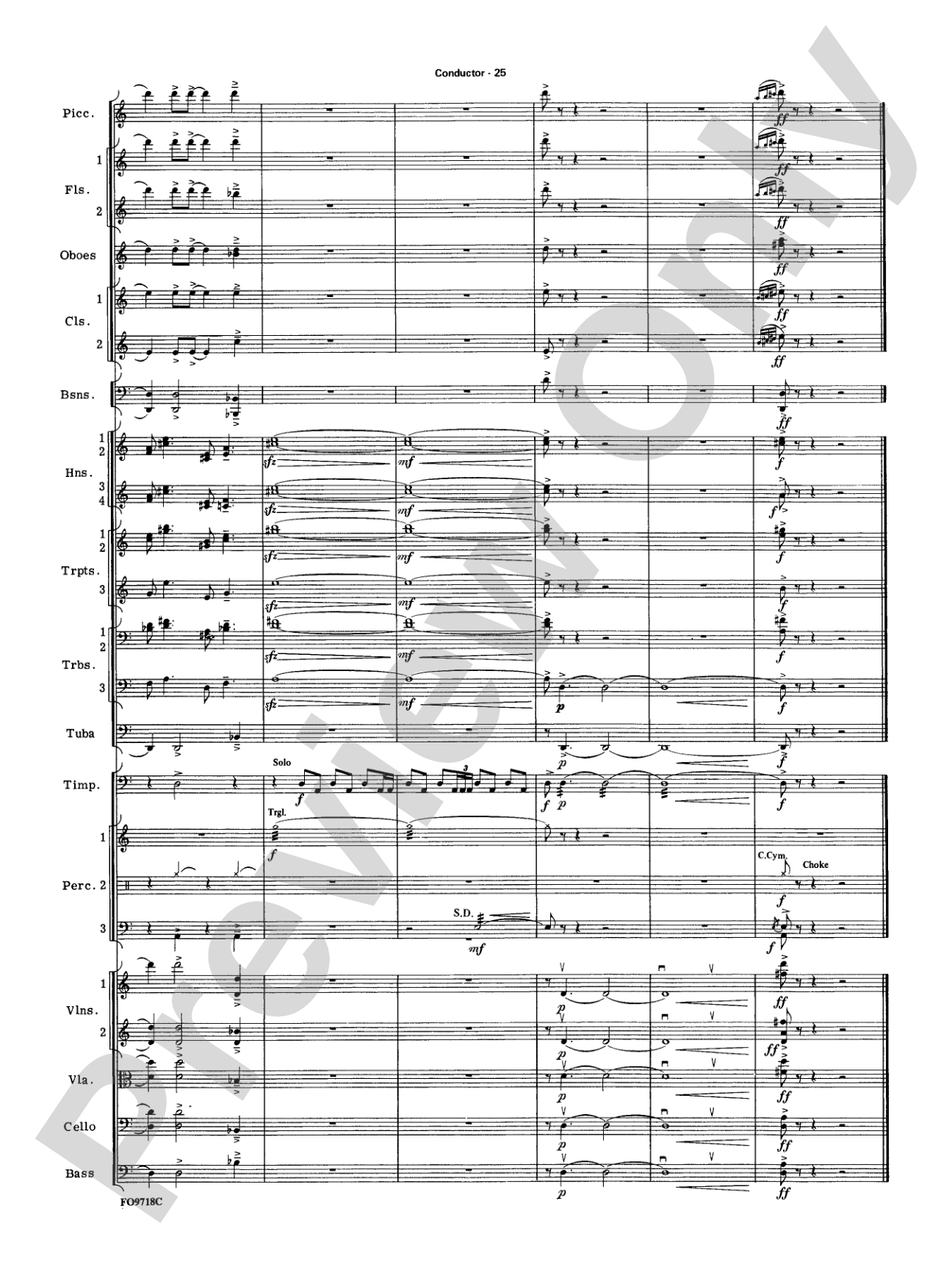


The Empire Strikes Back Medley: Full Orchestra Conductor Score & Parts
By John Williams / arr. John C. Whitney
Grade: 3.5
Item: 00-PK-0005849

$80.00
Pickup currently not available
Buy Extra Parts (Digital PDF Download)
Parts Added to Cart!
Description
This fantastic score by John Williams, which has thrilled millions of moviegoers, lives again! From The Empire Strikes Back comes these fantastic themes, presented here in a terrific medley: Star Wars (Main Theme) * May The Force Be With You * Hans Solo and the Princess * Yoda's Theme * The Imperial March (Darth Vader's Theme). Resplendent in this newly released and enhanced big screen spectacular, these marvelous melodies are indeed timeless! (5:17)


Don't just read it, hear it, play along with it, and watch your students grow with it. In MakeMusic Cloud, The Empire Strikes Back Medley: Full Orchestra Conductor Score & Parts comes alive with professional accompaniment, adjustable tempo, and built-in practice tools that turn solo practice into real progress.
Open in the Player
Jump straight in and assign it today.
Start Your Free Trial
Open this title and explore the full library in minutes.
Sample Audio
No sample audio found.
Sample Video
No sample videos found.
Additional Details
Series:
Pop Concert Full Orchestra
Publisher:
Alfred Music
Page Count:
268
SKU:
00-PK-0005849
More about this title
About the Composer: John Williams
John Williams is one of the most celebrated film composers in cinema history, with a catalog spanning more than six decades. His work across the Star Wars saga, Indiana Jones films, Jaws, E.T., Schindler's List, and countless other iconic scores has fundamentally shaped how we experience narrative through music. Williams brings the sensibility of a symphonic composer to film, crafting themes of genuine melodic substance and harmonic sophistication that audiences remember and musicians treasure.
Beyond the screen, Williams has conducted major orchestras worldwide and composed extensively for concert halls and educational ensembles. His orchestral writing is remarkably clear and idiomatic, making his music accessible to student orchestras while maintaining the grandeur and emotional depth that made his film scores legendary.
Why we love this
This medley captures the architectural brilliance of Williams's thematic writing within a single, manageable performance. The sequence moves through some of cinema's most recognizable melodies with natural pacing and emotional arc, giving your orchestra a chance to sink their teeth into genuinely memorable material rather than filler. At Grade 3.5, the orchestration balances accessibility with sophistication, allowing strong musicianship to shine without demanding virtuosity.
What to expect
Sweeping, heroic, and cinematic without requiring a film score sensibility to perform well. The writing inhabits the rich orchestral colors of the original while delivering moments of genuine tenderness alongside the expected grandeur. You'll find yourself conducting passages that feel less like transcription and more like orchestral storytelling.
Who it's for
Orchestra directors seeking repertoire that engages students through immediately recognizable material and provides meaningful artistic challenges. This works equally well for high school orchestras with solid fundamentals and community or youth orchestras aiming for a concert-worthy program that audiences genuinely want to hear.
How to get the most out of it
- Shape the iconic main theme with a singing, almost vocal quality in the first violins; resist the impulse to let it sound perfunctory despite its familiarity.
- Balance the brass entrances carefully during the Imperial March section so the sinister character emerges clearly without overpowering the ensemble.
- Give the woodwind writing in May the Force Be With You room to breathe; this section asks for restraint and clarity rather than rhythmic propulsion.
- Use the transition between themes to establish clear tempo relationships; even brief pause points help the audience recognize each new section.
How to use it
Program this as a centerpiece in a pops concert or as a festival selection where you want to showcase your orchestra's ability to handle contemporary, high-profile material with musical integrity. It also works beautifully in a film music or concert medley context, and the five-minute-plus length gives the piece substantial weight on any program.
Skills your students will build
- Balancing exposed thematic lines with accompaniment texture
- Sustaining musical shape across recognizable melodies
- Executing brass and percussion writing with stylistic control
- Reading and performing multiple key centers within a single work
- Responding to conductor interpretation of well-known material