The Emerald Sea Sheet Music Preview

The Emerald Sea: Piano

By Timothy Brown

Item: 98-DW9115

Digital Download
$5.95
Description
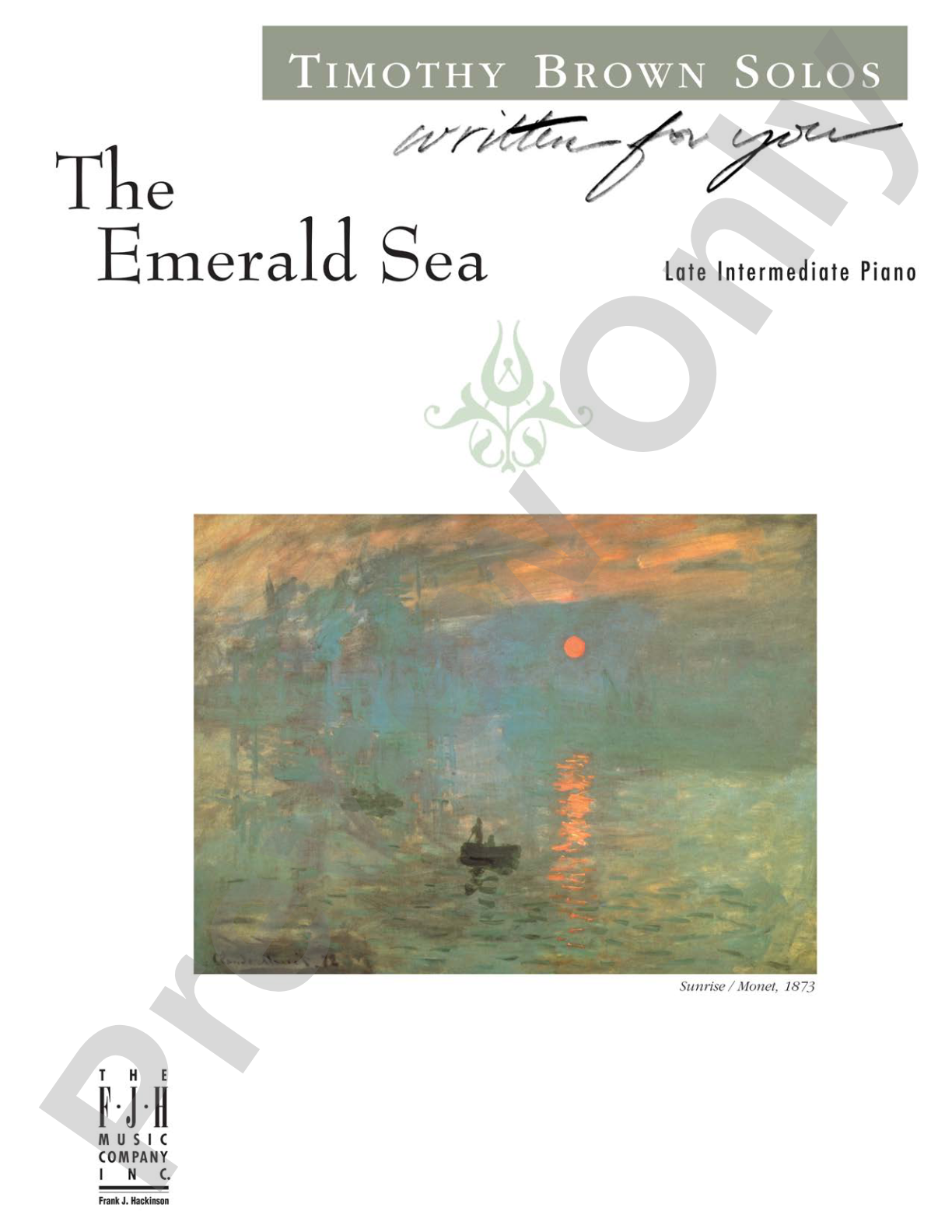
This solo sparkles with its flowing melody and rippling chords that encourage a balance of sound between the hands. A "song without words"� of a colorful sea.

The Emerald Sea: Piano isn't in MakeMusic Cloud just yet...but it could be. Let us know you'd like to see it, and you'll help shape what comes next. In the meantime, start a free trial and dive into thousands of interactive titles your students can play along with today.

Sample Audio
No sample audio found.
Sample Video
Additional Details
Series: Written For You
Publisher: The FJH Music Company, Inc.
SKU: 98-DW9115

More about this title

Why we love this

The writing sits perfectly in that sweet spot where pianists can explore hand independence and dynamic balance without fighting against the music. The rippling accompaniment figure gives students a tangible goal for tone control, making this an ideal choice when you want to build musicianship alongside technical growth.

What to expect

The piece evokes the gentle undulation of ocean swells, with a singing melody that floats above shimmering harmonic movement. There's something almost impressionistic about the sound world, suggesting the play of light on water rather than depicting the sea literally.

Who it's for

Pianists in the early-to-intermediate stages who are developing touch differentiation and hand balance. This piece works well for students ready to move beyond simple accompaniment patterns but still building confidence with two-handed coordination.

How to get the most out of it

  • Listen for the independence between your hands; the melody should emerge clearly above the flowing accompaniment without either hand overpowering the other
  • Shape the rippling chords as a continuous gesture rather than individual block chords, letting the water imagery guide your phrasing
  • Explore subtle tempo flexibility at the ends of phrases to let the melody breathe naturally, then return gently to the established pulse

How to use it

This pairs naturally with other character pieces that explore nature imagery or impressionistic textures. Consider programming it early in a recital to set a contemplative mood, or use it as a transitions piece between more dramatic works.

Skills your students will build

  • Hand balance and voice independence
  • Controlling tone and dynamics in accompaniment figures
  • Sustaining legato phrasing while maintaining rhythmic clarity
  • Creating shimmer and resonance through rolled or arpeggiated chords

You May Also Like