The Eastern Gate Sheet Music Preview

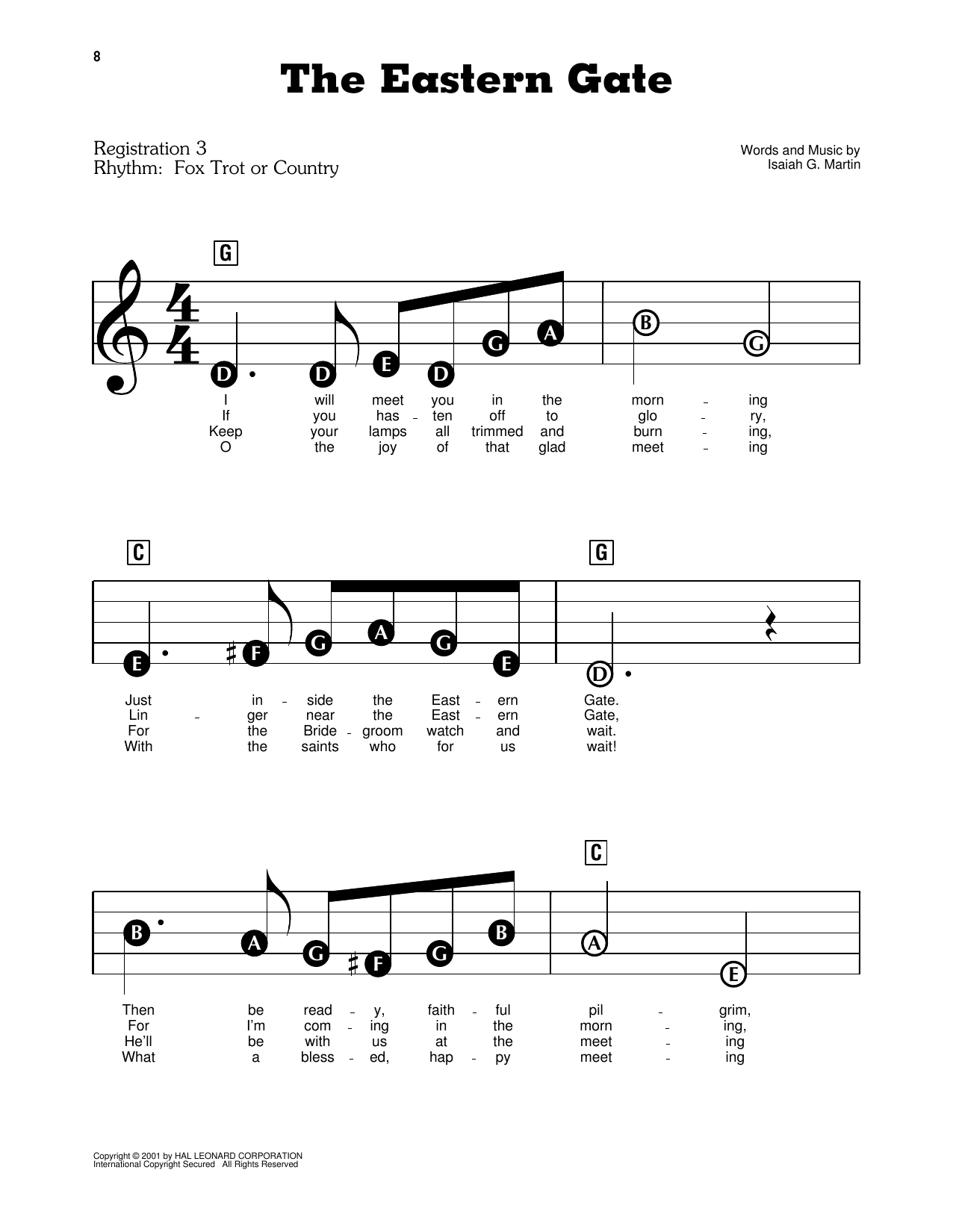
The Eastern Gate: E-Z Play Today

As performed by Isaiah G. Martin

Item: 35-DS00456659

Digital Download
$4.99
Description

The Eastern Gate: E-Z Play Today isn't in MakeMusic Cloud just yet...but it could be. Let us know you'd like to see it, and you'll help shape what comes next. In the meantime, start a free trial and dive into thousands of interactive titles your students can play along with today.

Sample Audio
No sample audio found.
Sample Video
Additional Details
Publisher: Hal Leonard
Page Count: 2
SKU: 35-DS00456659

More about this title

Why we love this

Martin's arrangement captures the spiritual warmth of this traditional hymn without overcomplicating the accompaniment. The E-Z Play format makes it accessible to pianists who need something singable and straightforward, yet the harmonic choices keep it engaging for both player and listener.

What to expect

The Eastern Gate carries a quiet, reverent quality rooted in American hymn tradition. There's both solemnity and gentle hope in the harmonies; the piece invites contemplation rather than technical display.

Who it's for

Beginning to early intermediate pianists who want to build repertoire in sacred and gospel idioms. Worship leaders and pianists accompanying congregational singing or small vocal groups will find this particularly useful.

How to get the most out of it

  • Let the melody breathe in the right hand; resist the urge to rush through phrases. The hymn tradition calls for clear, unhurried phrasing that gives the text room to land.
  • Voice the left hand chords to sit comfortably under the melody rather than competing with it. Keep dynamics gentle so the tune remains the focal point.
  • Pay attention to any tied notes or fermatas; these moments of stillness are where the spiritual character of the piece becomes most apparent.

How to use it

Include this in a service of worship, a community hymn sing, or a program celebrating American sacred music traditions. Pianists preparing for church accompaniment work will benefit from studying this arrangement closely.

Skills your students will build

  • Playing with appropriate hymn phrasing and line control
  • Voicing left hand chords to support rather than compete with melody
  • Interpreting sacred repertoire with appropriate reverence and stillness

You May Also Like