
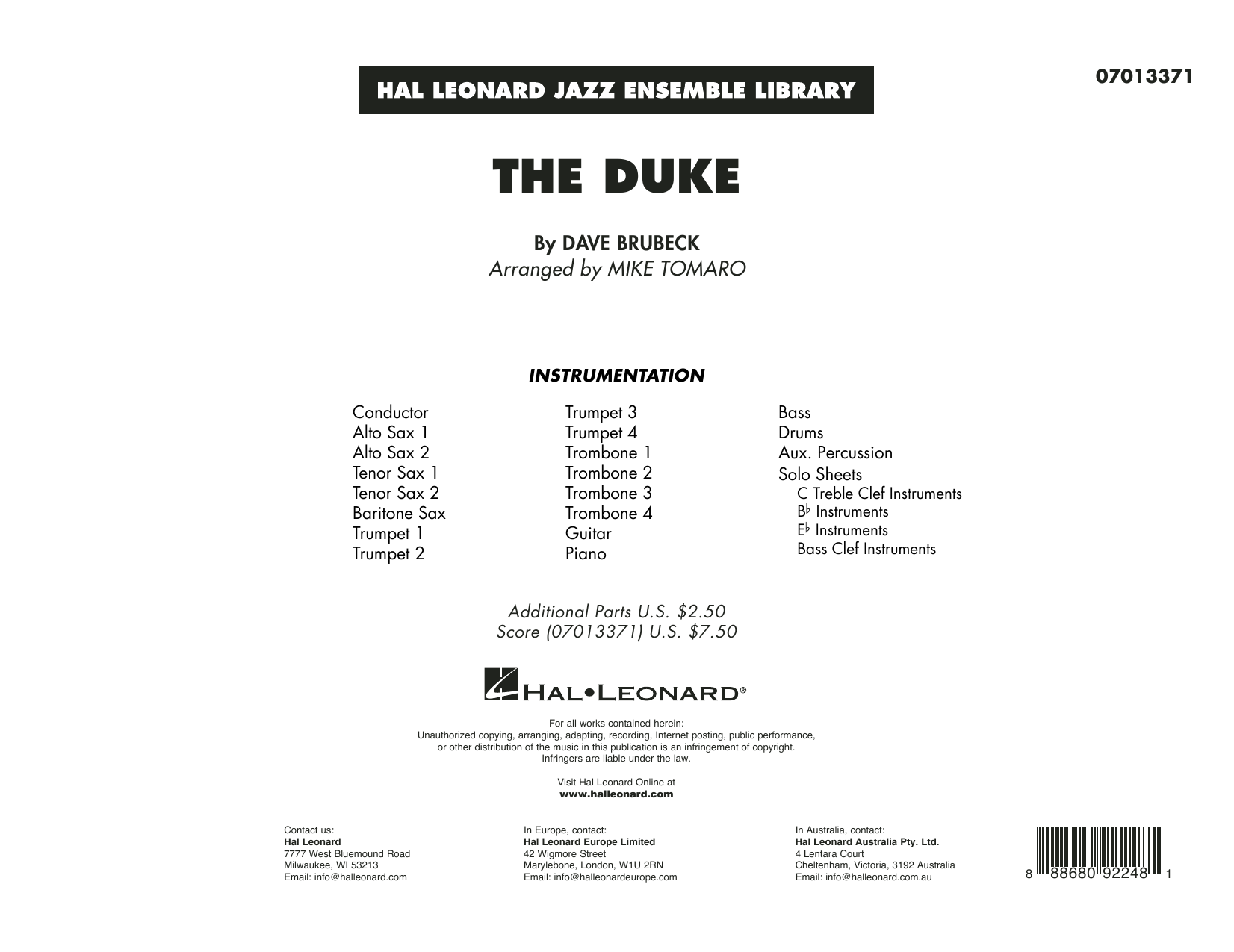

The Duke (arr. Mike Tomaro): Jazz Ensemble Conductor Score & Parts
By Dave Brubeck / Arranged by Mike Tomaro
Grade: 4
Item: 35-PK00447225
$55.00
Pickup currently not available
Buy Extra Parts (Digital PDF Download)
Parts Added to Cart!
Description
This jazz standard composed by Dave Brubeck came to notoriety on the landmark 1957 Miles Davis/Gil Evans collaboration "Miles Ahead". This arrangement takes the composition in a somewhat different direction with a fully-notated Afro-Cuban groove. Solos are included for alto sax and trumpet.


The Duke (arr. Mike Tomaro): Jazz Ensemble Conductor Score & Parts isn't in MakeMusic Cloud just yet...but it could be. Let us know you'd like to see it, and you'll help shape what comes next. In the meantime, start a free trial and dive into thousands of interactive titles your students can play along with today.
Request This Title
Tell us you want it.
Start Your Free Trial
Explore everything that's ready to play right now.
Sample Audio
No sample audio found.
Sample Video
No sample videos found.
Additional Details
Publisher:
Hal Leonard
SKU:
35-PK00447225
More about this title
About the Composer: Dave Brubeck
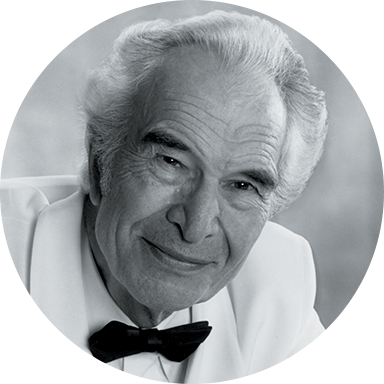
Dave Brubeck built a career that spanned both the jazz stage and the concert hall, proving that improvisation and formal composition could flourish in a single artistic life. Beyond his improvisational mastery as a pianist, he composed prolifically across genres: sacred works including the oratorio To Hope! and the mass Pange Lingua Variations, orchestral pieces, chamber music, and ballet suites that have been performed by ensembles ranging from the London Symphony Orchestra to major American dance companies. His educational path shaped this versatility; after Army service in World War II, he studied composition with Darius Milhaud at Mills College, who encouraged him to synthesize jazz language with classical forms.
Breakthroughs define his legacy. "Time Out" became the first jazz album to sell over a million copies, while "Take Five" secured his place in popular culture. Beyond the music itself, Brubeck was a quiet force for integration during the Civil Rights era, refusing to perform at segregated venues and actively advancing racial justice in American music. His honors reflect both artistic achievement and cultural significance: a Grammy Lifetime Achievement Award, the Presidential Medal of the Arts, and induction into the American Classical Music Hall of Fame in 2003.
Why we love this
Tomaro's arrangement captures a pivotal moment in jazz history while creating something entirely fresh. By grafting an Afro-Cuban pulse onto Brubeck's melodic architecture, this version gives your ensemble a rhythmic anchor that feels modern and danceable, yet the fully notated horn sections maintain the sophisticated harmonies that made the original endure. Your alto and trumpet soloists get genuine real estate to develop their improvisation in a idiomatically strong groove.
What to expect
The piece marries the cool intellectualism Brubeck brought to his "Time Out" era with an infectious Latin swing that propels the music forward. You get the sophistication without the academic distance; it's a composition that thinks and dances at the same time.
Who it's for
Jazz ensembles at the intermediate to advanced high school level will find an accessible entry point to both Brubeck's compositional language and Afro-Cuban jazz idioms. The Grade 4 difficulty allows younger or less experienced groups to participate meaningfully while the solo opportunities and harmonic sophistication keep advanced students engaged.
How to get the most out of it
- Anchor the Afro-Cuban foundation in your rhythm section before adding horns. Spend early rehearsals isolating the piano, bass, and drums so the groove locks before the ensemble colors it in.
- Balance transparency with swagger in the notated sections. These horn lines should sit clearly without sounding thin; find the dynamic sweet spot where each voice contributes texture but the rhythm section remains audible.
- Give your soloists generous space to breathe during their choruses. Brief them beforehand on the harmonic structure and the energy level you want, then trust them to navigate the groove.
How to use it
Pair this alongside other Brubeck material or other modern jazz standards to build a thematic concert, or use it as a contrast piece in a program that alternates between straight-ahead swing and world music influences. It works equally well as a showcase for developing soloists or as a complete ensemble statement in a longer set.
Skills your students will build
- Reading fully notated jazz arrangements with mixed swing and straight eighth-note figures
- Listening and locking into Latin/Afro-Cuban rhythmic feels
- Trading harmonic phrases and responding to soloist vocabulary in an ensemble context
- Balancing melodic clarity with rhythmic support in a dense horn section
- Interpreting stylistically idiomatic articulation and phrasing in a contemporary jazz context