
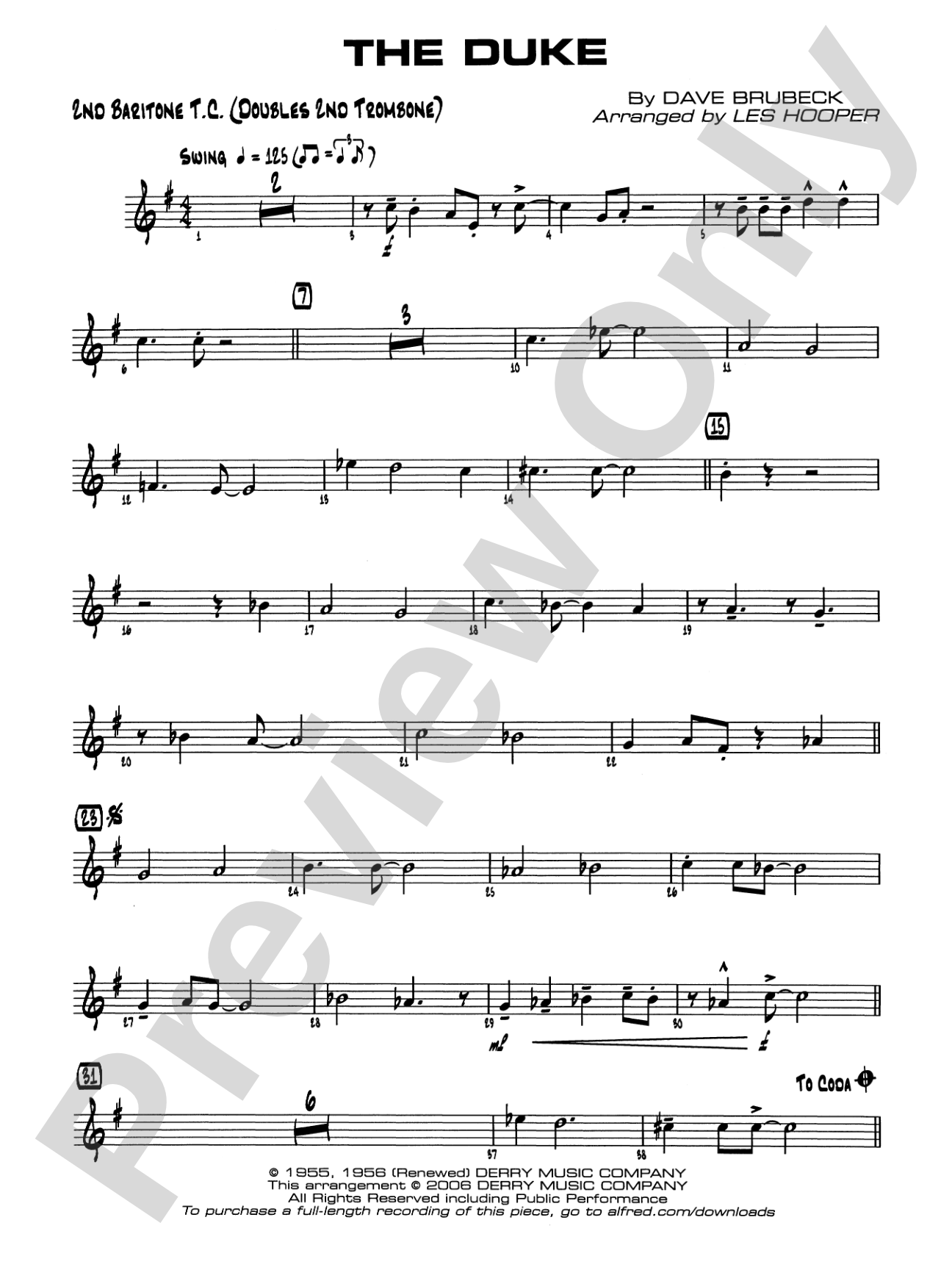

The Duke: 2nd Baritone T.C.
By Dave Brubeck / arr. Les Hooper
Grade: 3 (Medium)
Item: 00-PC-0015650_BTC2
$3.00
Pickup currently not available
Description
"The Duke" provides an intimate ensemble setting of a beautiful Dave Brubeck melody with written-out solos for alto sax and trumpet. The lead trumpet plays to a written G on top of the staff. This is a tasty, musical, dynamic, and first-class chart based on a superb tune! This title is available in MakeMusic Cloud.


Don't just read it, hear it, play along with it, and watch your students grow with it. In MakeMusic Cloud, The Duke: 2nd Baritone T.C. comes alive with professional accompaniment, adjustable tempo, and built-in practice tools that turn solo practice into real progress.
Open in the Player
Jump straight in and assign it today.
Start Your Free Trial
Open this title and explore the full library in minutes.
Sample Audio
1
Audio File
--:--
0:00
0:00
Sample Video
No sample videos found.
Additional Details
Series:
Jazz Band Series
Publisher:
Alfred Music
Page Count:
98
SKU:
00-PC-0015650_BTC2
More about this title
About the Composer: Dave Brubeck
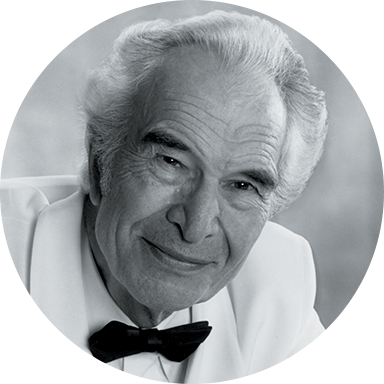
Dave Brubeck was a pianist and composer whose improvisational command shaped modern jazz while his formal training enabled him to write across genres: orchestral works, ballets, chamber music, choral pieces, and large-scale compositions for chorus and orchestra. His album "Time Out" became the first jazz recording to sell over a million copies, and "Take Five" entered the cultural canon. Beyond his prolific output as a performer and recording artist, Brubeck actively broke racial barriers in mid-20th-century American music.
Brubeck's compositional reach extended far beyond jazz standards. He studied with Darius Milhaud at Mills College after World War II, an influence that encouraged him to blend jazz vocabulary with classical forms. His sacred works including "To Hope!" and "Pange Lingua Variations" have been performed and recorded internationally by major orchestras and choirs. Honors accumulated throughout his career include a Grammy Lifetime Achievement Award, the Presidential Medal of the Arts, and induction into the American Classical Music Hall of Fame in 2003.
Why we love this
This arrangement captures the lyrical core of a Brubeck melody while giving your soloists room to breathe with written-out alto sax and trumpet parts that sound genuine, not mechanical. The Grade 3 level makes it accessible without feeling underdeveloped, and the lead trumpet's written G provides clarity for section balance. It's the kind of chart that feels musical in rehearsal and polished in performance.
What to expect
Intimate and conversational, like overhearing a small group session in a late-night club. The melody carries elegance and clarity while the solos weave in and out with natural phrasing, never overwhelming the ensemble texture.
Who it's for
Jazz ensemble directors working with intermediate students who need solid repertoire that sounds professional without requiring extensive improvisation coaching. Soloists benefit from the pre-written parts, which eliminate transcription work while preserving the genuine jazz feel. This is ideal for groups eager to program Brubeck without stepping into advanced territory.
How to get the most out of it
- Balance the written solos so they feel conversational rather than spotlight-driven; the alto sax and trumpet should blend with, not dominate over, the ensemble foundation.
- Shape the melody with rubato in the head; Brubeck's writing thrives when you let the phrasing breathe rather than locking rigidly to the grid.
- Use the lead trumpet's written G as a tuning reference for the entire trumpet section to ensure unified intonation on the highest passagework.
- Let the rhythm section lock in the pocket early in rehearsal so the horns can focus on the melodic nuance rather than fighting for time.
How to use it
Program this mid-set to showcase melodic sophistication and ensemble balance; it pairs well alongside swing standards or contemporary jazz pieces. It also works as a recital or concert closer that demonstrates your ensemble's maturity without requiring the technical demands of a hard-bop chart.
Skills your students will build
- Reading written jazz solos with idiomatic phrasing and articulation
- Balancing melody and accompaniment in small ensemble settings
- Responding to dynamic shape within a lyrical, non-fast-tempo context
- Sectional tuning and intonation in upper register trumpet passages
- Ensemble listening and conversation between rhythm section and horns