
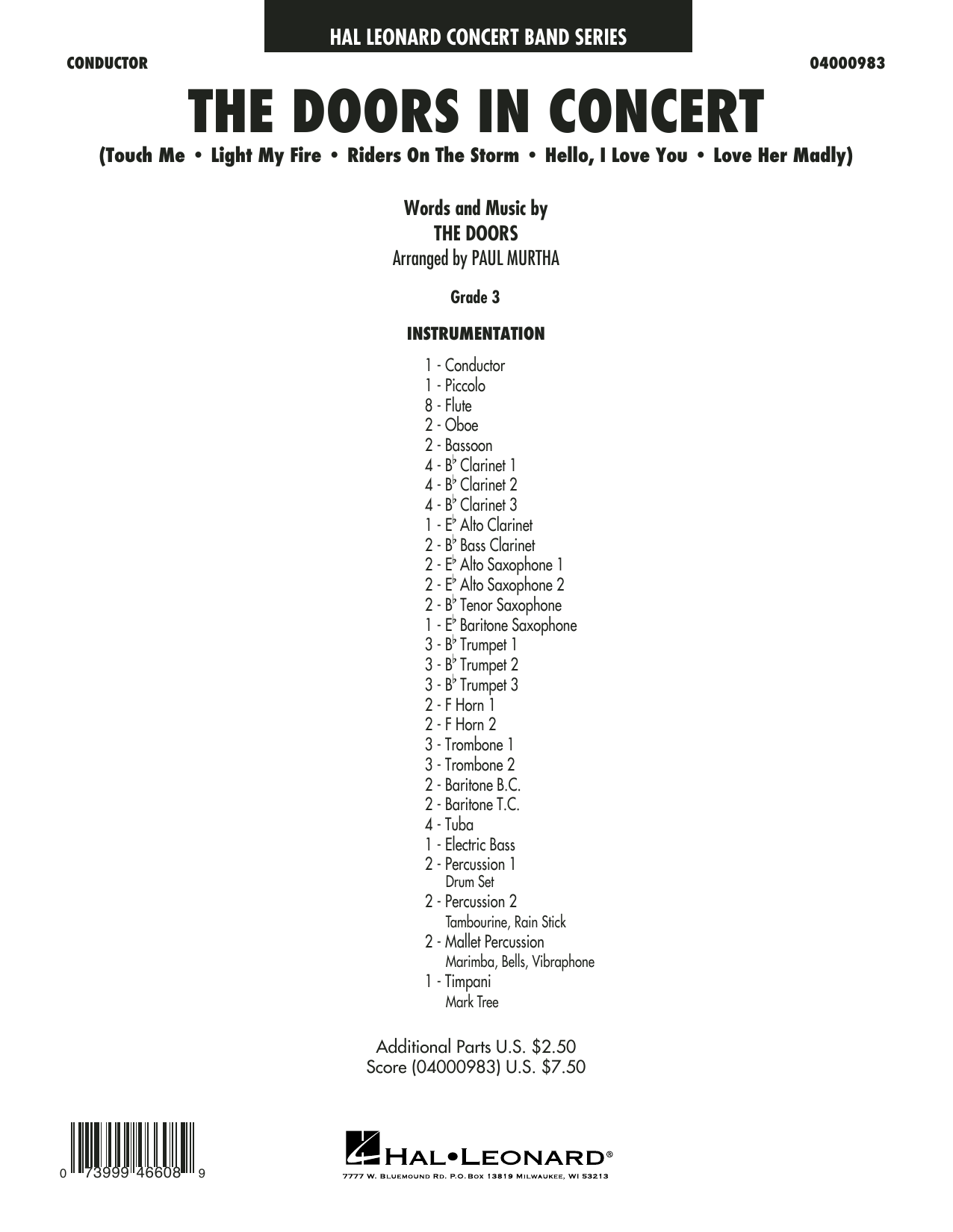

The Doors in Concert (arr. Paul Murtha): Concert Band Conductor Score & Parts
As performed by The Doors / Arranged by Paul Murtha
Grade: 3
Item: 35-PK00455503
$75.00
Pickup currently not available
Buy Extra Parts (Digital PDF Download)
Parts Added to Cart!
Description
This legendary band from the late '60s gave us some of the best classic hits of the rock era. This powerful-sounding medley for concert band includes: "Light My Fire; Riders on the Storm; Love Her Madly; Hello, I Love You;" and "Touch Me".


Discover MakeMusic Cloud: thousands of interactive titles your students can play along with today.
Sample Audio
No sample audio found.
Sample Video
Additional Details
Publisher:
Hal Leonard
SKU:
35-PK00455503
More about this title
About the Artist: The Doors
The Doors emerged from Los Angeles in 1965 as one of rock music's most innovative and intellectually ambitious bands. Led by Jim Morrison's distinctive baritone and poetic lyrics, keyboardist Ray Manzarek's atmospheric organ work, and a rhythm section that could shift from bluesy grooves to driving rock propulsion, the group created a catalog that blended rock, blues, and experimental elements. Their influence on popular music remains substantial, and their catalog continues to captivate audiences across generations.
For music educators, The Doors' material offers rich opportunities to explore rock songwriting that transcends simple verse-chorus structures. Their songs contain harmonic sophistication and dynamic range that reward serious musical attention, making them ideal bridge material for concert ensembles seeking to engage students with authentic popular music that doesn't sacrifice artistic depth.
Why we love this
Paul Murtha's arrangement captures the unmistakable sonic identity of these five classic Doors recordings without requiring rock instrumentation or extensive amplification. The medley structure maintains enough separation between songs to feel like distinct moments, yet flows with musical intelligence that keeps audiences engaged from "Light My Fire" through "Touch Me." Grade 3 bands get to explore authentic rock textures, modal harmony, and that late-1960s sensibility that students recognize and respect.
What to expect
Atmospheric and hypnotic in moments, then surging with rock energy the next. The arrangement channels the Doors' signature blend of blues-inflected organ work, Morrison's laid-back vocal phrasing translated for instruments, and the undercurrent of sophisticated harmony that made them more than just a rock radio band. Expect your students to feel the coolness factor of performing music that matters.
Who it's for
Concert bands at the Grade 3 level seeking repertoire that feels current and relevant while maintaining strong arranging craft. Directors programming a mix of classical and contemporary work will find this medley bridges those worlds naturally. Students respond to material they recognize, and this collection offers five songs that even young musicians likely know by name.
How to get the most out of it
- Let the rhythm section lock into the grooves early in rehearsal rather than drilling pitch first. These songs breathe from their rhythmic foundation, so secure the pocket before layering the melody and harmony voices.
- Emphasize space and restraint in the softer sections, particularly around "Riders on the Storm." The arrangement's power comes partly from contrast, so resist the impulse to fill every moment with full band sound.
- Shape the dynamic arc across all five songs as one continuous journey. Rather than treating each tune as self-contained, think of the overall medley as building toward the final moments.
How to use it
This medley works exceptionally well as a spring or winter concert closer that shifts energy and genre without leaving the concert setting. Place it after more traditional repertoire to remind audiences (and students) that concert band speaks many musical languages. It also serves as effective motivation during the latter part of the school year when ensemble morale can benefit from repertoire students genuinely want to perform.
Skills your students will build
- Reading and performing rock rhythm feels and groove-based ensemble playing
- Balancing harmonic density and orchestral color in a rock context
- Executing smooth transitions between contrasting tempos and moods within a single work
- Shaping dynamics and phrasing beyond traditional classical articulation
- Understanding modal harmony and blues-based chord progressions