Georges Bizet (1838–1875) was a French composer whose gift for melodic invention and orchestral color shaped Romantic opera. Though he died at thirty-six, his works reveal a composer deeply attuned to human emotion and theatrical storytelling. His operas, ballets, and instrumental pieces remain central to the repertoire because they combine technical sophistication with immediate emotional appeal.
Why we love this
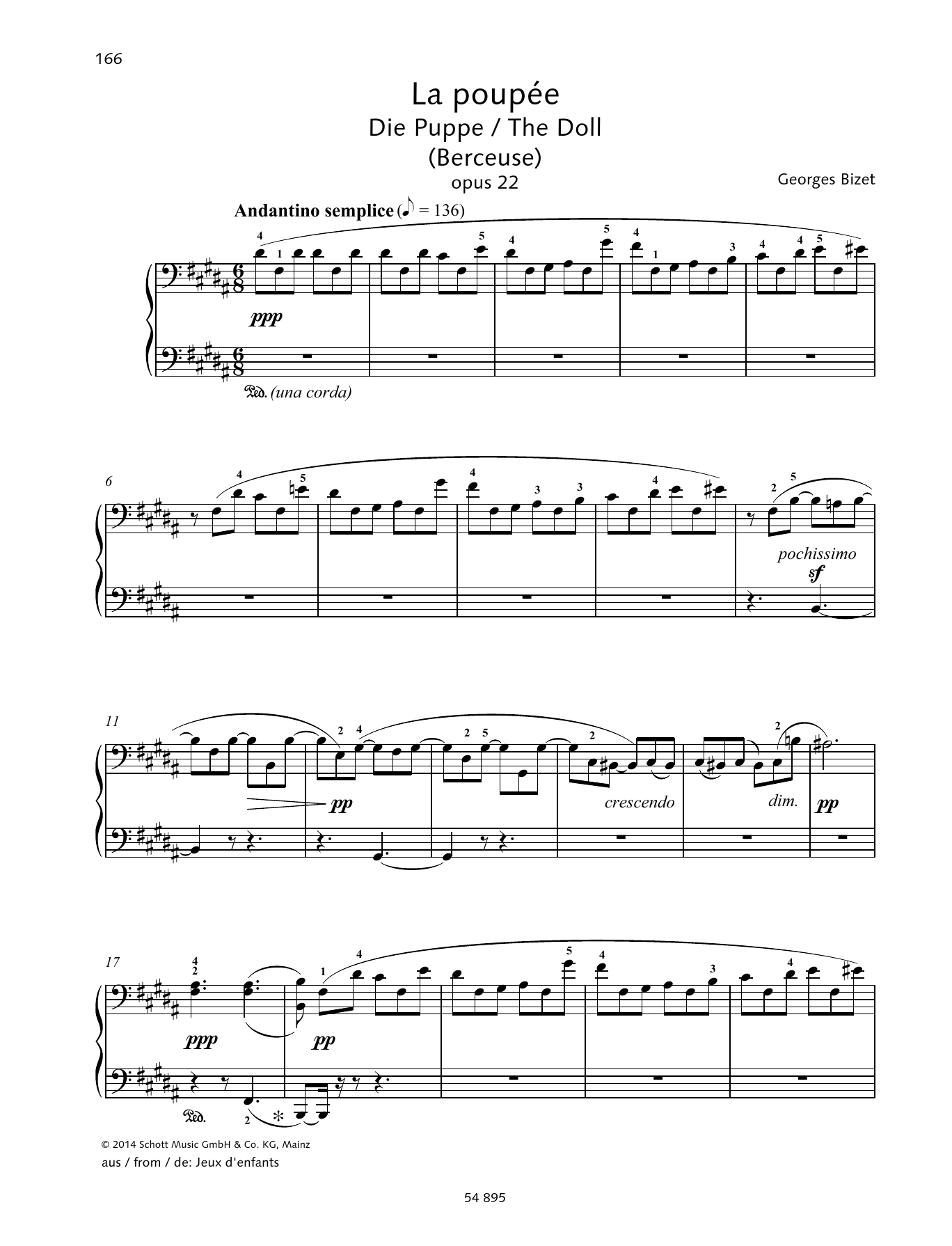
Bizet's gift for character portrayal shines in this intimate character piece. The piece rewards careful attention to phrasing and dynamic shaping, making it an ideal choice for students learning to shape melodic lines with intention rather than mere technical accuracy.
What to expect
The piece captures a moment of gentle reflection, with a direct and unadorned melodic voice set against simple harmonic support. There is an intimacy here that draws the listener into a single emotional thread, neither bombastic nor overly sentimental.
Who it's for
This piece suits intermediate pianists developing their interpretive skills and understanding of Romantic-era character writing. It works well for students preparing recital programs or exploring the keyboard works of a major operatic composer.
How to get the most out of it
Shape each phrase as if telling a story; the melody should breathe naturally at logical resting points rather than holding through to barlines
Balance the hands carefully so the accompaniment supports but never overwhelms the main voice
Listen for opportunities to lean subtly on expressive notes without disrupting the underlying pulse
How to use it
Pair this with other Bizet keyboard works or other French character pieces to create a focused thematic concert section. Its modest scope and clear emotional content make it an effective opener or interlude in a mixed recital.
Skills your students will build
Sustaining legato through position shifts without losing tonal continuity
Reading and executing pedal markings for coloristic effect
Balancing foreground and background textures within a single instrument
Interpreting rubato within a Classical framework
You May Also Like
Scan to Complete Your Purchase
Use your phone's camera to scan the code below
You'll log in on your phone and the order will be added to your account