
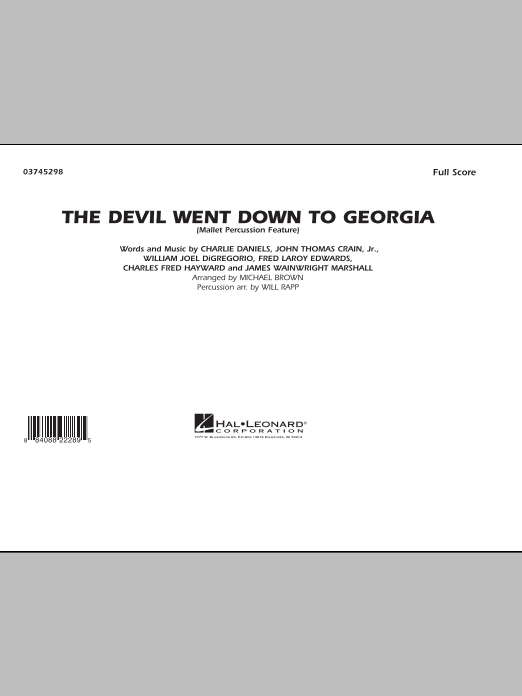

The Devil Went Down to Georgia: Marching Band Conductor Score & Parts
As performed by Charlie Daniels Band / Arranged by Michael Brown / Arranged by Will Rapp
Grade: 4
Item: 35-PK00123671
$65.00
Pickup currently not available
Buy Extra Parts (Digital PDF Download)
Parts Added to Cart!
Description
Here's your chance to let your overachieving mallet players do battle with the devil! There's plenty for the full band to do as well, plus a short feature spot for the battery percussion. Great staging and visual possibilities!


The Devil Went Down to Georgia: Marching Band Conductor Score & Parts isn't in MakeMusic Cloud just yet...but it could be. Let us know you'd like to see it, and you'll help shape what comes next. In the meantime, start a free trial and dive into thousands of interactive titles your students can play along with today.
Request This Title
Tell us you want it.
Start Your Free Trial
Explore everything that's ready to play right now.
Sample Audio
No sample audio found.
Sample Video
No sample videos found.
Additional Details
Publisher:
Hal Leonard
SKU:
35-PK00123671
More about this title
About the Artist: Charlie Daniels Band
The Charlie Daniels Band emerged from Nashville in the 1970s with a signature blend of country, rock, and Southern storytelling that gave voice to working people and rural America. Led by fiddler and vocalist Charlie Daniels, the band became known for their virtuosic instrumental performances, particularly their use of fiddle as a lead voice, and their unapologetic celebration of country culture.
Their 1979 hit "The Devil Went Down to Georgia" remains a cornerstone of American popular music, showcasing the band's gift for narrative songwriting paired with driving rhythm and showmanship. For music educators, the Daniels Band represents how accessible, high-energy arrangements can engage students while maintaining genuine musicality and technical demands.
Why we love this
This arrangement gives your percussion section a genuine spotlight within a full-band context rather than relegating them to rhythmic support. The narrative structure and country swagger make it an instant crowd pleaser that keeps audiences engaged while your students navigate the technical challenges of a solid Grade 4 score.
What to expect
A rollicking showdown wrapped in Southern groove: the melody dances with a fiddle's swagger, the rhythm section locks into an insistent rock pocket, and there's genuine drama in the arrangement's ebb and flow. You feel the heat of competition and the twang of the original without losing the energy that makes marching band exciting.
Who it's for
Directors programming Grade 4 marching shows who want a piece with narrative appeal and built-in entertainment value. Bands with capable mallet players and solid battery sections will find plenty to sink their teeth into, and the full ensemble gets real work too rather than padding.
How to get the most out of it
- Lock the fiddle melody with your solo mallet voice so the lead line cuts through; this is the hook that people recognize, and clarity here anchors the entire arrangement.
- Balance the battery percussion feature by having the conductor section sit slightly forward in the mix during that moment; let the texture change serve as its own spatial marker.
- Lean into the country rhythmic pocket rather than playing this straight ahead. Slight flexibility in the backbeat will give it the swagger and character it needs.
- Map out your staging early. The description mentions visual possibilities, so plan where the percussion feature happens and whether your mallets or battery need to move or pose during their moments.
How to use it
Plant this in the second or third spot on your show to build momentum early; it's energetic enough to grab attention right away and crowd-friendly enough that judges and audiences both respond to it. The percussion features make it an excellent teaching vehicle for how to balance solo spotlighting with ensemble responsibility.
Skills your students will build
- Articulation clarity in country and rock idioms
- Balancing solo and ensemble voices within a single arrangement
- Rhythmic accuracy in syncopated, backbeat-driven figures
- Dynamic contrast and phrasing within a high-energy context
- Percussion feature coordination and spatial awareness