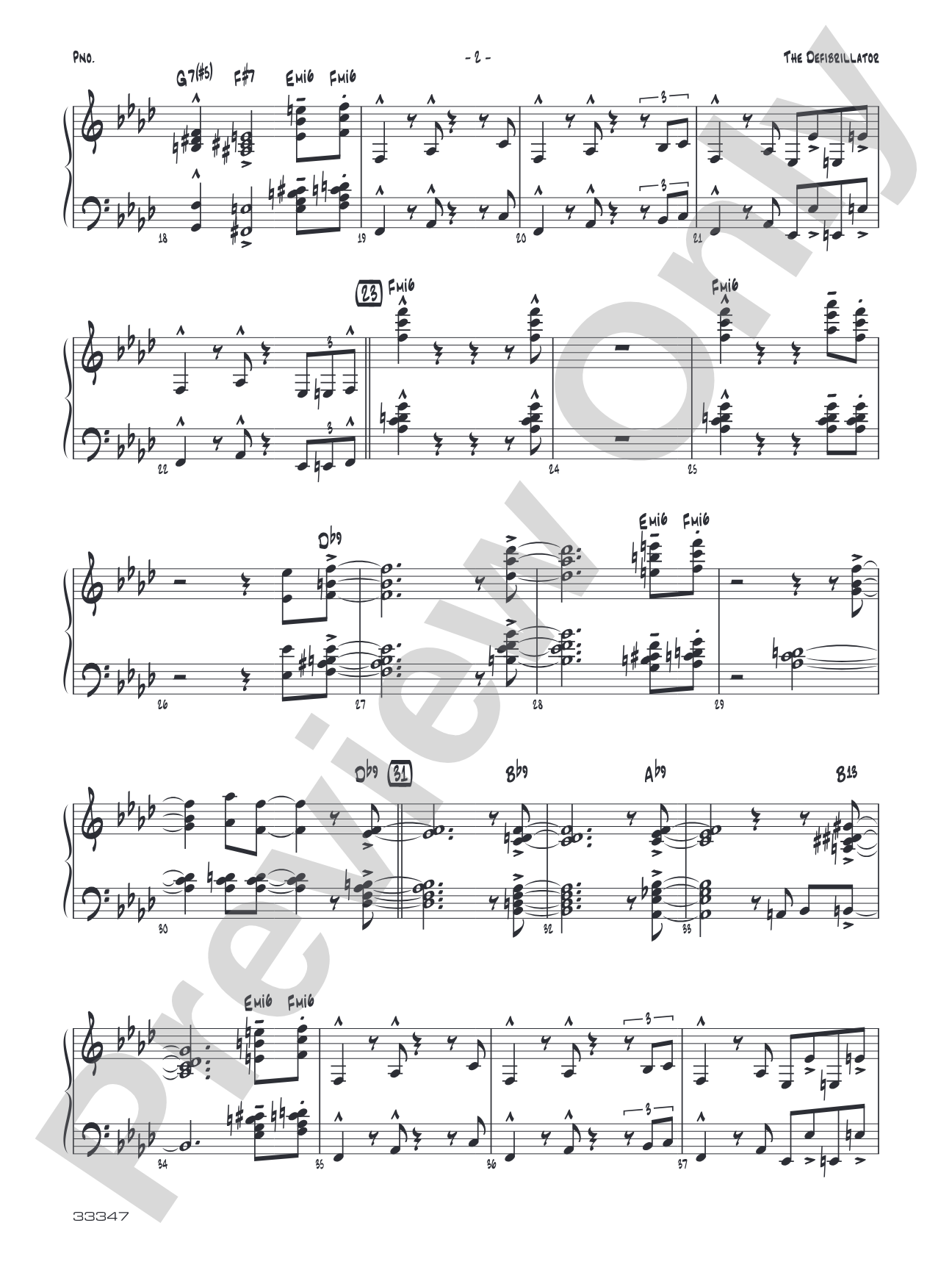
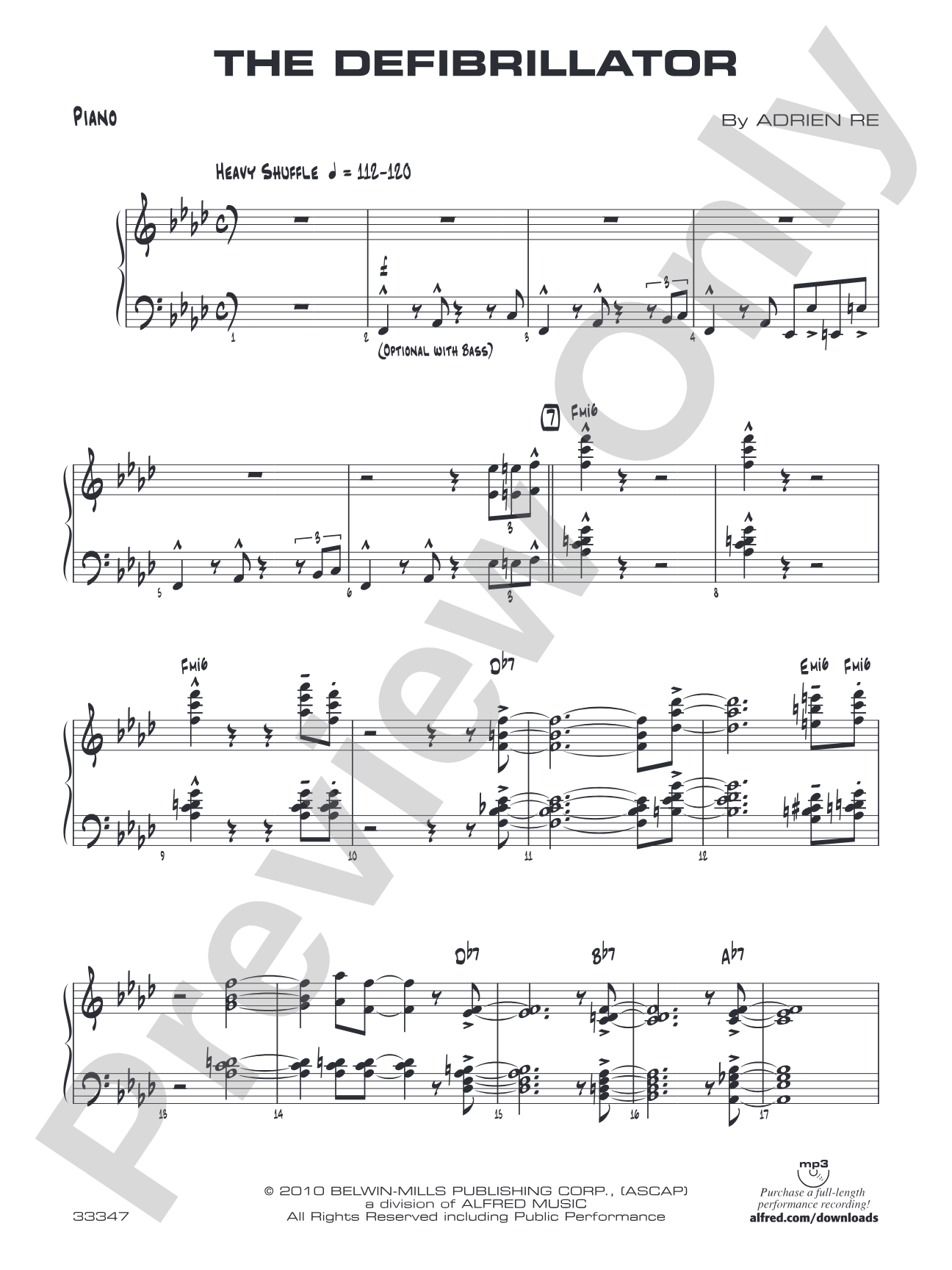
The Defibrillator: Piano Accompaniment Sheet Music Preview

The Defibrillator: Piano Accompaniment

By Adrien Re

Grade: 3 (Medium)

Item: 00-PC-0016204_K

Digital Download
$3.00
Description
The Defibrillator is a level 3 Jazz Band Series piece designed for high school and advanced junior high school band. Full instrumentation includes 5 saxophones, 8 brass, and 4 rhythm parts. Optional parts include flute, tuba, horn in F and baritone T.C./tenor sax. Solos are written out with chord changes, the rhythm section parts suggest chord voicings and rhythms and guitar chord frames are provided to help young guitarists.

Don't just read it, hear it, play along with it, and watch your students grow with it. In MakeMusic Cloud, The Defibrillator: Piano Accompaniment comes alive with professional accompaniment, adjustable tempo, and built-in practice tools that turn solo practice into real progress.

Sample Audio
0:00
0:00
Sample Video
Additional Details
Series: Jazz Band Series
Publisher: Alfred Music
Page Count: 98
SKU: 00-PC-0016204_K

More about this title

Why we love this

Adrian Re writes for student jazz ensembles with genuine respect for what young players can accomplish. The written-out solos with chord changes and the carefully constructed rhythm section voicings mean your students aren't left guessing how to voice their parts or interpret a solo line. This is the kind of scaffolding that lets less experienced improvisers focus on phrasing and feel rather than frantically figuring out harmony.

What to expect

Sharp, driving, and alive. The energy in "The Defibrillator" suggests something that jolts awake, with punchy brass figures and a rhythm section that propels the whole ensemble forward. This is not a ballad; it demands focus and commitment from every section.

Who it's for

High school and advanced junior high school jazz ensembles ready to tackle a full big band sound with manageable solo responsibilities. The flexible instrumentation, including optional parts for flute, tuba, horn in F, and baritone/tenor sax, means you can perform it with your available players rather than writing off the piece if your roster isn't perfect.

How to get the most out of it

  • Balance the rhythm section early. With four rhythm parts, clarity in the comping and timekeeping sets the foundation for the full band to lock in.
  • Work the solos carefully even though they're written out. The written melody is a starting point; encourage soloists to listen to how jazz musicians phrase, bend, and breathe within the changes.
  • Have your guitarist study the chord frames provided. Young guitarists especially benefit from seeing the visual fingering alongside the chord symbol.
  • Let the band hear the piece whole before dissecting sectionals. Understanding the overall groove and energy first makes part-specific work much more purposeful.

How to use it

Feature this as a mid-season or spring concert centerpiece when your ensemble has enough rehearsal time to develop solid ensemble sound and work solos individually. It pairs well alongside a ballad and uptempo chart to show the full range of your group's capabilities.

Skills your students will build

  • Reading and interpreting written jazz solos with chord changes
  • Comping rhythm section parts with suggested voicings and rhythmic figures
  • Ensemble cohesion in a full big band texture
  • Listening for balance and lock between rhythm and horns
  • Guitar chord voicing using provided frames
  • Jazz phrasing and articulation across all sections

You May Also Like