
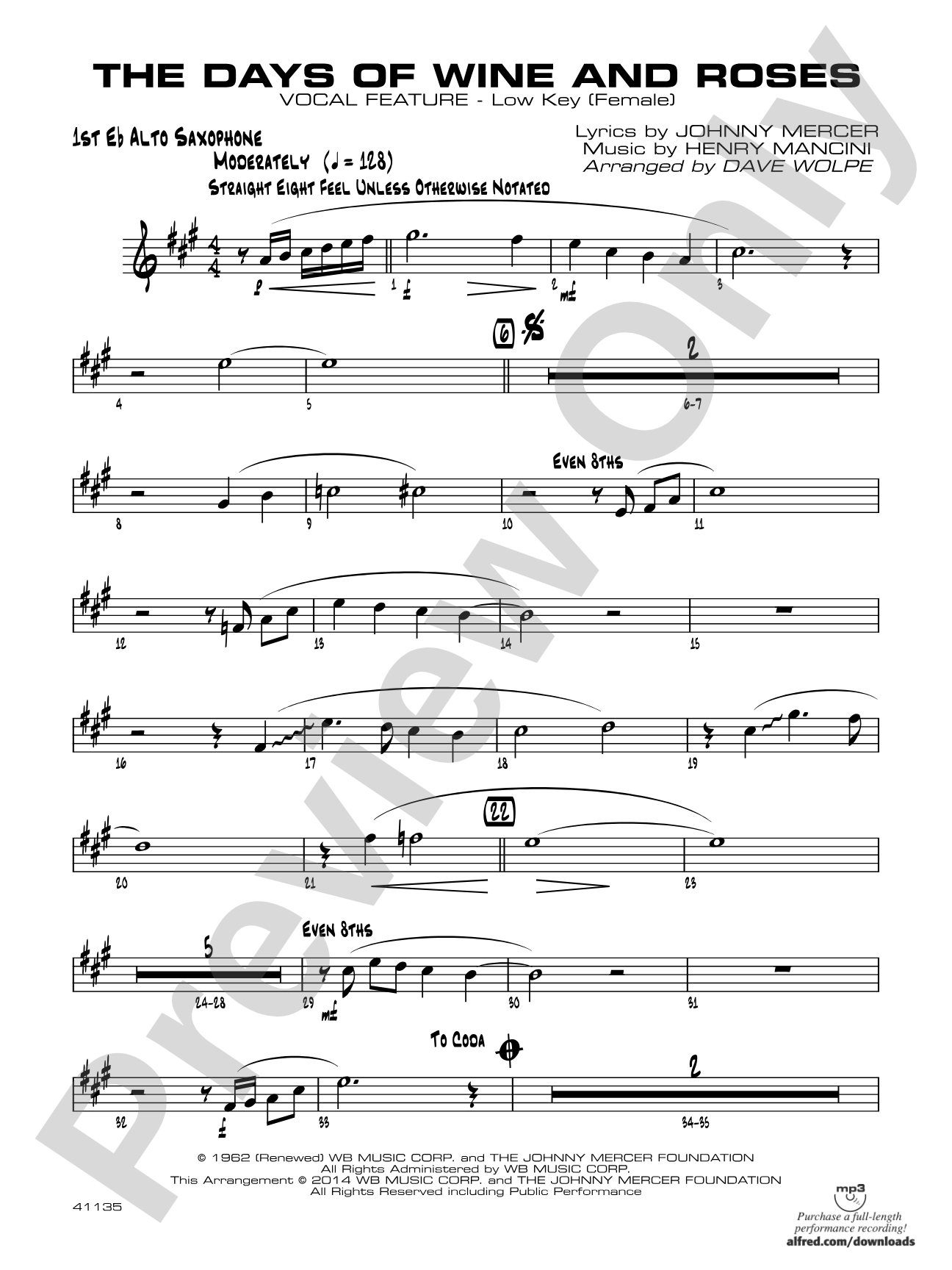

The Days of Wine and Roses: E-flat Alto Saxophone
Lyrics by Johnny Mercer, music by Henry Mancini / arr. Dave Wolpe
Grade: 3.5 (Medium)
Item: 00-PC-0016272_AX1
$5.99
Pickup currently not available
Description
The Days of Wine and Roses arranged by Dave Wolpe is a fine vocal chart of a wonderful standard treated as a moderate swing. Arranged in two keys for flexibility, the low female key is C, and the vocal range is G below middle C to third line B. The high male key is F, and the range is middle C to top space E treble clef. Lead trumpet range is to written B above the staff. Includes a written-out tenor solo. (3:20)


Don't just read it, hear it, play along with it, and watch your students grow with it. In MakeMusic Cloud, The Days of Wine and Roses: E-flat Alto Saxophone comes alive with professional accompaniment, adjustable tempo, and built-in practice tools that turn solo practice into real progress.
Open in the Player
Jump straight in and assign it today.
Start Your Free Trial
Open this title and explore the full library in minutes.
Sample Audio
1
Audio File
--:--
0:00
0:00
Sample Video
Additional Details
Series:
Jazz Vocal Series
Publisher:
Alfred Music
Page Count:
82
SKU:
00-PC-0016272_AX1
More about this title
About the Composer: Henry Mancini
Henry Mancini (1924-1994) shaped the sound of American popular music across film, television, and the concert stage. His gift for melody and orchestration made him one of the most recorded composers of the twentieth century, with an output spanning from Pink Panther themes to romantic film scores that defined an era.
Mancini's work remains essential repertoire for jazz ensembles and vocalists because it balances accessibility with genuine sophistication. His arrangements reveal how swing styles and orchestral craft can serve a song without overwhelming it, making his charts invaluable models for musicians learning to interpret standards with taste and clarity.
Why we love this
Wolpe's arrangement captures everything that makes this standard endure: a melody that sits perfectly in the voice, changes that reward harmonic awareness, and a rhythm section that swings without strain. The dual-key format removes the guesswork about casting, while the written tenor solo gives your ensemble a feature moment that feels earned rather than tacked on.
What to expect
Elegantly wistful and gently swinging. The melody carries a bittersweet warmth, supported by lush but restrained ensemble writing that feels like late-evening sophistication rather than bombast. The tenor solo brings a moment of intimate vulnerability before the ensemble softly frames the resolution.
Who it's for
Any jazz ensemble with a capable vocalist and a strong tenor saxophonist looking to program a sophisticated standard that audiences recognize and musicians respect. This works equally well for contest preparation, concert programming, or as a teaching piece in jazz history and arranging contexts.
How to get the most out of it
- Balance the vocal line against the ensemble by having the rhythm section settle into a relaxed medium swing feel first; the melody will project naturally once the pocket is steady.
- Shape the melody through phrase rather than dynamic changes alone. The arch of this standard lives in how you breathe and voice the lyric, not in sudden volume shifts.
- Feature the tenor soloist with clear ensemble accompaniment. This arrangement gives the reeds room to support without drowning the solo voice, so let that contrast speak.
- Pay attention to the range extremes in both keys. The low C voicings in the female key and the high trumpet writing demand focused intonation and breath management from your soloists.
How to use it
Program this as a concert centerpiece that showcases both your vocalist and tenor section. It pairs naturally with uptempo swingers on either side, offering the audience a chance to hear how swing can be tender without losing its groove. It also works beautifully as a closing number before a high-energy finale.
Skills your students will build
- Singing within a jazz ensemble texture while maintaining independent line clarity
- Interpreting swing rhythm and behind-the-beat phrasing in a vocal context
- Reading and balancing lead trumpet range (written notes above the staff)
- Accompanying and supporting a tenor solo with ensemble sensitivity
- Sustaining legit vocal tone while navigating jazz harmonic changes and rubato
- Understanding orchestration choices that support rather than obscure the melody