
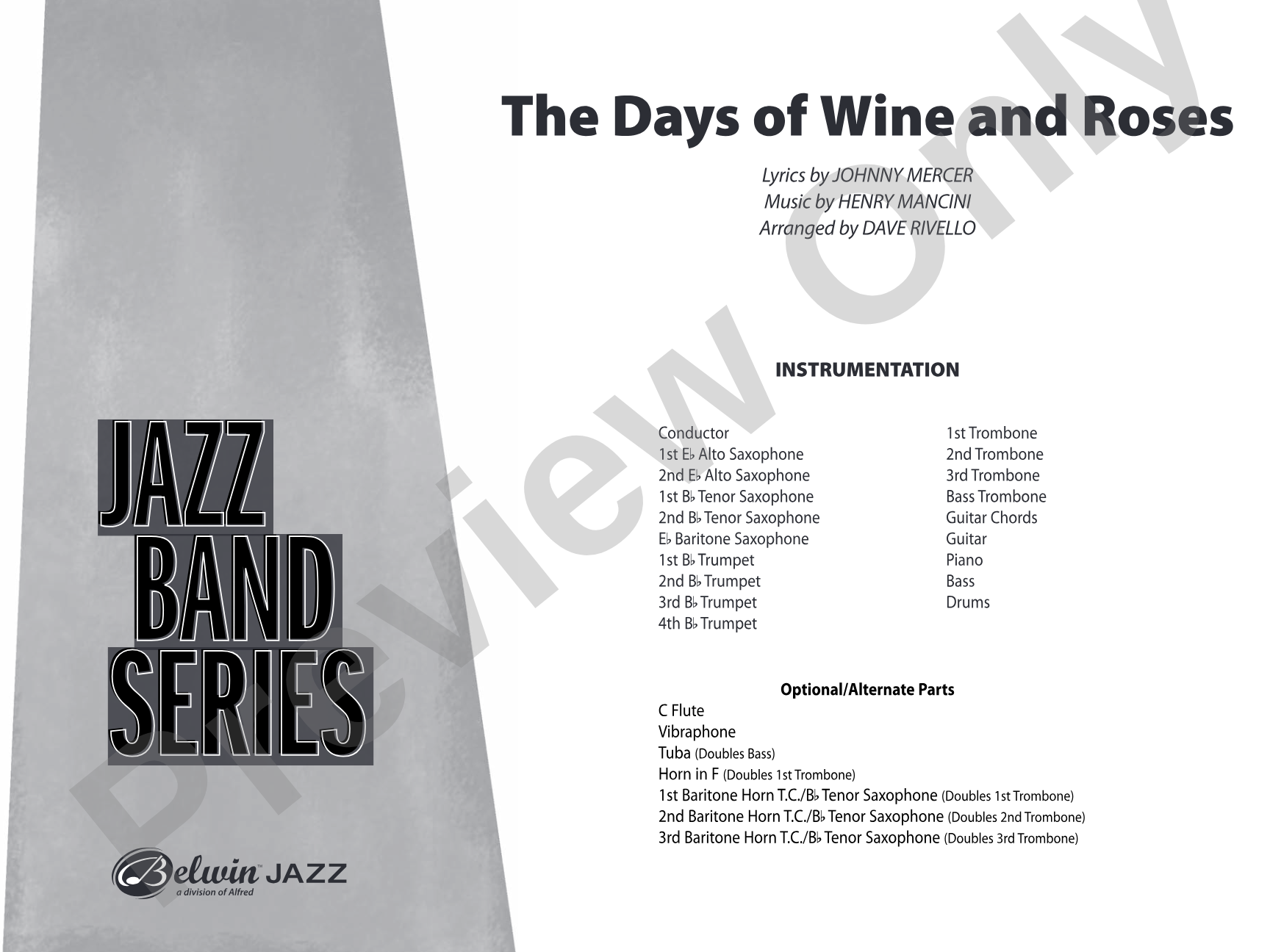
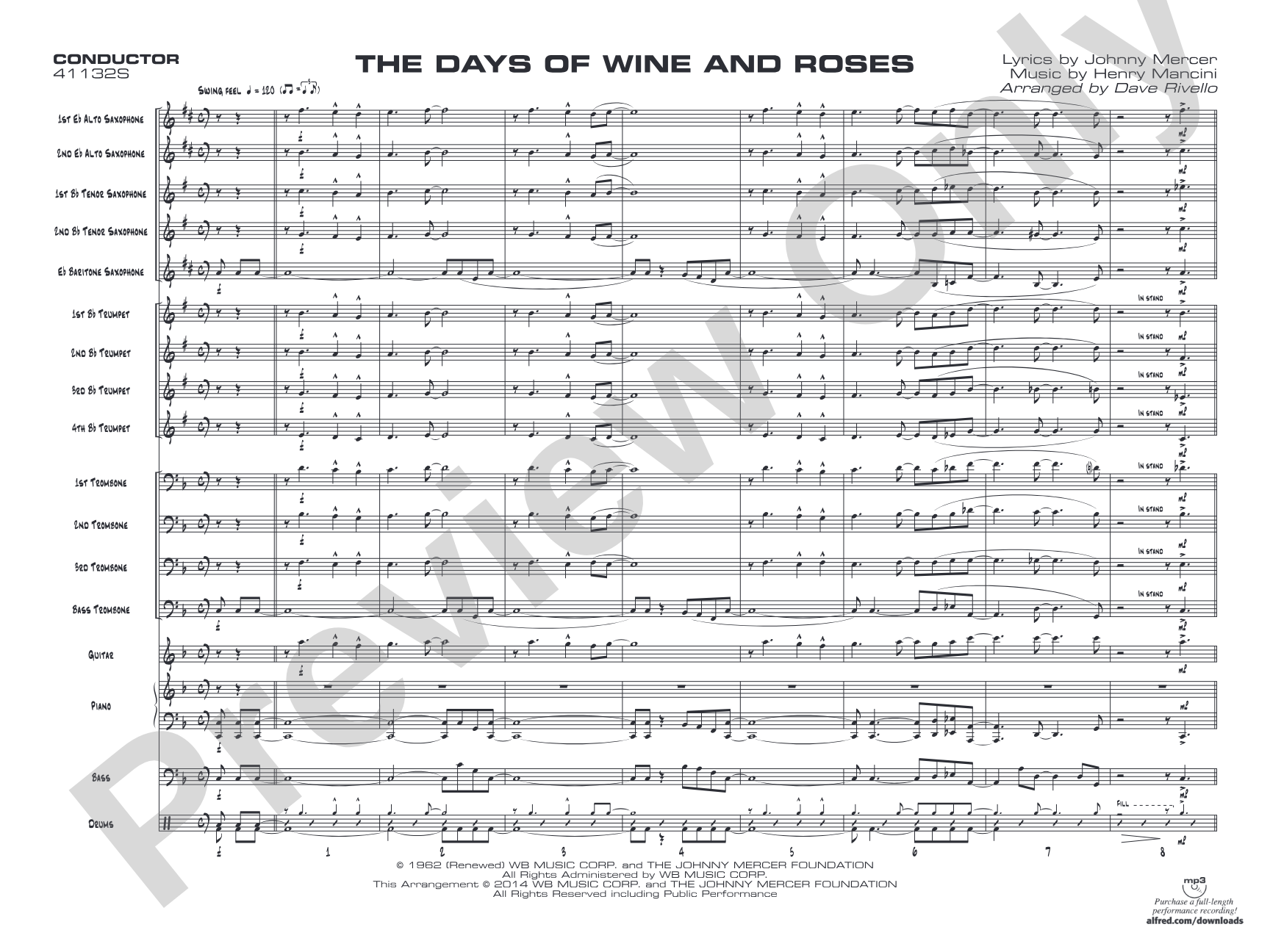
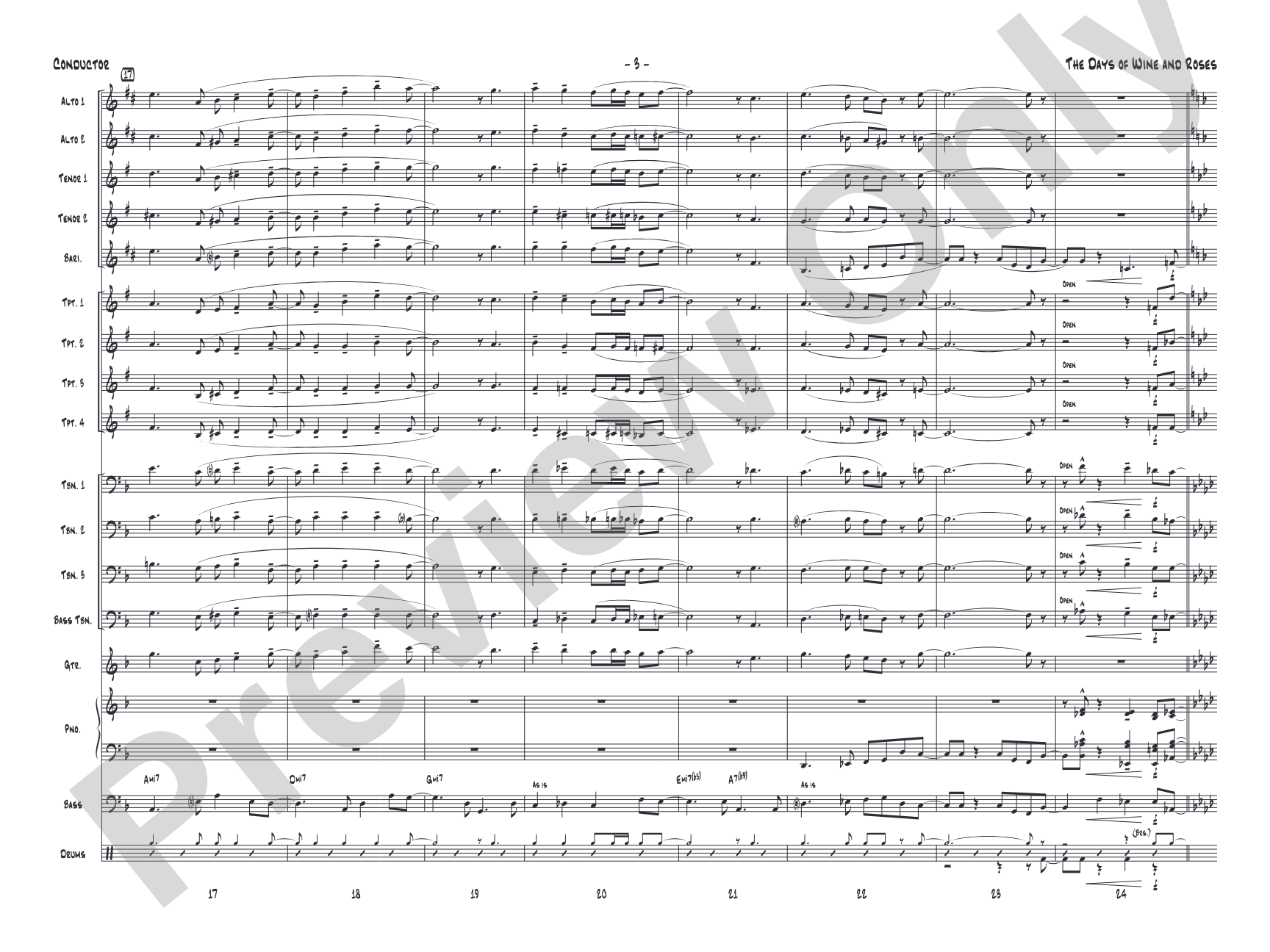
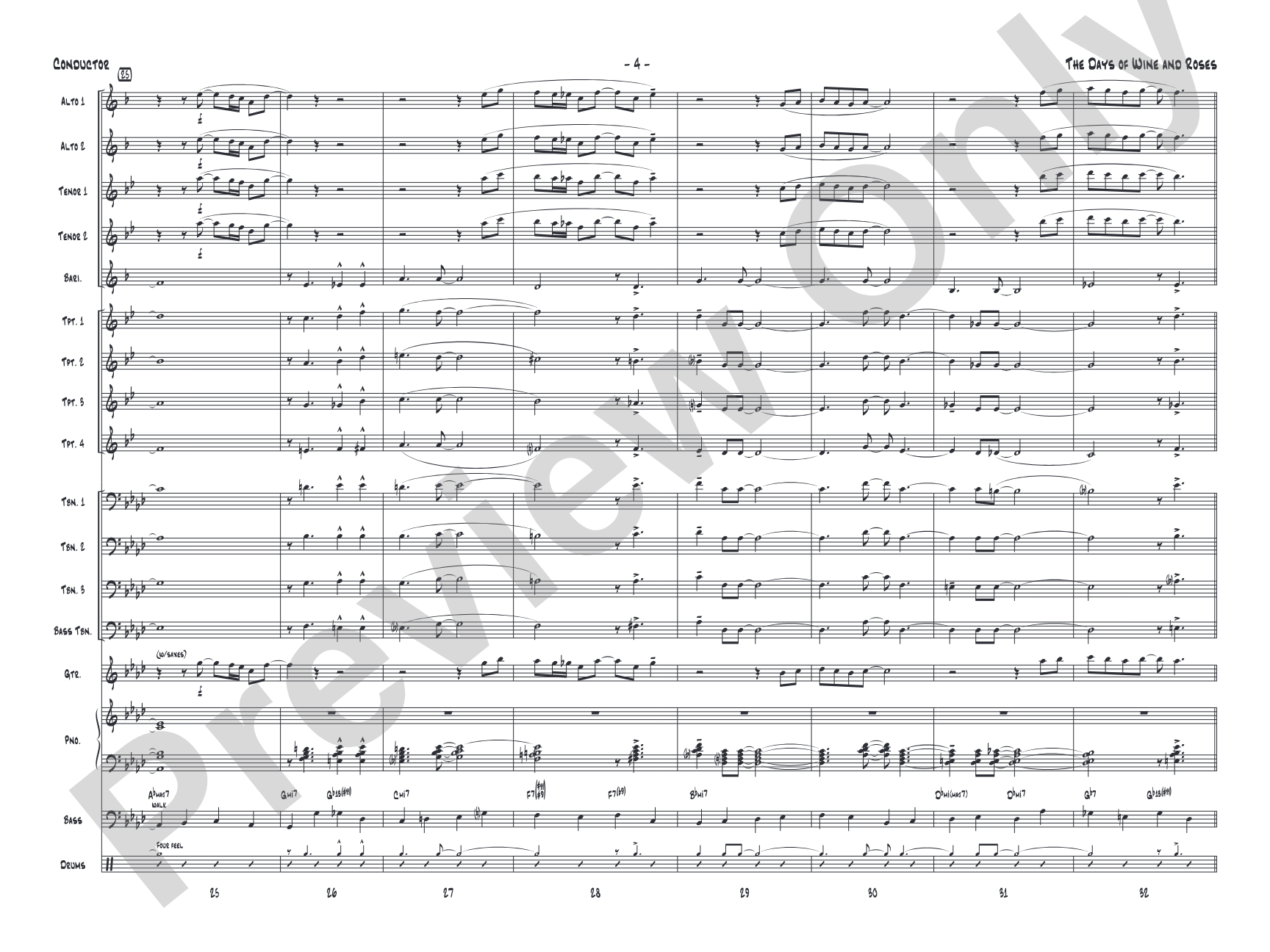
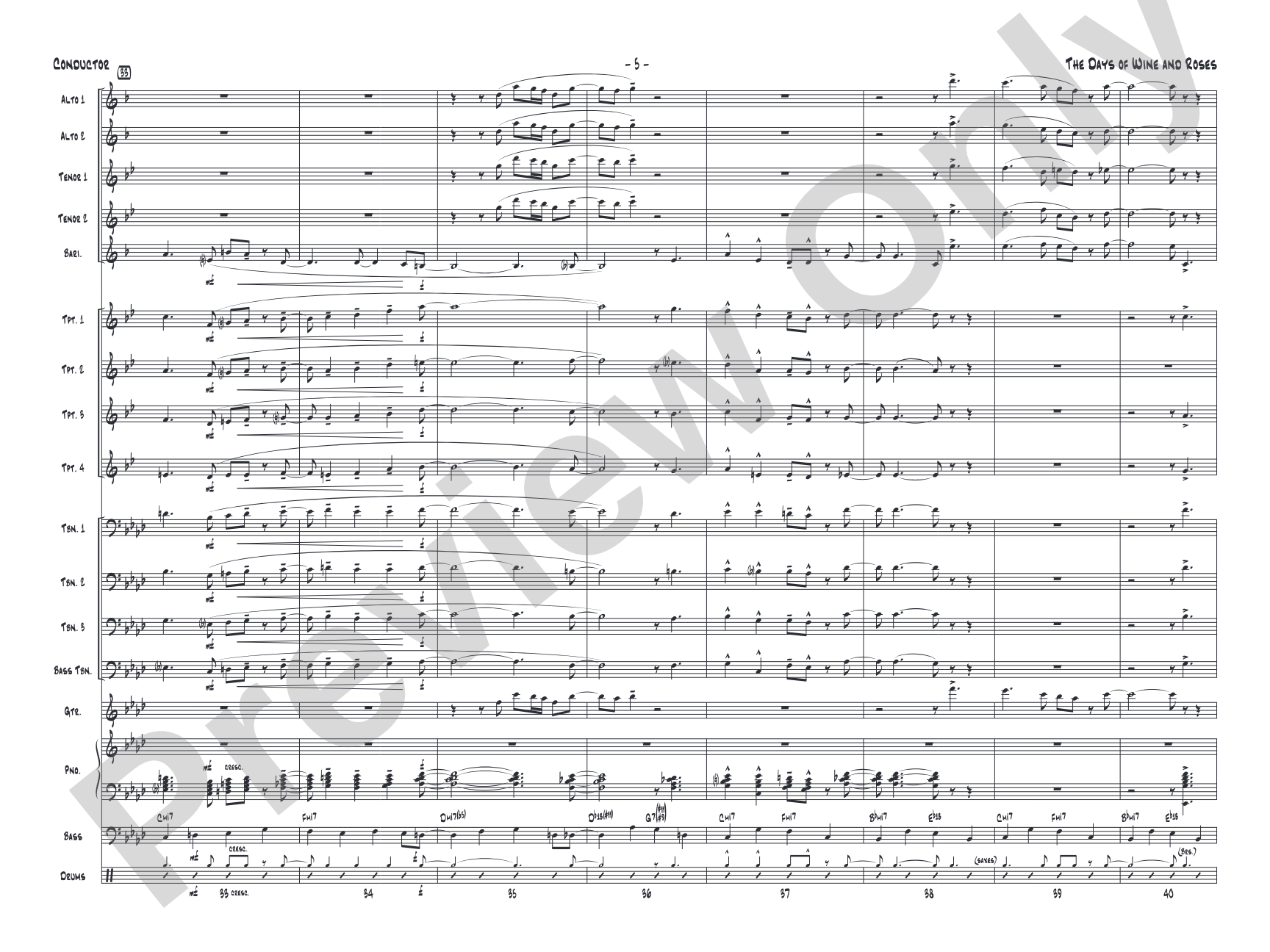
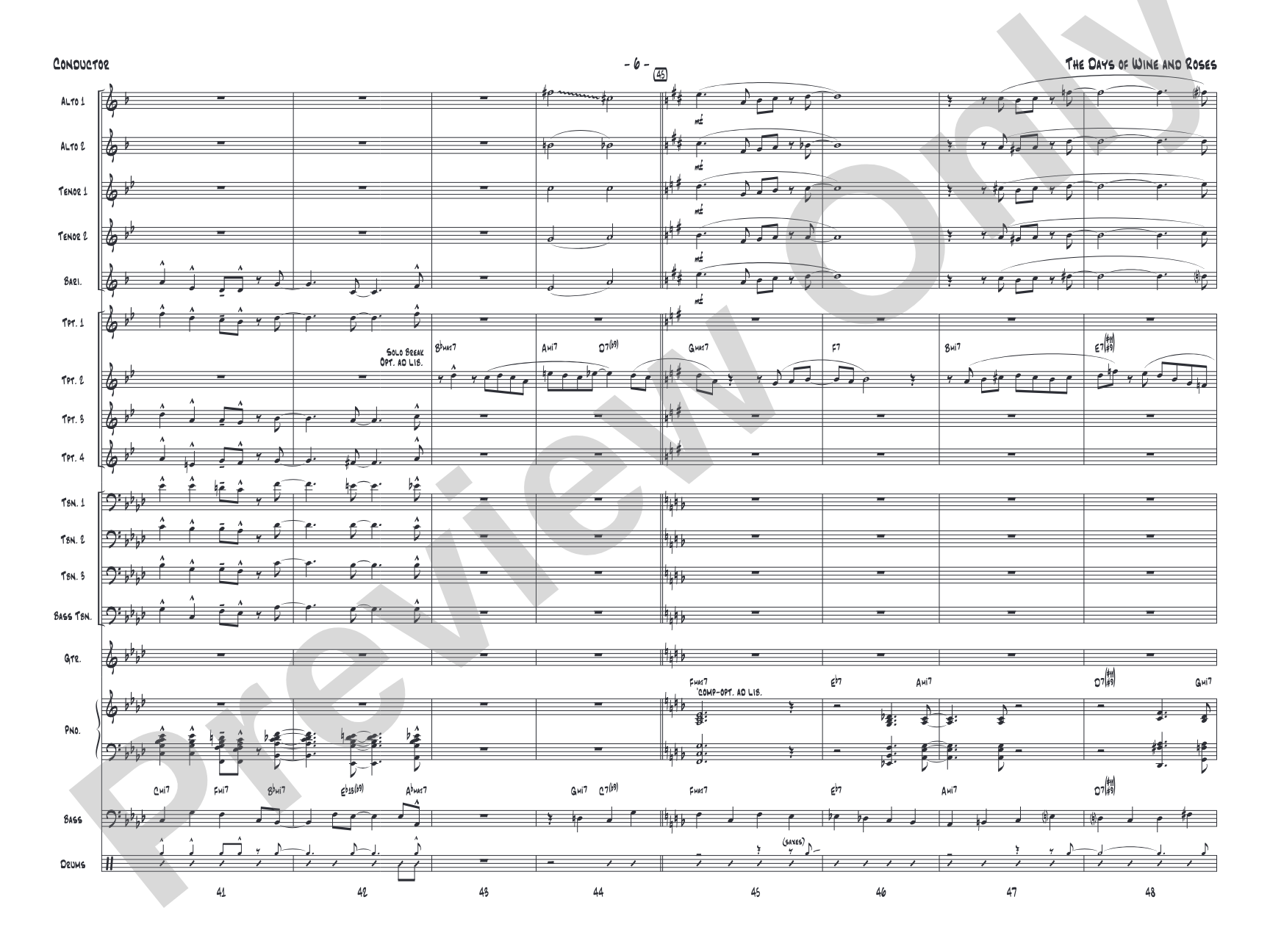
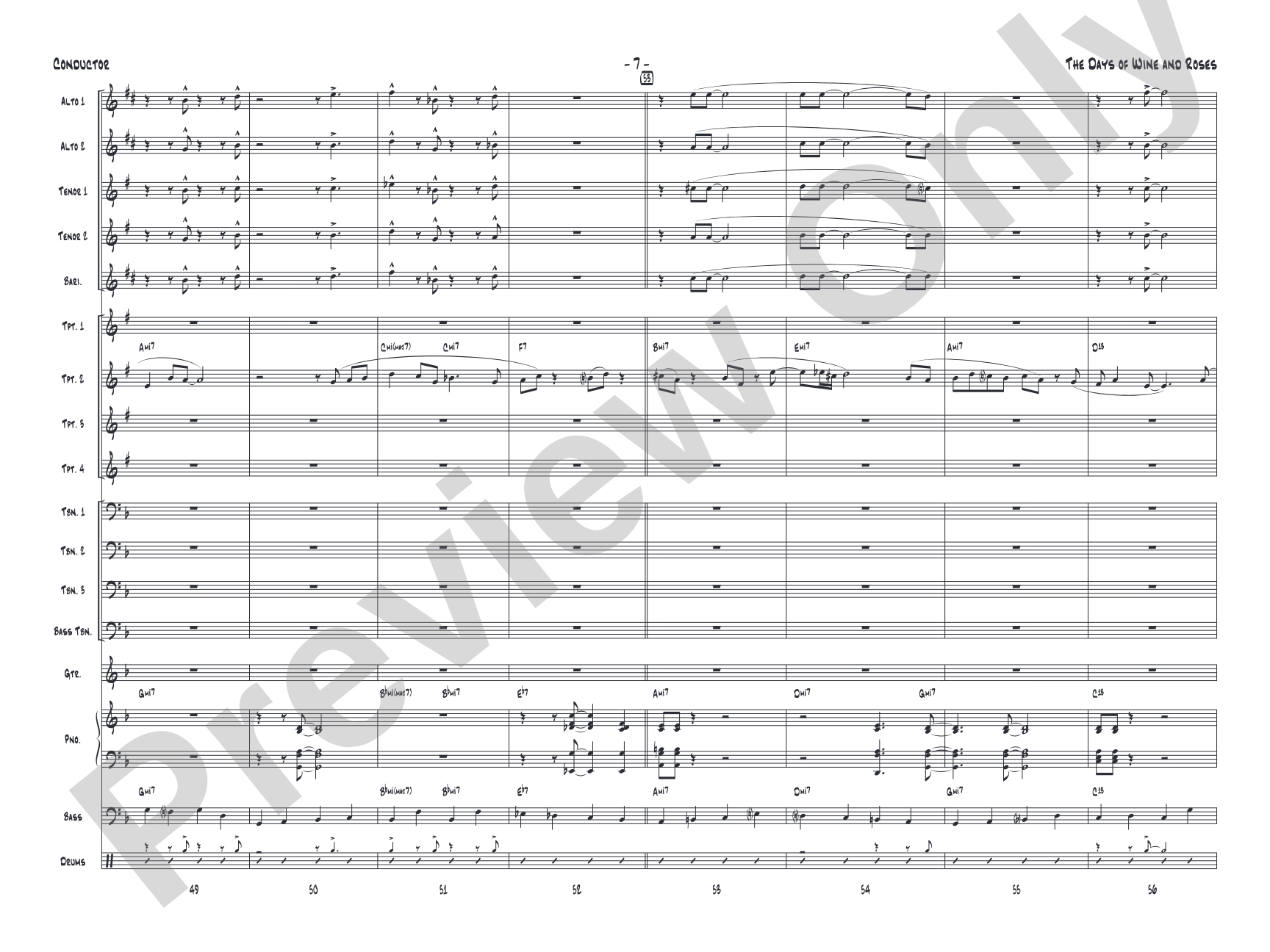
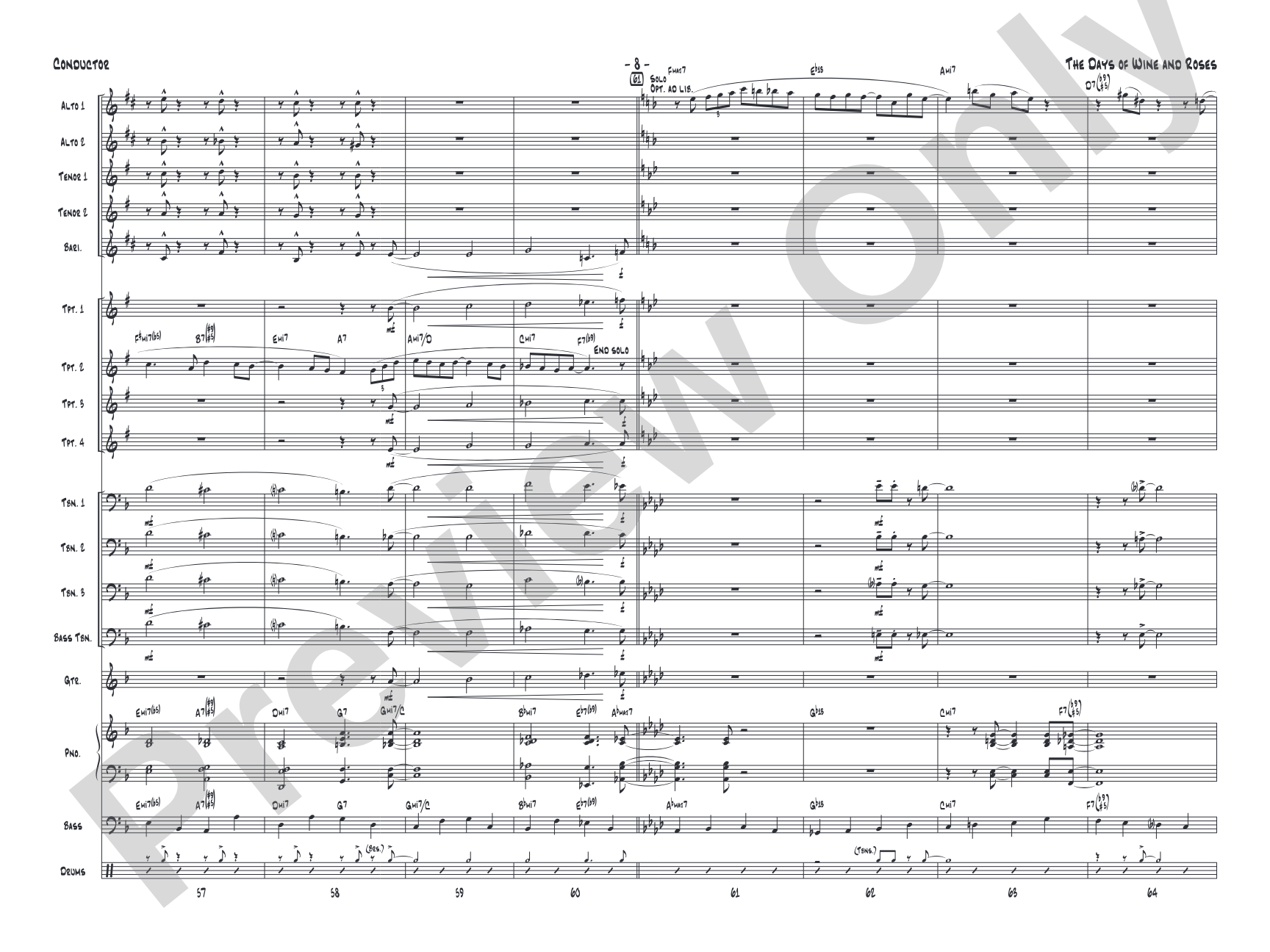
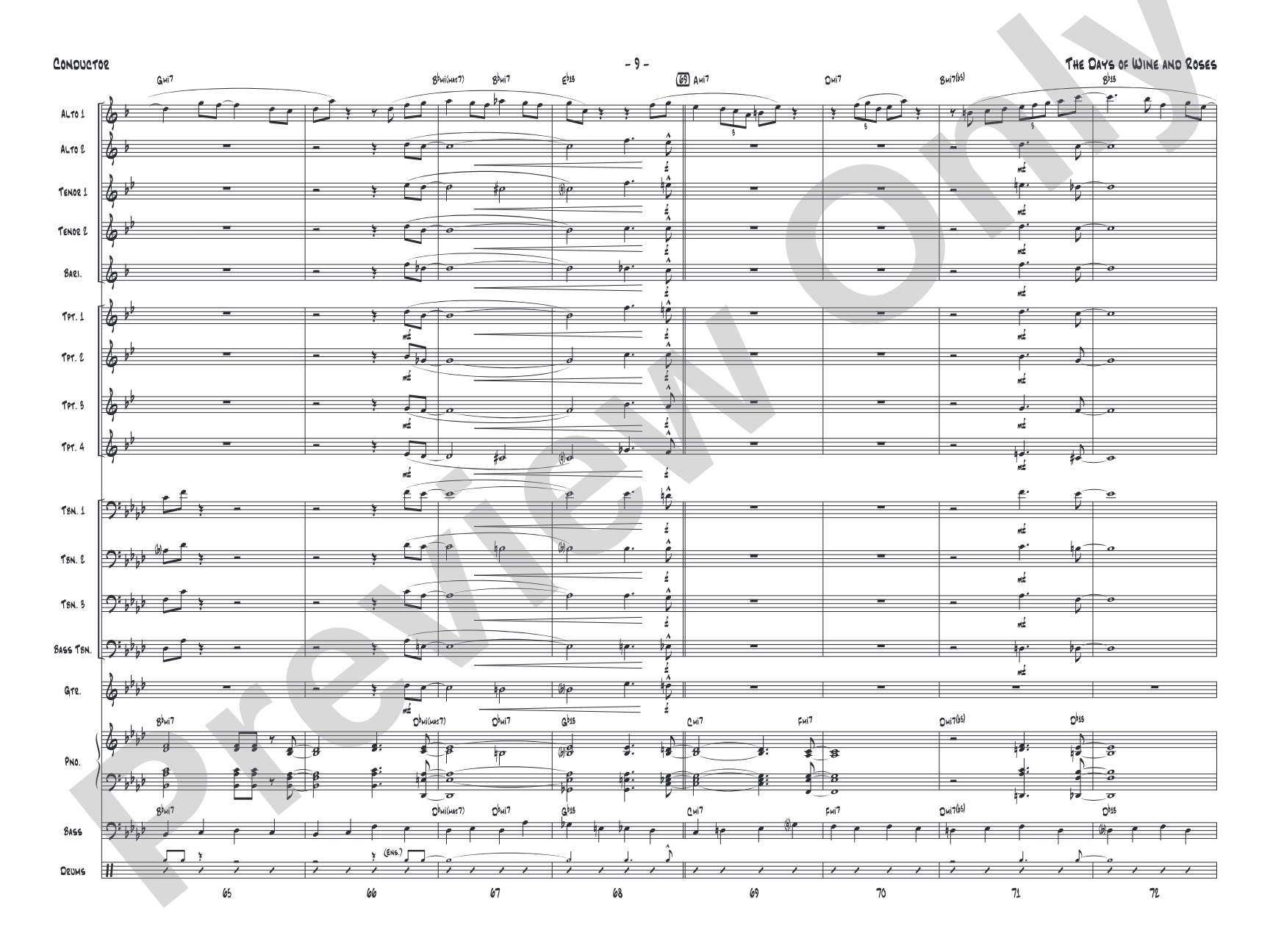
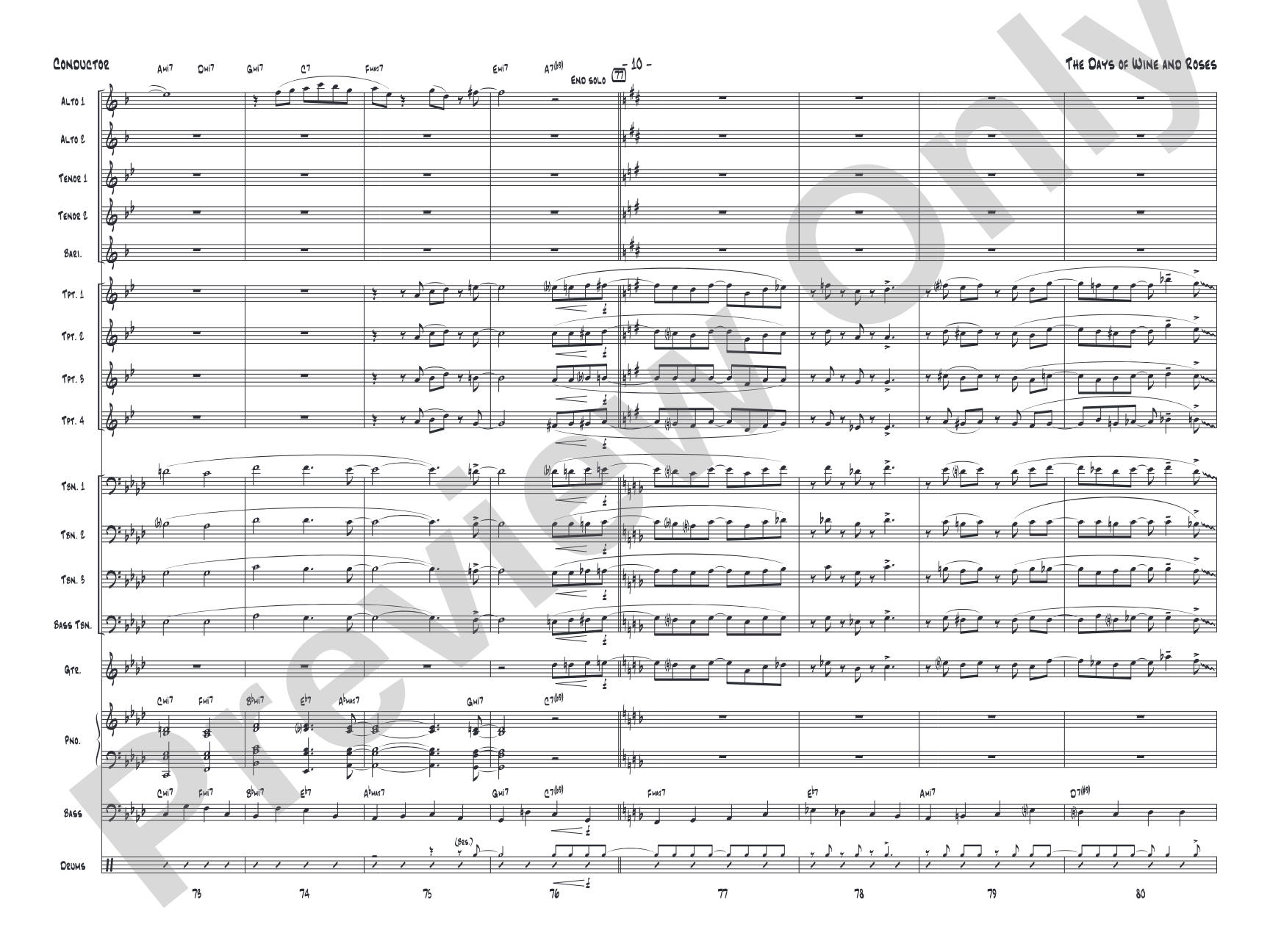
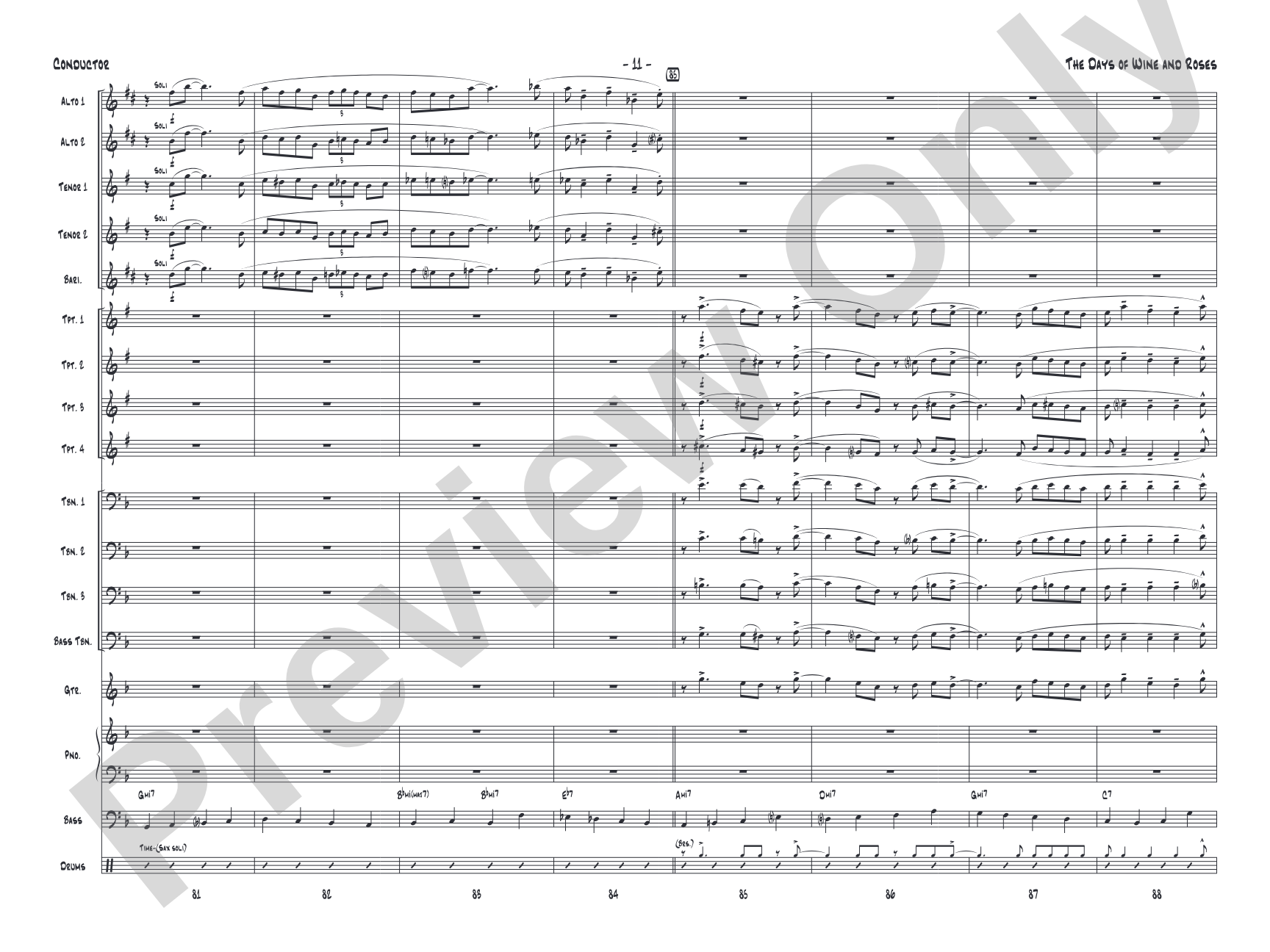
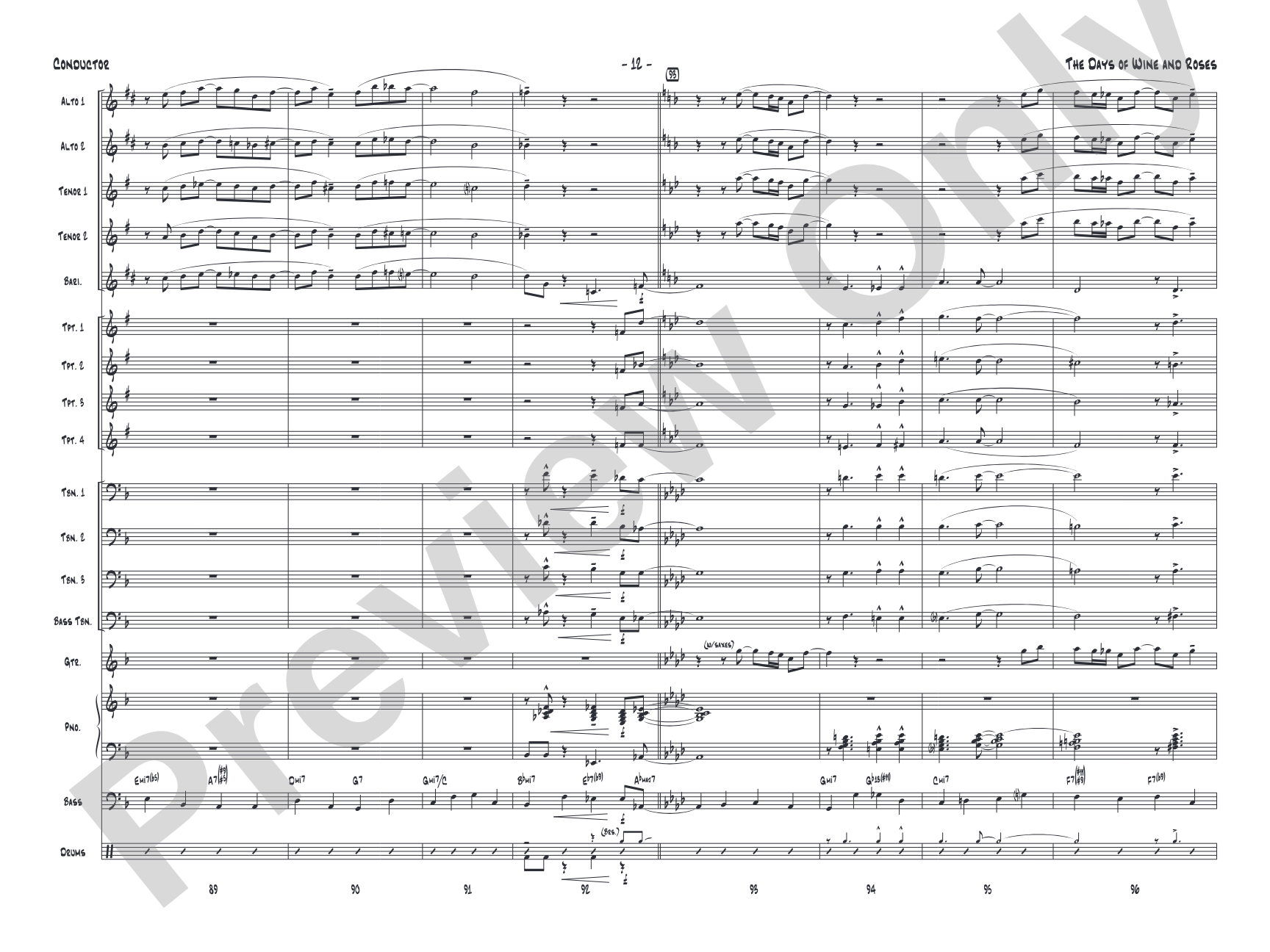
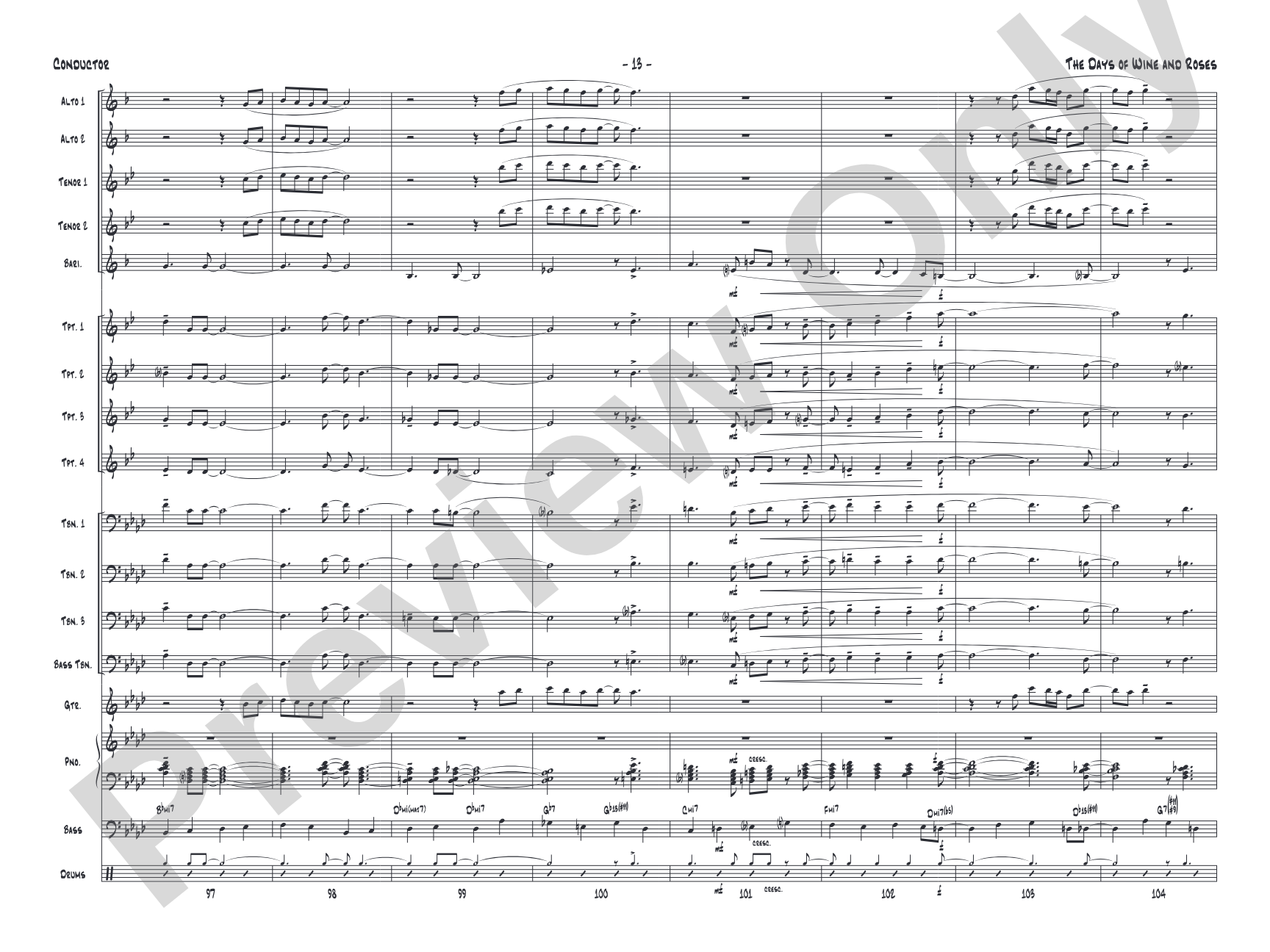
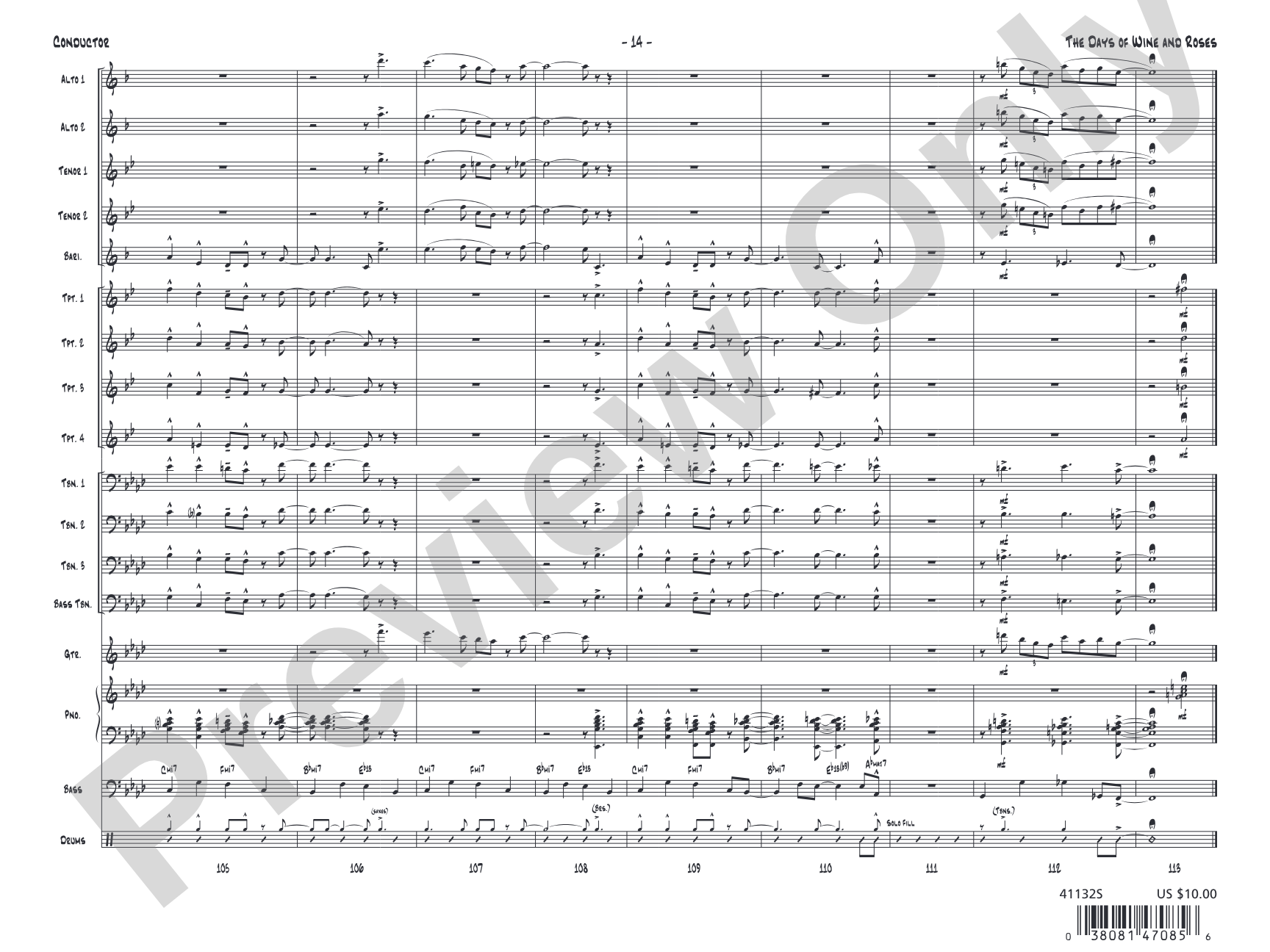

The Days of Wine and Roses: Jazz Ensemble Conductor Score & Parts
Lyrics by Johnny Mercer, music by Henry Mancini / arr. Dave Rivello
Grade: 3 (Medium)
Item: 00-PK-0006013

$52.00
Pickup currently not available
Buy Extra Parts (Digital PDF Download)
Parts Added to Cart!
Description
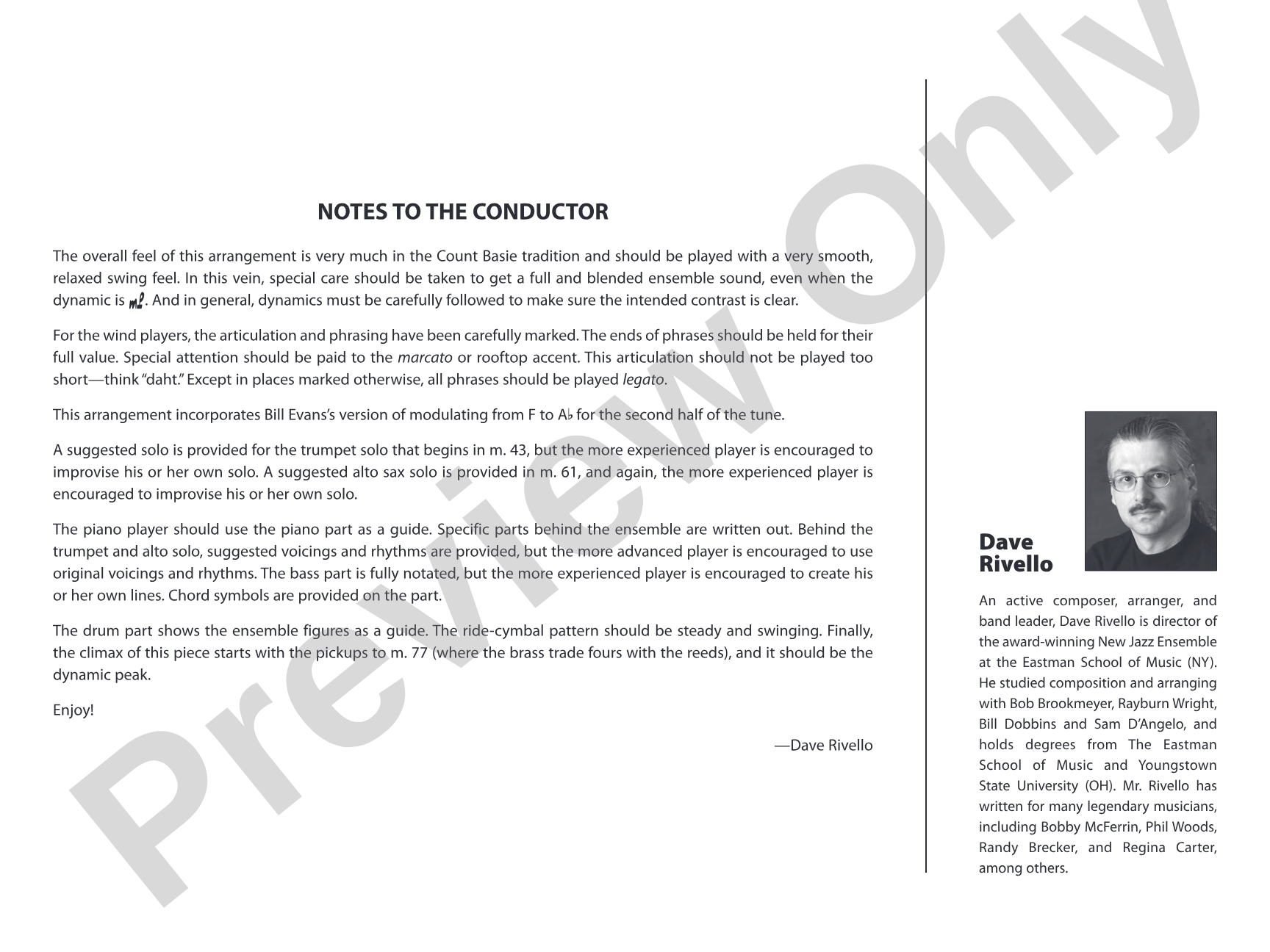
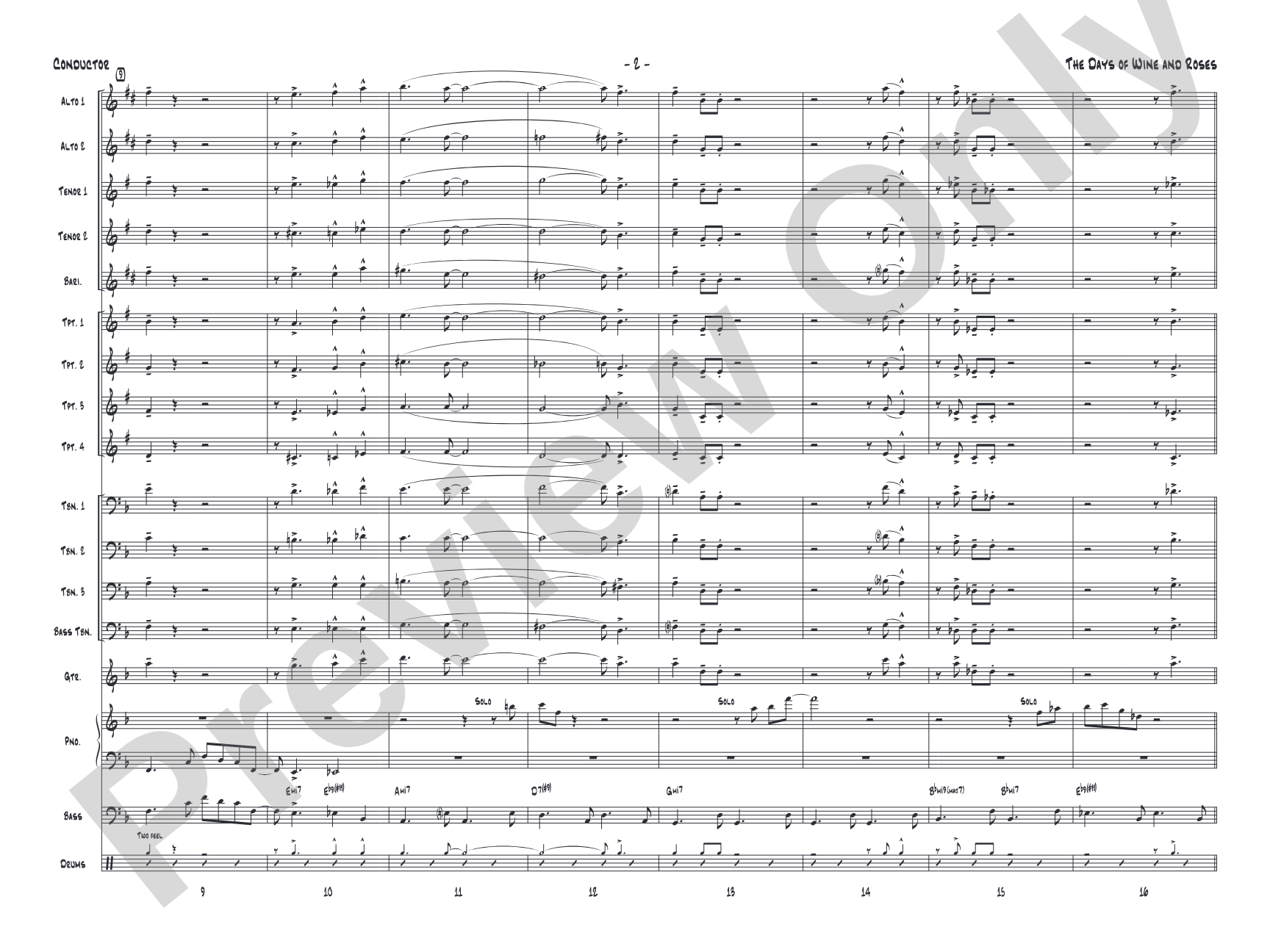
You know this great standard, but check out how the chart goes back and forth from F to A-flat. The swing feel is around 148 BPM, solos are written for trumpet 2 and alto, lead trumpet hit a written B-flat above the staff, and the vibe part will add a nice texture to the ensemble. Dave Rivello's arrangement of The Days of Wine and Roses is superb!(3:12) This title is available in MakeMusic Cloud.


Don't just read it, hear it, play along with it, and watch your students grow with it. In MakeMusic Cloud, The Days of Wine and Roses: Jazz Ensemble Conductor Score & Parts comes alive with professional accompaniment, adjustable tempo, and built-in practice tools that turn solo practice into real progress.
Open in the Player
Jump straight in and assign it today.
Start Your Free Trial
Open this title and explore the full library in minutes.
Sample Audio
1
Audio File
--:--
0:00
0:00
Sample Video
Additional Details
Series:
Jazz Band Series
Publisher:
Alfred Music
Page Count:
98
SKU:
00-PK-0006013
More about this title
About the Composer: Henry Mancini
Henry Mancini (1924-1994) defined the sound of American film and television through his prolific career as a composer. His gift for melody and harmonic sophistication made him one of the most recorded composers of the twentieth century, with work spanning dramatic underscore, comedic cues, and standards that became jazz repertoire staples. Music educators value Mancini's output because it bridges classical training with accessible popular forms, offering students repertoire that feels contemporary while rewarding careful musicianship.
Mancini's arrangements and compositions became part of the standard jazz library, and his melodies translate beautifully across ensemble contexts. His harmonic language rewards both precise section work and individual artistry, making his pieces valuable teaching tools for intermediate and advanced ensembles.
Why we love this
Dave Rivello's arrangement captures the elegant simplicity of Mancini's melody while building sophisticated harmonic movement through the F and A-flat key centers. The written solos and lead trumpet line give capable players real material to work with, and the vibe part transforms the texture in a way that feels both essential and stylistically authentic to the jazz tradition.
What to expect
Sophisticated and lyrical, with the kind of elegant restraint that allows individual voices to emerge without overshadowing the whole. The harmonic movement between F and A-flat creates subtle emotional shifts; the piece breathes like a ballad even at its moderate tempo, and the vibe texture adds shimmer and warmth.
Who it's for
Jazz ensembles working at an intermediate level who want a recognizable standard with real musical substance. Directors seeking pieces that engage serious soloists while maintaining ensemble cohesion will find this arrangement rewarding for both students and audiences.
How to get the most out of it
- Balance the vibe part carefully during the A sections. It should shimmer beneath the ensemble, not push the sound forward; dial back the dynamic just enough to let the brass shine through.
- Lock the swing eighth-note feel at 148 BPM before tackling the key modulations. The rhythmic pocket will make the harmonic shifts sound intentional rather than jarring.
- Give trumpet 2 and alto plenty of rehearsal time for their solos. Both voices sit in registers where slight intonation shifts become obvious, so precision in the section during ensemble passages will support confident solo playing.
- Approach the lead trumpet B-flat above the staff as a moment of arrival, not strain. Shape the phrase leading into it so the note feels earned and purposeful within the musical line.
How to use it
Program this for a winter or spring concert where you want to showcase your ensemble's taste and control without venturing into aggressive territory. It pairs naturally with other mid-century standards and film-inspired compositions, and the manageable length (3:12) makes it an ideal choice for festival performances or as a palate-cleanser in a longer program.
Skills your students will build
- Swinging eighth-note subdivisions at moderate tempos
- Reading and navigating key modulations (F major to A-flat major)
- Playing written melodic solos with jazz phrasing and articulation
- Balancing texture and supporting soloists within a section
- Intonation precision in legit ballad context at upper register (lead trumpet)
- Stylistic sensitivity to film-era jazz arranging conventions