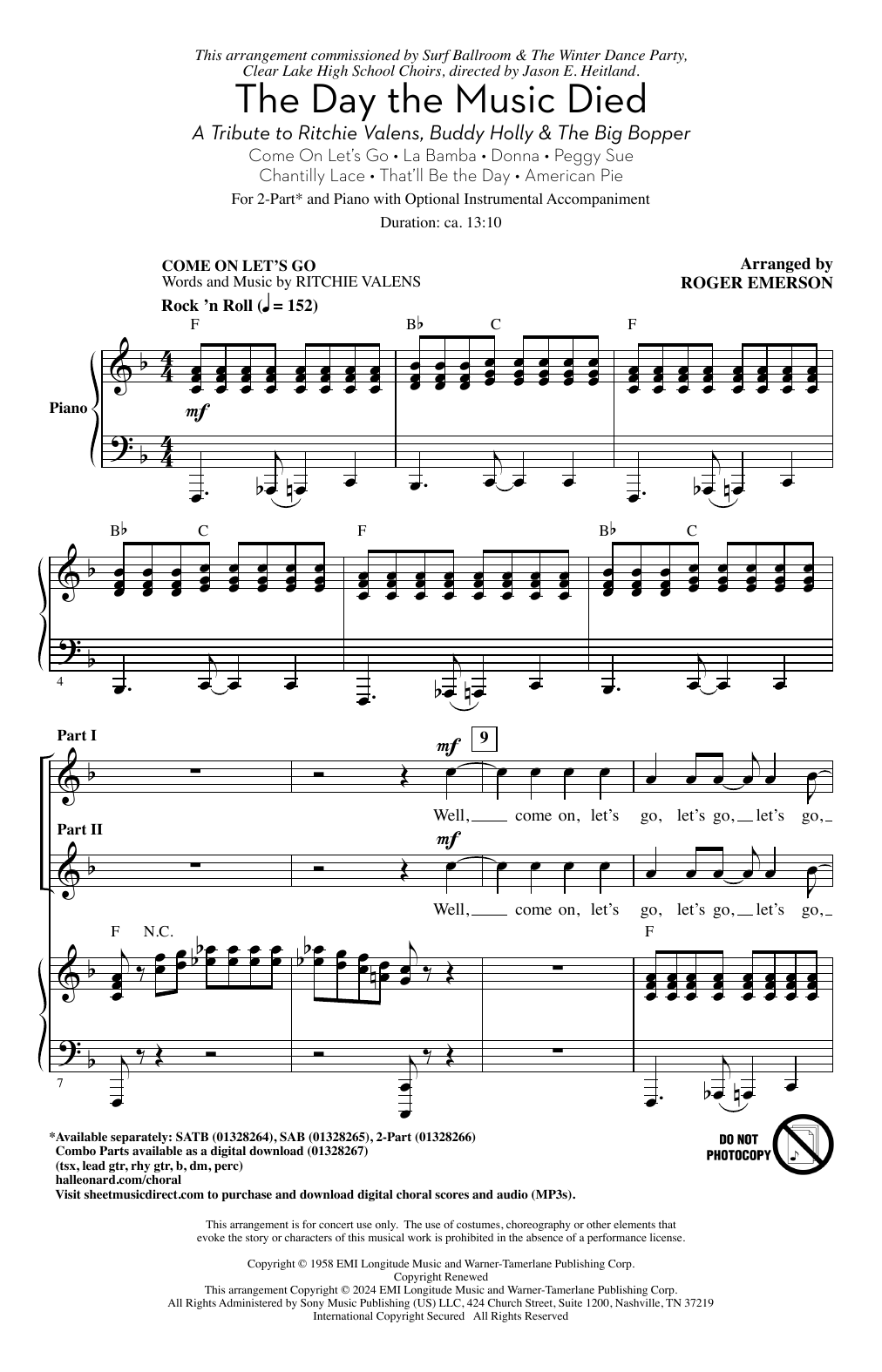
The Day The Music Died Sheet Music Preview

The Day The Music Died: 2-Part Choral Octavo

Arranged by Roger Emerson

Item: 35-DS01411543

Digital Download
$3.75
Description

The Day The Music Died: 2-Part Choral Octavo isn't in MakeMusic Cloud just yet...but it could be. Let us know you'd like to see it, and you'll help shape what comes next. In the meantime, start a free trial and dive into thousands of interactive titles your students can play along with today.

Sample Audio
No sample audio found.
Sample Video
Additional Details
Publisher: Hal Leonard
Page Count: 31
SKU: 35-DS01411543

More about this title

About the Arranger: Roger Emerson

Roger Emerson is a prolific arranger whose work defines the contemporary choral repertoire for school and community ensembles. With hundreds of arrangements published across all voicing levels, Emerson has built a reputation for crafting singable, musically substantial versions of popular songs that resonate with young singers while maintaining artistic integrity.

Why we love this

Emerson captures the iconic melancholy of Don McLean's original while making it entirely accessible to developing singers. The 2-part voicing keeps the emotional weight intact without sacrificing singability, and the arrangement respects the song's narrative power, which tends to engage students more deeply than typical pop fare.

What to expect

Wistful and introspective, with a gentle forward motion that never becomes hurried. The arrangement preserves the original's elegiac quality, creating moments of quiet reflection punctuated by fuller harmonic texture that never overwhelms the intimacy of the song's core message.

Who it's for

This works well for middle and high school choirs seeking repertoire that connects to student interests while building musicianship. The two-part voicing makes it equally viable for treble or mixed voices, and the piece's literary quality appeals to singers who engage thoughtfully with text.

How to get the most out of it

  • Shape the opening section with patience; resist rushing the slower tempo that establishes the reflective mood.
  • Balance vibrato and tone quality between parts so the harmony doesn't overshadow the lyrical line.
  • Let the story emerge naturally through your phrasing rather than pushing for dramatic expression in early rehearsals.

How to use it

Consider pairing this with other meaningful pop or folk arrangements to create a concert segment exploring how contemporary songs function as modern ballads. The piece's moderate length (31 pages) and straightforward voicing make it flexible for spring concerts or thematic programs addressing social reflection and cultural memory.

Skills your students will build

  • Sustaining long phrases with proper breath management
  • Singing secondary harmony parts that serve the overall line
  • Communicating narrative intent through careful text delivery
  • Balancing ensemble blend in a simple two-part texture

You May Also Like