Harald Kloser is an Austrian film composer known for his work on large-scale Hollywood productions, particularly in the action and disaster genres. His scores combine orchestral sophistication with accessible melodic writing, making his work equally effective in cinematic and concert settings.
Why we love this
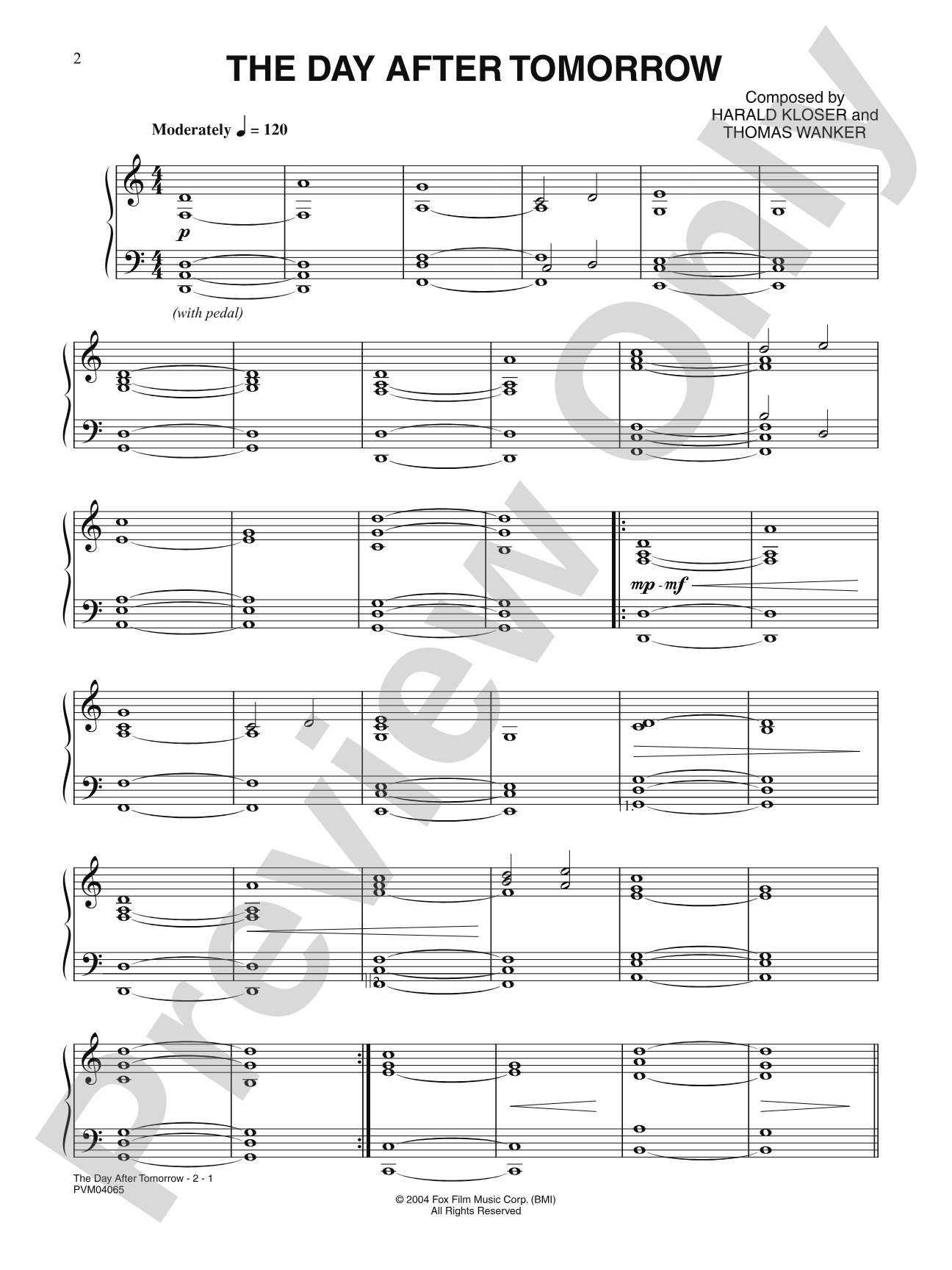
This arrangement captures the emotional core of Kloser's film score in a format that works for voice and piano, making it accessible for recital programs, vocal studio lessons, and school concerts without losing the cinematic sweep of the original. The chord symbols give pianists the flexibility to reharmonize or improvise, while the vocal line sits naturally for contemporary singers across a range of voice types.
What to expect
The piece carries a sense of reflection and quiet determination, with an undercurrent of tension that mirrors the film's thematic concerns. The harmonic language is modern and accessible, with moments of unexpected emotional depth that reward careful listening and intentional interpretation.
Who it's for
Vocalists preparing contemporary songs for recital or audition repertoire will find this arrangement both musically satisfying and performable at multiple skill levels. Piano students and teachers can use the chord symbols to develop improvisation skills and harmonic awareness while learning a piece drawn from film music.
How to get the most out of it
Pay attention to the song's emotional arc; resist rushing through climactic moments. The piece builds intensity gradually, and patience in the middle section will make the final phrases land with more impact.
Use the chord symbols as a guide for phrasing and dynamic shape, not just harmonic reference. Consider where the harmony shifts most dramatically and let those changes breathe.
Balance the vocal melody with a supporting piano part that doesn't overshadow the singer. Think of the accompaniment as creating atmosphere rather than doubling or competing with the line.
How to use it
Include this in a contemporary music concert or a program that mixes film scores with art songs, as it bridges both worlds effectively. It also works well as a teaching piece for vocalists developing maturity and control with film-derived material, or for studio pianists expanding their repertoire beyond classical standards.
Skills your students will build
singing with dynamic control and emotional nuance in contemporary idioms
reading chord symbols and using them to shape harmonic accompaniment
balancing vocal melody with piano texture in ensemble contexts
interpreting film music as standalone concert repertoire
You May Also Like
Scan to Complete Your Purchase
Use your phone's camera to scan the code below
You'll log in on your phone and the order will be added to your account