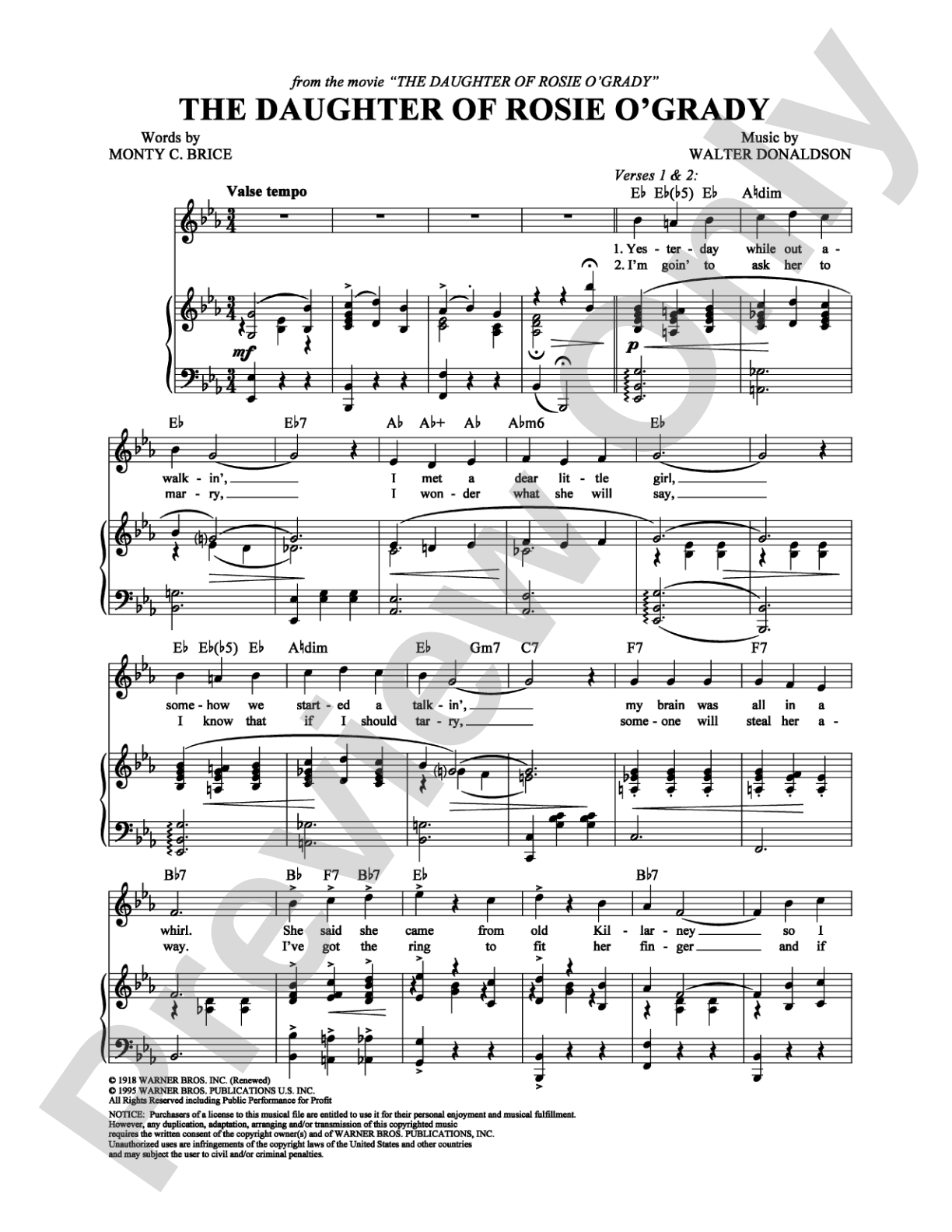
The Daughter of Rosie O'Grady: Piano/Vocal/Chords Digital Sheet Music

The Daughter of Rosie O'Grady: Piano/Vocal/Chords Digital Sheet Music

Walter Donaldson

Item: 00-PS-0008531

Digital Download
$3.99
Description

The Daughter of Rosie O'Grady: Piano/Vocal/Chords Digital Sheet Music isn't in MakeMusic Cloud just yet...but it could be. Let us know you'd like to see it, and you'll help shape what comes next. In the meantime, start a free trial and dive into thousands of interactive titles your students can play along with today.

Sample Audio
No sample audio found.
Sample Video
Additional Details
SKU: 00-PS-0008531

More about this title

Why we love this

This early 20th-century standard sits in that sweet spot between accessibility and genuine charm, making it ideal for singers building their jazz and pop vocal library. The piano/vocal/chords format gives you flexibility: work with the written arrangement, improvise around the chord changes, or use it as a foundation for a full band arrangement.

What to expect

Warm, nostalgic, and genuinely affectionate. The melody has a lilting, conversational quality that invites performers and listeners into a vivid character moment. It's the kind of song that benefits from a performer's personal touch and storytelling instinct.

Who it's for

Vocalists exploring early musical theatre and popular song repertoire will find this accessible yet musically substantial. Piano accompanists looking to expand their standards and songs library, plus anyone preparing for auditions or recitals that call for classic American songbook material.

How to get the most out of it

  • Treat the rhythm with a light, conversational swing. The melody should feel natural and storytelling, not metronomic.
  • Use the chord symbols as a springboard for comping texture. Fill the space between vocal phrases with rhythmic accompaniment rather than playing everything as written.
  • Anchor the bridge with a slight tempo lift or dynamic warmth to create shape across the form.
  • Let the lyrics land clearly. The song's charm depends on the story coming through, so phrase the melody conversationally rather than pushing for volume.

How to use it

Pair this with other American standards or early musical theatre selections for a retrospective concert. It works equally well as a solo feature or as part of a themed program exploring early 1900s popular song. The modest accompaniment requirements make it practical for intimate venues or solo recitals.

Skills your students will build

  • Singing in a conversational, character-driven style
  • Reading and interpreting chord symbols for comping
  • Shaping longer melodic phrases with natural phrasing and breath placement
  • Accompanying singers with appropriate texture and dynamic support

You May Also Like