The Darktown Strutters' Ball Sheet Music Preview

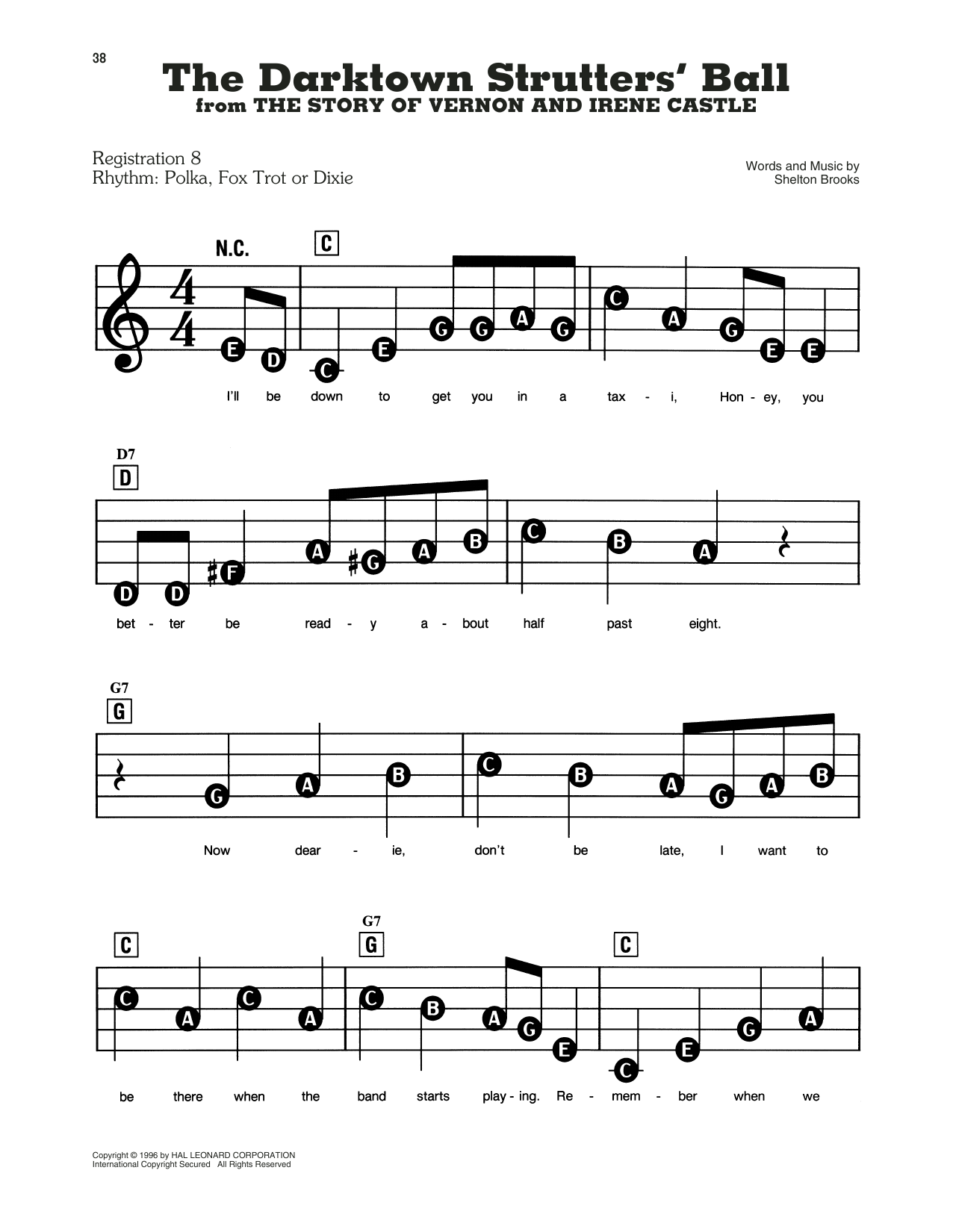
The Darktown Strutters' Ball: E-Z Play Today

As performed by Fred Astaire & Ginger Rogers / As performed by Sophie Tucker / As performed by Ted Lewis

Item: 35-DS00499336

Digital Download
$4.99
Description

The Darktown Strutters' Ball: E-Z Play Today isn't in MakeMusic Cloud just yet...but it could be. Let us know you'd like to see it, and you'll help shape what comes next. In the meantime, start a free trial and dive into thousands of interactive titles your students can play along with today.

Sample Audio
No sample audio found.
Sample Video
Additional Details
Publisher: Hal Leonard
Page Count: 2
SKU: 35-DS00499336

More about this title

About the Artist: Fred Astaire & Ginger Rogers

Fred Astaire and Ginger Rogers defined the golden age of film musicals in the 1930s and 1940s, bringing jazz standards and popular songs to millions through their innovative dance partnerships and vocal performances. Their work elevated the status of these songs in American culture, turning tunes like "The Darktown Strutters' Ball" into enduring standards that continue to shape how pianists approach swing and syncopation.

Their recordings remain essential references for understanding jazz phrasing and rhythmic flexibility. For educators, their interpretations offer masterclasses in how to swing a melody and when to sit slightly behind or ahead of the beat, making them invaluable study material for students learning to play standards with authentic style.

Why we love this

This standard swings with genuine historical weight. The arrangement sits perfectly at the intersection of jazz and pop accessibility, giving pianists enough rhythmic sophistication to stay engaged without requiring advanced harmonic knowledge. Performing this song connects students directly to the golden age of American music.

What to expect

Energy and elegance in equal measure. The piece radiates the optimistic swagger of 1920s nightlife while maintaining enough sophistication to appeal to discerning ears. You'll feel the rhythmic tension between straight notation and swing delivery from the first measures.

Who it's for

Pianists comfortable reading lead sheet notation and ready to work with standards repertoire. Intermediate students learning swing interpretation and jazz vocabulary will find this highly rewarding, as will anyone preparing material for jazz combo or solo performances.

How to get the most out of it

  • Keep the left hand relaxed and light in the bass; the groove depends on implied swing feel rather than driving force
  • Listen to the original recordings and study how the melody is phrased around the beat, not on top of it
  • Shape the dynamics across the 2-page structure to build energy in the second half without losing the tune's inherent bounce
  • Experiment with comping rhythms in the accompaniment to match different interpretations of the melody

How to use it

Pair this with other Astaire-Rogers standards to create a complete "Golden Age" concert segment, or slot it into a jazz history program tracing the evolution of American popular song. It works equally well as a solo piano feature or the opening number for a standards-based revue.

Skills your students will build

  • Reading and interpreting swing rhythms in a notated lead sheet
  • Phrasing melodic lines around the beat rather than strictly on it
  • Left-hand comping patterns appropriate to 1920s-1930s jazz style
  • Balancing melody and accompaniment in a two-chorus structure

You May Also Like