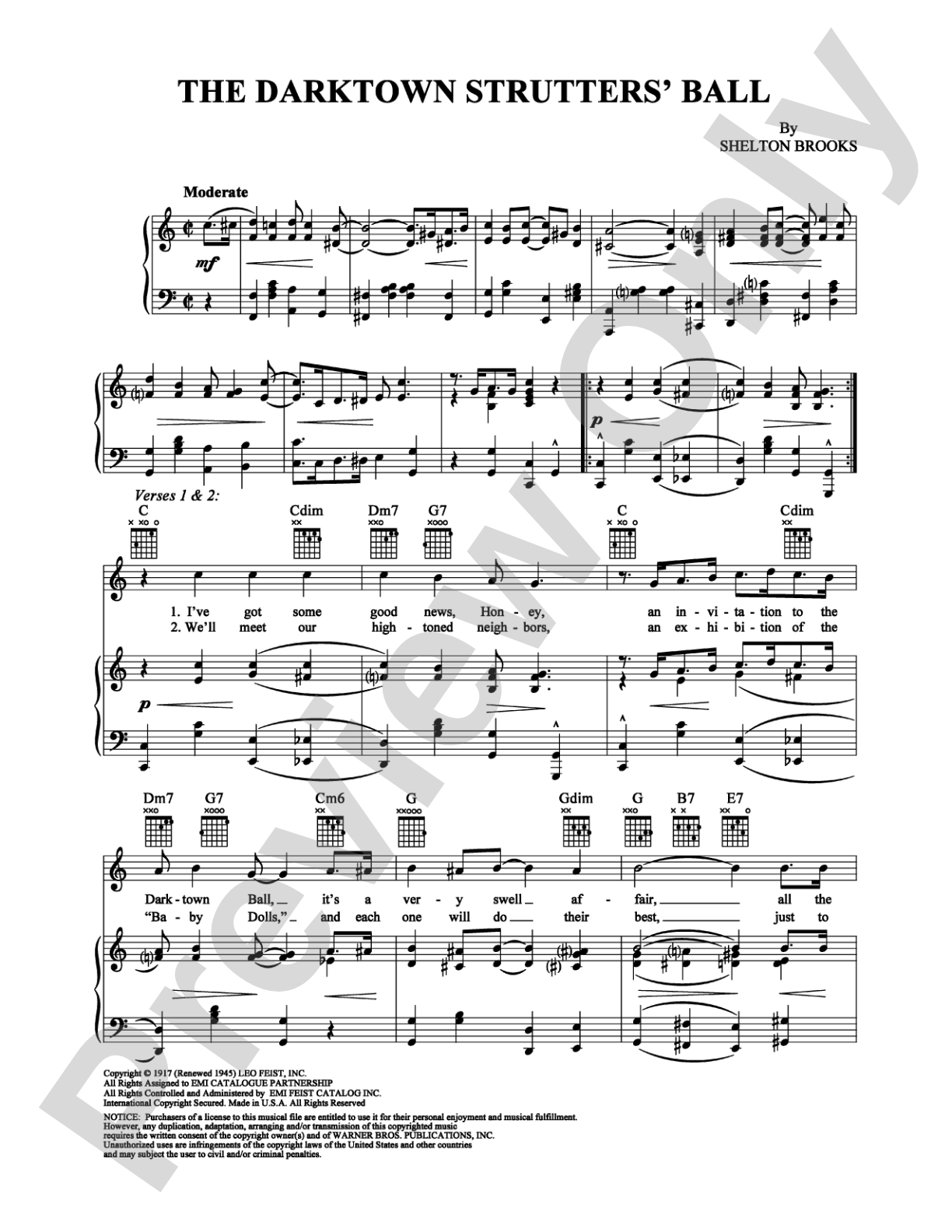
The Darktown Strutters' Ball: Piano/Vocal/Chords Digital Sheet Music

The Darktown Strutters' Ball: Piano/Vocal/Chords Digital Sheet Music

Shelton Brooks

Item: 00-PS-0004358

Digital Download
$3.99
Description

The Darktown Strutters' Ball: Piano/Vocal/Chords Digital Sheet Music isn't in MakeMusic Cloud just yet...but it could be. Let us know you'd like to see it, and you'll help shape what comes next. In the meantime, start a free trial and dive into thousands of interactive titles your students can play along with today.

Sample Audio
No sample audio found.
Sample Video
Additional Details
SKU: 00-PS-0004358

More about this title

About the Creator: Shelton Brooks

Shelton Brooks wrote "The Darktown Strutters' Ball" in 1913, and the song became one of the earliest jazz standards to achieve widespread popularity. Brooks crafted a piece that captured the exuberance and social energy of early 20th-century African American entertainment, creating something that would outlive its era by decades. His gift for melody and understanding of what made music singable and playable kept this tune alive through countless interpretations.

The song's endurance speaks to Brooks' ear for infectious rhythm and harmonic clarity. It arrived at a moment when jazz was still defining itself, and Brooks' straightforward, memorable approach helped establish what a popular song could be in this emerging genre.

Why we love this

This early jazz standard captures the infectious energy and syncopated swing that defined the 1910s dance hall scene. The piano/vocal arrangement gives singers and pianists room to interpret the melody with period style while the chord symbols support improvisation and arrangement flexibility. It's a natural choice for anyone building a jazz standards repertoire that connects historical context to contemporary performance.

What to expect

Bright, rhythmically playful, and deeply rooted in early jazz vernacular. The melody has an irresistible bounce that draws you into the dance hall atmosphere of another era, with chord changes that invite reharmonization and personal interpretation.

Who it's for

Pianists and singers studying jazz repertoire, from intermediate students exploring swing era standards to performers building a working knowledge of early 20th-century American song. This arrangement works equally well for voice lessons, jazz combos, or recital programming.

How to get the most out of it

  • Lean into the syncopation without rushing; the swing feel comes from relaxed phrasing, not tempo urgency.
  • Use the chord symbols as a springboard for comping variations rather than strict voicing rules. Keep it light and playful.
  • If you're singing, commit to the character of the title. The language and subject matter reflect its historical moment; deliver it with authenticity and respect for that context.
  • Balance the vocal line with piano accompaniment so the melody sits naturally above the harmonic texture, not fighting for attention.

How to use it

Pair this with other standards from the 1910s-1920s to create a jazz history set, or use it as a solo feature for a singer-pianist duo at a recital. It's also an engaging teaching piece for exploring how swing phrasing differs from classical legato.

Skills your students will build

  • Reading and performing swing rhythm and syncopation
  • Interpreting chord symbols and improvising comping patterns
  • Vocal phrasing and interpretation in early jazz style
  • Understanding the historical context and vernacular language of 1910s-era American song

You May Also Like