The Darktown Strutter's Ball: Lead Sheet Digital Sheet Music

The Darktown Strutter's Ball: Lead Sheet Digital Sheet Music

Shelton Brooks, Original Dixieland Jazz Band

Item: 00-PS-0007422

Digital Download
$1.99
Description

The Darktown Strutter's Ball: Lead Sheet Digital Sheet Music isn't in MakeMusic Cloud just yet...but it could be. Let us know you'd like to see it, and you'll help shape what comes next. In the meantime, start a free trial and dive into thousands of interactive titles your students can play along with today.

Sample Audio
No sample audio found.
Sample Video
Additional Details
SKU: 00-PS-0007422

More about this title

About the Artist: Original Dixieland Jazz Band

The Original Dixieland Jazz Band made history in 1917 when they became the first jazz ensemble to record commercially, capturing the raw energy and collective improvisation that defined early New Orleans jazz. Their recordings of tunes like "The Darktown Strutter's Ball" became foundational documents of jazz history, showcasing the band's tight ensemble playing, rhythmic drive, and infectious swing that influenced generations of musicians.

Composed by Shelton Brooks in 1910, "The Darktown Strutter's Ball" became a standard of the jazz repertoire through the ODJB's iconic 1917 recording. The tune remains a window into the ensemble style and approach to melody and rhythm that characterized the birth of jazz.

Why we love this

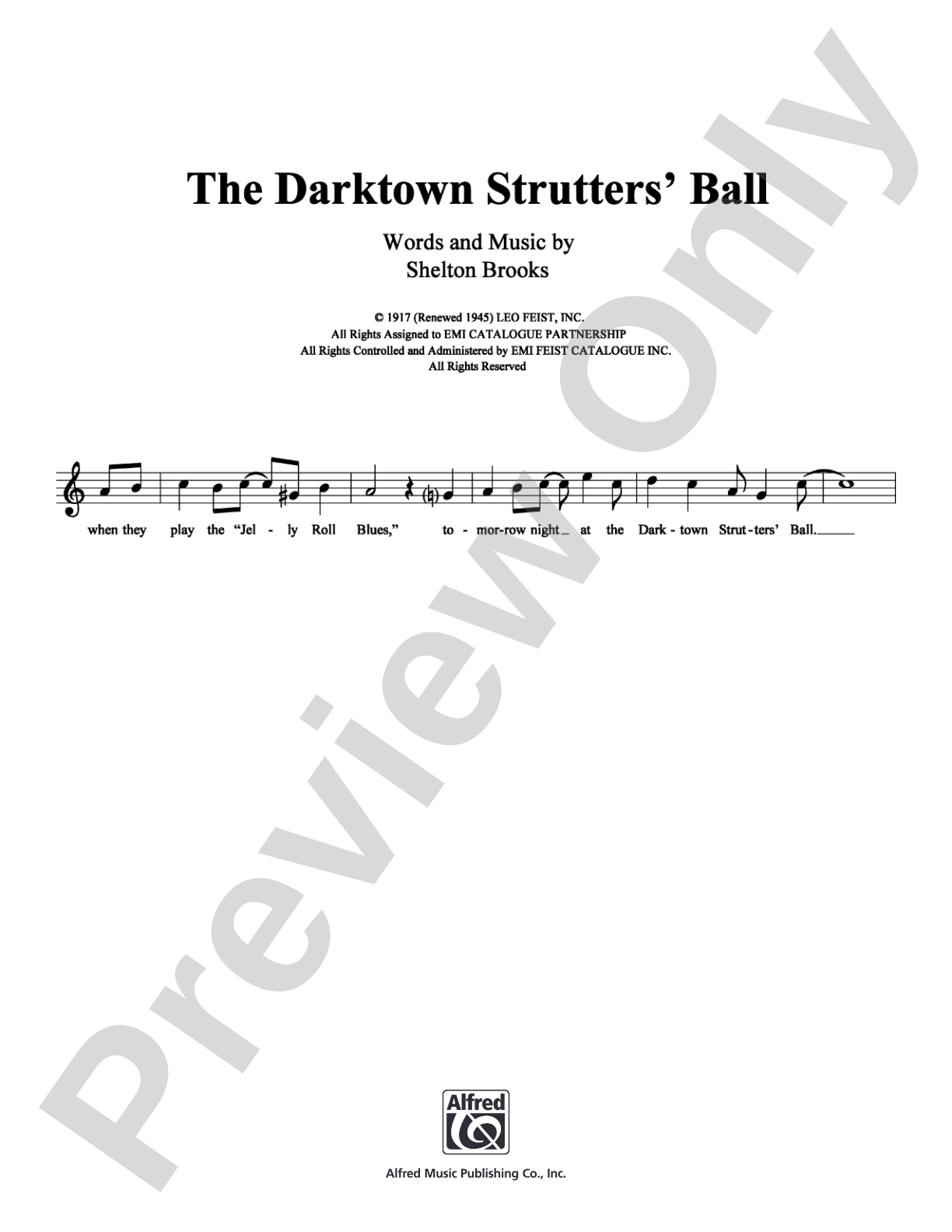
This lead sheet captures a piece of jazz history that players and composers need to experience firsthand. The tune's straightforward melody and harmonic structure make it accessible for lead sheet reading practice, while its historical weight gives students a concrete connection to how early jazz musicians approached standards. It's a repertoire essential that belongs in any serious jazz program.

What to expect

"The Darktown Strutter's Ball" bubbles with the lighthearted exuberance and rhythmic swagger of early New Orleans jazz. The melody sits comfortably, inviting interpretation and solo space, while the harmonic movement propels the tune forward with steady momentum and clear harmonic landmarks that feel intuitive to navigate.

Who it's for

Jazz ensemble directors, lead sheet readers, and arrangement students will find this tune essential for understanding early jazz standards and their harmonic and melodic architecture. Combo musicians and soloists building a repertoire of foundational jazz tunes will use this to develop their fluency with the changes and style.

How to get the most out of it

  • Study the original ODJB recording alongside the lead sheet to hear how the ensemble interprets phrasing, articulation, and the specific groove of early jazz.
  • Emphasize the syncopated rhythmic figures that give the tune its bounce; these characteristic rhythms were central to how early jazz musicians conveyed swing.
  • Experiment with different voicings and comping approaches to find arrangements that honor the tune's structure while allowing your ensemble's personality to emerge.
  • Pay attention to how soloists in historical recordings navigate the changes; their approaches offer models for melodic phrasing and tension-and-release that remain relevant today.

How to use it

Position this as a learning vehicle in your ensemble curriculum to build lead sheet fluency and understanding of early jazz harmony. It works equally well as a warm-up tune that connects students to jazz history or as a performance piece that celebrates the music's origins; its accessibility means players across ability levels can participate meaningfully.

Skills your students will build

  • Reading and interpreting lead sheet notation
  • Understanding early jazz harmonic progression and voice leading
  • Developing rhythmic accuracy and swing phrasing in an ensemble context
  • Analyzing and adapting historical jazz arrangements for different instrumentation
  • Recognizing stylistic characteristics of New Orleans jazz and 1920s ensemble approach

You May Also Like