
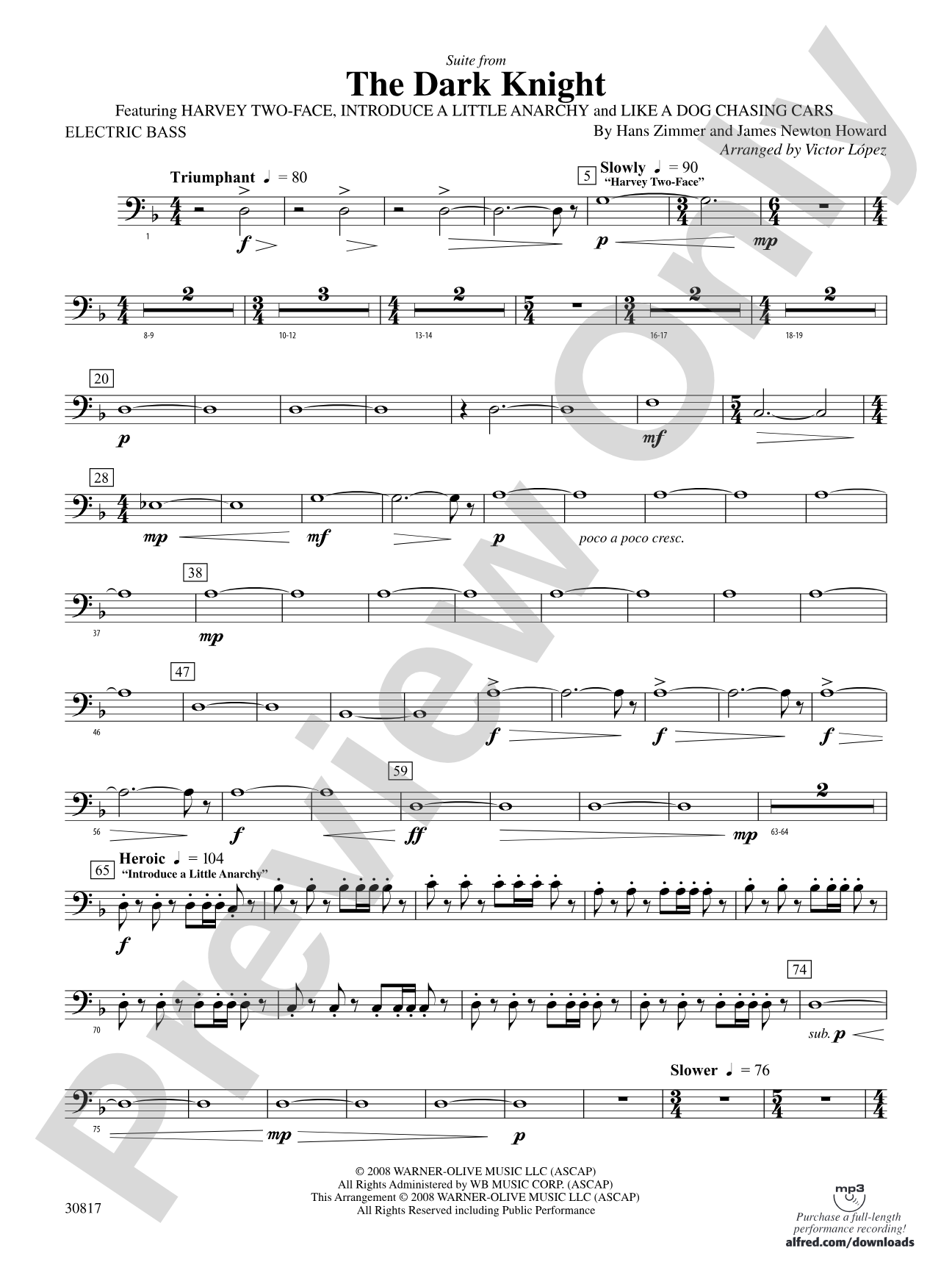

The Dark Knight, Suite from: Electric Bass
Featuring: Harvey Two-Face / Introduce a Little Anarchy / Like a Dog Chasing Cars
By Hans Zimmer and James Newton Howard / arr. Victor López
Grade: 3 (Medium Easy)
Item: 00-PC-0015731_EB
$5.99
Pickup currently not available
Description
The epic suite from The Dark Knight has been masterfully arranged by Victor López at the concert band level. Retaining the dramatic scoring by the award-winning film scoring team of Hans Zimmer and James Newton Howard, the suite contains "Harvey Two-Face," "Introduce a Little Anarchy" and "Like a Dog Chasing Cars." The musical imagery infused in this medley, scored for contemporary concert band, will capture the imagination for your whole audience while providing ample opportunity for every member of your ensemble to shine. Be sure to program this blockbuster film score medley on your very next concert! (7:00)


Don't just read it, hear it, play along with it, and watch your students grow with it. In MakeMusic Cloud, The Dark Knight, Suite from: Electric Bass comes alive with professional accompaniment, adjustable tempo, and built-in practice tools that turn solo practice into real progress.
Open in the Player
Jump straight in and assign it today.
Start Your Free Trial
Open this title and explore the full library in minutes.
Sample Audio
1
Audio File
--:--
0:00
0:00
Sample Video
Additional Details
Series:
Pop Concert Band
Publisher:
Alfred Music
Page Count:
268
SKU:
00-PC-0015731_EB
More about this title
About the Composer: Hanz Zimmer
Hans Zimmer has redefined film scoring for contemporary cinema through his innovative use of electronic and orchestral textures. His work spans decades of blockbuster franchises, from The Lion King to The Inception series, establishing him as one of the most influential composers in modern media. His scores prioritize emotional storytelling through instrumental color rather than traditional melodic development, a philosophy that translates powerfully to the concert band idiom.
Why we love this
Victor López's arrangement captures the visceral intensity of Zimmer and Howard's original score without requiring the vast resources of a film orchestra. The suite gives your band genuine dramatic weight, with orchestration that sits naturally on concert band instruments while maintaining the film's psychological edge. Your audience will recognize these moments instantly, and your musicians get to inhabit music written for a major motion picture.
What to expect
Tension builds through unsettling textures and jagged rhythmic patterns, punctuated by moments of stark, menacing calm. The arrangement channels the film's psychological intensity, creating an atmosphere where danger feels present even in the quietest passages. Your band will feel the weight of playing music written for a major cinematic villain.
Who it's for
Concert bands at the Grade 3 level seeking repertoire with genuine dramatic stakes and contemporary appeal. Directors programming film music will find this suite accessible without sacrificing musical substance, and student musicians respond powerfully to material that connects with popular culture they already know.
How to get the most out of it
- Balance the dark, sustained textures in the lower voices against any soloistic material in the upper woodwinds and brass; resist the urge to let either dominate.
- Attend carefully to the dynamic transitions between movements. This suite thrives on contrast between agitated passages and brooding stretches.
- Lock the ensemble rhythmically in the driving sections. The sense of propulsion matters more than interpretive flexibility in these moments.
- Shape phrase endings with restraint. Let silences and space do the dramatic work rather than underlining climaxes with excessive volume.
How to use it
Program this as a centerpiece moment on a concert mixing classical and contemporary works. The 7-minute runtime and emotional arc make it substantial enough to anchor a first half or provide a dramatic bridge between lighter fare. Consider pairing it with other film music or with original compositions exploring similar harmonic territory.
Skills your students will build
- Sustaining intensity through extended passages of low dynamic level
- Executing precise rhythmic entrances in driving, syncopated sections
- Balancing transparency in contemporary harmonic language
- Responding to rapid dynamic shifts and textural changes
- Managing dissonant sonorities without losing intonation