About the Composer: Hans Zimmer & James Newton Howard
Hans Zimmer and James Newton Howard are the architects behind some of cinema's most iconic scores. Zimmer's work spans decades of innovation in film music, from experimental soundscapes to orchestral grandeur, while Howard brings a classically trained composer's sensibility and melodic sophistication to every project. Together on The Dark Knight trilogy, they created a sonic language that elevated superhero filmmaking into something operatic and psychologically complex.
Why we love this
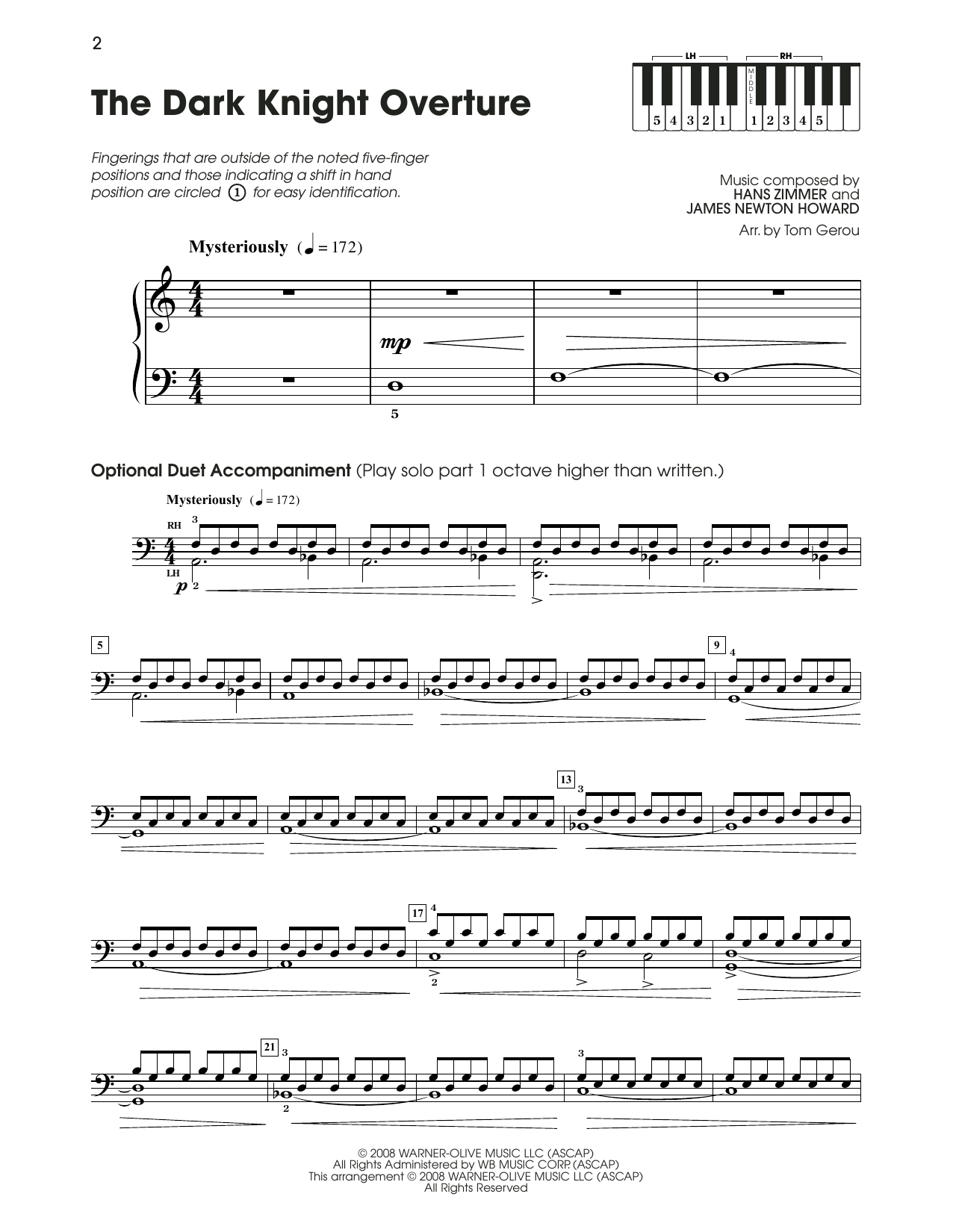
Students recognize this music instantly, which creates immediate engagement. Tom Gerou's 5-finger arrangement captures the driving intensity and dark mystery of the original without sacrificing the compositional weight that makes the theme so memorable.
What to expect
Brooding and purposeful. The harmonic language suggests darkness and mystery, yet there's an undercurrent of heroic determination beneath the surface. This is music that moves forward with quiet intensity.
Who it's for
Young pianists who want to explore film music in a format that builds technical foundation without overwhelming them. Teachers looking for repertoire that connects with students' actual listening lives and keeps their practice room engaging.
How to get the most out of it
Shape the opening lines with precision; the repeating figures need clarity rather than dynamics to build tension effectively.
Keep the tempo steady and purposeful. This theme lives in forward momentum, not rubato.
Pay attention to the interplay between hands if there are harmonic accompaniment patterns. Balance ensures the main melodic thread stays prominent.
How to use it
Pair this with other 5-finger film arrangements to create a contemporary cinema medley, or use it as a performance piece that speaks to students' cultural moment. It also works as a bridge between classical piano training and the repertoire students actually want to play.
Skills your students will build
Reading steady rhythmic patterns across both hands
Maintaining tempo through repetitive harmonic figures
Bringing dramatic character to minimalist textures
Balancing melody and accompaniment in the same hand
You May Also Like
Scan to Complete Your Purchase
Use your phone's camera to scan the code below
You'll log in on your phone and the order will be added to your account