The Dance Of Denial Sheet Music Preview

The Dance Of Denial: Jazz Ensemble Conductor Score & Parts

Arranged by Michael Philip Mossman

Grade: 4

Item: 35-PK00141413

Digital Download
$55.00

One moment…

Description
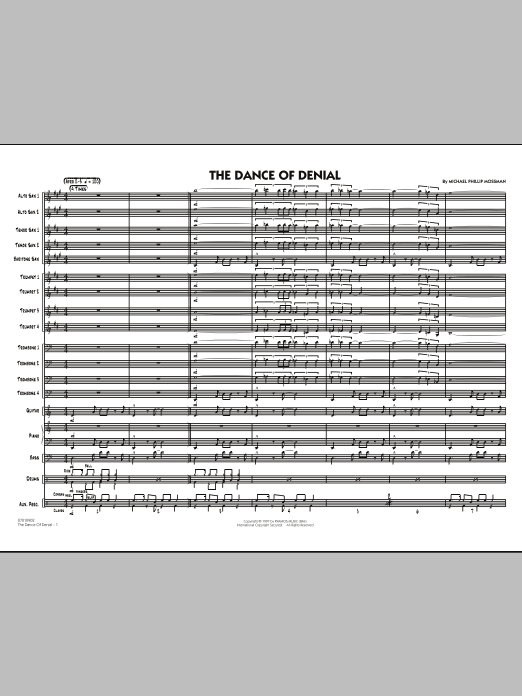
Using an Afro-Cuban style alternating with an authentically notated cha-cha groove, composer Michael Philip Mossman adds a hint of Egyptian mystery (Dance of da Nile?) in creating this marvelous production number for today's adventurous jazz ensemble. Includes solos for alto and trumpet, as well as space to feature Latin percussion and/or the drummer.

The Dance Of Denial: Jazz Ensemble Conductor Score & Parts isn't in MakeMusic Cloud just yet...but it could be. Let us know you'd like to see it, and you'll help shape what comes next. In the meantime, start a free trial and dive into thousands of interactive titles your students can play along with today.

Sample Audio
No sample audio found.
Sample Video
Additional Details
Publisher: Hal Leonard
SKU: 35-PK00141413

More about this title

About the Arranger: Michael Philip Mossman

Michael Philip Mossman is a trumpeter and composer with deep roots in both straight-ahead jazz and Latin music. His arrangements balance authentic rhythmic writing with accessibility, making him a trusted voice for jazz educators building repertoire that challenges ensemble musicianship without sacrificing playability.

Why we love this

The stylistic layering here is what sets this apart. Most Grade 4 Latin charts stay in one groove, but Mossman's alternation between Afro-Cuban and cha-cha textures forces your ensemble to navigate genuine rhythmic contrasts rather than coast through eight choruses of the same thing. The Egyptian mystery element adds visual and sonic personality that students actually remember.

What to expect

Exotic and grounded at once. The piece moves between dancing sophistication and earthy percussion conversations, never settling into predictability. There's real joy in the rhythm sections, a touch of intrigue in the melodic writing, and room for individual voices to emerge.

Who it's for

Jazz ensembles ready to move beyond basic swing grooves. This works for groups that have solid rhythmic reading and the maturity to honor Latin styles authentically rather than treating them as novelty colors.

How to get the most out of it

  • Lock the clave pattern first. Before the band plays anything, have the percussion section establish the underlying clave independently so the ensemble feels the authentic Latin foundation beneath the horns.
  • Balance the alto and trumpet solos by giving each one distinct space in your rehearsal schedule. These voices deserve equal preparation time so neither gets overshadowed in performance.
  • Emphasize the groove shift between sections. Mark the transitions clearly in parts so the band experiences the style change as intentional contrast, not as confusion.
  • Invite Latin percussion and the drummer to shine without drowning the ensemble. Space matters here; brief moments of trio interplay hit harder when surrounded by full ensemble texture.

How to use it

Consider this a spring concert opener or mid-set palate cleanser. The production number energy invites ensemble camaraderie, and the stylistic variety makes it stand out if you are programming a set of Latin charts or exploring jazz geography across multiple traditions.

Skills your students will build

  • Authentic Afro-Cuban and cha-cha rhythmic vocabularies
  • Soloist independence and solo accompaniment sensitivity
  • Clave awareness and polyrhythmic ensemble coordination
  • Stylistic transitions and dynamic shape within a single piece
  • Latin percussion integration and improvisation within notated frameworks

You May Also Like