
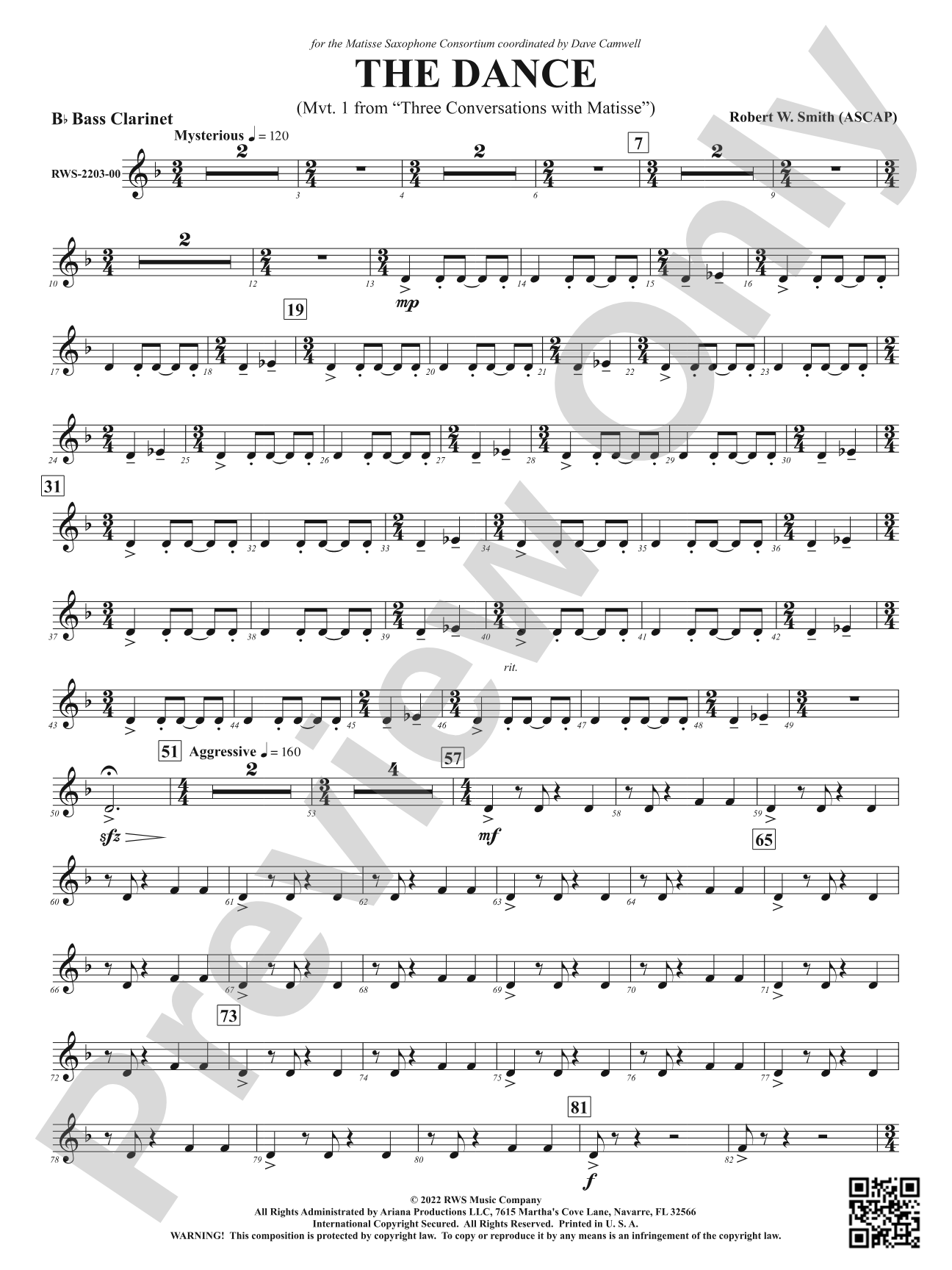

The Dance - Mvt. 1 from Three Conversations with Matisse: B-flat Bass Clarinet
Mvt. 1 from Three Conversations with Matisse
By Robert W. Smith
Grade: 4.5
Item: 98-PC-RWS2203_BC
$3.99
Pickup currently not available
Description
Inspired by the paintings of impressionist Henri Matisse and featuring the alto saxophone, "The Dance" is the first movement of "Three Conversations With Matisse." Along with the well known Matisse painting of the same name, this unique musical statement can be described as forbidding, menacing, tribal and ritualistic. Written for the accomplished saxophone soloist, the band accompaniment is well within the technical range of most high school, university and community ensembles. A powerful and welcome addition to the saxophone and concert band repertoire!
Original Item#: RWS-2203-00


Original Item#: RWS-2203-00
The Dance - Mvt. 1 from Three Conversations with Matisse: B-flat Bass Clarinet isn't in MakeMusic Cloud just yet...but it could be. Let us know you'd like to see it, and you'll help shape what comes next. In the meantime, start a free trial and dive into thousands of interactive titles your students can play along with today.
Request This Title
Tell us you want it.
Start Your Free Trial
Explore everything that's ready to play right now.
Sample Audio
1
Audio File
--:--
0:00
0:00
Sample Video
No sample videos found.
Additional Details
Series:
RWS - Symphony Band
Publisher:
RWS Music Company
SKU:
98-PC-RWS2203_BC
More about this title
About the Composer: Robert W. Smith
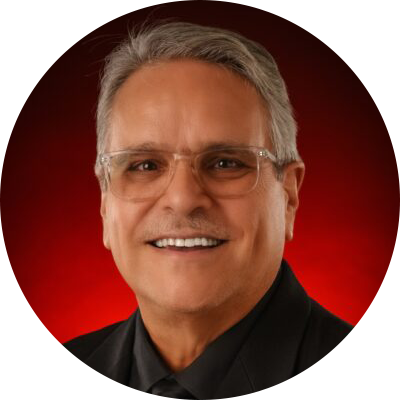
Robert W. Smith stands among America's most recorded composers for concert band and orchestra, with over 400 published works to his name. He holds degrees from Troy State University and the University of Miami, and his original compositions have been performed across North America, Europe, Australia, and Asia. His symphonies The Divine Comedy and The Odyssey, along with works like The Tempest, have become repertoire standards.
Beyond the concert hall, Smith's music has reached audiences through major television broadcasts, Olympic ceremonies, presidential state functions, and iconic American events ranging from the Macy's Thanksgiving Day Parade to Opening Day at Dodger Stadium. His work as a conductor and clinician has taken him across the United States and internationally to Canada, Japan, Australia, Italy, Austria, and the United Kingdom.
Why we love this
Smith crafts a genuinely visceral piece that sits at the intersection of concert sophistication and immediate impact. The featured alto saxophone part demands real artistry from your soloist while keeping the band writing accessible enough that your section players stay engaged rather than relegated to padding, making this work equally rewarding for a developing ensemble or a seasoned group.
What to expect
Dark ritual unfolds across primordial soundscapes. The music evokes the raw energy of Matisse's painting, building from forbidding shadows into something both menacing and strangely hypnotic, with the alto saxophone cutting through like an incantation against the band's tribal pulse.
Who it's for
Advanced high school bands and college ensembles with a capable alto saxophone soloist will find this piece ideally scaled. The Grade 4.5 designation reflects the solo demands and the composer's harmonic language rather than technical difficulty in the band parts, making it accessible for accomplished programs seeking substantive concert repertoire.
How to get the most out of it
- Establish the menacing character through ensemble precision in the rhythmic figures that frame the saxophone solo; even slight tightness in the accompaniment will undermine the tribal intensity Smith intends.
- Balance the alto saxophone prominence carefully so the soloist projects without the band receding into mere support; this is a conversation, not a spotlight.
- Take advantage of the impressionist harmonic language by allowing for slight rubato and dynamic shaping within phrases rather than metronomic regularity.
How to use it
This opening movement works powerfully as the centerpiece of a concert devoted to visual art as inspiration for music, paired perhaps with other color-driven or impressionist-influenced works. It also serves effectively as a contest piece where the alto saxophone feature and distinctive character set your program apart from more conventional selections.
Skills your students will build
- Ensemble balance and blend with a solo instrument
- Rhythmic precision in minimalist, ritualistic accompaniment figures
- Harmonic sophistication through impressionist chord movement and resolution
- Dynamic control and orchestration awareness in supporting an extended solo line