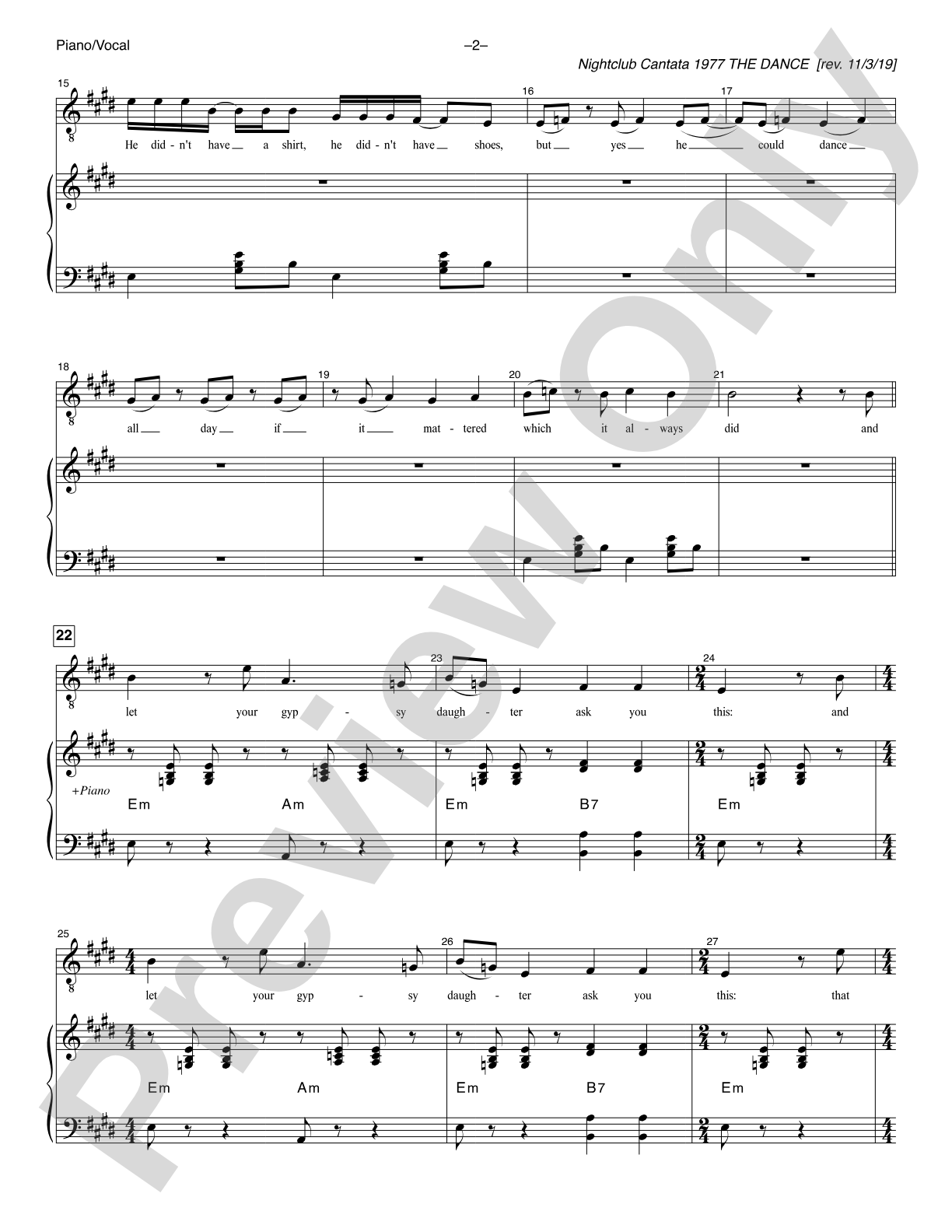
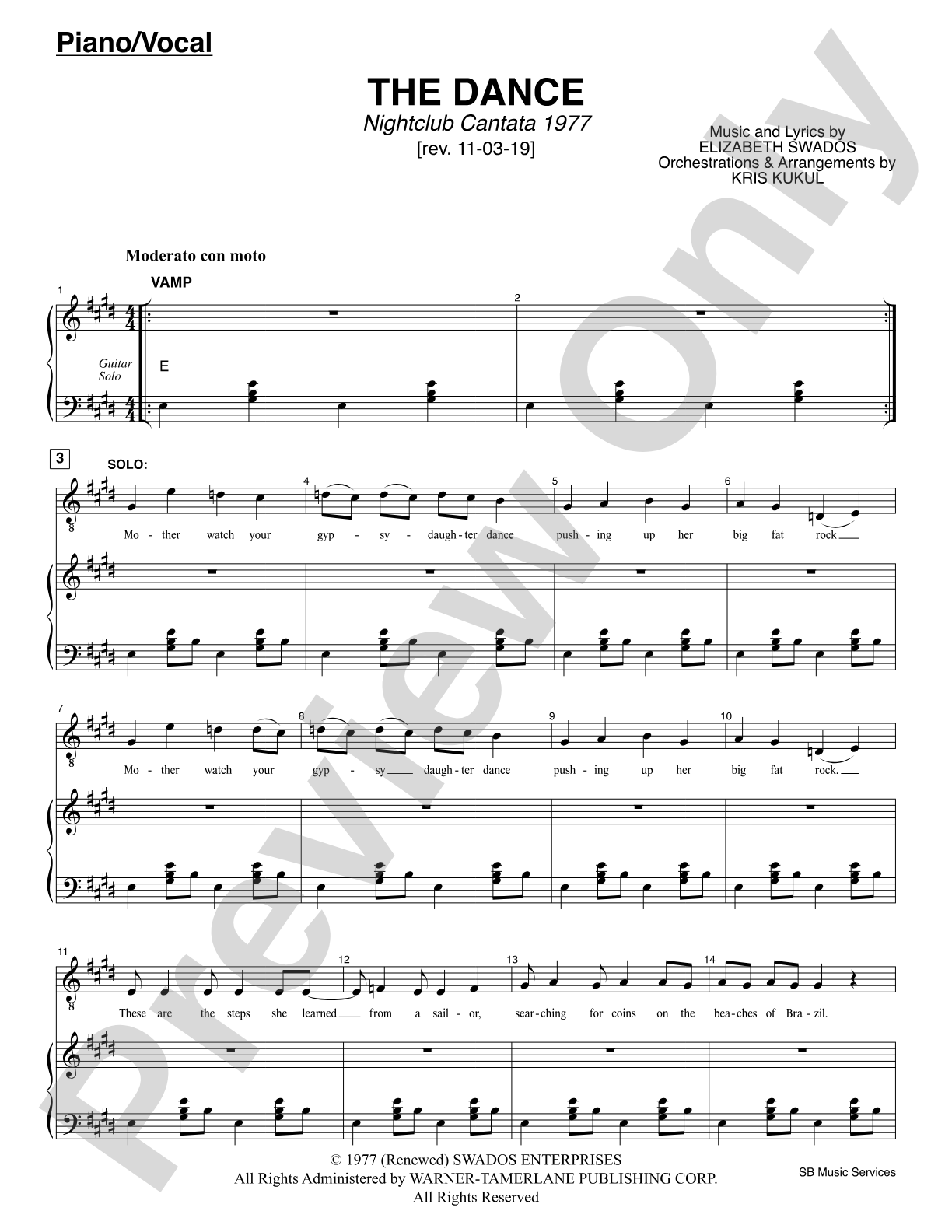
The Dance (<i>Nightclub Cantata 1977</i>) Sheet Music Preview

The Dance (Nightclub Cantata 1977): Piano/Vocal

Music and lyrics by Elizabeth Swados / Orchestrations and arrangements by Kris Kukul

Item: 00-PS-0016365

Digital Download
$3.99

One moment…

Description
From The Liz Swados Project---a tribute album to the Tony-nominated artist Elizabeth Swados.

The Dance (Nightclub Cantata 1977): Piano/Vocal isn't in MakeMusic Cloud just yet...but it could be. Let us know you'd like to see it, and you'll help shape what comes next. In the meantime, start a free trial and dive into thousands of interactive titles your students can play along with today.

Sample Audio
No sample audio found.
Sample Video
Additional Details
SKU: 00-PS-0016365

More about this title

About the Composer: Elizabeth Swados

Elizabeth Swados (1951-2016) was a Tony-nominated director, composer, and choreographer whose work bridged experimental theater, popular music, and social consciousness. She created innovative productions that blended original scores with choreography and visual storytelling, earning her recognition across Broadway, off-Broadway, and international stages. Her compositional voice drew from rock, folk, and theatrical idioms, and she was dedicated to creating work that was politically aware and emotionally direct.

Swados's career spanned decades of creation for theater, film, and concert settings. She worked with major institutions and created pieces that challenged conventional theatrical form. Her legacy includes numerous original scores and adaptations that continue to be performed by educational and professional ensembles.

Why we love this

The Dance draws from a score written for theater, giving it theatrical immediacy and strong melodic character that sings naturally. Kris Kukul's arrangement captures the energy of the original while remaining idiomatic for the piano/vocal format, making it accessible for recital settings or concert programming that seeks contemporary material with genuine artistic depth.

What to expect

The Dance pulses with theatrical energy and directness. The music carries the immediacy of a moment on stage, where movement and gesture meet melody. There's a quality of dance embedded in the rhythmic life of the piece, even as the vocal line unfolds with dramatic intention.

Who it's for

This arrangement suits experienced vocalists who are comfortable with contemporary popular and theatrical music, and pianists confident in accompanying singers with rhythmic precision. It works well for recital singers building programs that include Broadway and contemporary theatrical material.

How to get the most out of it

  • Anchor the vocal line to the character and narrative of the original production; even in concert, this piece benefits from a singer who commits to the emotional subtext rather than treating it as abstract vocal music.
  • Balance the piano part so the accompaniment supports rather than overwhelms the voice. The rhythmic drive should remain clear without overpowering the lyrical content.
  • Attend to the rhythmic precision in the piano part. Theater-derived songs often depend on tight rhythmic alignment between voice and accompaniment to land their theatrical impact.
  • Explore the dynamic range available in the piece. Theatrical material often rewards expressive dynamics that underscore emotional shifts in the text.

How to use it

Include this alongside other contemporary vocal literature in a recital or concert that highlights theatrical songwriting. Its accessibility and strong musical character make it an excellent anchor for a set exploring how Broadway and popular music inform art song performance. The piece also works as a crossover selection for programs mixing classical and musical theater repertoire.

Skills your students will build

  • Phrasing operatic melody in a contemporary popular idiom
  • Coordinating rhythmic precision between voice and piano accompaniment
  • Interpreting text-driven vocal music with dramatic intention
  • Managing sustained vocal line over active accompaniment
  • Translating theatrical context into concert performance

You May Also Like