The Crab Walk Sheet Music Preview

The Crab Walk: Piano

By Jeanne Costello

Item: 98-DW9460

Digital Download
$3.95
Description
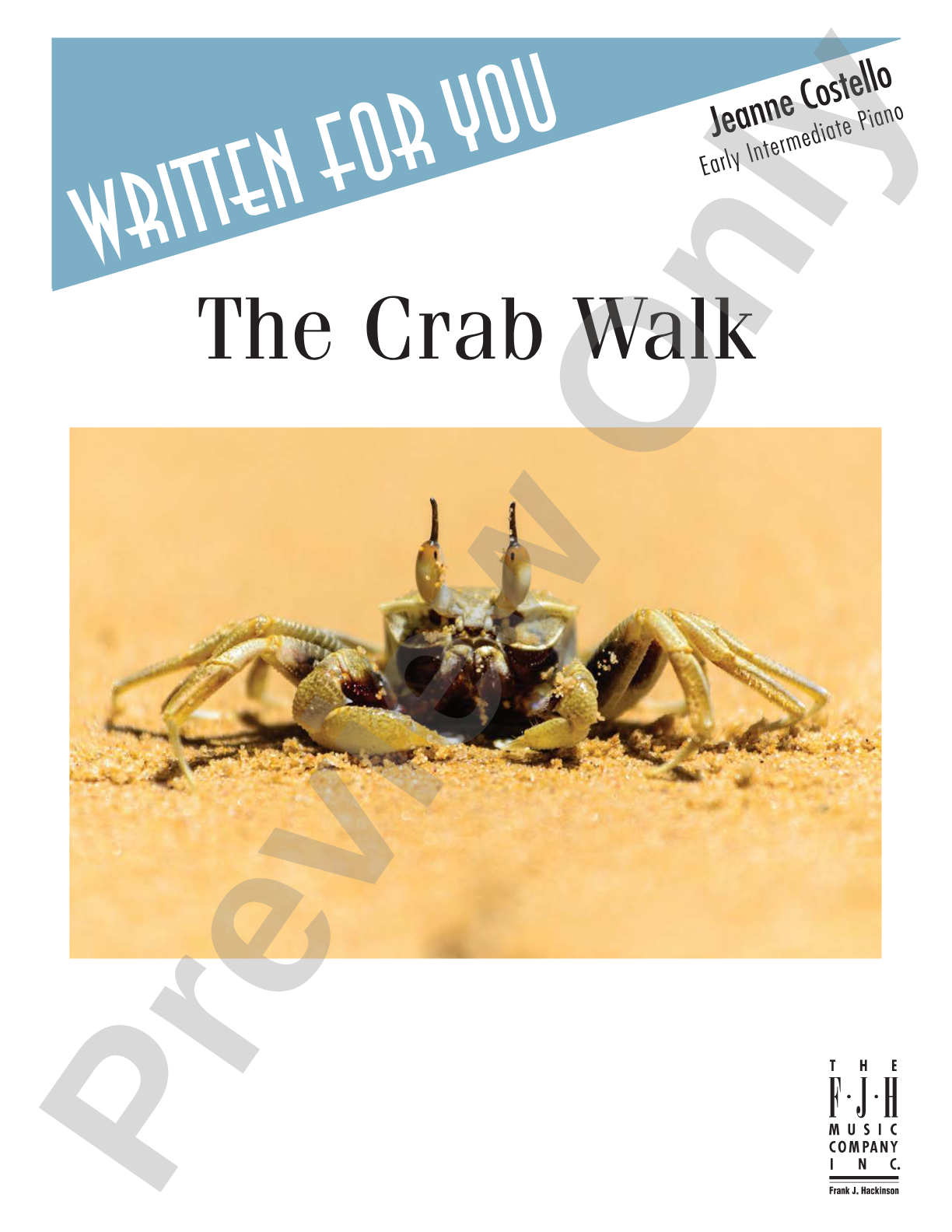
In C minor with an easy L.H. ostinato, the R.H. is often in a 5-finger pattern in this clever depiction of a scuttling crab---it seems to move forward and sideways at the same time. Hands cross over each other in the B section. Can be learned and memorized quickly.

The Crab Walk: Piano isn't in MakeMusic Cloud just yet...but it could be. Let us know you'd like to see it, and you'll help shape what comes next. In the meantime, start a free trial and dive into thousands of interactive titles your students can play along with today.

Sample Audio
No sample audio found.
Sample Video
Additional Details
Series: Written For You
Publisher: The FJH Music Company, Inc.
SKU: 98-DW9460

More about this title

Why we love this

Costello captures genuine animal character through straightforward, singable piano writing. The mechanical quality of the left hand ostinato against the wandering right hand melody actually sounds like a creature moving in two directions at once, which makes the piece memorable without relying on virtuosity or pretension.

What to expect

Quirky and deliberate, like watching something small move with odd determination across the floor. The C minor key gives it a slightly mysterious quality, while the simple right-hand figures keep the mood playful rather than dark.

Who it's for

Early-intermediate pianists ready to build hand independence and comfort with ostinato patterns. Students working toward program pieces that have character and narrative without excessive technical demands will find this rewarding.

How to get the most out of it

  • Keep the left hand ostinato steady and unfussy; it's the anchor that lets the right hand move freely. The crab effect depends on that rhythmic certainty.
  • Shape the right hand melody with small dynamic pushes to suggest the crab's sideways scuttle, rather than playing it mechanically.
  • Prepare for the hand crossing in section B by practicing the transition slowly and noting exactly where your hands pass each other; students often rush this moment.
  • Consider the piece a study in hand independence; once the pattern clicks, it's an excellent stepping stone before tackling more complex cross-hand textures.

How to use it

This works beautifully in a themed recital focused on music inspired by nature or animals. It also fits well as a transition piece between a more serious sonata movement and a heavier work, offering a moment of lightness and humor that audiences genuinely enjoy.

Skills your students will build

  • Left hand ostinato independence from right hand melody
  • Hand crossing coordination and spatial awareness at the keyboard
  • Quick score memorization through repetitive, logical structure
  • Character interpretation and expression within a simple technical framework
  • Five-finger pattern flexibility in C minor

You May Also Like