
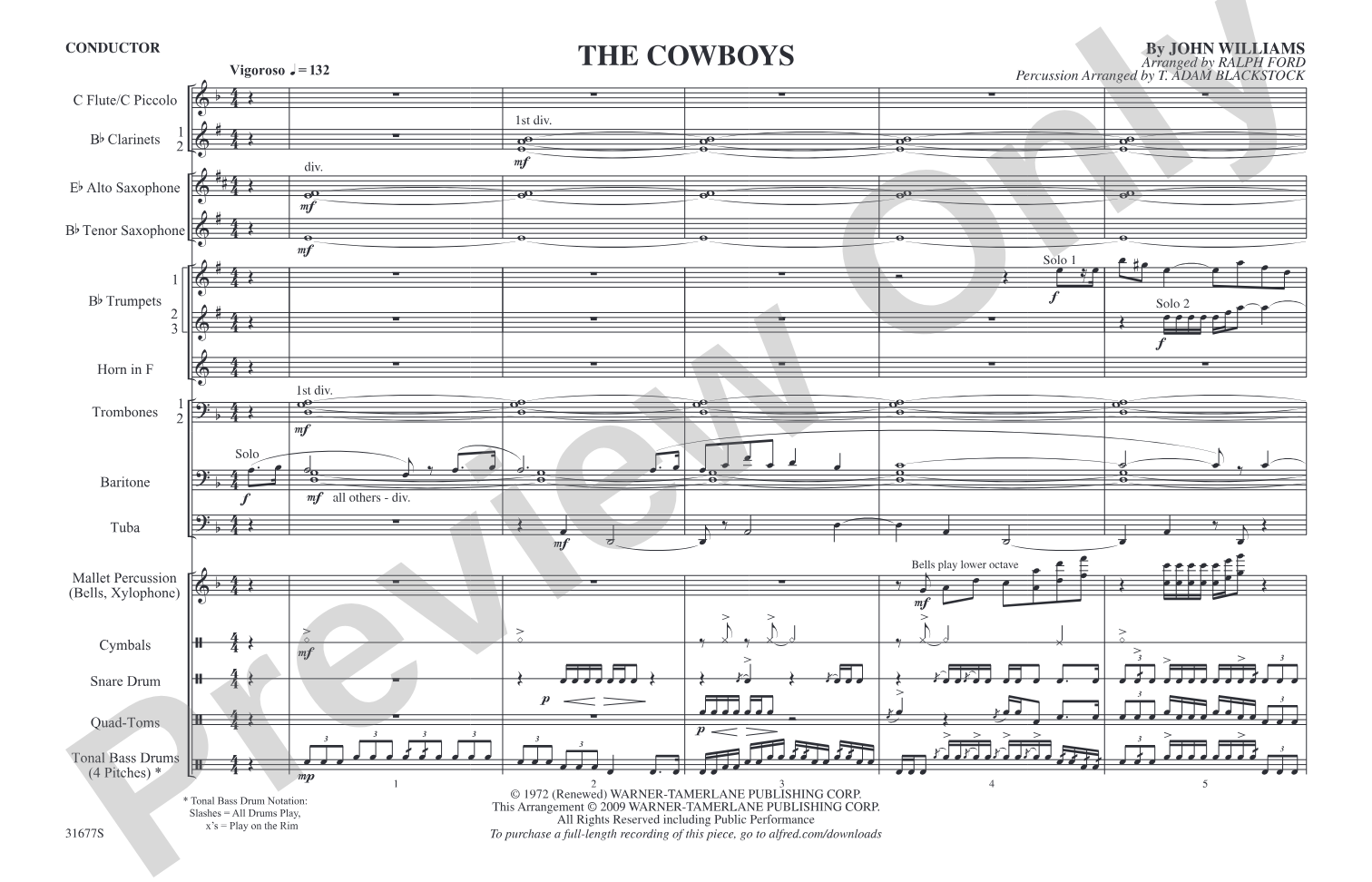
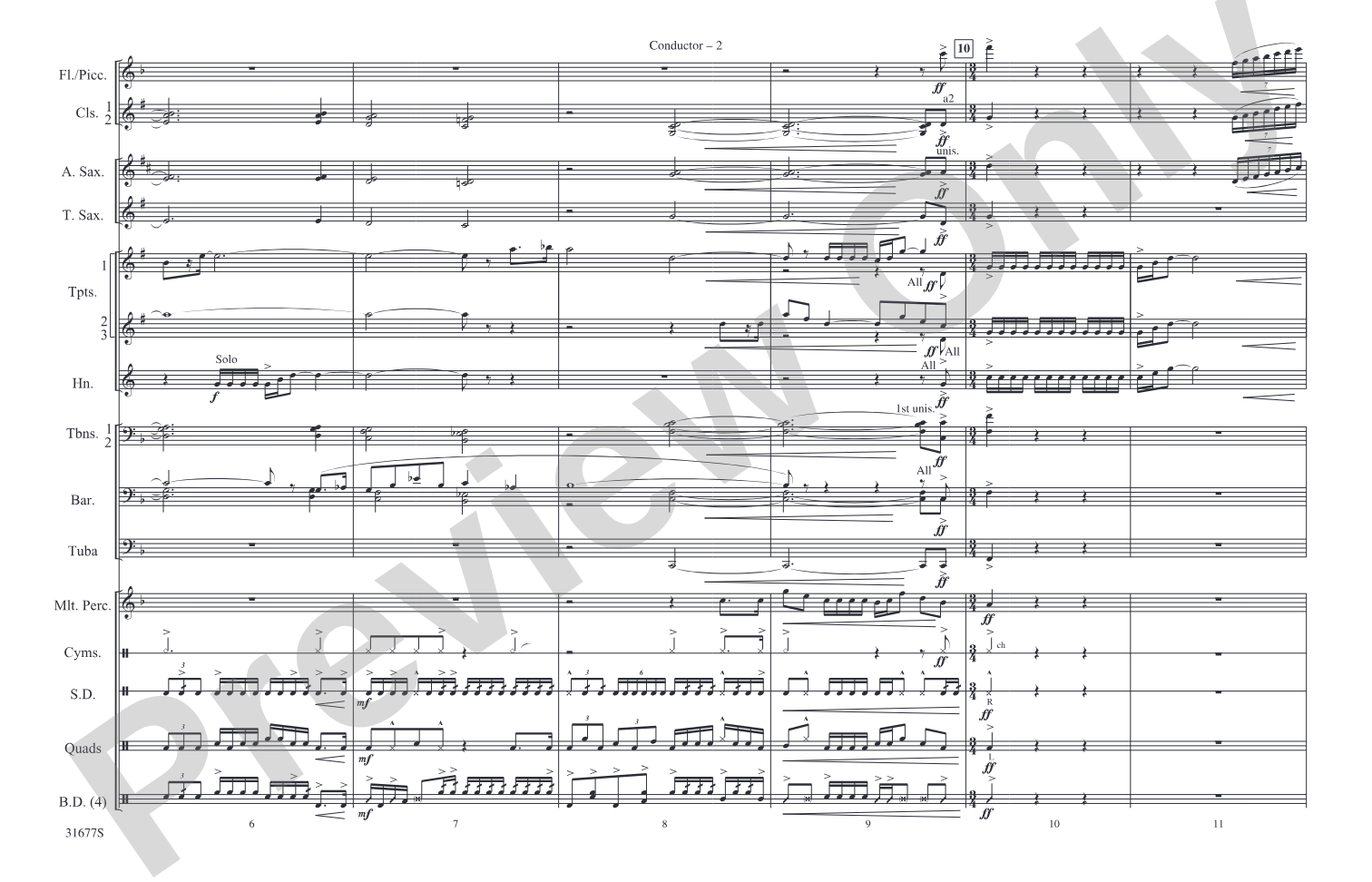
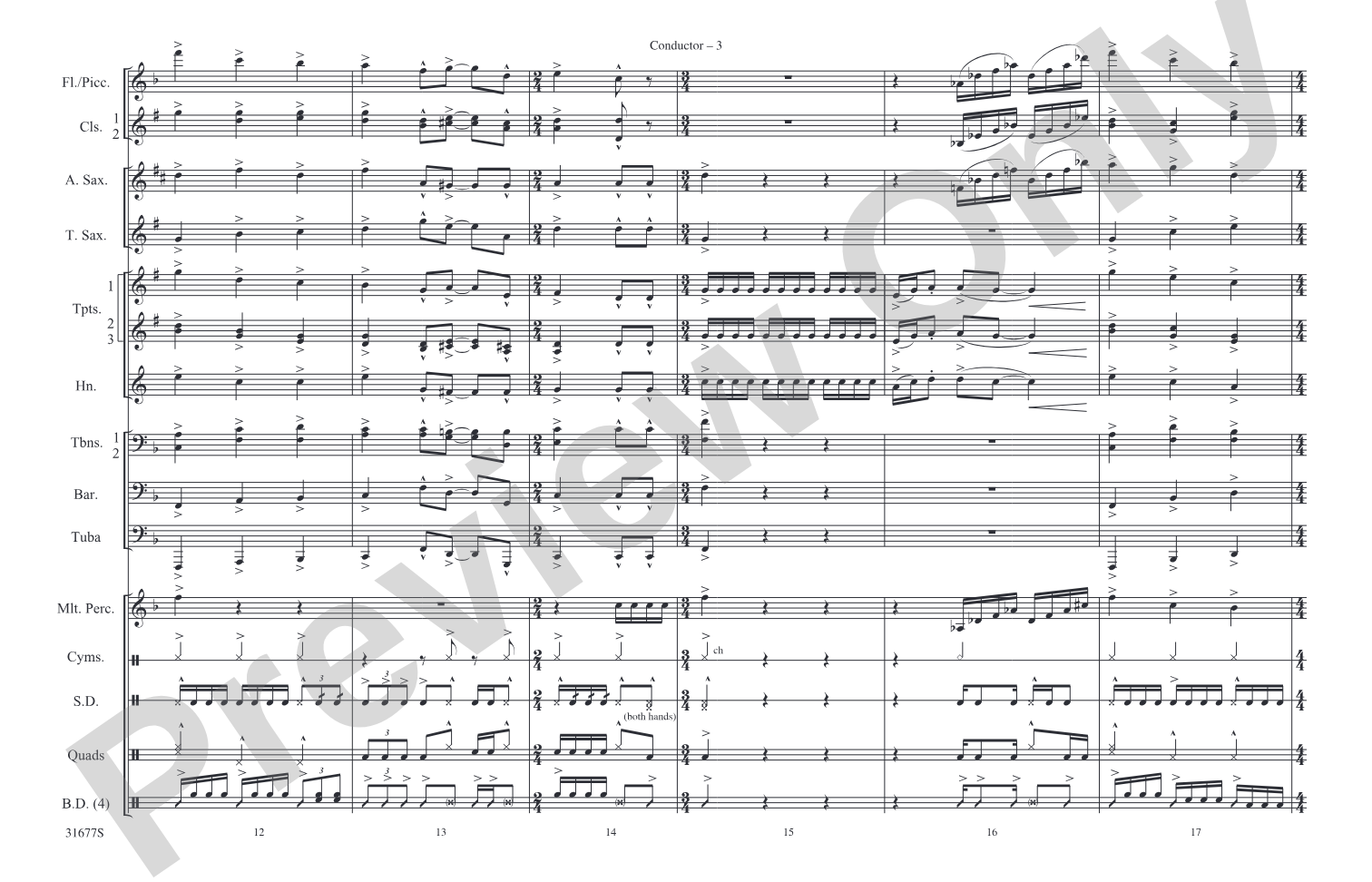
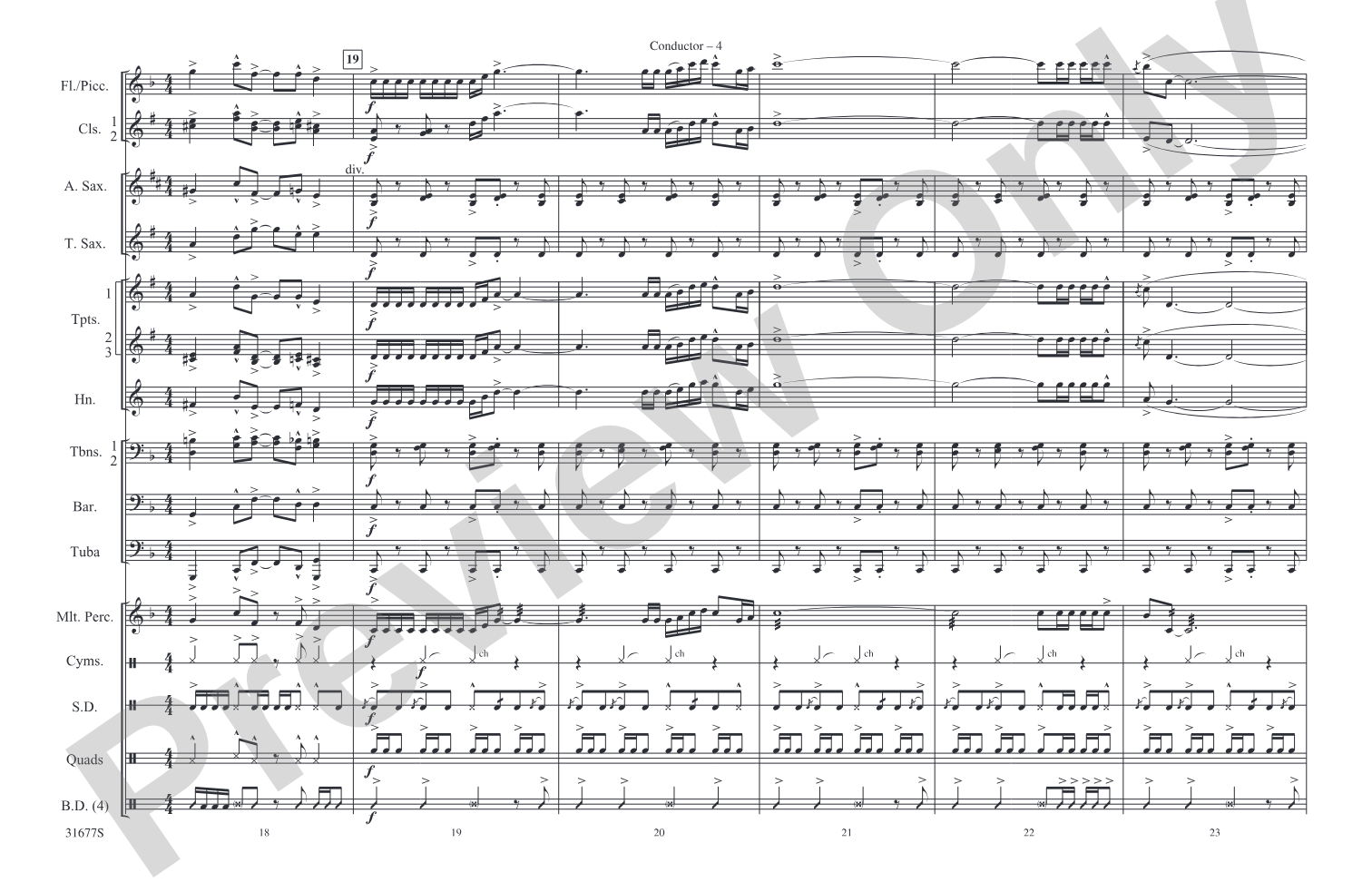
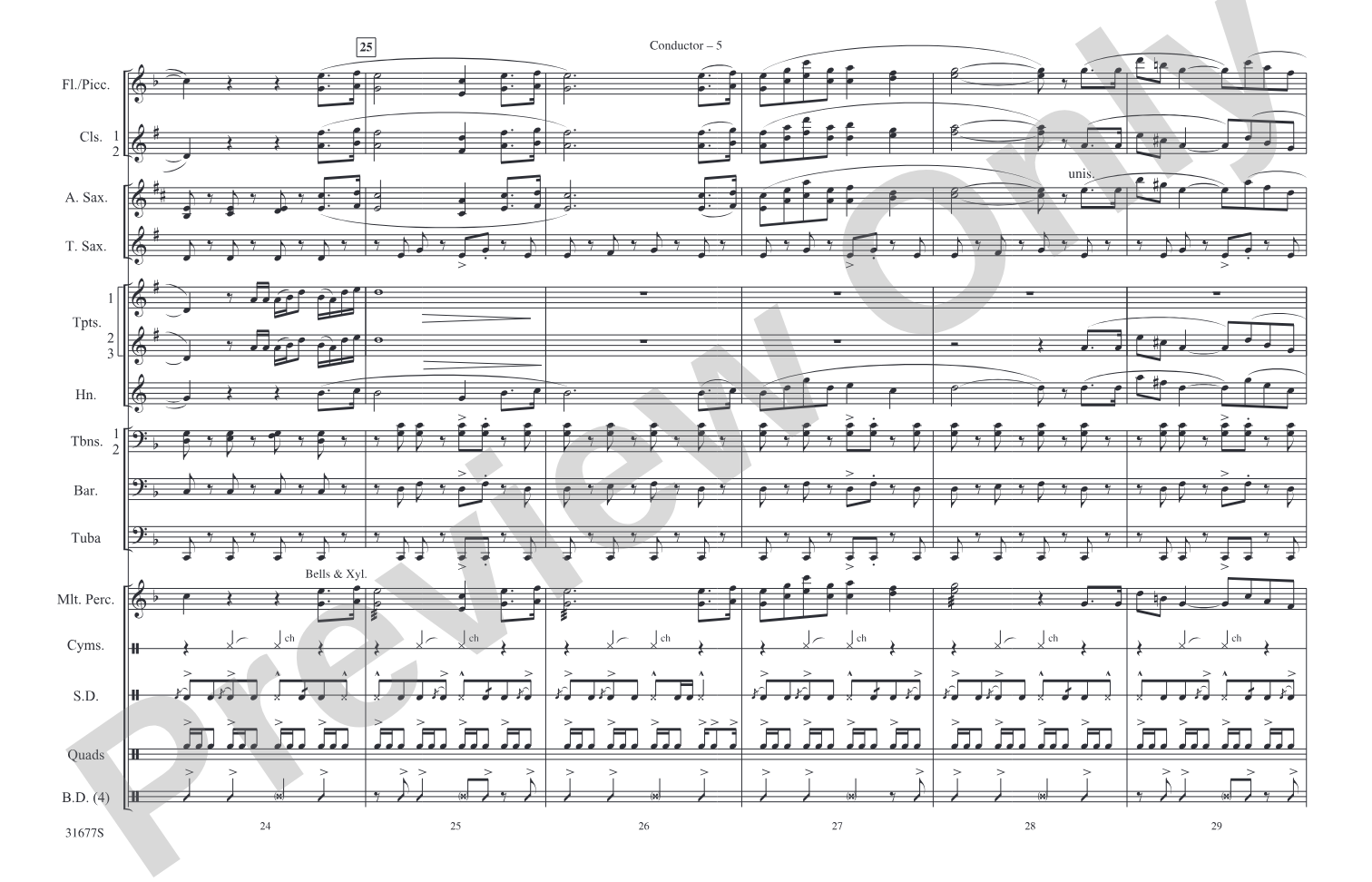
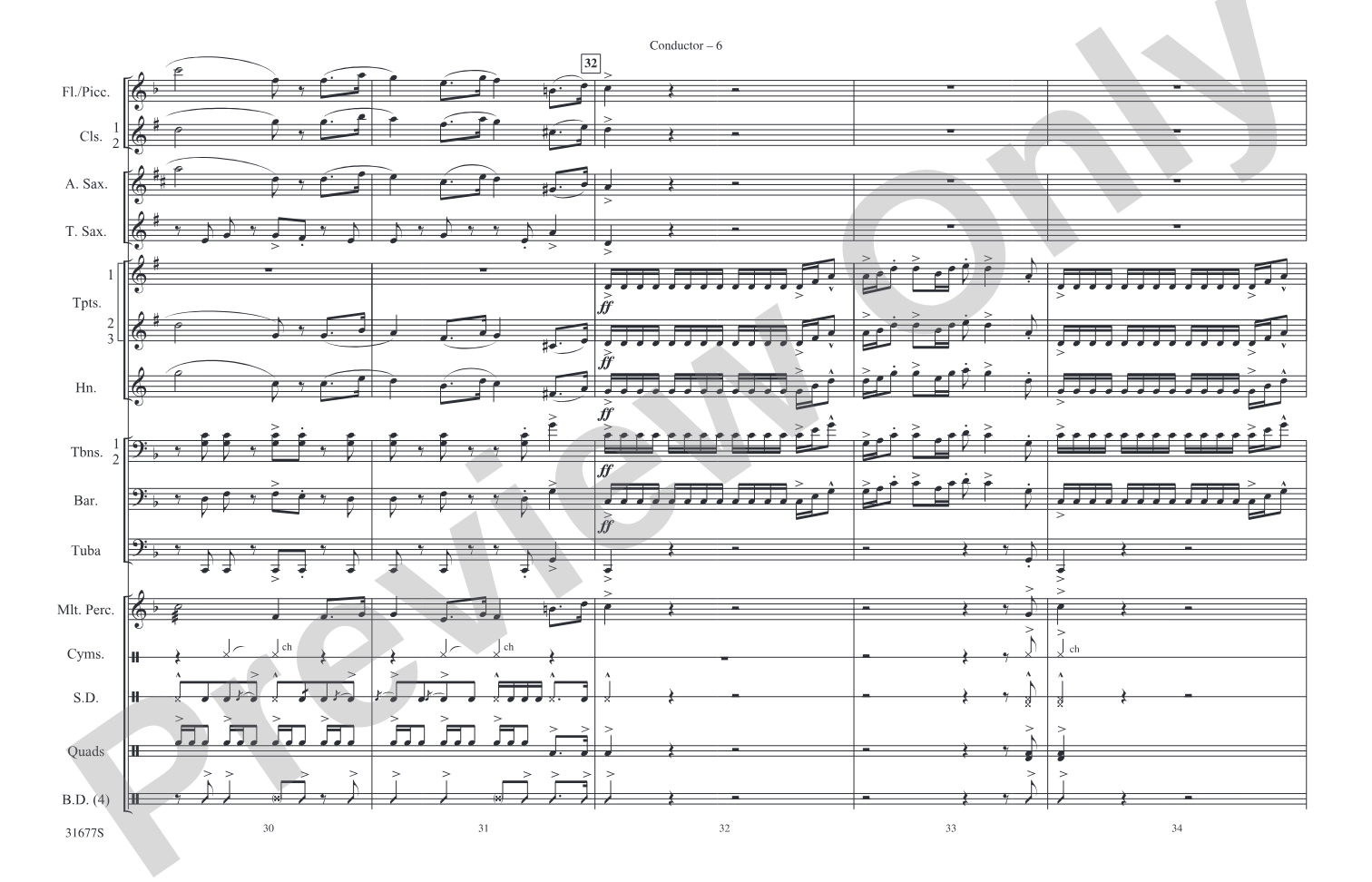
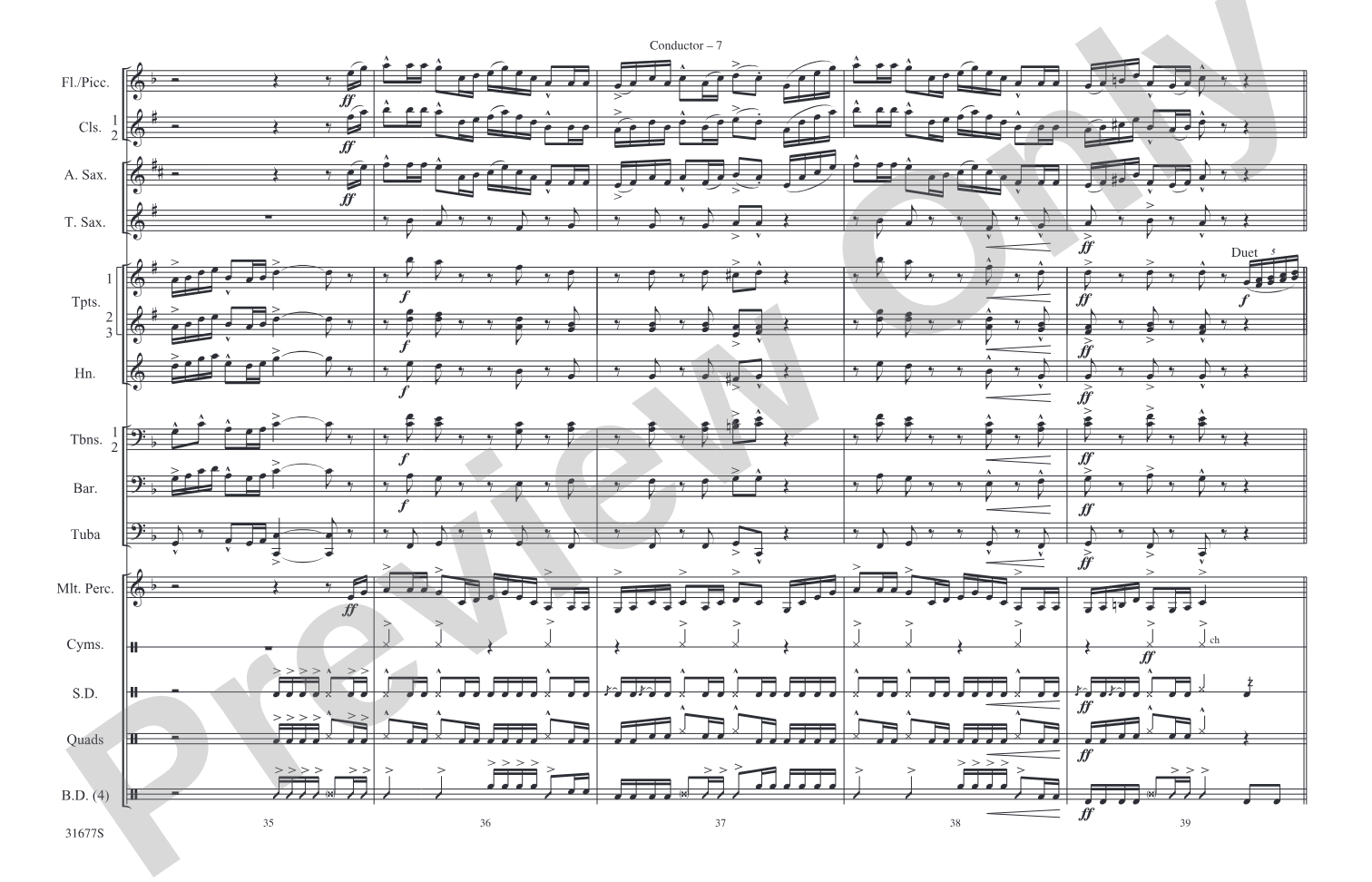
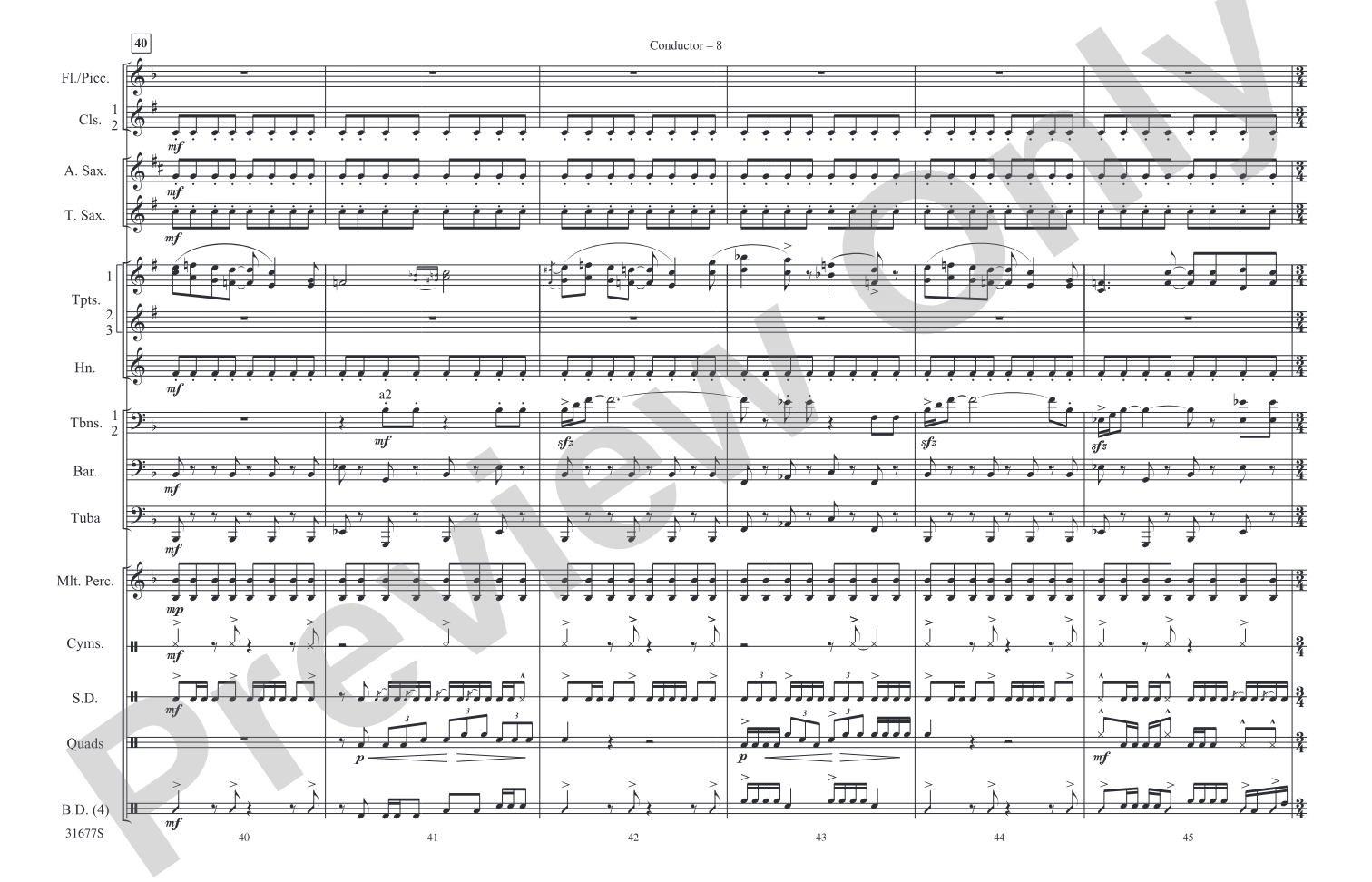
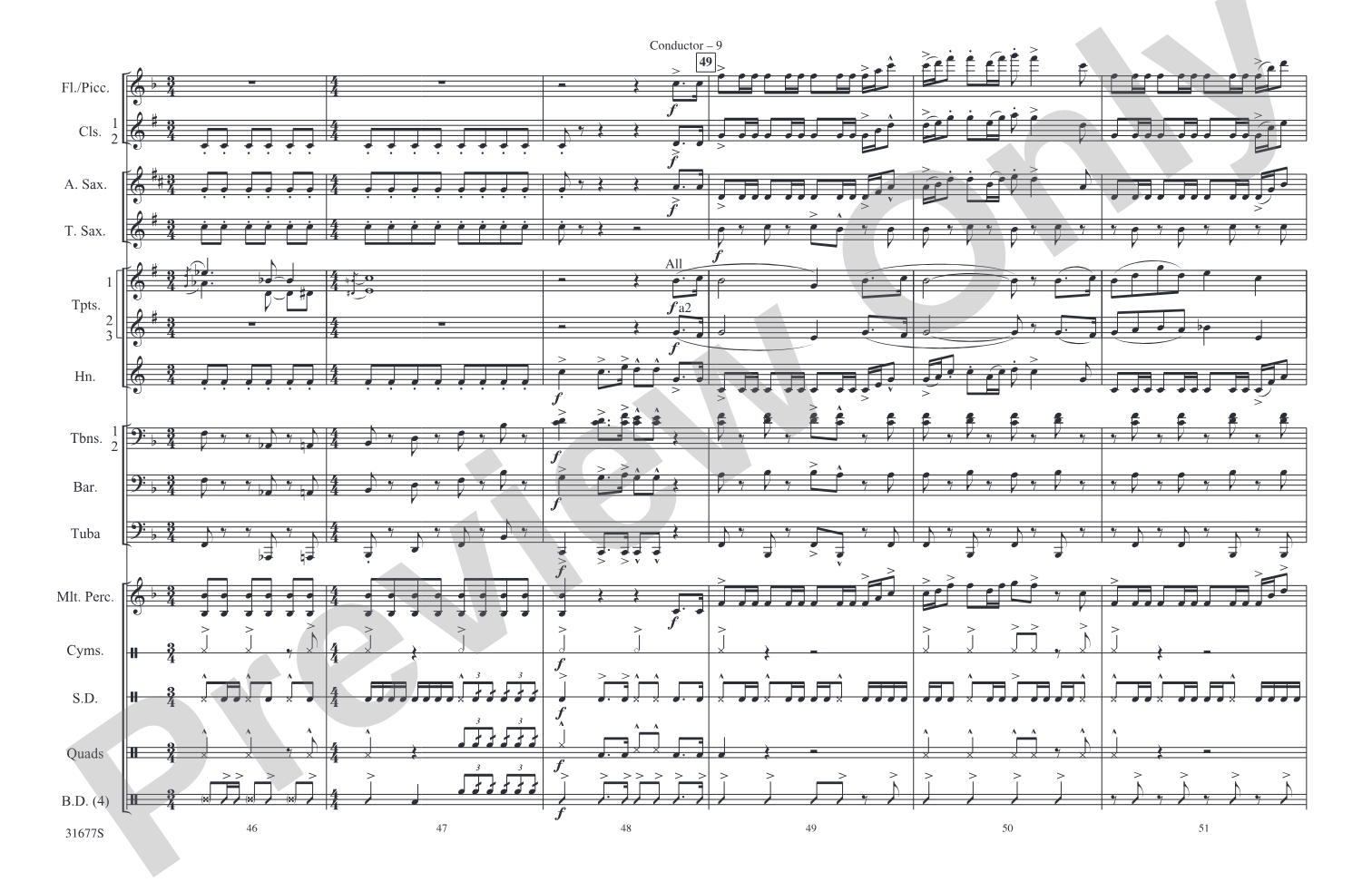
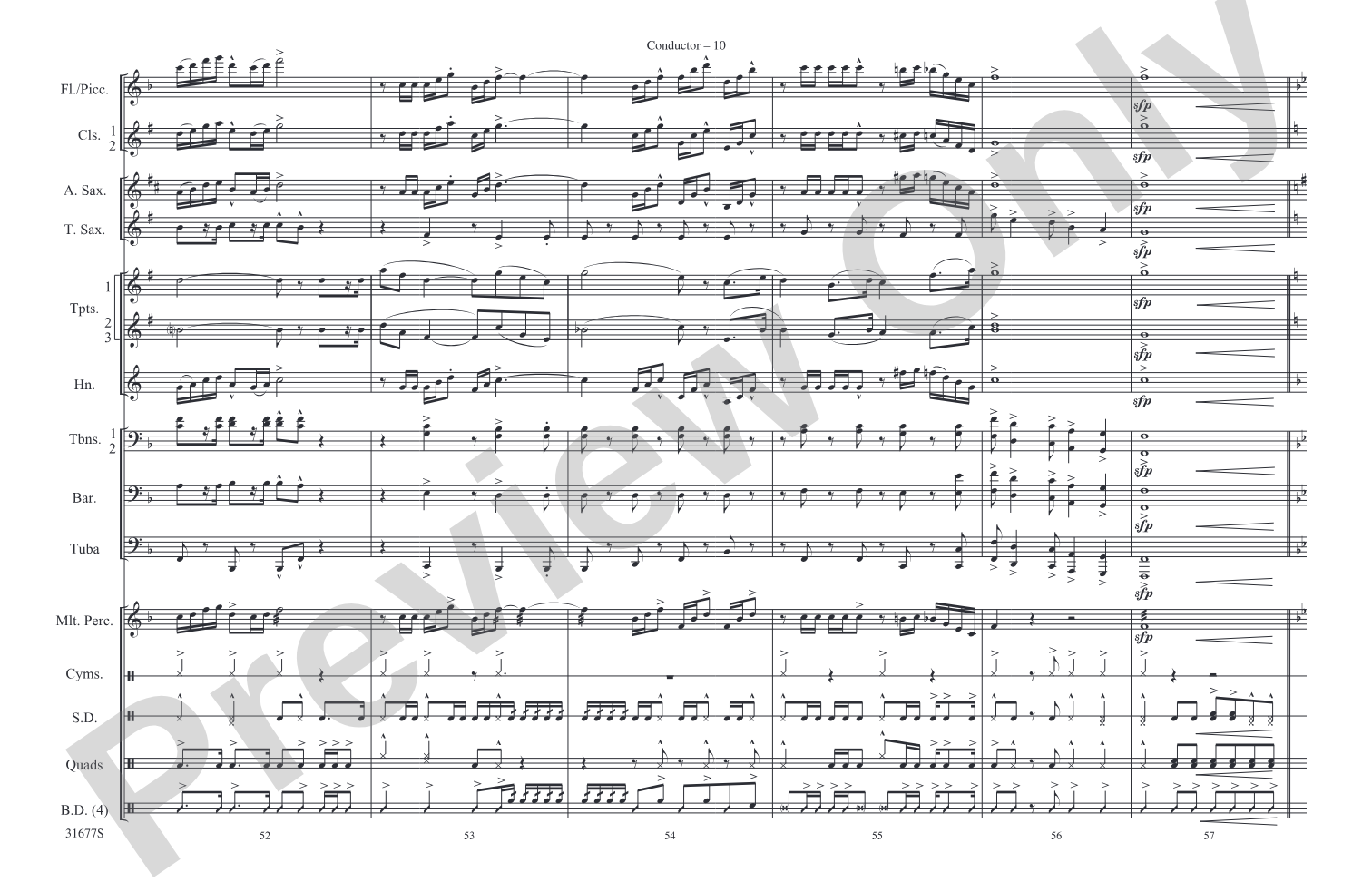
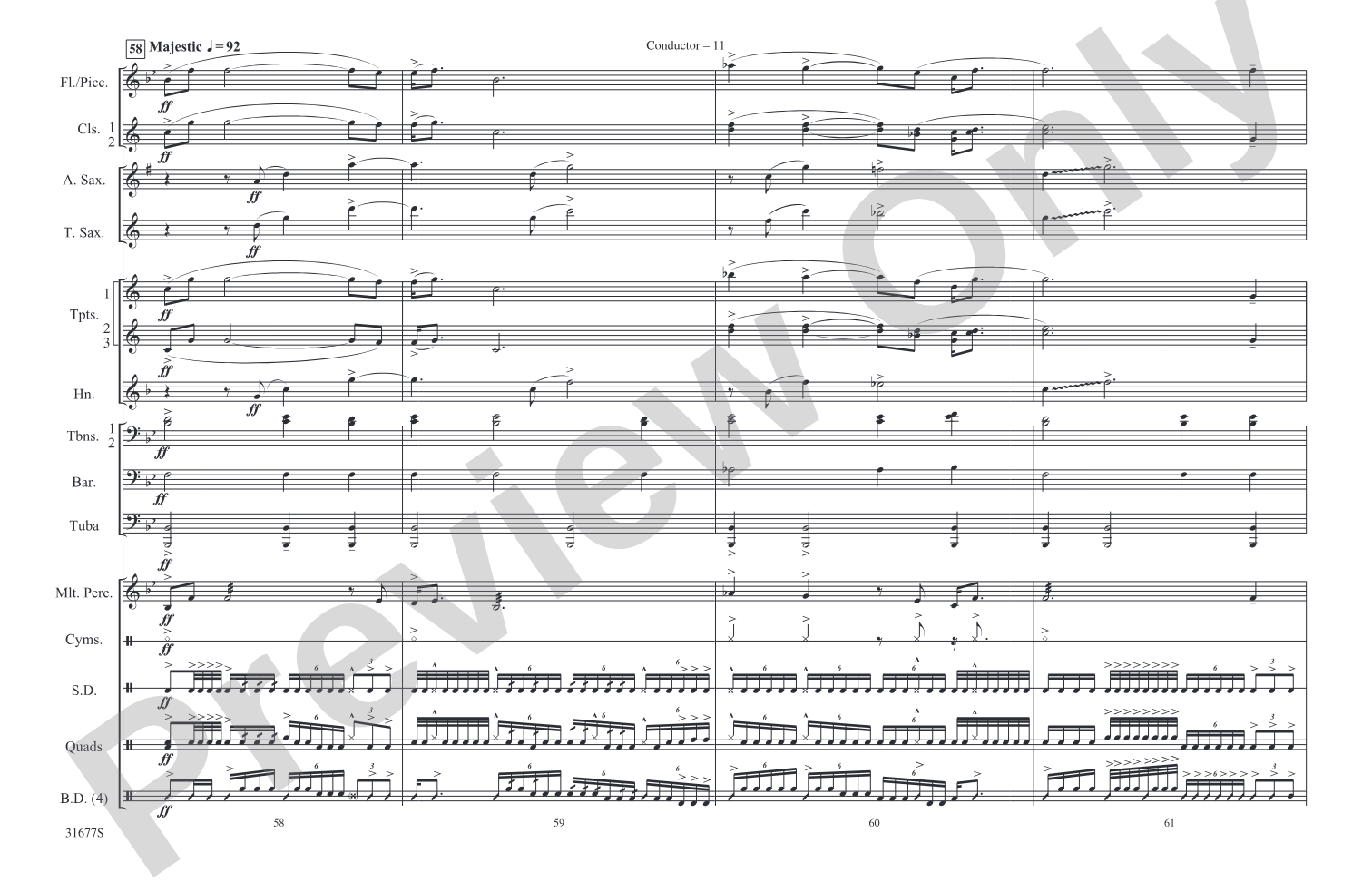
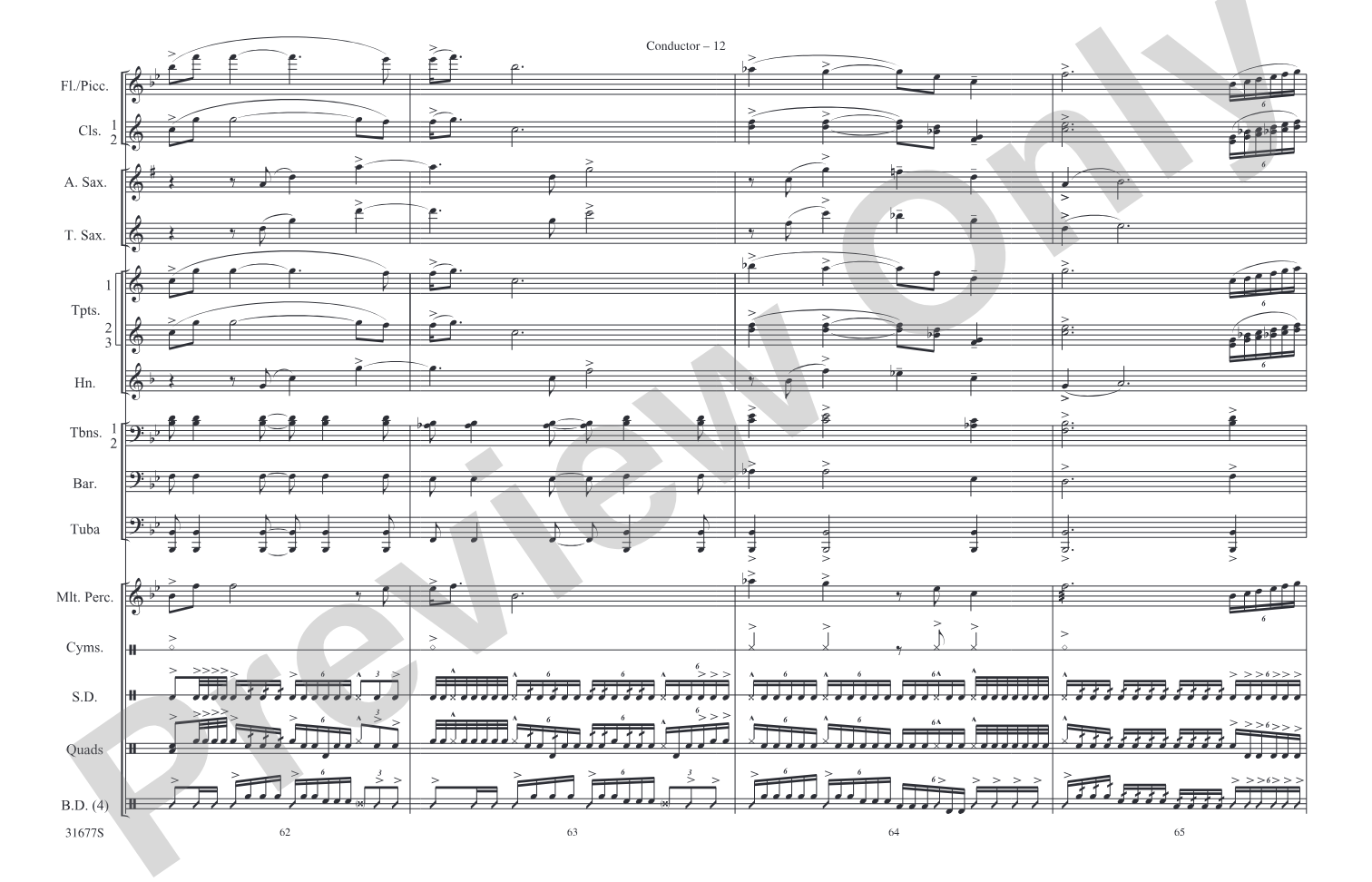
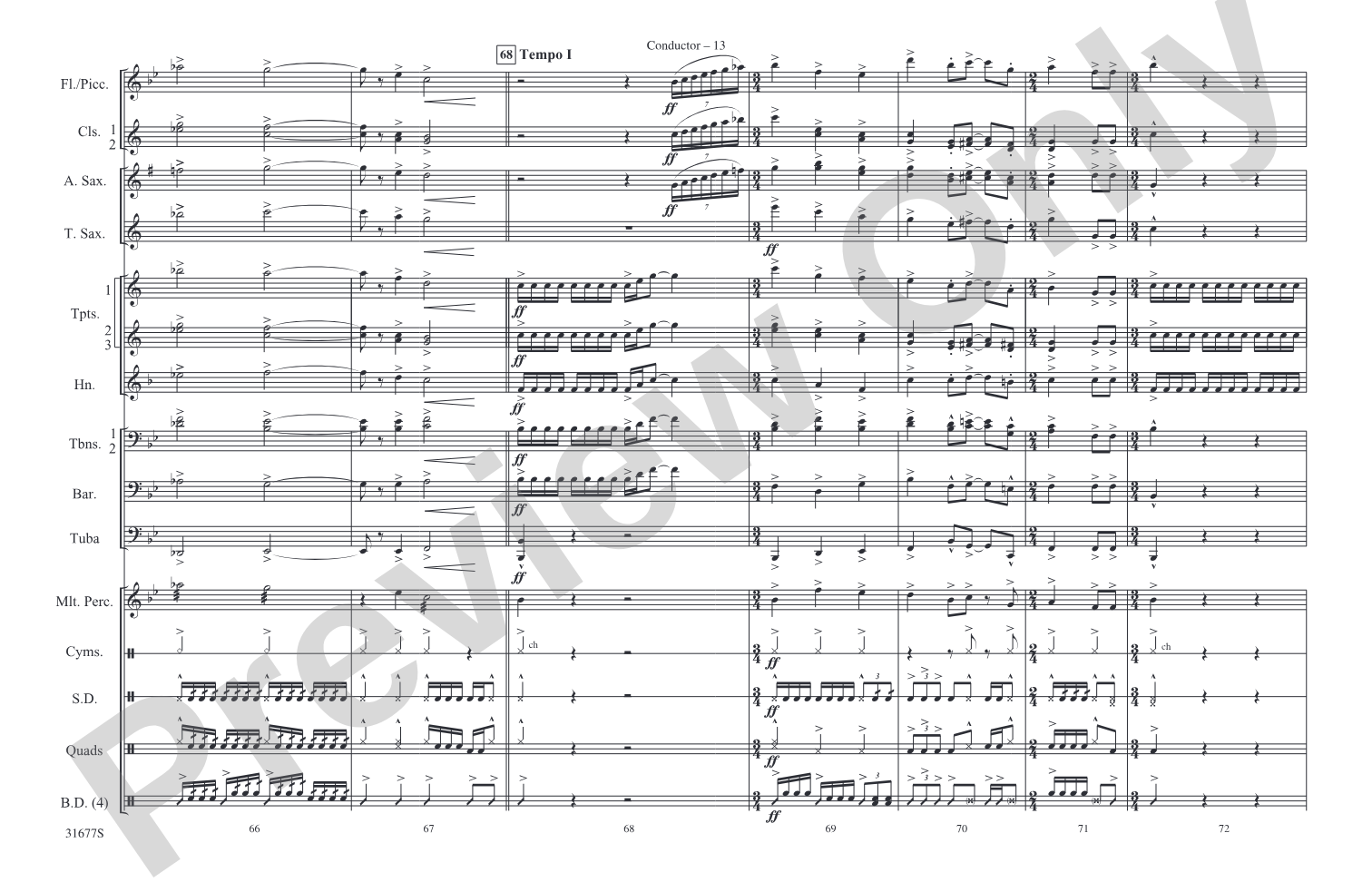
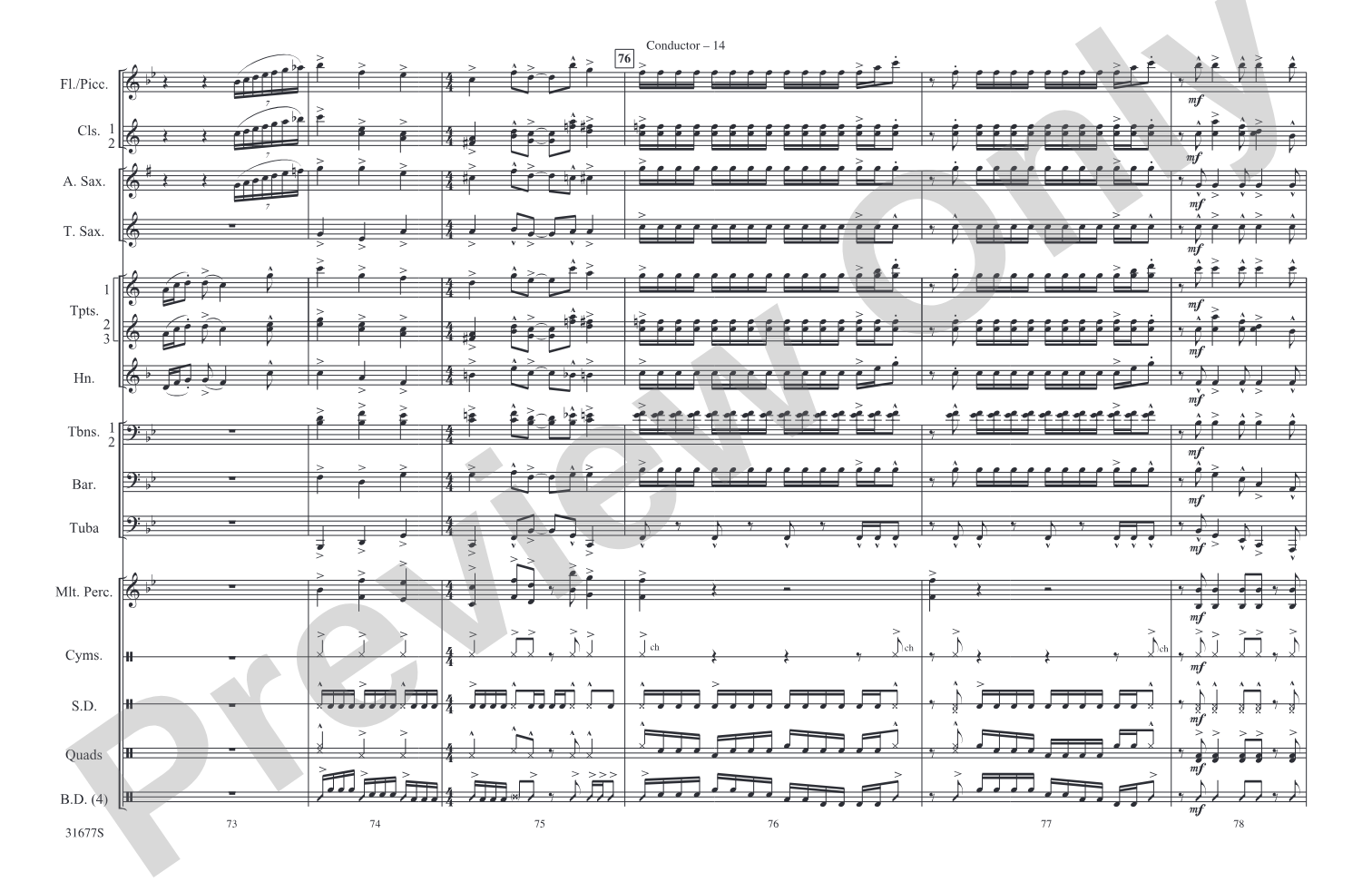
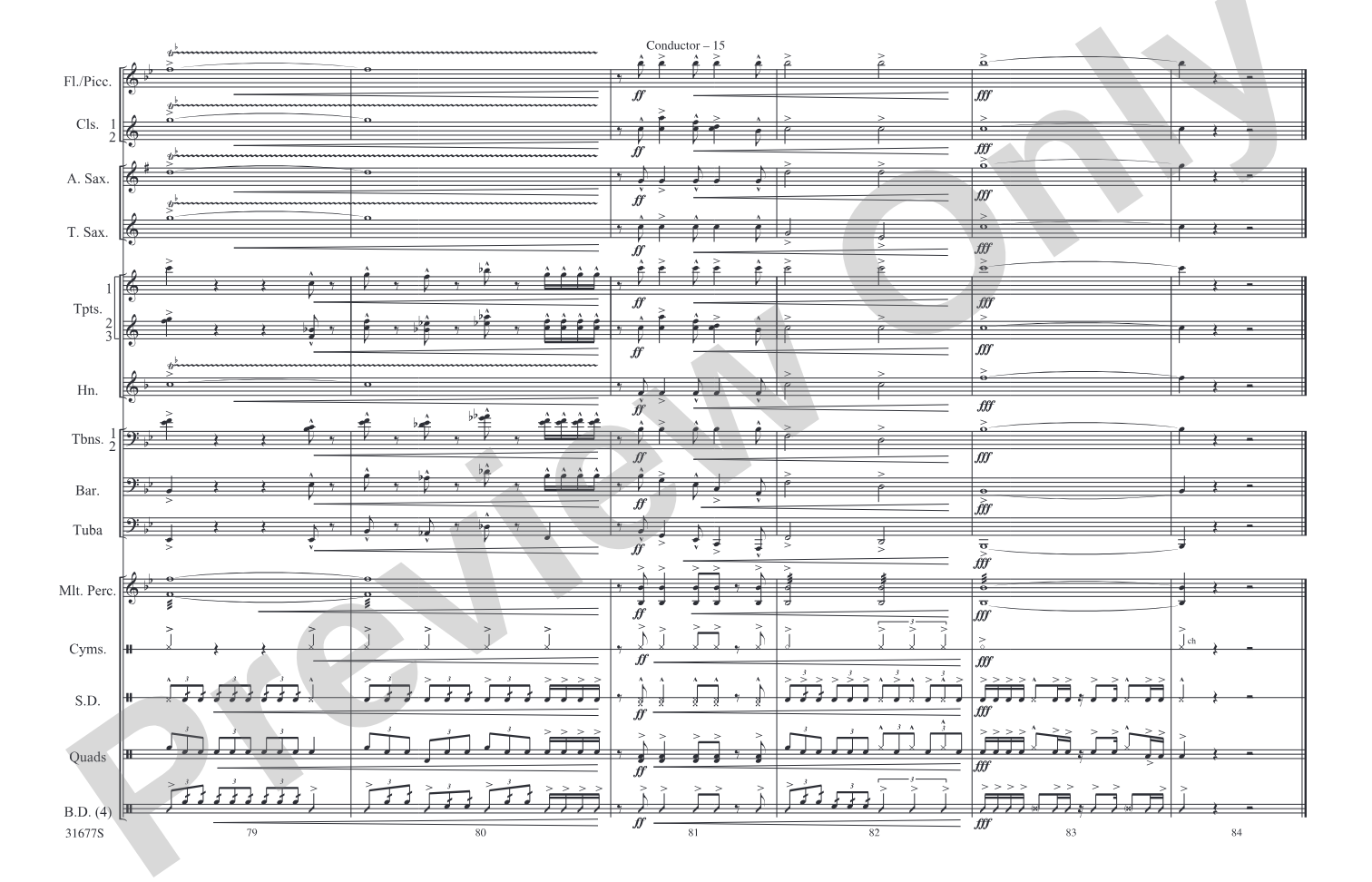

The Cowboys: Marching Band Conductor Score & Parts
By John Williams / arr. Ralph Ford, perc. arr. T. Adam Blackstock
Grade: 4 (Advanced)
Item: 00-PK-0007906

$60.00
One moment…
Description
John Williams' themes for the movies have become standard repertoire for the field. We bring you an exciting new arrangement of the music from one of his most memorable scores. It is full of colorful textures that will add the needed punch for your show this fall. (2:42)


Don't just read it, hear it, play along with it, and watch your students grow with it. In MakeMusic Cloud, The Cowboys: Marching Band Conductor Score & Parts comes alive with professional accompaniment, adjustable tempo, and built-in practice tools that turn solo practice into real progress.
Open in the Player
Jump straight in and assign it today.
Start Your Free Trial
Open this title and explore the full library in minutes.
Sample Audio
1
Audio File
--:--
0:00
0:00
Sample Video
No sample videos found.
Additional Details
Series:
Diamond Series
Publisher:
Alfred Music
Page Count:
240
SKU:
00-PK-0007906
More about this title
About the Composer: John Williams
John Williams stands among the most prolific film composers of the modern era, with a catalog spanning over six decades and some of cinema's most iconic themes. His work for marching band and wind ensemble has become foundational to the field, offering arrangers rich melodic material and sophisticated orchestrations that translate remarkably well to the athletic demands of the field show.
Why we love this
This arrangement captures the narrative sweep and emotional momentum that made the original score memorable, while Ford and Blackstock have crafted parts that sit comfortably across your entire ensemble without sacrificing the dramatic impact. The textures shift constantly, which means every section gets moments to shine and your visual design team has clear musical landmarks to work with. At Grade 4, it demands precision and musicality without becoming a technical obstacle.
What to expect
Cinematic and expansive, with the kind of orchestral color that makes you forget you're listening to a field show. Moments of intimate lyricism alternate with full ensemble drive, and the harmonic language feels sophisticated without sounding academic or detached from the melodic core.
Who it's for
Marching bands at the advanced level looking for film music with legitimate artistic weight and visual potential. Directors who want their students performing music that resonates beyond the marching arts community and arrangers seeking a score with clean part writing and clear architectural design.
How to get the most out of it
- Balance the sustained harmonies in the brass against the rhythmic drive underneath; the texture works best when both layers remain audible and distinct.
- Mark the sectional dynamic shifts clearly during rehearsal. This score moves through several emotional centers, and clarity about when the landscape changes helps everyone stay synchronized.
- Pay attention to articulation consistency within each voice part. Williams' orchestrations depend on matching attack and release to create the cohesion that makes colorful voicings read as intentional rather than muddy.
- Use the extended length (2:42) as an opportunity to build and sustain tension rather than letting energy flatten. The pacing rewards disciplined releases and clean transitions between thematic sections.
How to use it
Program this as a centerpiece of your fall show rather than a supporting piece. The length and emotional range justify dedicated rehearsal time and visual choreography that responds to the score's internal structure. It also works effectively as a non-competitive exhibition piece or as the anchor of a concert program where you want to showcase both your ensemble's musicality and technical capability.
Skills your students will build
- Balancing independent melodic lines within a complex harmonic texture
- Sustaining tone quality across dynamic and register shifts
- Responding to subtle sectional cues and transitions
- Reading and executing music that requires both rhythmic precision and expressive phrasing