
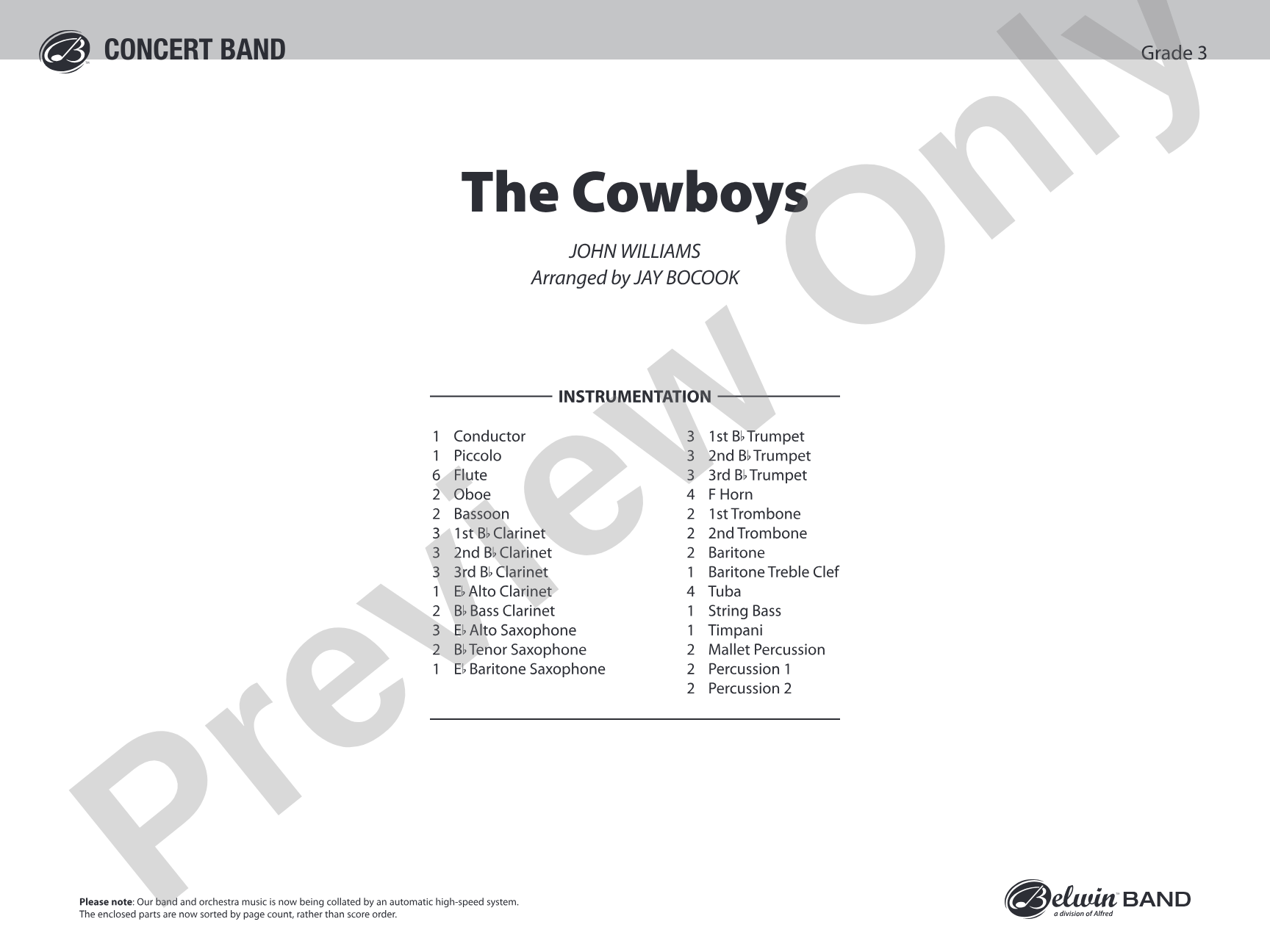
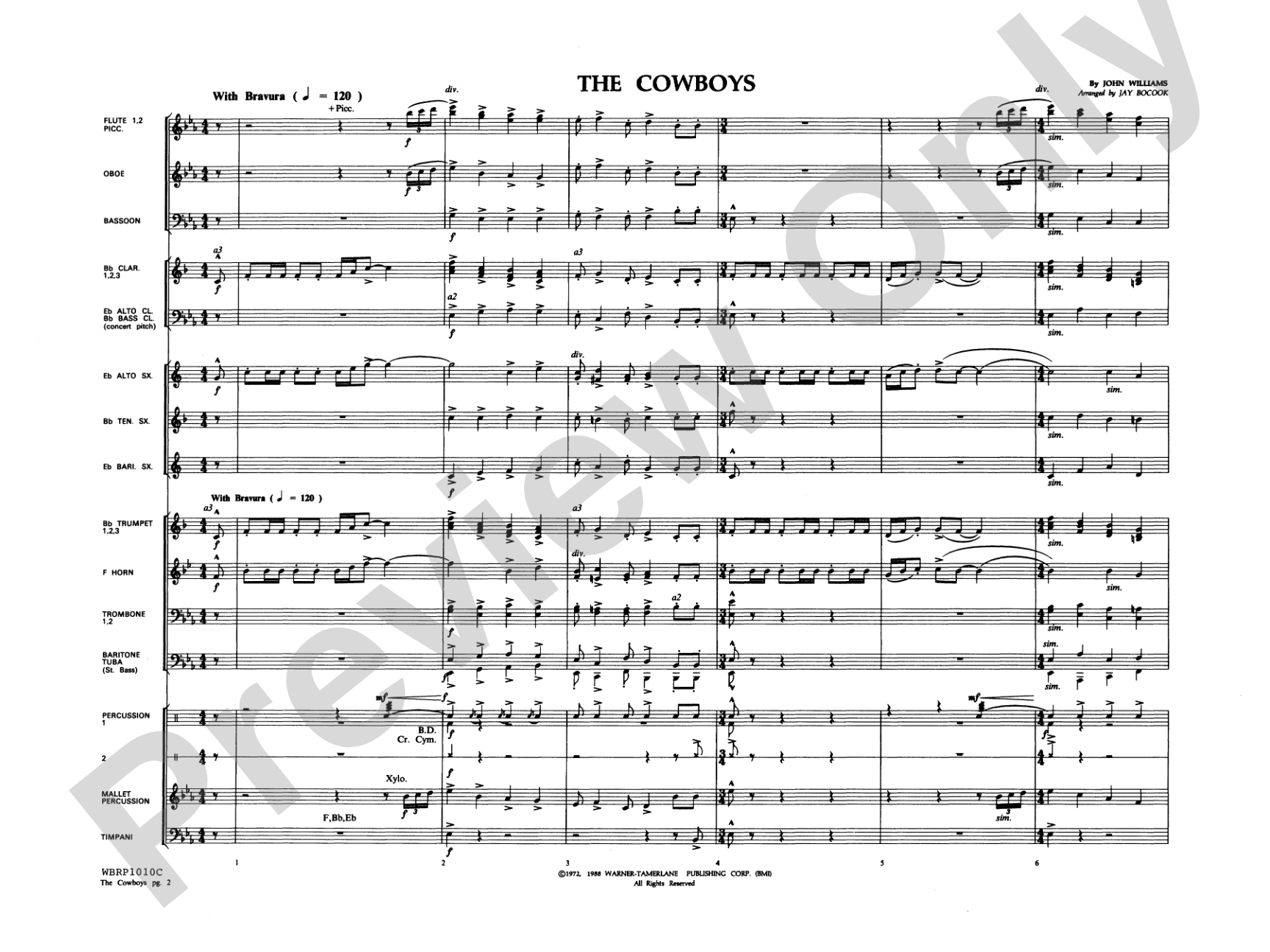
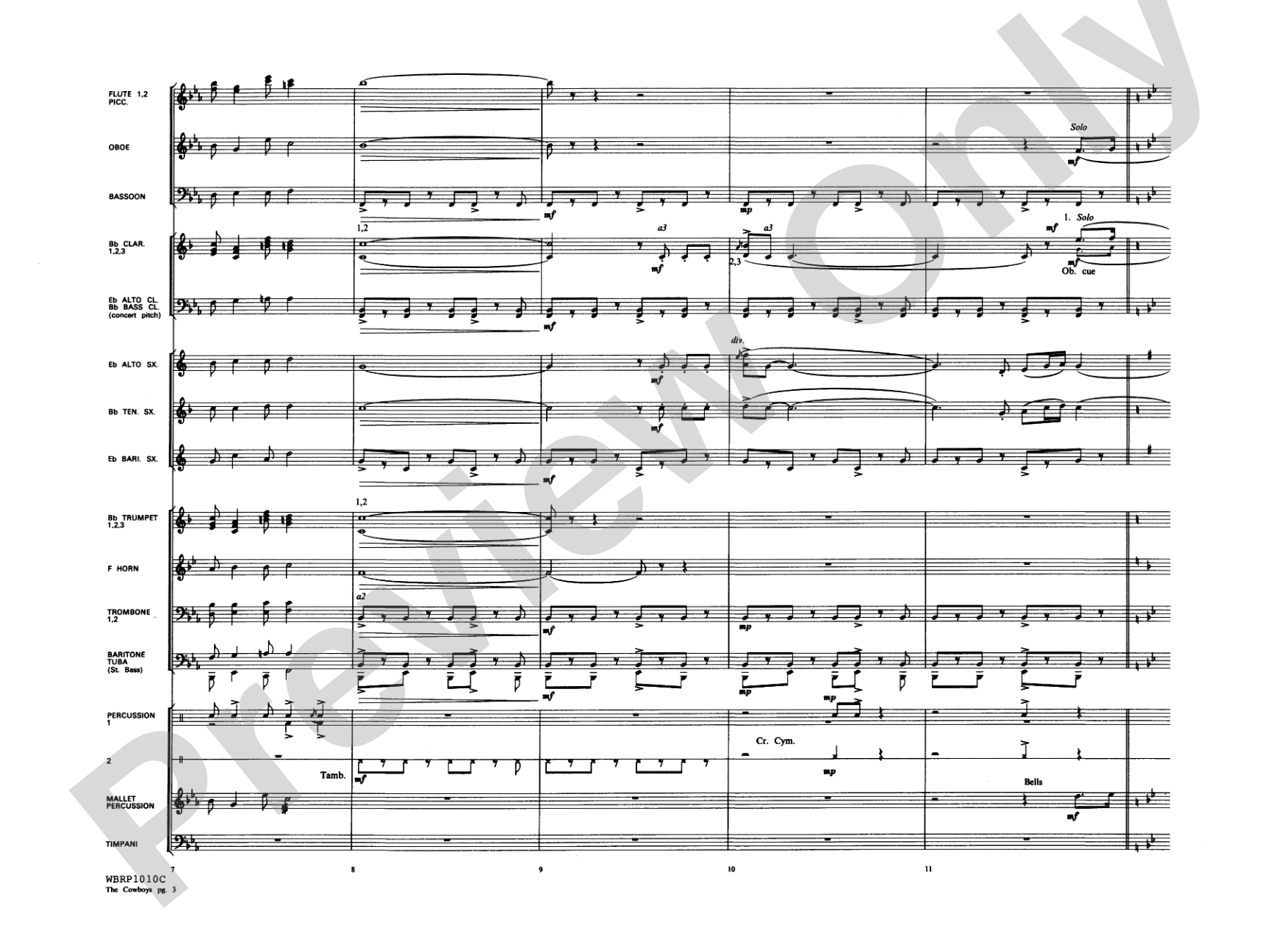
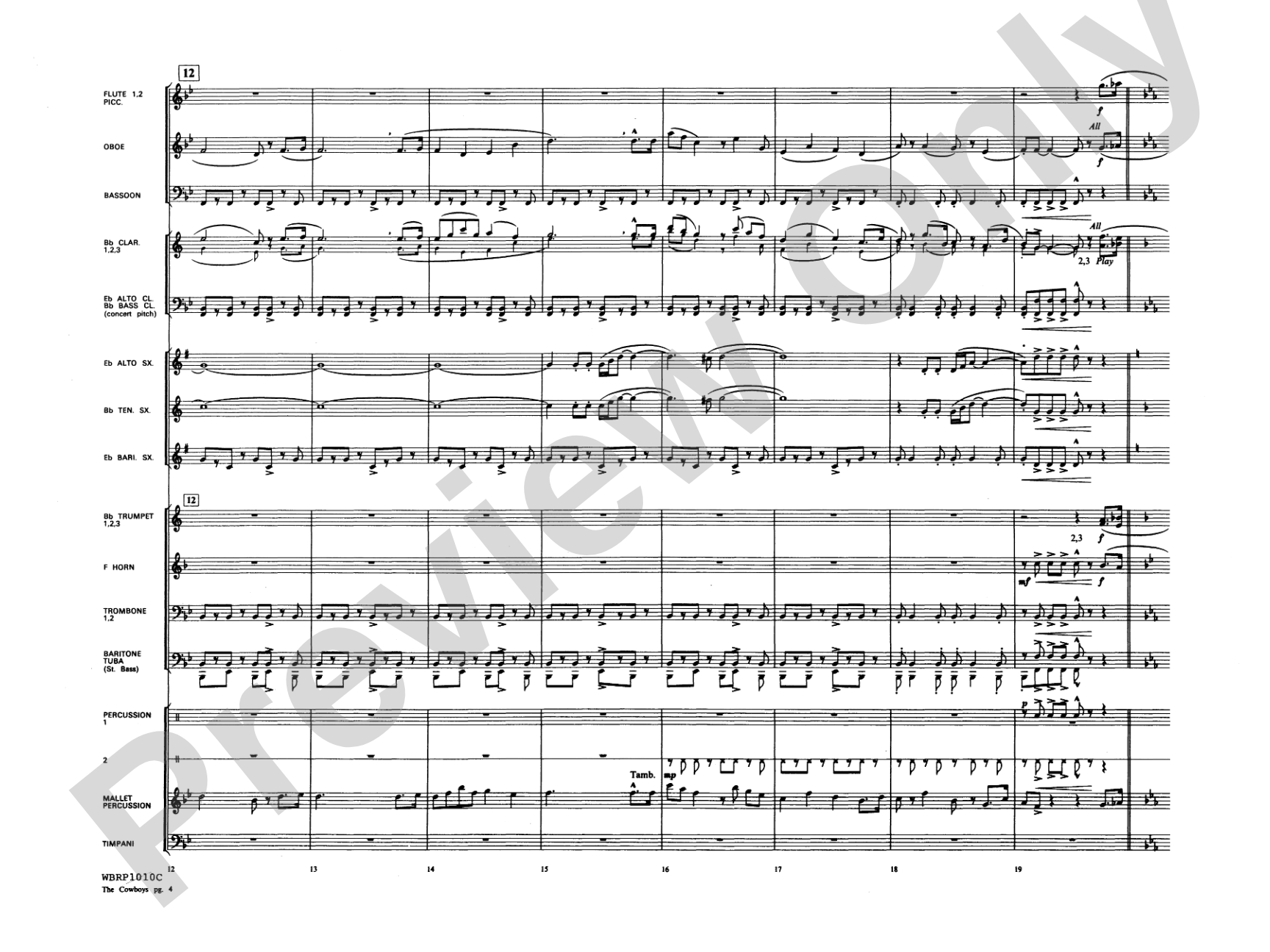
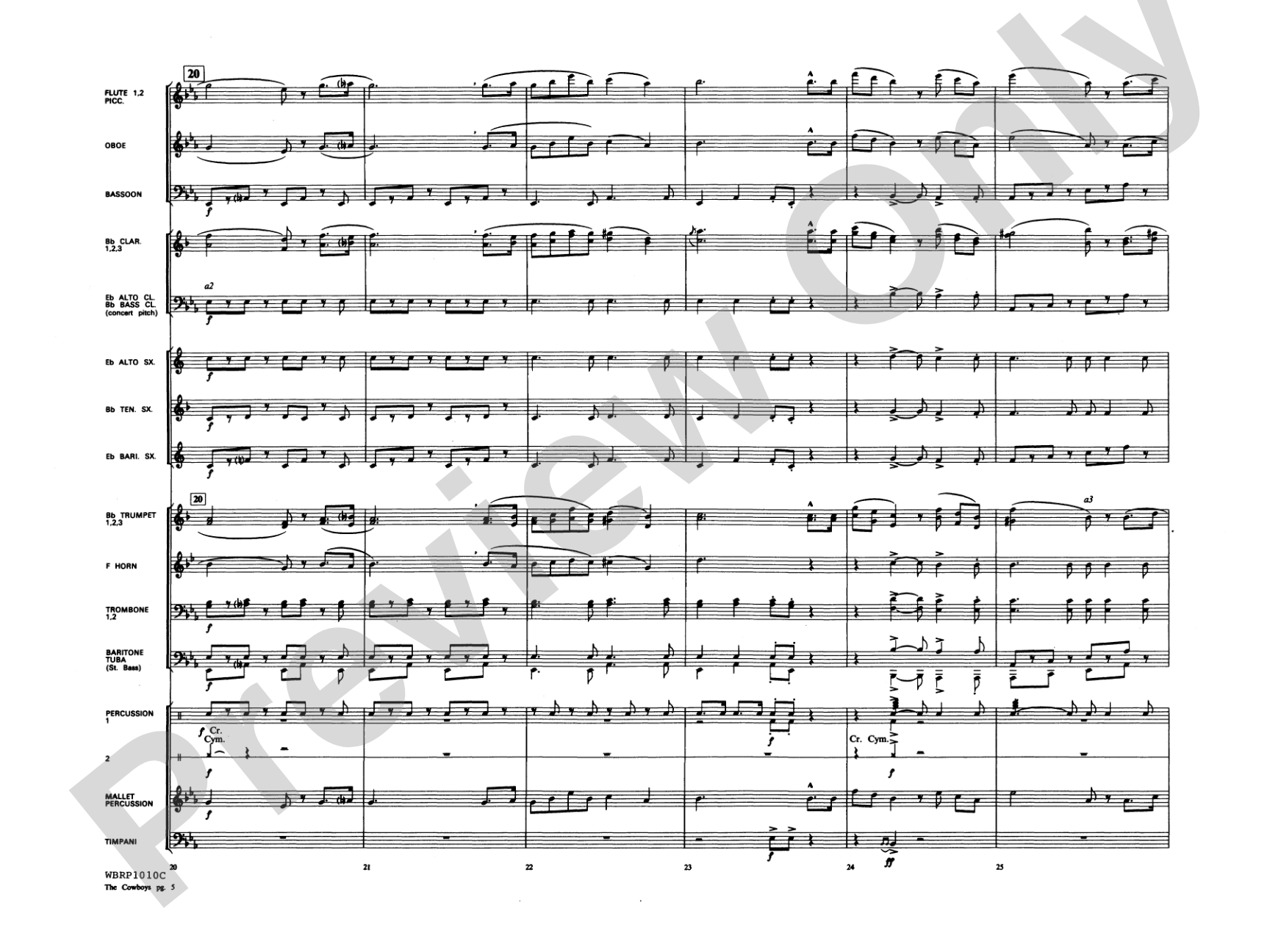
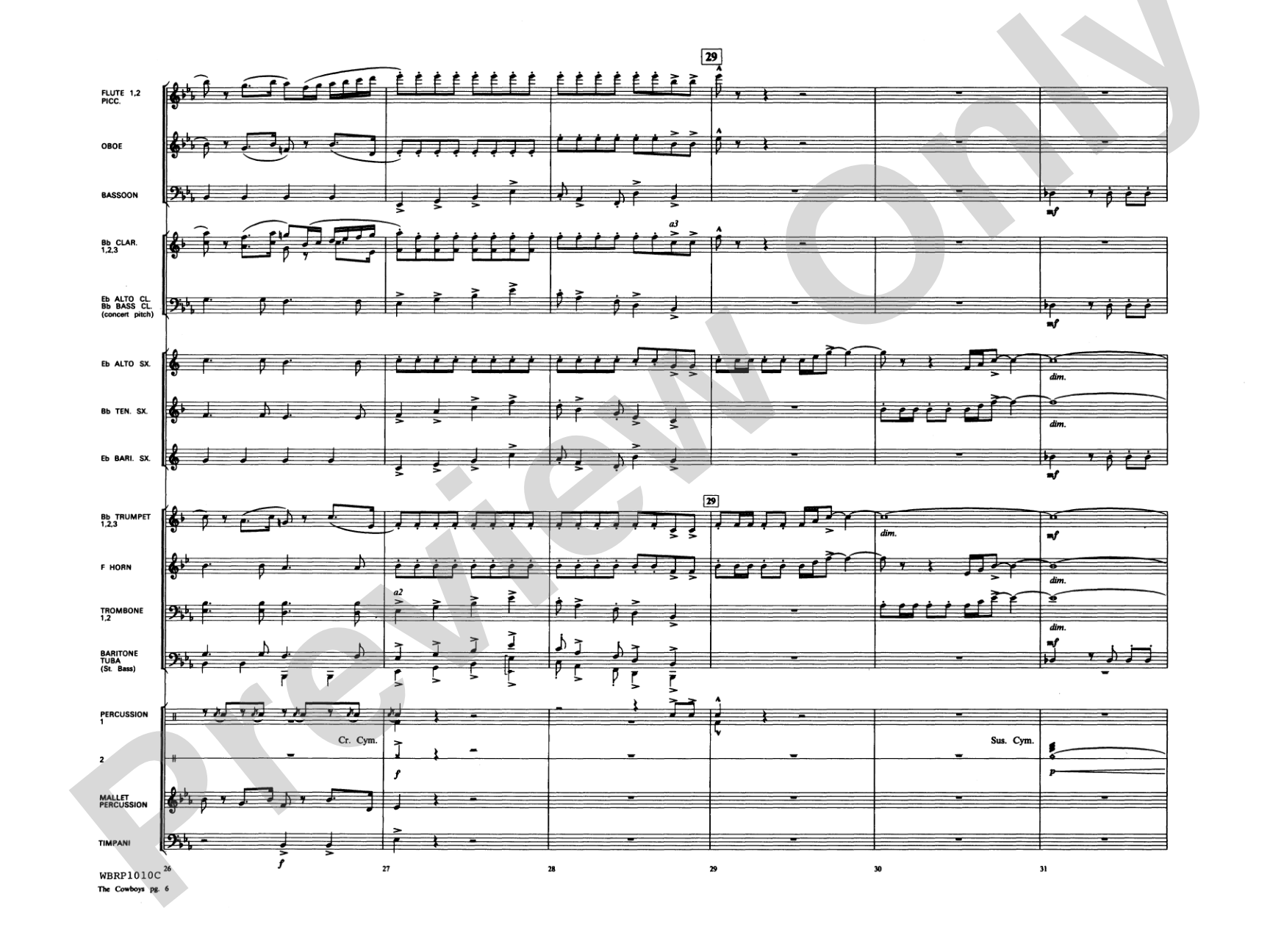
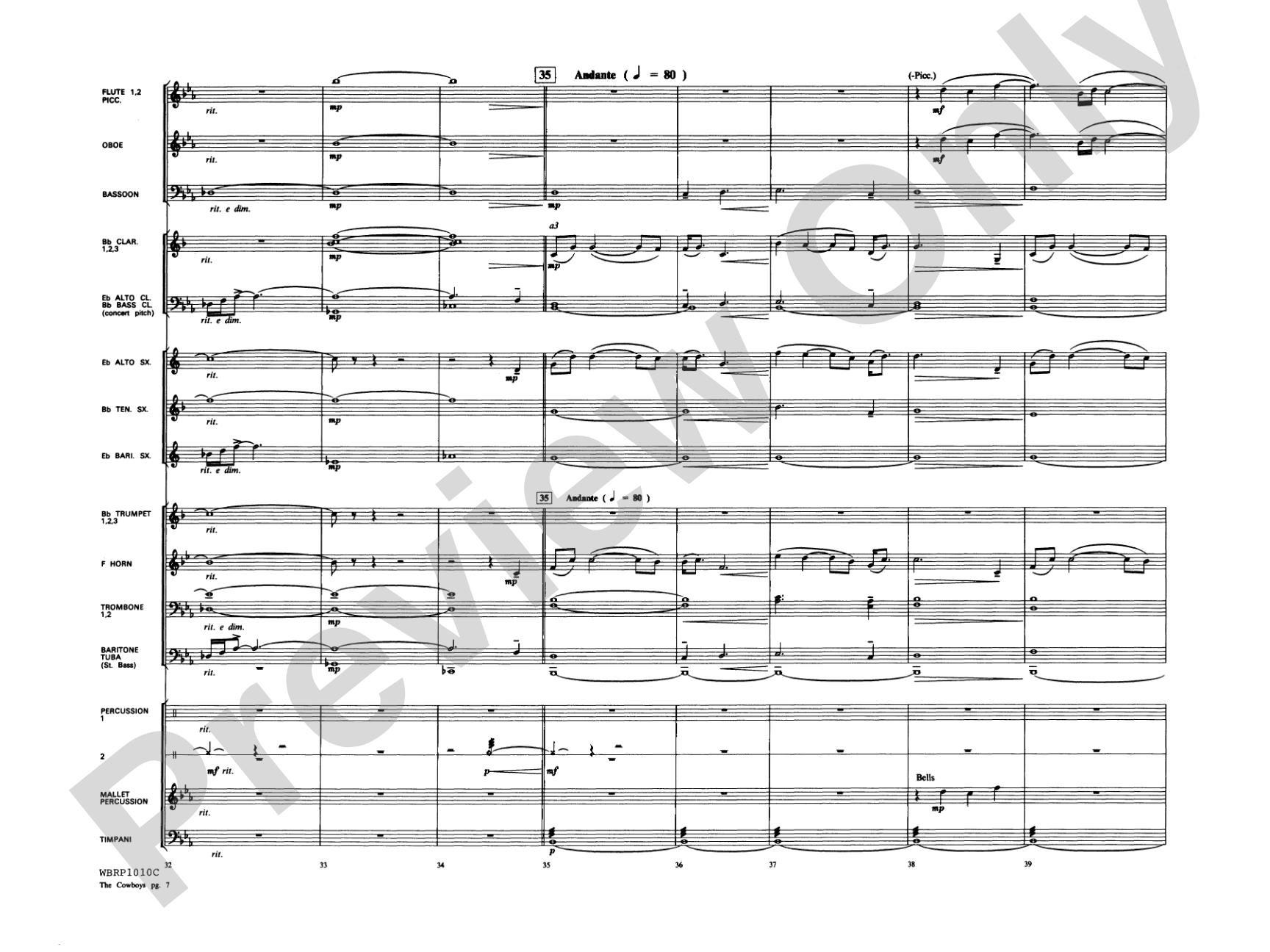
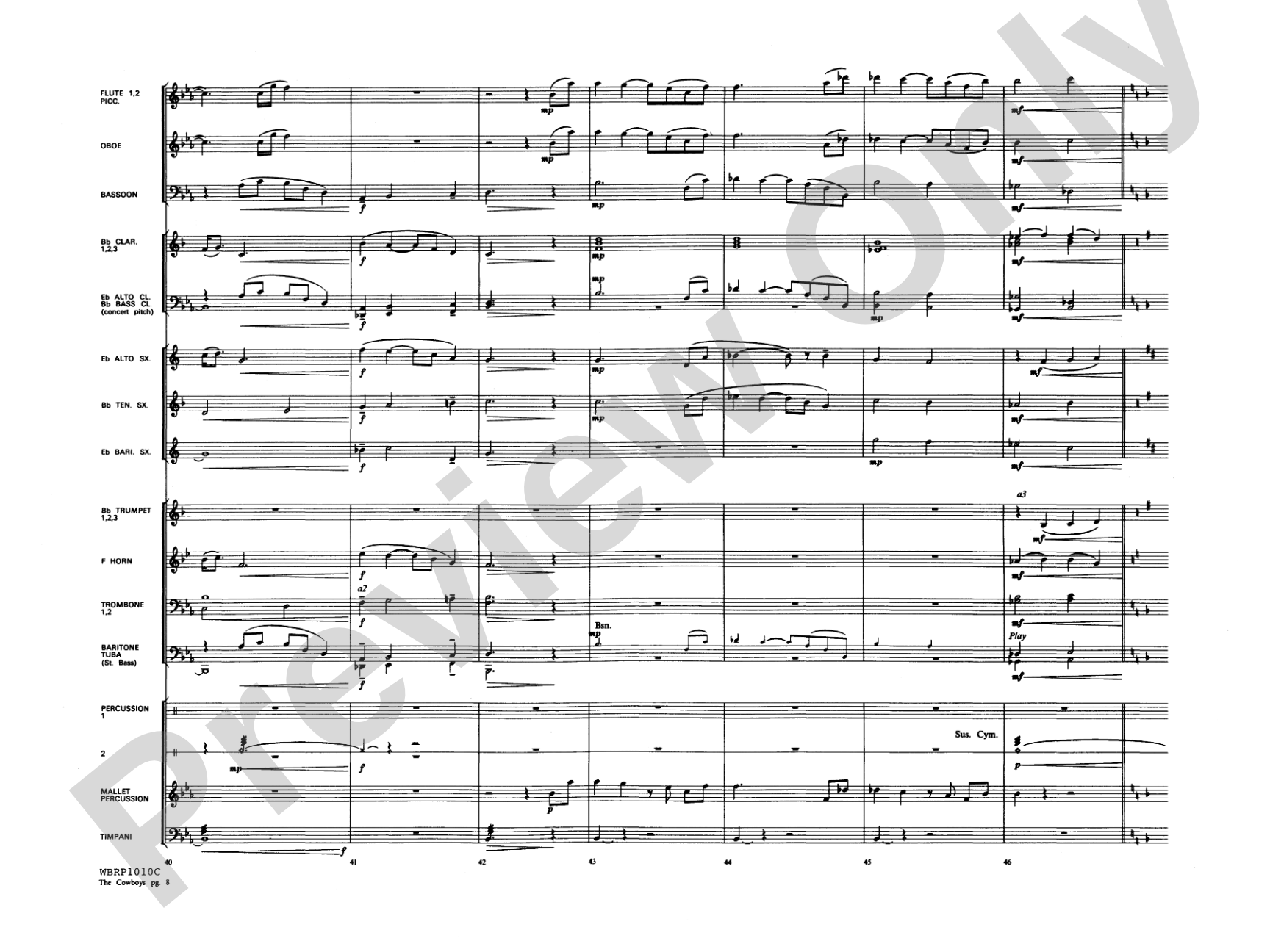
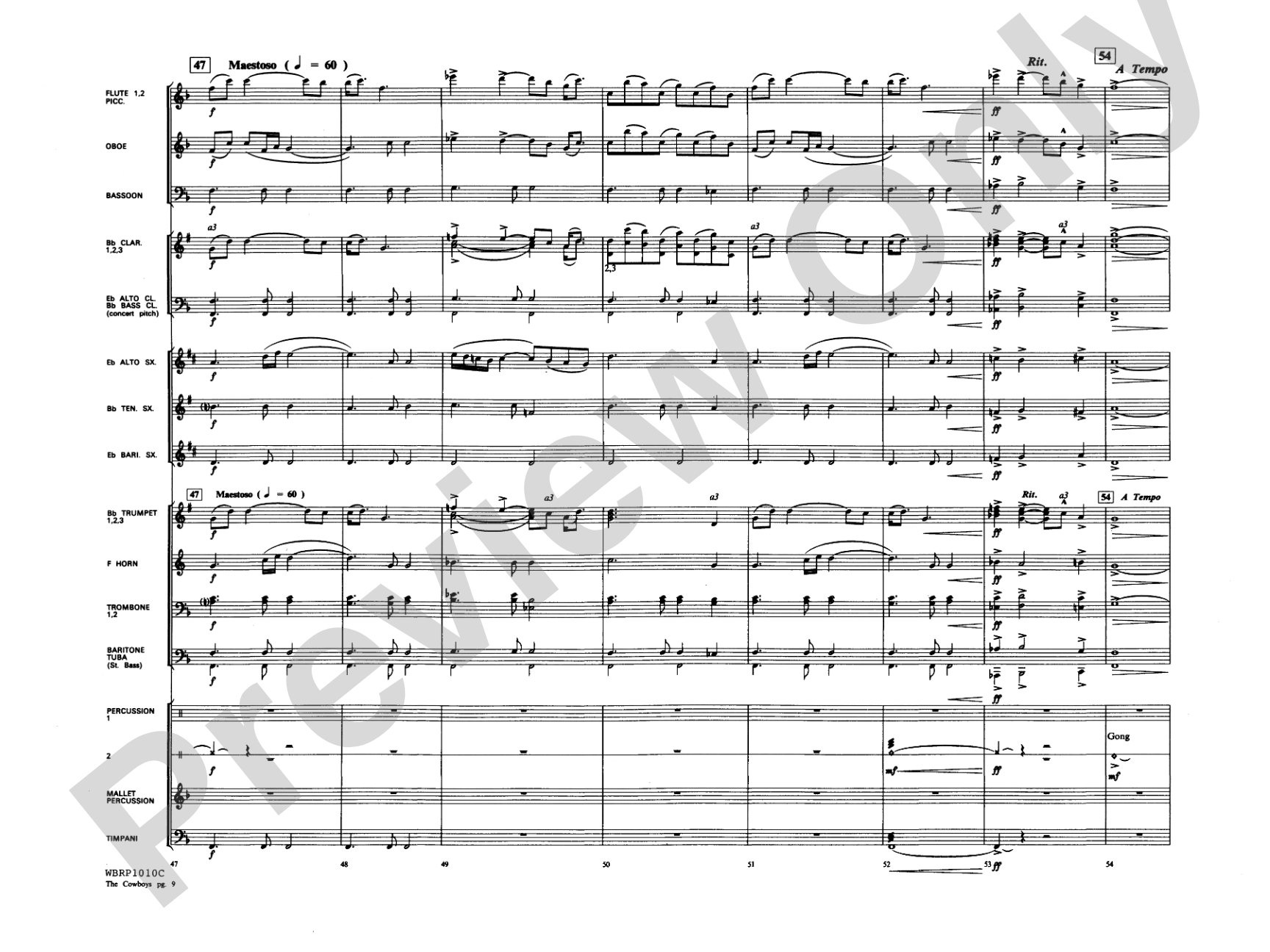
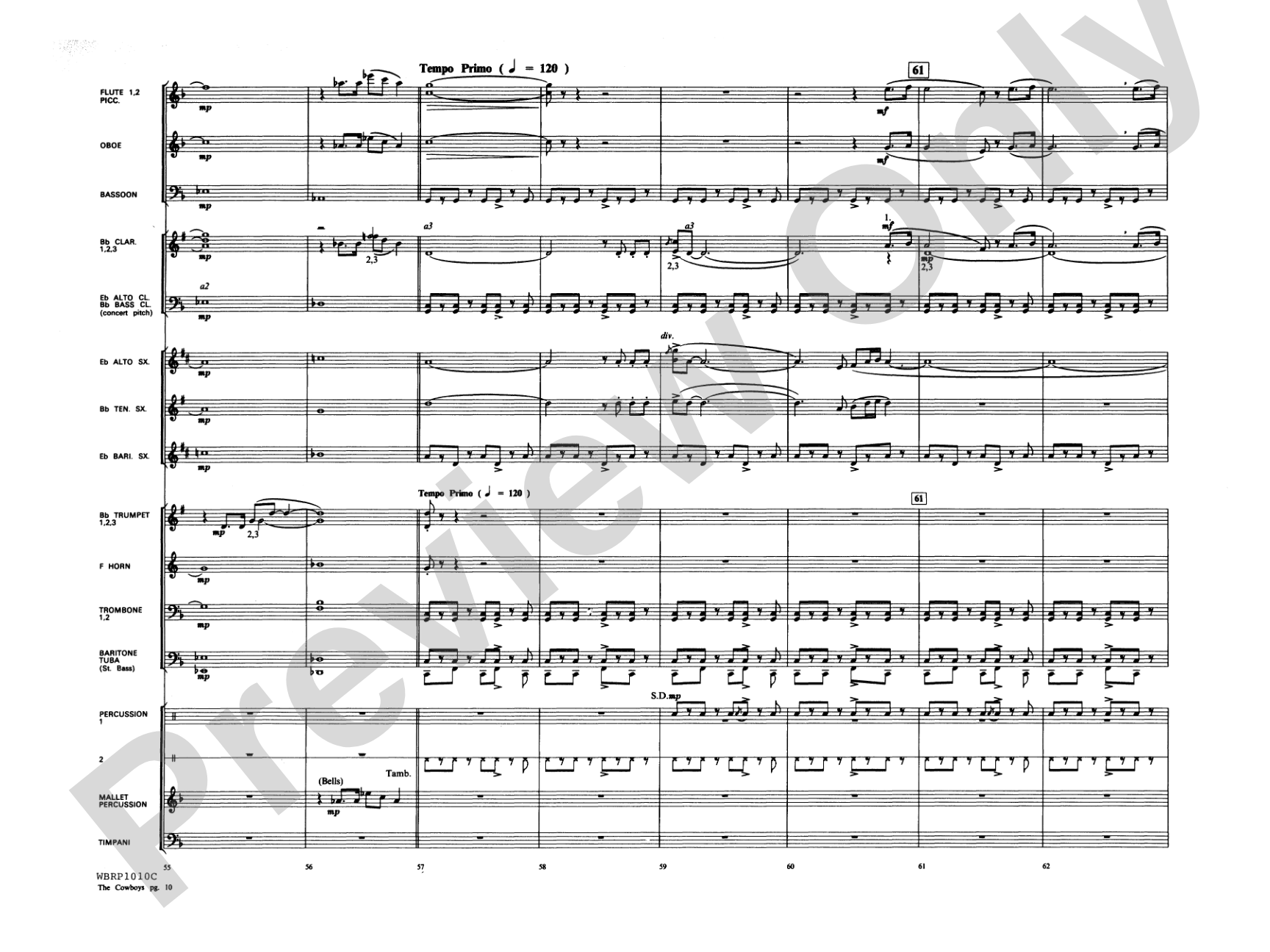
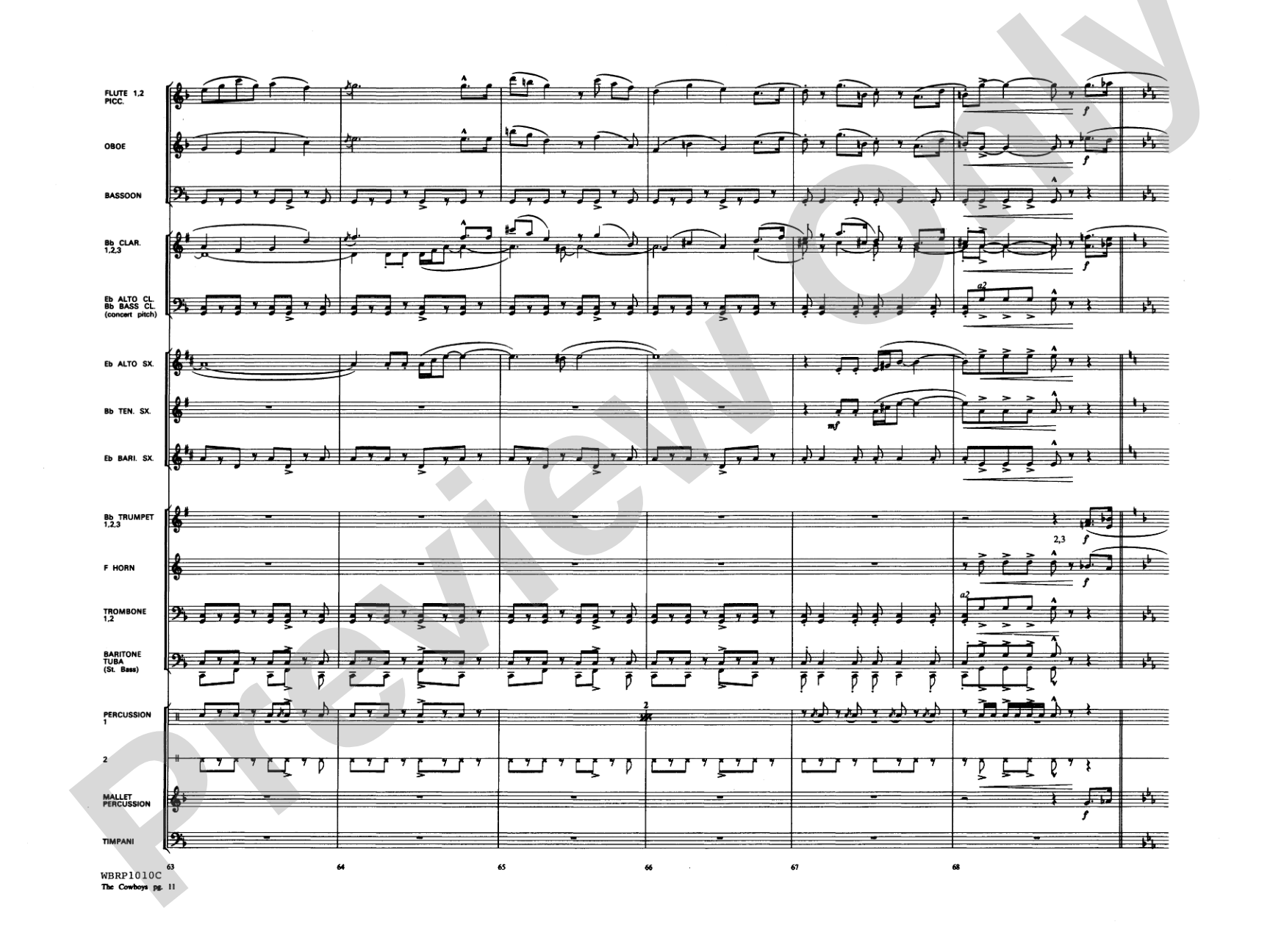
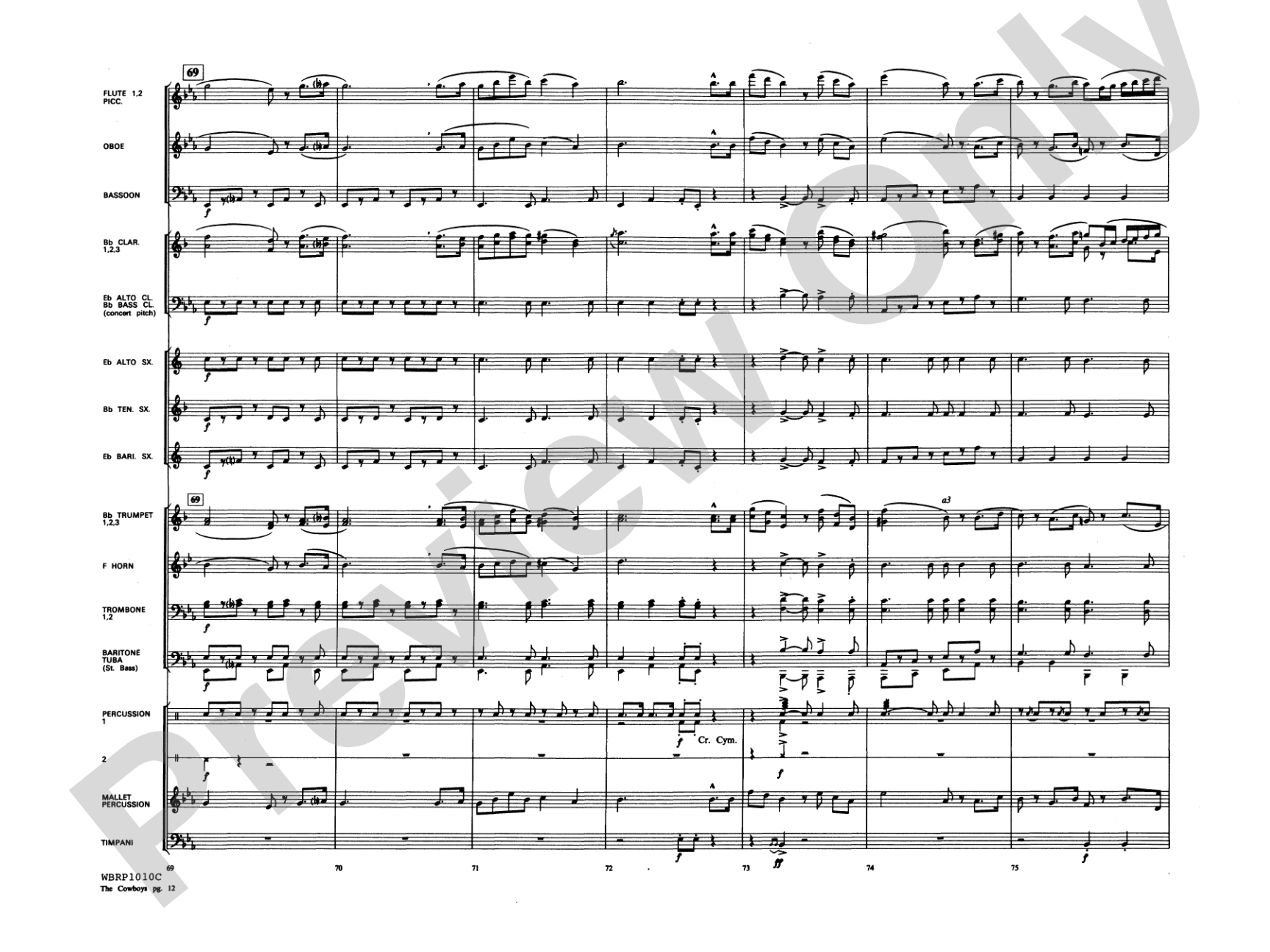
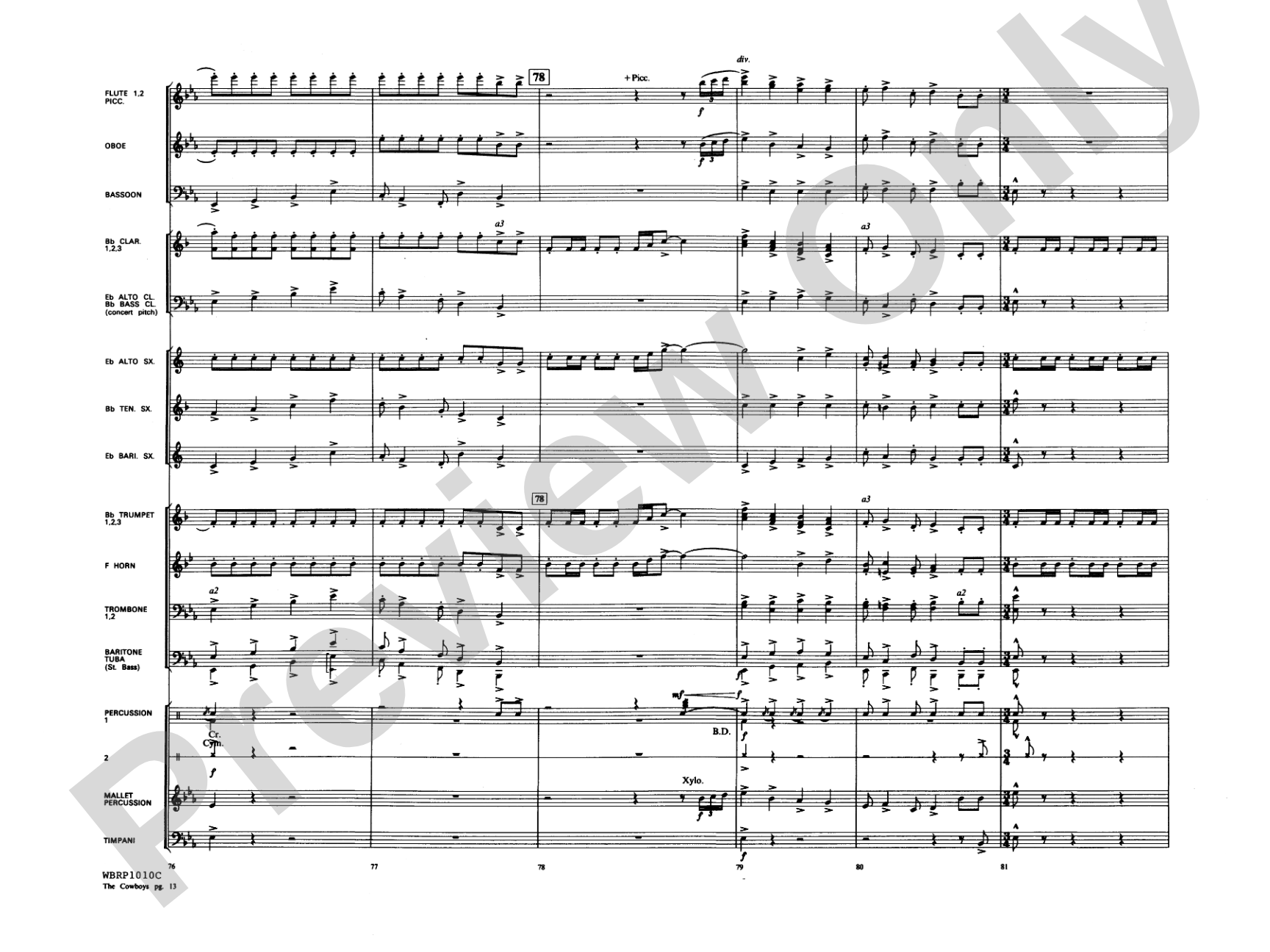
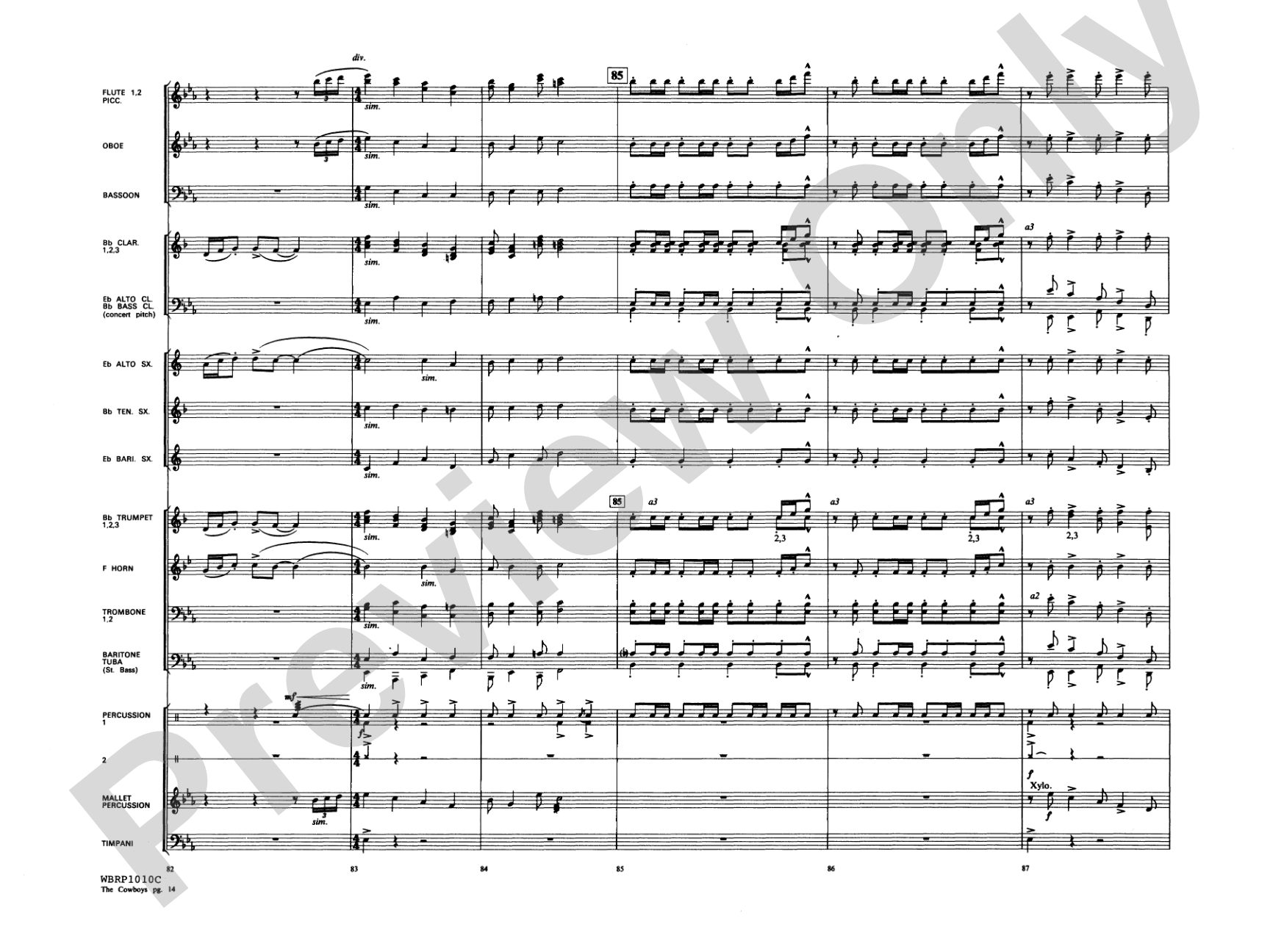
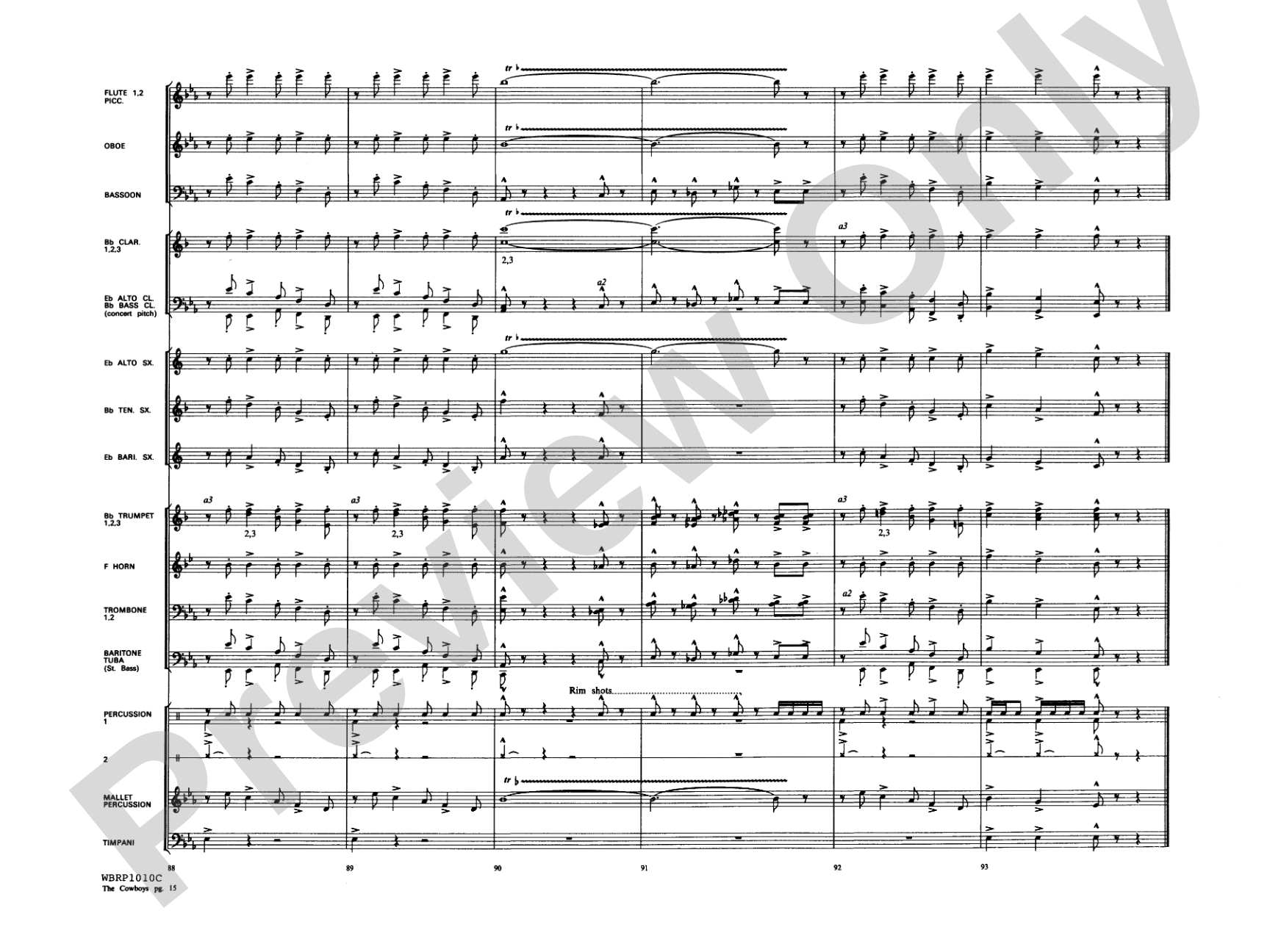


The Cowboys: Concert Band Conductor Score & Parts
By John Williams / arr. Jay Bocook
Grade: 3 (Medium Easy)
Item: 00-PK-0002675

$77.00
One moment…
Description
Here's an easy treatment of the classic John Williams film score. Jay Bocook has skillfully combined the major themes using solid keys, ranges, and rhythms for young band. An impressive Western panorama.


Don't just read it, hear it, play along with it, and watch your students grow with it. In MakeMusic Cloud, The Cowboys: Concert Band Conductor Score & Parts comes alive with professional accompaniment, adjustable tempo, and built-in practice tools that turn solo practice into real progress.
Open in the Player
Jump straight in and assign it today.
Start Your Free Trial
Open this title and explore the full library in minutes.
Sample Audio
No sample audio found.
Sample Video
No sample videos found.
Additional Details
Series:
Concert Band
Publisher:
Alfred Music
Page Count:
298
SKU:
00-PK-0002675
More about this title
About the Composer: John Williams
John Williams stands among the most prolific and celebrated film composers of our time. His career spans more than five decades, during which he has defined the sound of modern cinema through works for Star Wars, Jaws, Indiana Jones, Schindler's List, and dozens of other landmark films. His ability to craft memorable, singable themes that work across full orchestras has made his music a staple in concert halls and educational ensembles worldwide.
Williams' scores demonstrate sophisticated harmonic language, clear orchestration, and thematic development rooted in the classical tradition. For music educators, his works offer students the chance to engage with film music that carries genuine artistic weight while remaining accessible to young players.
Why we love this
Jay Bocook's arrangement captures the sweep and character of Williams' Western themes without overwhelming a young band. The orchestration respects the original harmonic content while keeping part independence manageable, allowing each section to feel like they're playing real music rather than simplified filler. This is exactly the kind of film music arrangement that builds student confidence and ensemble cohesion.
What to expect
Wide open spaces, dramatic landscapes, and the forward momentum of adventure. The piece evokes the scope of a Western film without requiring advanced technical facility; the melodies soar, the harmonies support cleanly, and the rhythm section drives the action forward with confidence.
Who it's for
Young concert bands working at the Grade 3 level who want to program recognizable, engaging material with genuine musical substance. Directors seeking a piece that appeals to audiences (students, families, community members all recognize Western film aesthetics) while providing solid pedagogical value will find this arrangement does both effectively.
How to get the most out of it
- Balance the melodic statements between upper woodwinds and horns so the recognizable themes emerge clearly without drowning out the harmonic support underneath.
- Treat the rhythmic Western figures (particularly in percussion and lower brass) with precision and slight emphasis; this drives the narrative energy of the piece.
- Shape phrase endings with slight ritardando to let the audience absorb each thematic statement before moving to the next section.
- Manage dynamic contrast carefully at the Grade 3 level; young players often rush louder passages, so establish a steady tempo and trust the ensemble to sustain it through building sections.
How to use it
Program this as a concert centerpiece or closer in a spring concert alongside other thematic works from film or classical sources. It pairs well with lighter fare (pops selections, seasonal pieces) and provides enough substance to stand beside more serious contemporary or classical works. The film context also makes it a natural fit for educational concerts where you're introducing young audiences to concert band repertoire.
Skills your students will build
- Sustaining long melodic lines across phrase boundaries
- Balancing parts within the harmonic structure to support rather than overpower melody
- Executing rhythmic patterns common in Western and film music idioms
- Reading from conductor score and part coordination across all sections
- Responding to thematic material and shape it expressively even at accessible difficulty levels