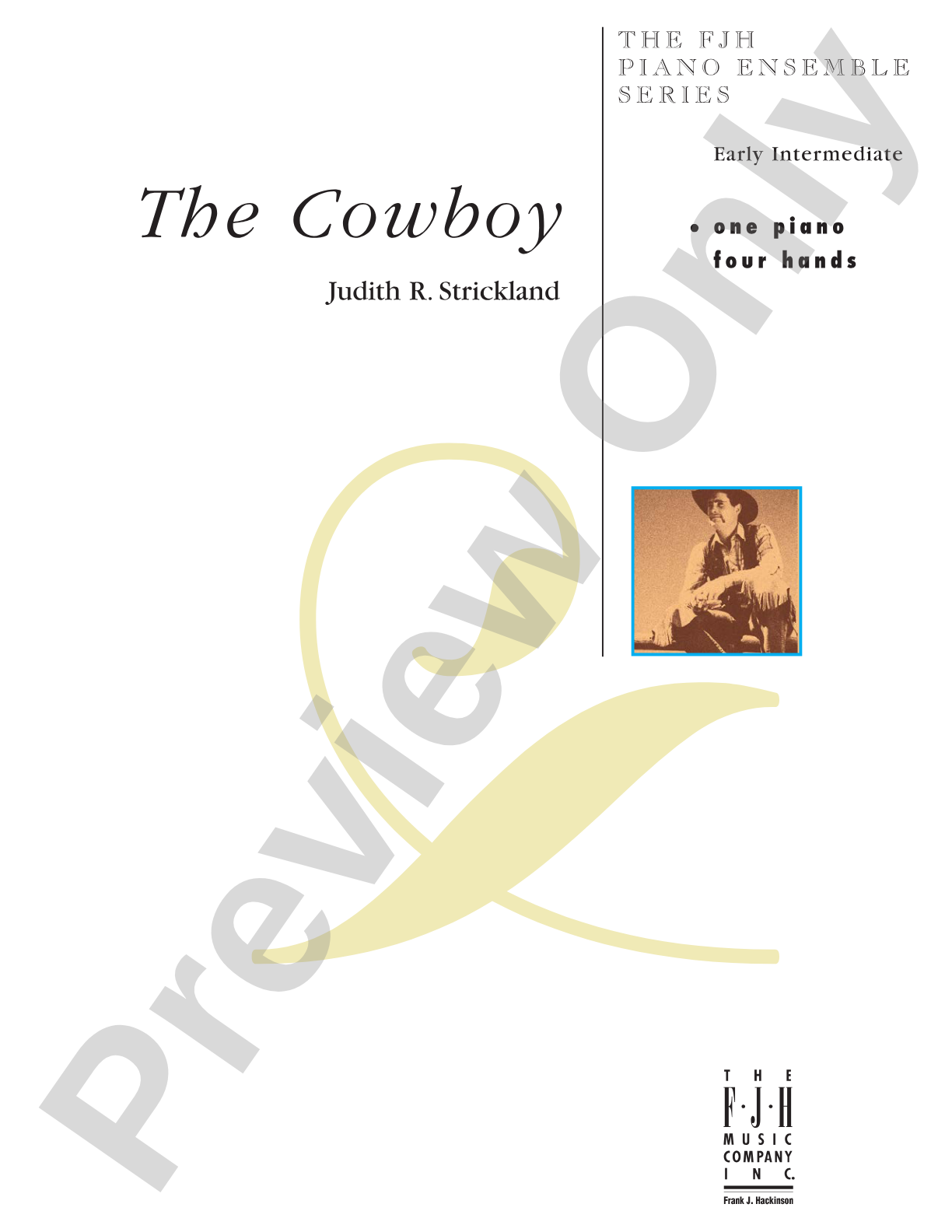
This one piano, four hands jaunty ensemble will be loved by all the cowboys and cowgirls in your studio! Written in an ABA form, this piece starts off in C Major and contains a short B section in A minor. The sections are nicely contrasted, and the piece contains an array of articulations to enhance the spirit of the piece.
Discover MakeMusic Cloud: thousands of interactive titles your students can play along with today.
Strickland nails the balance between fun and musical substance here. The ABA structure gives students a clear formal template to understand, while the contrast between C Major brightness and A minor introspection keeps things interesting without overwhelming players at this level.
What to expect
Bright and spirited, with a genuine cowboy swagger in the A section. The move to A minor brings a moment of reflection before the return, creating a satisfying arc that feels complete despite the modest technical demands.
Who it's for
Students comfortable with early intermediate technique who are ready to explore duet playing. The piece works especially well for studio teachers introducing ensemble concepts or for students who connect with Western themes.
How to get the most out of it
Articulation choices matter enormously in this piece. Work through the score marking exactly where staccatos and legatos appear, then rehearse those sections slowly to build consistency between hands.
The key change into A minor in the B section needs intention. Bring out the shift in character by adjusting dynamics subtly; the minor section doesn't need to be quiet, just distinctly different in mood.
Balance the primo and secondo parts so neither disappears. Even when one hand carries the melody, the accompanist's rhythmic support should remain audible and steady.
How to use it
Ideal for a studio recital showcase where duet playing deserves its own spotlight. The thematic appeal means students will practice willingly, making it perfect for spring concerts or end-of-year studio events where you want engaging music that audiences recognize immediately.
Skills your students will build
Reading and executing varied articulations (staccato, legato, accent)
Playing confidently in minor keys and understanding relative major-minor relationships
Balancing primo and secondo roles in ensemble settings
Recognizing and performing ABA form structures
Coordinating hand independence and rhythmic precision with a partner
You May Also Like
Scan to Complete Your Purchase
Use your phone's camera to scan the code below
You'll log in on your phone and the order will be added to your account