
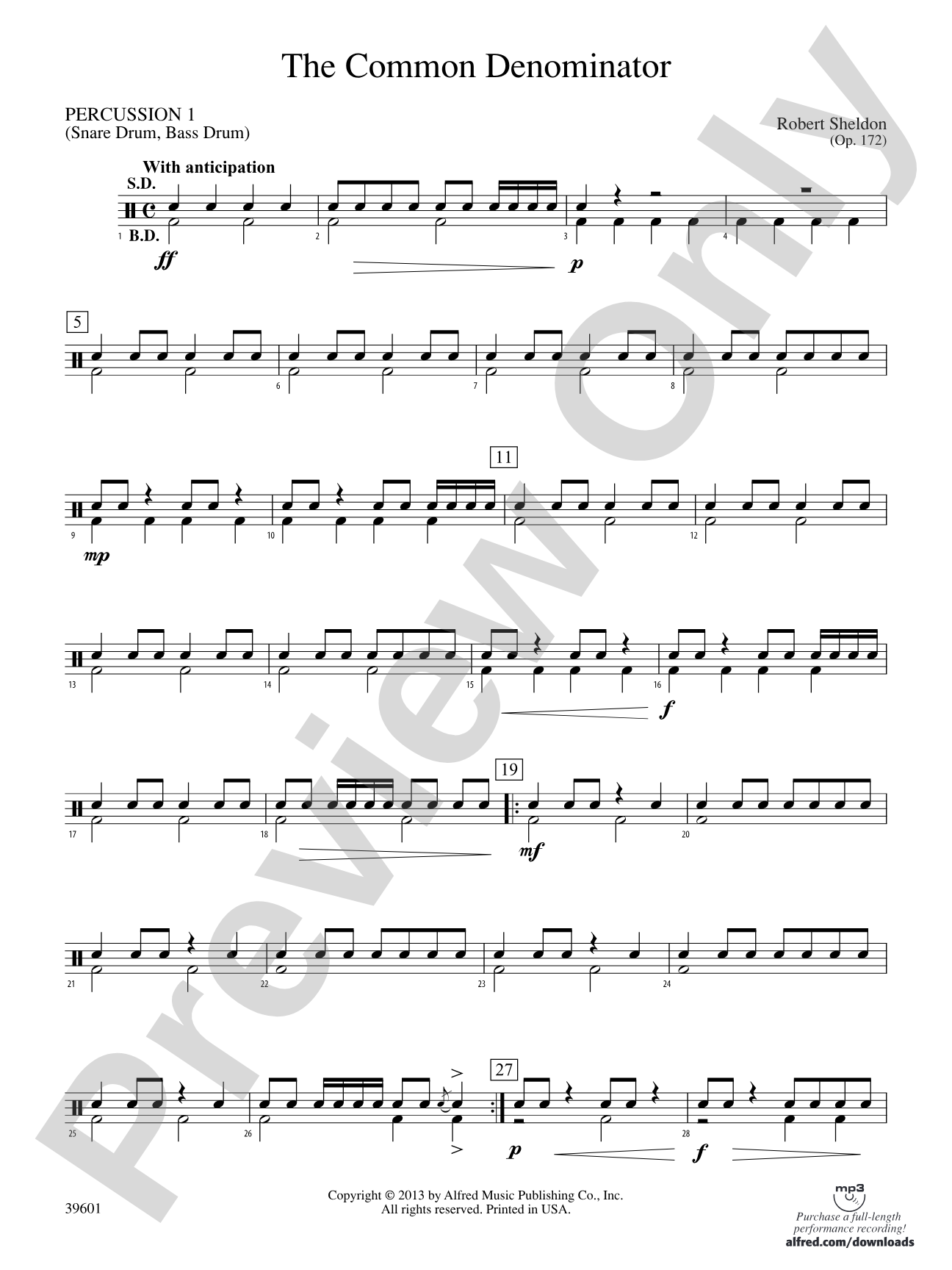

The Common Denominator: 1st Percussion
By Robert Sheldon
Grade: 0.5 (Very Easy)
Item: 00-PC-0015876_PC1
$3.00
Pickup currently not available
Description
This energetic piece for beginning band provides drama and imagination to any program. Exploring rhythm in common time while highlighting dynamics and style, audiences will never imagine that only a handful of notes are used! (1:55) Correlates to Sound Innovations for Concert Band Book 1, Level 3.


Don't just read it, hear it, play along with it, and watch your students grow with it. In MakeMusic Cloud, The Common Denominator: 1st Percussion comes alive with professional accompaniment, adjustable tempo, and built-in practice tools that turn solo practice into real progress.
Open in the Player
Jump straight in and assign it today.
Start Your Free Trial
Open this title and explore the full library in minutes.
Sample Audio
1
Audio File
--:--
0:00
0:00
Sample Video
No sample videos found.
Additional Details
Series:
Sound Innovations for Concert Band
Publisher:
Alfred Music
Page Count:
140
SKU:
00-PC-0015876_PC1
More about this title
About the Composer: Robert Sheldon

Robert Sheldon ranks among the most widely performed composers in wind band repertoire. His works appear regularly on state and national contest lists, and he has conducted performances of his compositions at Carnegie Hall, Orchestra Hall, the Kennedy Center, and other major venues across the United States and internationally, including appearances in Japan, Canada, Italy, Germany, Australia, and China.
Sheldon serves as lead author of Sound Innovations for Concert Band and remains deeply engaged in music education through guest conducting assignments with All-State and Regional Honor Bands, as well as clinician presentations at universities and state music education conferences. His contributions to the field have earned recognition from the American School Band Directors Association, Phi Beta Mu, and the American Society of Composers, Authors and Publishers. He holds an honorary doctorate from VanderCook College of Music.
Why we love this
Sheldon has crafted a piece that proves elementary bands don't need sprawling palettes to make an impact. The economy of material here becomes the strength: by limiting the pitch content while varying rhythm, dynamics, and articulation, students experience how musical drama emerges from intelligent use of what they already know. This approach builds genuine confidence in young musicians and gives conductors a concert piece that sounds polished without requiring months of rehearsal.
What to expect
Bright and propulsive, with the kind of forward momentum that holds audience attention despite its economy of notes. There's a theatrical quality in the dynamic gestures, and the interplay between rhythmic drive and expressive moments creates a sense of musical sophistication that belies the easy technical demands.
Who it's for
Beginning concert bands looking for energetic, audience-friendly repertoire that doesn't oversimplify the musical experience. Directors teaching students who are still building fluency with their instruments will find this piece rewards clarity and ensemble cohesion without demanding technical facility beyond Grade 0.5 level.
How to get the most out of it
- Treat the dynamic contrasts as the main architectural element. The shift between passages should feel deliberate and controlled, not accidental. Have your ensemble identify every marking on the score during sectional prep.
- Lock in the rhythmic precision early. With limited melodic interest, any rhythmic wavering becomes immediately apparent. Isolate problem areas with a metronome and build gradually to tempo.
- Shape phrases even within simple note patterns. Encourage players to listen for natural breathing points and support the musical line through consistent air pressure and phrasing, not just note accuracy.
- Balance your voicing so that no single section dominates. With restricted pitch material, strategic doubling matters; make sure accompanying parts sit at an appropriate dynamic level to support melodic voices without overshadowing them.
How to use it
Program this as an opener or early-concert feature when you want to establish energy and momentum with the audience. Its two-minute runtime and memorable character make it ideal for mixed programs pairing beginning and intermediate ensembles, or for contest appearances where a polished, confident opener sets an excellent first impression.
Skills your students will build
- Maintaining steady rhythm in common time while responding to dynamic changes
- Ensemble balance and blend within a limited pitch set
- Phrasing and musical shaping using dynamics and articulation rather than wide melodic range
- Reading and executing style markings with precision
- Building confidence and musicality without relying on technical complexity