

The Cole Porter Mallet Collection: 2nd Vibes
5 Classics Arranged for Marimba and Vibraphone
Words and music by Cole Porter / arr. Anders Åstrand
Item: 00-PC-0015763_V2
$3.00
Pickup currently not available
Description
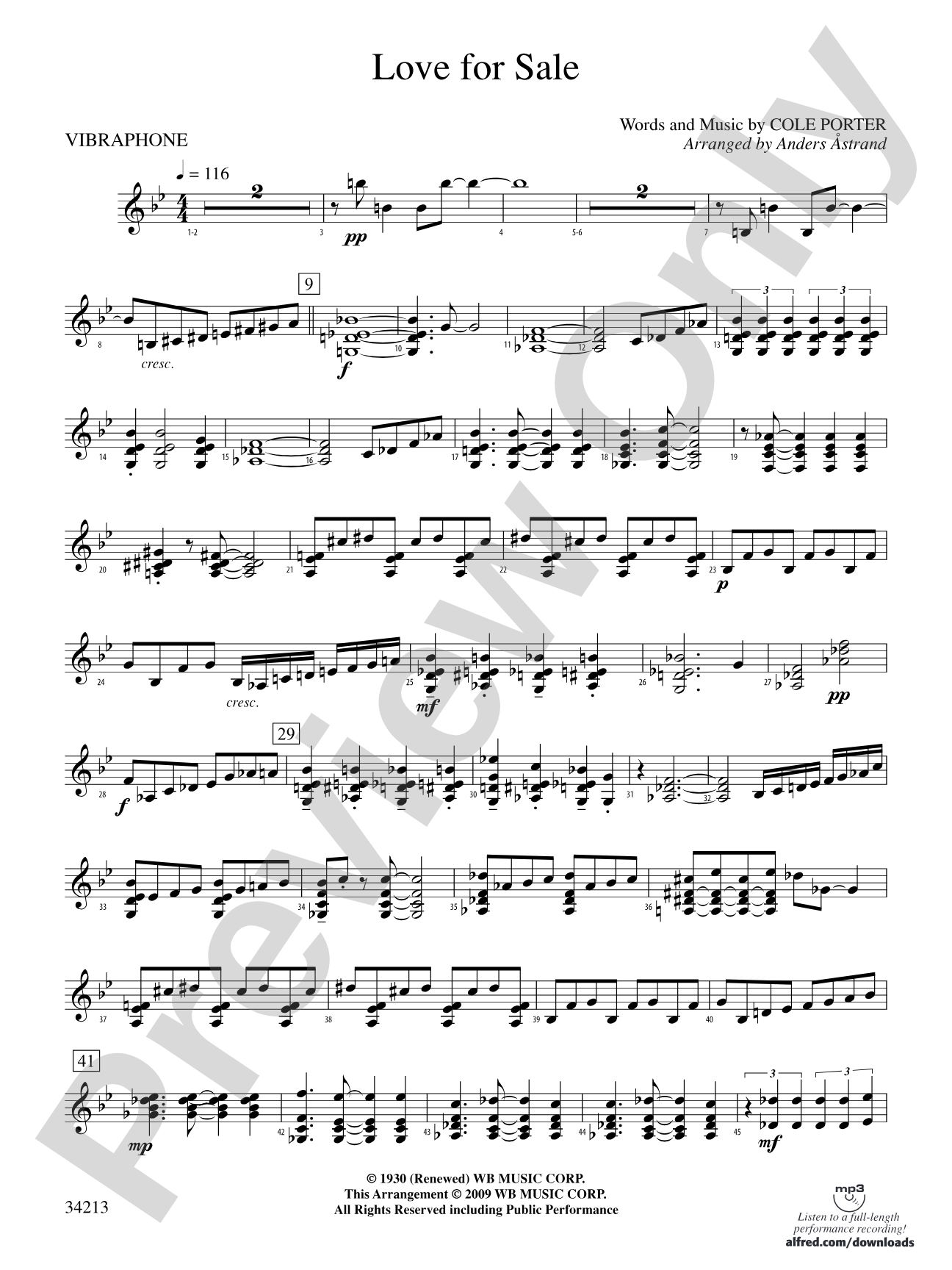
The Cole Porter Mallet Collection contains five classics arranged for marimba and vibraphone ("Anything Goes," "I Love Paris," "Love for Sale," "Two Little Babes in the Woods," and "Night and Day"). The pieces in this collection have been arranged to give those with limited improvisational experience the opportunity of playing the melody using chords. For marimba, the arrangements also utilize interesting bass lines, giving each tune a great rhythmic foundation.


Don't just read it, hear it, play along with it, and watch your students grow with it. In MakeMusic Cloud, The Cole Porter Mallet Collection: 2nd Vibes comes alive with professional accompaniment, adjustable tempo, and built-in practice tools that turn solo practice into real progress.
Open in the Player
Jump straight in and assign it today.
Start Your Free Trial
Open this title and explore the full library in minutes.
Sample Audio
1
1 Anything Goes
--:--
2
2 I Love Paris
--:--
3
3 Love for Sale
--:--
4
4 Night and Day
--:--
5
5 Two Little Babes in the Woods
--:--
1 Anything Goes
0:00
0:00
Sample Video
No sample videos found.
Additional Details
Publisher:
Alfred Music
Page Count:
44
SKU:
00-PC-0015763_V2
More about this title
About the Composer: Cole Porter
Cole Porter (1891-1964) stands as one of America's most sophisticated songwriters, creating works that marry witty, urbane lyrics with melodically inventive music. His songs became standards of the Great American Songbook, performed by everyone from Ella Fitzgerald to contemporary jazz artists. Porter's gift for melody and harmonic complexity made his compositions natural vehicles for instrumental interpretation, and their enduring popularity in recital and concert settings speaks to their musical substance beyond the stage.
Why we love this
These arrangements open Porter's sophisticated harmonic language to percussionists who are still building their improv chops. The chord-melody approach keeps the focus on playing the tune itself rather than generating accompaniment, while the bass lines on marimba provide authentic rhythmic texture that makes each piece feel complete and grounded. You get genuine Porter standards here, not lightweight novelties.
What to expect
These arrangements carry the elegance and wit of Porter's originals into the mallet world. You'll find yourself playing melodies that feel both familiar (if you know the standards) and freshly voiced, supported by bass lines and chord textures that anchor each piece without overwhelming it. The overall effect is urbane and swinging, with just enough harmonic sophistication to keep your ears engaged.
Who it's for
Percussionists with developing musicianship who are ready to explore melodic playing on mallet instruments but aren't yet comfortable generating their own harmonic accompaniment. This collection also serves intermediate students and recitalists looking for sophisticated standard tunes that sit naturally on marimba and vibraphone.
How to get the most out of it
- Shape the melody phrase by phrase rather than note by note; Porter's tunes are meant to sing, so let each idea breathe before moving to the next.
- Balance the melody and bass line on marimba so both parts exist in the same expressive space; avoid letting the bass line become merely mechanical.
- Lock the vibraphone line with the marimba's rhythmic foundation, especially in spots where the arrangements call for them to dance together.
- Mark the harmonic changes in your score so you understand the chord progression beneath the melody; this knowledge will inform your phrasing even when you're not comping.
How to use it
Feature any of these five pieces on a solo recital or as part of a mallet percussion showcase, pairing them with other arranged standards or original mallet works to build a cohesive program. They also work well in a casual concert setting where you want to program recognizable material that audiences will enjoy; the arrangements' accessibility doesn't diminish their musical substance.
Skills your students will build
- Playing melody with harmonic awareness (understanding chord changes without generating them)
- Integrating bass line and melody on four-mallet marimba technique
- Phrasing and shaping standards idiomatically across mallet instruments
- Vibraphone and marimba voicing and tone production in a lyrical context
- Reading and interpreting chord symbols in performance