The Cold Canyon: B-flat Bass Clarinet Sheet Music Preview

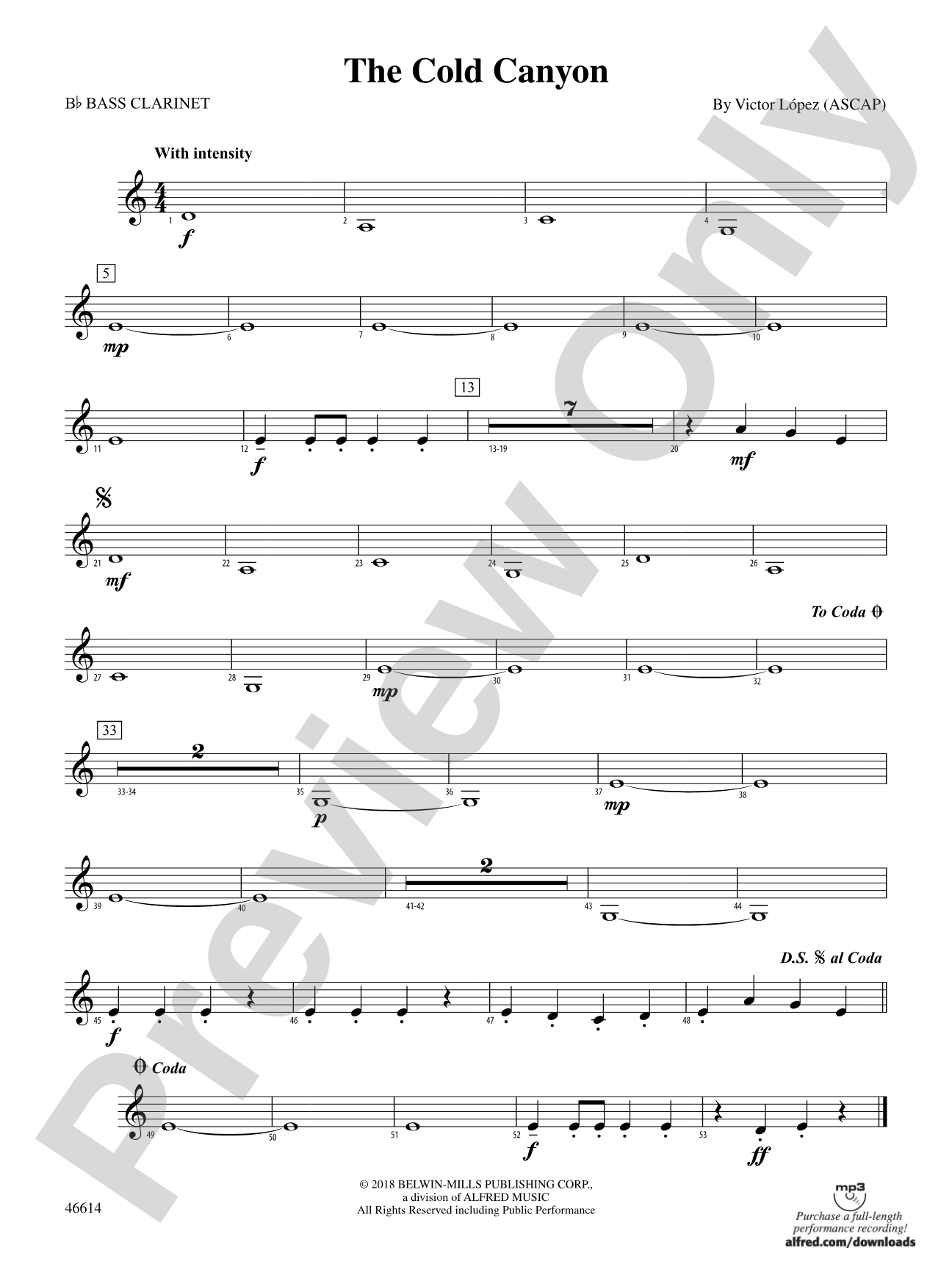
The Cold Canyon: B-flat Bass Clarinet

By Victor López

Grade: 0.5 (Very Easy)

Item: 00-PC-0018048_BC

Digital Download
$3.00
Description
Little Petra, also known as The Cold Canyon, is believed to have been established in the 1st Century C.E. Invite your students and audience on a magical and musical tour of this miraculous place. Repetitive phrases foster preparation, while subtle dynamic shifts offer exquisite texture changes for your first year students. Inspiring!

Don't just read it, hear it, play along with it, and watch your students grow with it. In MakeMusic Cloud, The Cold Canyon: B-flat Bass Clarinet comes alive with professional accompaniment, adjustable tempo, and built-in practice tools that turn solo practice into real progress.

Sample Audio
0:00
0:00
Sample Video
Additional Details
Series: Belwin Very Beginning Band
Publisher: Alfred Music
Page Count: 134
SKU: 00-PC-0018048_BC

More about this title

About the Composer: Victor López

Victor López is a prolific composer and arranger whose work spans concert band, jazz ensemble, and orchestral literature. His output emphasizes accessibility without sacrificing musical substance, making him a trusted voice for educators building foundational repertoire with developing ensembles.

Why we love this

López writes for first-year students with genuine respect for their capabilities, and this piece proves it. The repetitive phrasal structure gives early players time to settle into their parts without feeling patronized, while the dynamic architecture creates real musical moments that make young musicians feel like they're making art, not just reading notes.

What to expect

The piece evokes the quiet wonder of stepping into an ancient canyon carved by wind and time. The sonority is sparse and clear, letting individual voices emerge before blending into a unified texture that suggests vastness without overwhelming the listener.

Who it's for

This is ideal for conductors leading first-year concert bands who want genuine musical repertoire rather than drill exercises. The material works equally well for students in their opening weeks and those consolidating their fundamentals partway through the year.

How to get the most out of it

  • Shape each repeated phrase slightly differently through dynamic nuance rather than tempo changes. Even small crescendos and decrescendos prevent the repetition from sounding static and help students internalize phrasing naturally.
  • Balance the ensemble so that melodic material cuts through without overwhelming the harmonic foundation. In grade 0.5 writing, thinning the inner voices during exposed passages prevents muddiness.
  • Allow the shifting dynamics to breathe. Resist rushing into the next change; let students hear and feel the textural difference before moving forward.
  • Use sectional rehearsal to lock the rhythmic foundation first, then add the expressive layers. This builds confidence and makes the concert performance feel polished rather than tentative.

How to use it

Program this early in a concert to establish that young musicians can deliver mature musical moments. It also works beautifully as a contest or festival selection where simplicity and clarity demonstrate ensemble control.

Skills your students will build

  • Sustaining long tones with consistent tone quality across a phrase
  • Responding to dynamic markings and executing measured crescendos and decrescendos
  • Listening to ensemble balance while maintaining an independent part
  • Reading simple melodic and harmonic patterns across multiple parts
  • Counting through repetitive passages without rushing or losing focus

You May Also Like