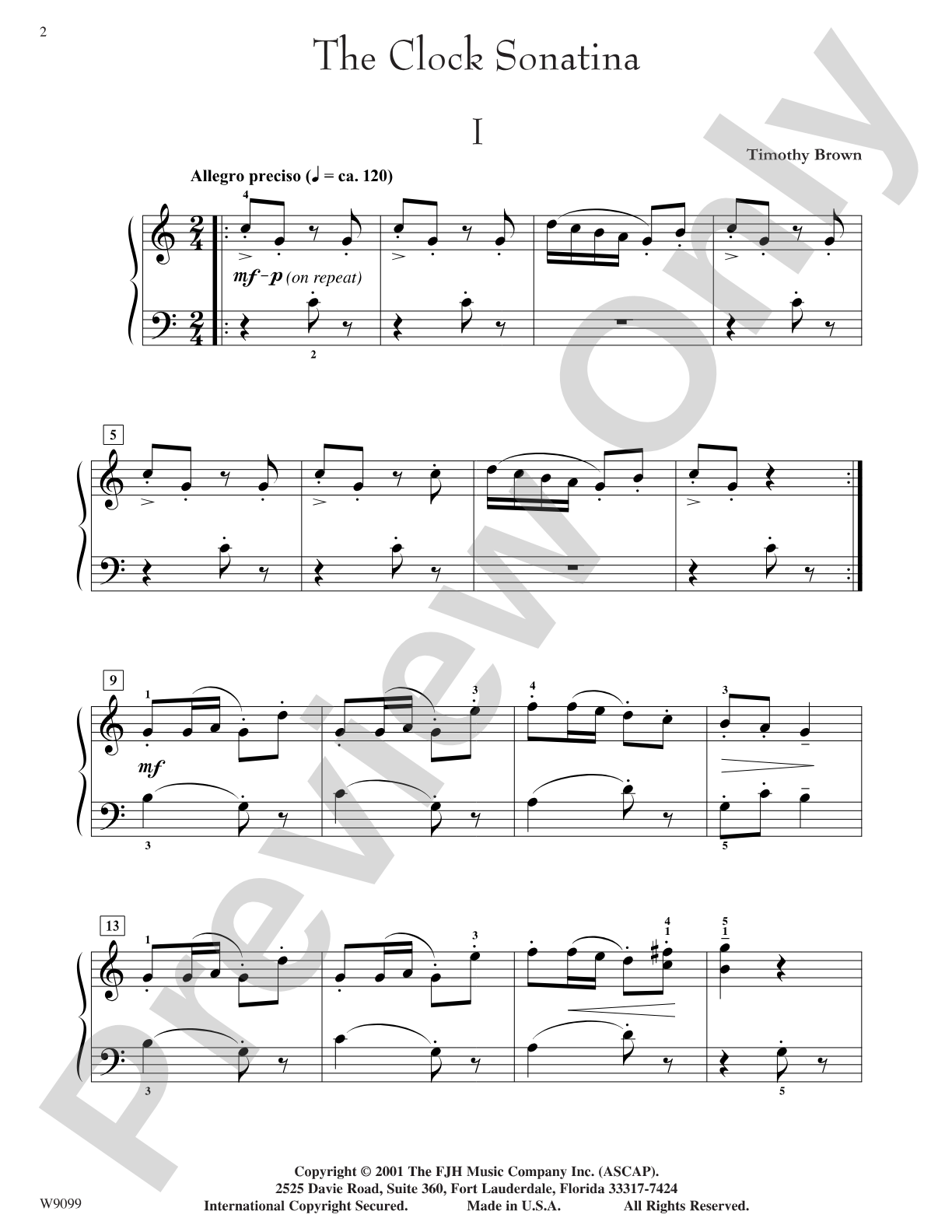
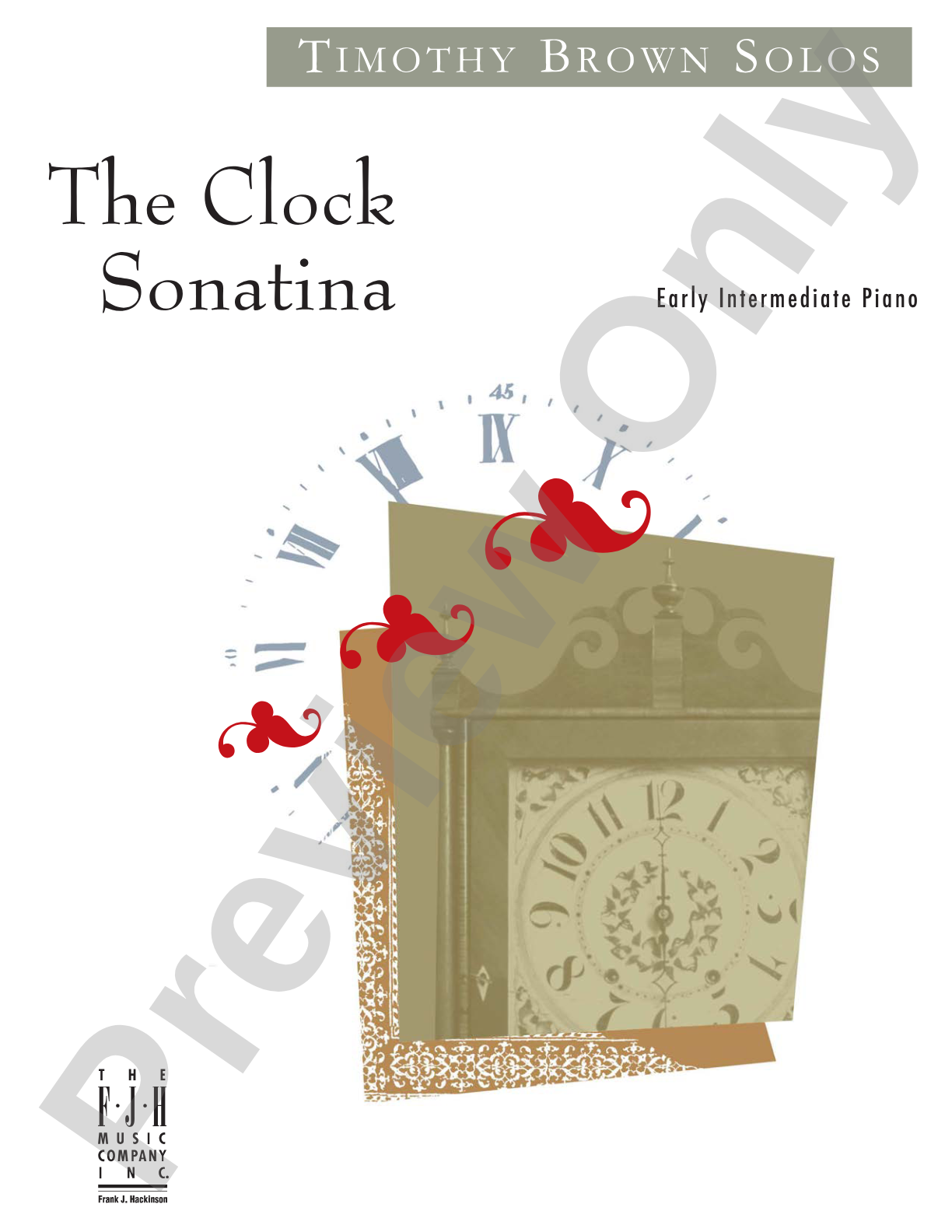
The Clock Sonatina Sheet Music Preview

The Clock Sonatina: Piano

By Timothy Brown

Item: 98-DW9099

Digital Download
$5.95
Description
This playful sonatina is written in three movements in contrasting styles. It places an emphasis on various patterned rhythms and precise articulation (imitating the ticking of a clock).t

The Clock Sonatina: Piano isn't in MakeMusic Cloud just yet...but it could be. Let us know you'd like to see it, and you'll help shape what comes next. In the meantime, start a free trial and dive into thousands of interactive titles your students can play along with today.

Sample Audio
No sample audio found.
Sample Video
Additional Details
Series: Written For You
Publisher: The FJH Music Company, Inc.
SKU: 98-DW9099

More about this title

Why we love this

The Clock Sonatina bridges the gap between early intermediate and intermediate repertoire without sacrificing musical substance. Brown's clever use of rhythmic patterns as both a compositional device and a performance challenge keeps students engaged across all three movements, and the ticking-clock concept gives young pianists a tangible musical image to work toward.

What to expect

Witty and mechanically precise, yet genuinely musical. The three movements tick, chime, and wind their way through contrasting moods, creating a listening experience that feels both playful and carefully constructed. You'll find yourself enjoying the piece's clever concept while discovering real musical substance beneath the surface.

Who it's for

Early intermediate and intermediate pianists seeking repertoire that develops rhythmic precision and articulation control without abandoning musicality. This sonatina works equally well for students preparing for competitions, recitals, or simply wanting a contemporary piece with a strong musical concept.

How to get the most out of it

  • Lock in the rhythmic precision from measure one. The clock metaphor demands metronomic accuracy; let a metronome be your practice partner through all three movements.
  • Shape each movement's distinct character clearly. Since the movements contrast in style, use tempo changes and articulation choices to mark the transitions and help listeners hear the architecture.
  • Pay close attention to the written articulation marks. Staccato, legato, and accent markings aren't decorative here; they're essential to creating the ticking effect and maintaining the piece's playful personality.

How to use it

Program this as a contemporary solo on a student recital or young artist showcase. Its three-movement structure and contrasting styles make it a satisfying standalone work, and the clock concept appeals to both young audiences and seasoned listeners. It also pairs well on a mixed program where you want to feature a student's rhythmic development and articulation skills.

Skills your students will build

  • Precision articulation (staccato, legato, and accent differentiation)
  • Rhythmic accuracy and metric control across contrasting meters
  • Patterned rhythm recognition and consistent execution
  • Characterization across contrasting musical styles within a single work
  • Hand independence and coordination for rhythmic patterns

You May Also Like